Northern Vietnam is where landscapes don’t just change, they completely shift your travel experience. From peaceful waterways framed by limestone cliffs to remote mountain roads disappearing into the clouds, Sapa or Ninh Binh each tells a very different story. Some travelers look for slow mornings and gentle scenery, while others are drawn to winding passes made for adventure motorcycle riding. Seen through the lens of real travel experiences curated by Indochina Adventure, the differences between these two journeys start to stand out.
Quick comparison: Ninh Binh or Sapa at a glance
When mapping out north Vietnam motorcycle tours, deciding where to point your handlebars often comes down to the classic debate of Ninh Binh vs Sapa. While one offers a smooth ride through ancient limestone valleys, the other challenges you with high-altitude switchbacks and dramatic mountain passes.
| Aspect | Ninh Binh | Sapa |
|
Location |
~90 km south of Hanoi, easy 2-hour trip |
Mountain town, 5 – 6 hours from Hanoi |
|
Landscape |
Limestone karsts, rivers, caves, rice paddies |
Terraced rice fields, valleys, misty peaks |
|
Natural highlights |
Trang An, Tam Coc, Hang Mua |
Fansipan Peak, Muong Hoa Valley |
|
Cultural experience |
Ancient capital, pagodas, temples |
Ethnic minority villages & markets |
|
Climate |
Warmer, more stable year-round |
Cooler, often misty |
|
Main activities |
Boat rides, cycling, temples |
Trekking, homestays, mountain views |
|
Ideal duration |
1 – 3 days |
3 – 5 days |
|
Best for |
Relaxed travel, scenery, history |
Adventure, trekking, culture |
In-Depth Travel Experience Comparison — Sapa or Ninh Binh
Many travelers ask Sapa or Ninh Binh which is better, but the answer often depends on pace, terrain, and how you like to explore. This deeper comparison breaks down what each place offers on the ground, especially for those interested in immersive journeys like motorbike tours of Vietnam.
Landscape and scenery — Sapa or Ninh Binh which is more impressive?
If you are craving a visual feast but only have a limited window, you might wonder “Should i go to Sapa or Ninh Binh to get the best photos of Northern Vietnam”. The choice boils down to a contrast between the “vertical” grandeur of the high mountains and the “horizontal” serenity of the ancient limestone valleys.
- Sapa: High mountain landscapes with deep valleys, terraced rice fields, and misty peaks. The most famous places to visit in Sapa, including Muong Hoa Valley and Fansipan Peak, stand out for their dramatic elevation and sweeping panoramas.
- Ninh Binh: Flat river plains framed by limestone karsts, rice paddies, caves and quiet villages. Many iconic places to visit in Ninh Binh like Trang An, Tam Coc and Hang Mua offer calm, scenic views best enjoyed by boat or bike.
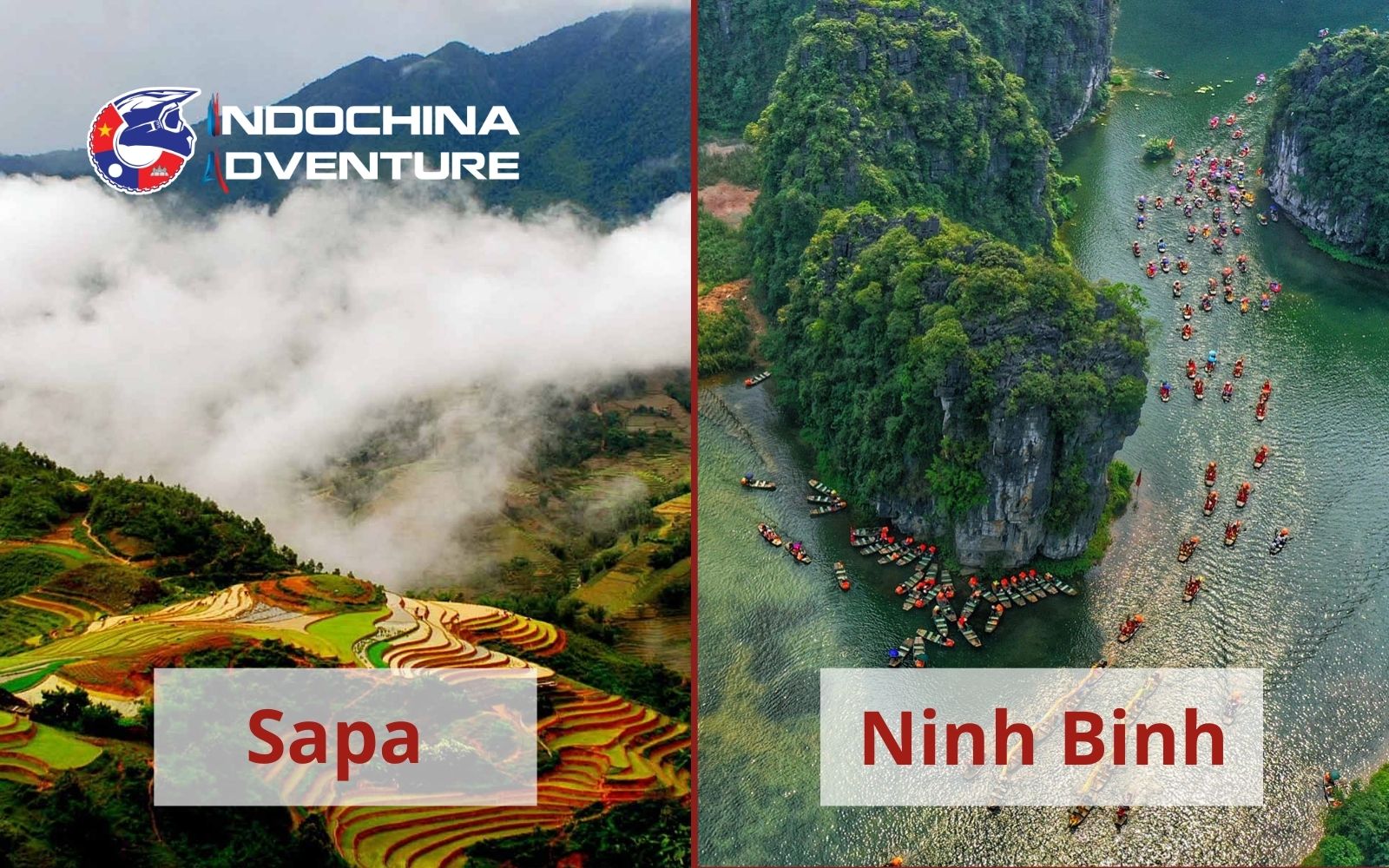
Comparing the majestic mountains of Sapa or Ninh Binh for your trip
Weather and comfort – Is Sapa or Ninh Binh easier to visit?
Weather can make or break your trip, especially if you are debating between Ninh Binh or Sapa in December, when the temperatures in Northern Vietnam begin to plummet. While one stays relatively mild, the other can transform into a freezing, misty landscape that requires serious winter gear.
- Sapa: Because of its high altitude, the time to visit Sapa is much more specific; March – May and September – November offer the clearest skies for trekking. Be aware that from December to February, Sapa is incredibly cold (0°C – 10°C) with occasional frost, and the rainy season (June – August) should be avoided due to muddy trails and potential landslides.
- Ninh Binh: This destination is generally more stable and easier to visit year-round. The best time to visit Ninh Binh is during the rice harvest seasons (May – June and September – October) or the dry season (November – April) when temperatures stay a pleasant 18°C to 25°C, making it perfect for cycling and boat rides.
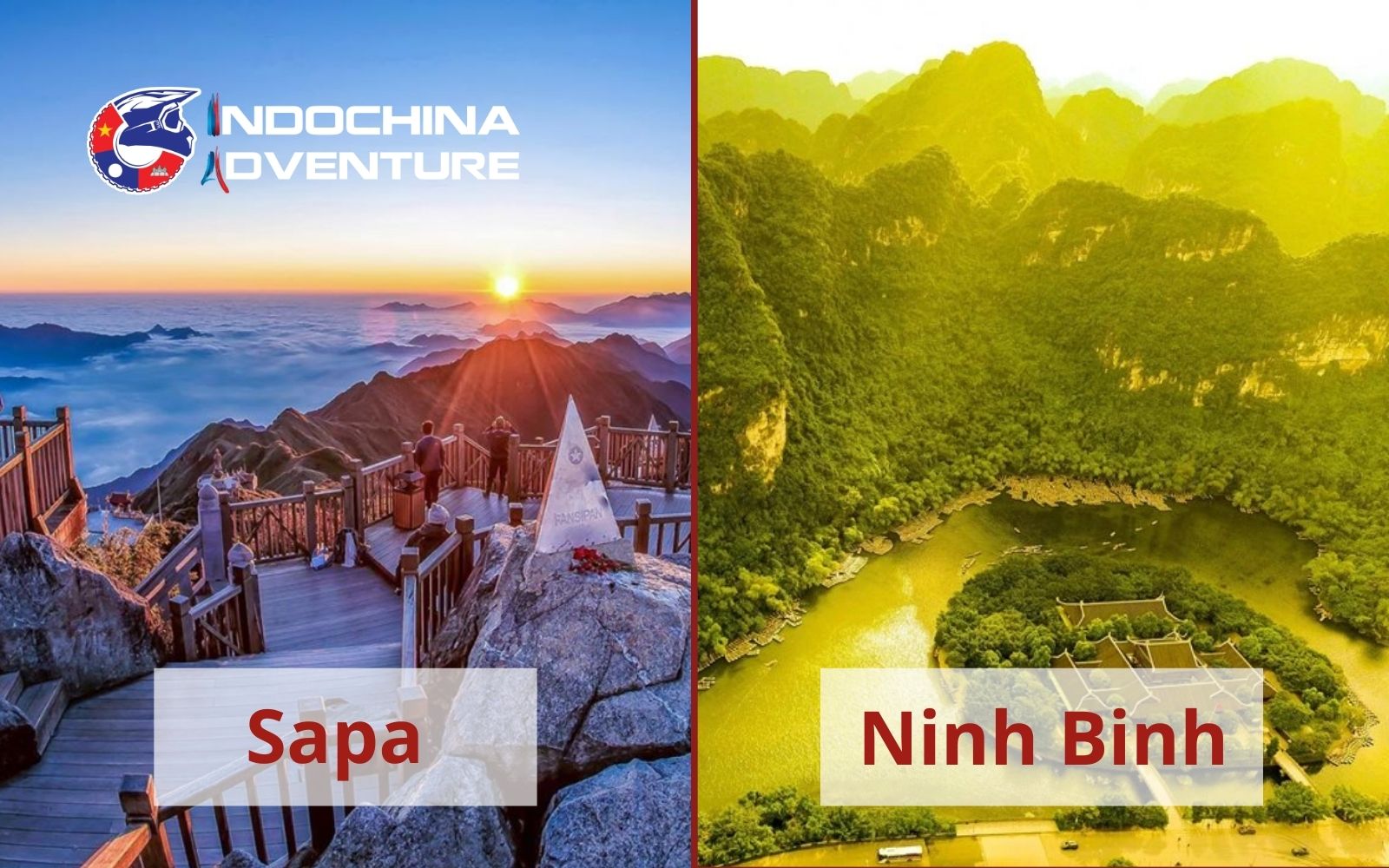
Stable lowland weather contrasts with Sapa’s seasonal cold and rain
Activities and experiences — What can you actually do in Sapa or Ninh Binh?
When planning a trip to Ninh Binh or Sapa Vietnam, the choice often comes down to how hands-on you want your journey to be. One destination leans toward active exploration and living culture, while the other highlights history, spirituality, and slow-paced rural life.
- Sapa: Built for adventure and cultural immersion, Sapa is best known for trekking through terraced rice fields and ethnic villages. Many of the most popular things to do in Sapa include visiting local markets, staying in village homestays, riding the Fansipan cable car, and relaxing in traditional herbal baths after a day of hiking.
- Ninh Binh: Experiences here revolve around heritage and landscape rather than physical challenge. Visitors explore ancient capitals, pagodas, and countryside villages tied to Vietnam’s dynastic past, with seasonal events and Ninh Binh traditional festivals reflecting Buddhist practices and Red River Delta culture.
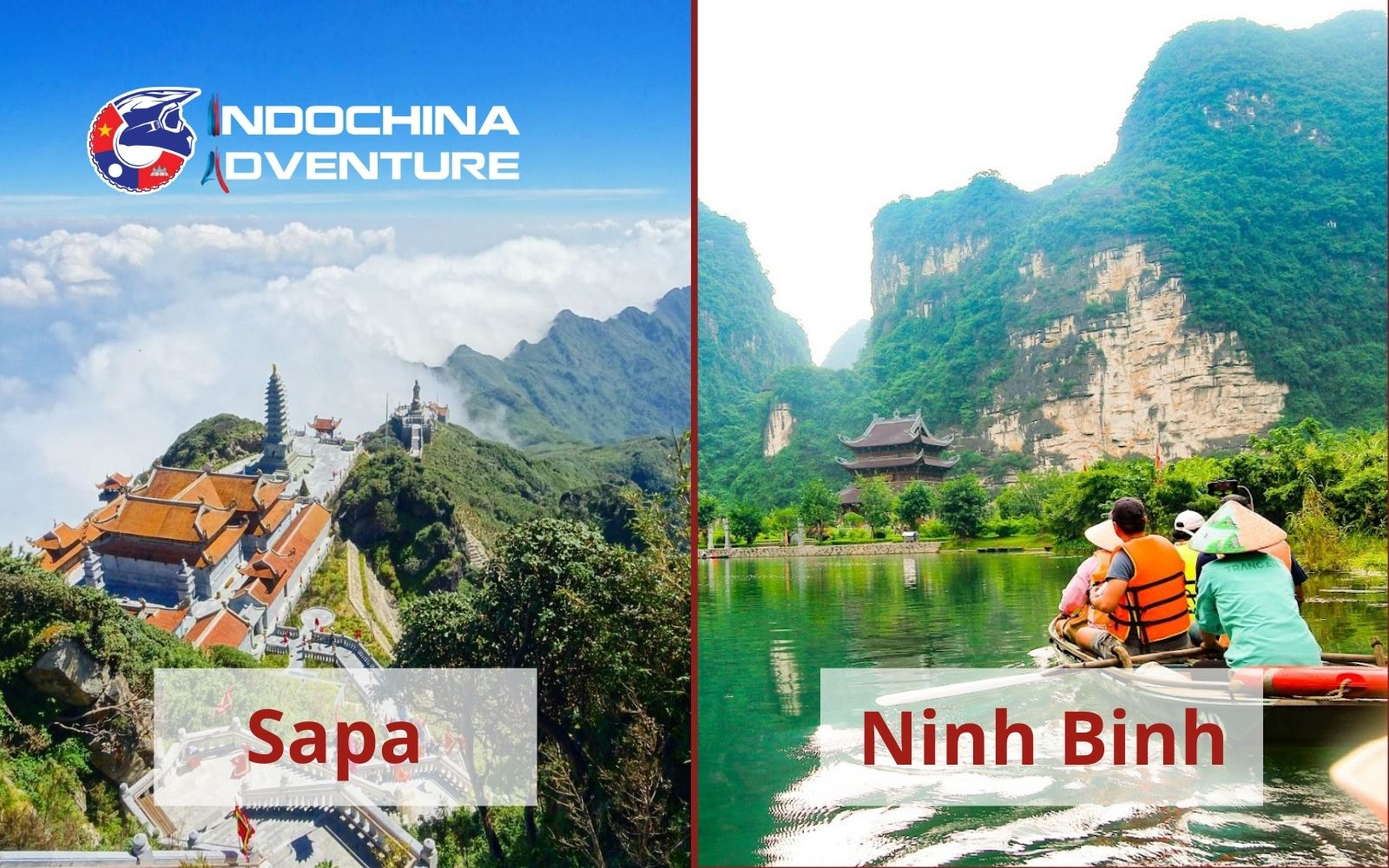
Trekking adventures meet relaxed boating, cycling and cultural discovery
Trip length — How many days for Sapa or Ninh Binh?
Trip length is a key factor when deciding between these two destinations, especially for travelers wondering if more time in Sapa or Ninh Binh makes sense for their itinerary. The answer depends on travel pace, distance, and how deeply you want to explore each region. This difference becomes even more important for those planning longer routes, including northwest or northeast Vietnam motorcycle tours, where time on the road is part of the experience.
Accessibility and travel time
Logistics play a huge role in your decision, as the physical distance between these hubs and the capital city can dictate your entire schedule. While one is a swift gateway to the countryside, the other is a deep excursion into the northern highlands.
- Sapa: Reaching Sapa requires more commitment, with a 5 – 6 hour bus ride or an overnight train followed by a transfer. To make the journey worthwhile, most travelers plan at least 2 days, with 3 days being ideal for exploring the surrounding highlands.
- Ninh Binh: Just 2 – 2.5 hours from Hanoi by car, bus, or train, Ninh Binh is easy to fit into short itineraries. Its smooth roads and short distance also make it a popular option for a Ninh Binh motor tour, whether as a day trip or a relaxed two-day escape.
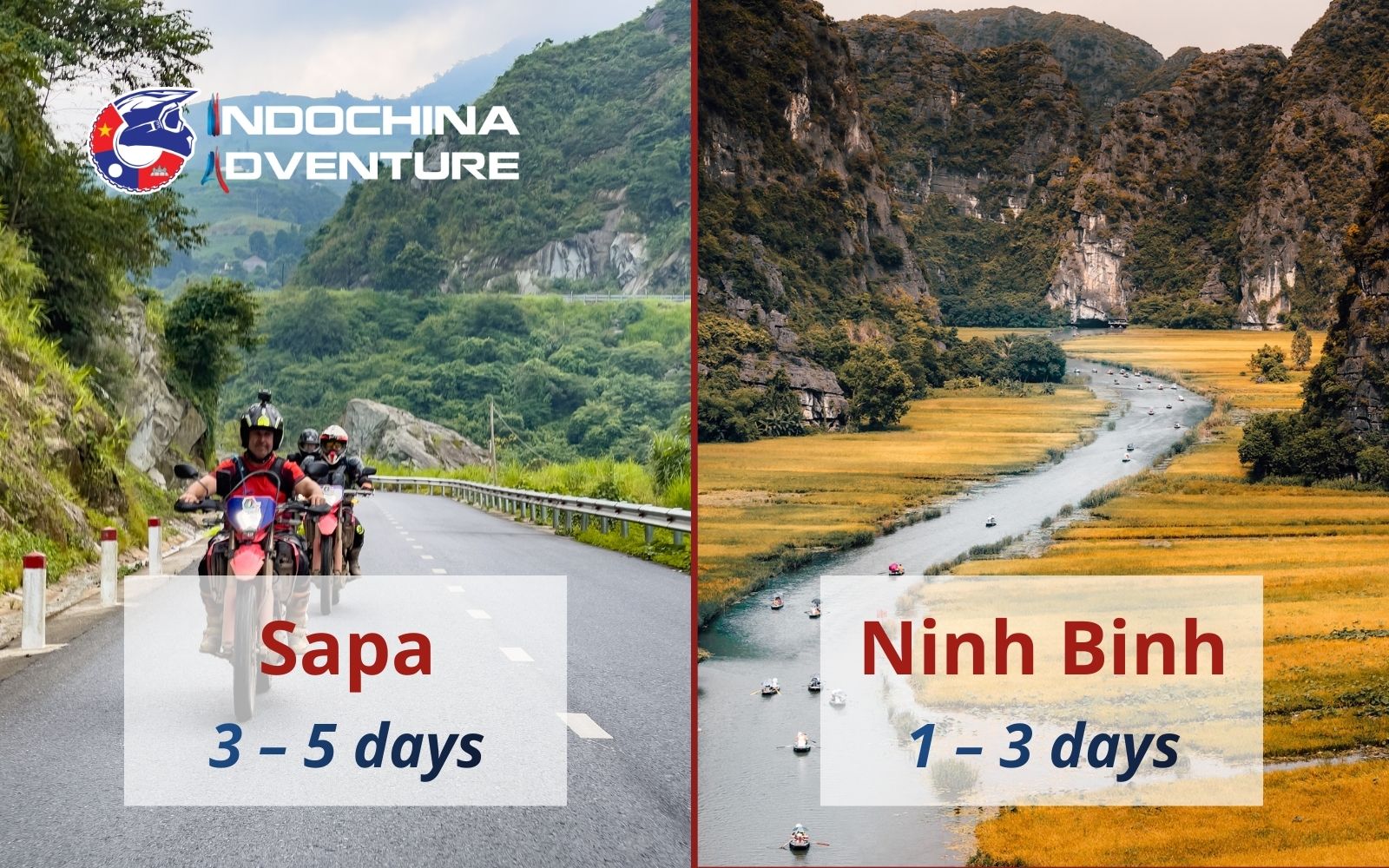
Short, easy transfers to Ninh Binh versus long journeys to Sapa
Off-road stories: Hidden Gems on Northwest Vietnam Motorcycle Routes
Crowds and travel atmosphere
For many travelers, deciding which is better Sapa or Ninh Binh comes down to how each place feels rather than the attractions themselves.
- Sapa: The town center is lively and can feel busy, particularly during peak seasons, with cafés, markets, and trekking tours creating a vibrant buzz. However, once you head into surrounding villages or join off-road Sapa motorbike tours, the atmosphere quickly shifts to something quieter, more remote, and deeply immersive.
- Ninh Binh: The overall vibe here is calm and unhurried, even when visitor numbers are high. Attractions are spread out across rivers, countryside, and karst landscapes, so crowds rarely feel overwhelming, making Ninh Binh ideal for slow travel and peaceful nature-focused journeys.
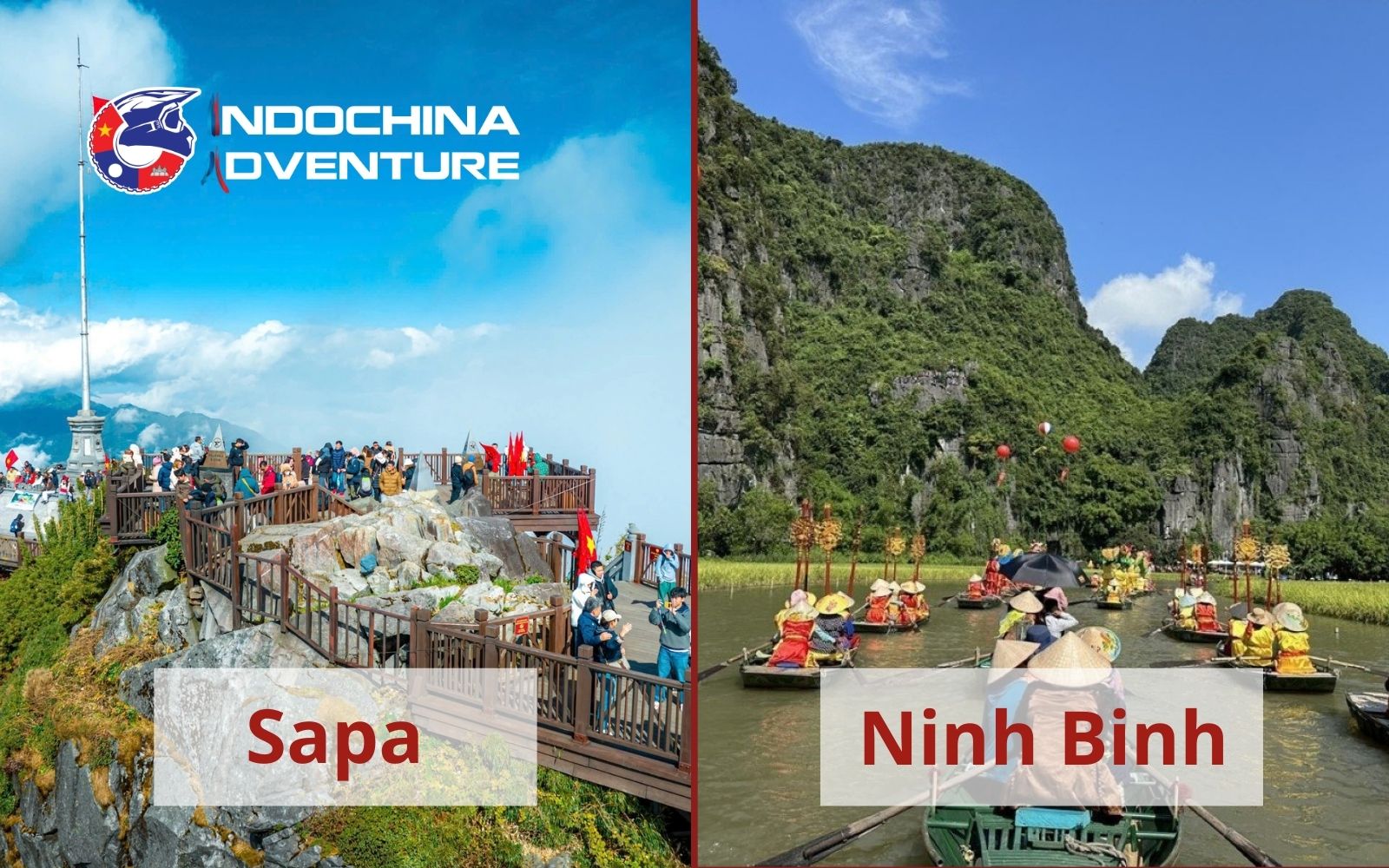
Enjoying the peaceful serenity of a remote and quiet mountain village
Cost and travel budget
Travel costs between Sapa and Ninh Binh differ mainly due to distance, length of stay, and activity expenses. Both destinations are affordable, but one clearly works better for shorter, lower-budget trips.
- Sapa: Expenses are higher because of longer transport, multi-day stays, and paid activities such as trekking tours or the Fansipan cable car. To get full value, travelers usually need a larger budget and at least three days in Sapa.
- Ninh Binh: Overall costs are lower thanks to short travel time from Hanoi and simple logistics. A 1 – 2 day trip typically covers transportation, accommodation, meals, and sightseeing at a relatively modest budget, making Ninh Binh motorbike routes ideal for cost-conscious travelers or tight schedules.
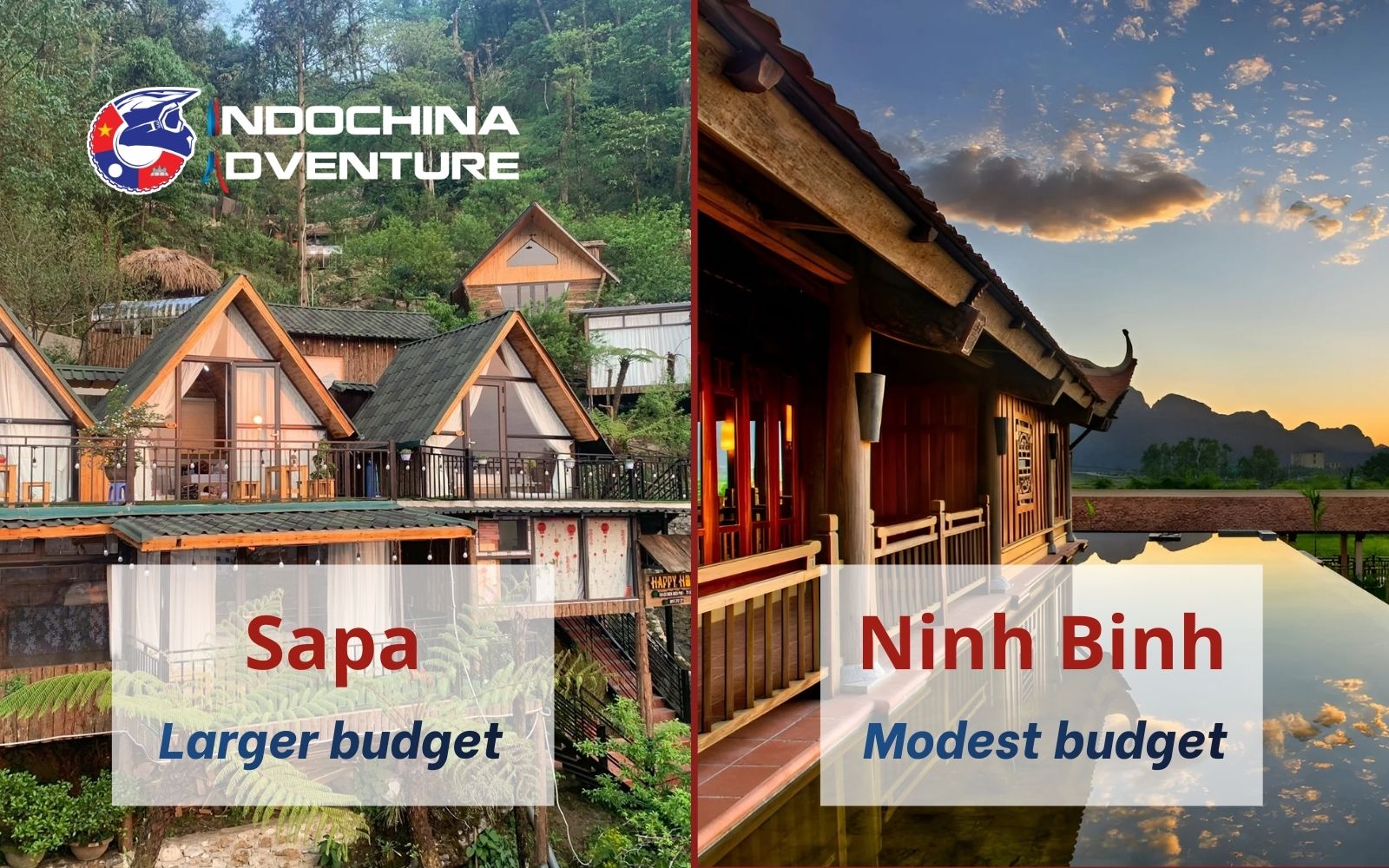
Affordable local street food and traditional homestays for the budget-conscious traveler
Related read: Ha Giang or Ninh Binh? A Clear Decision Guide for Travelers
Sapa or Ninh Binh — Which one should you choose?
Both locations offer a unique slice of Vietnam, but they cater to very different cravings.
- Choose Ninh Binh if: You are working with a tighter schedule (2 days or less) and prefer a mix of history and relaxation. It is the ideal choice for those who love drifting through river caves on a sampan, cycling through flat rural paths, or exploring ancient dynastic temples. Because of its proximity to the capital, the Hanoi to Ninh Binh motorbike route is a fantastic, low-stress ride for those who want a quick escape into nature without a full day of transit.
- Choose Sapa if: You crave the drama of the high mountains and have at least 3 – 4 days to spare. Sapa is perfect for active trekkers who want to sweat for their views, photography lovers obsessed with golden terraced rice fields and travelers looking for deep cultural interactions with the Hmong and Dao ethnic communities in a cooler, misty climate.
The verdict: If you simply can’t decide, why not do both? Combining them is easy: spend 2 days exploring the lowlands of Ninh Binh, then head back to the city to catch a sleeper bus or train for a 3-day adventure in the Sapa highlands for the ultimate Northern Vietnam experience.
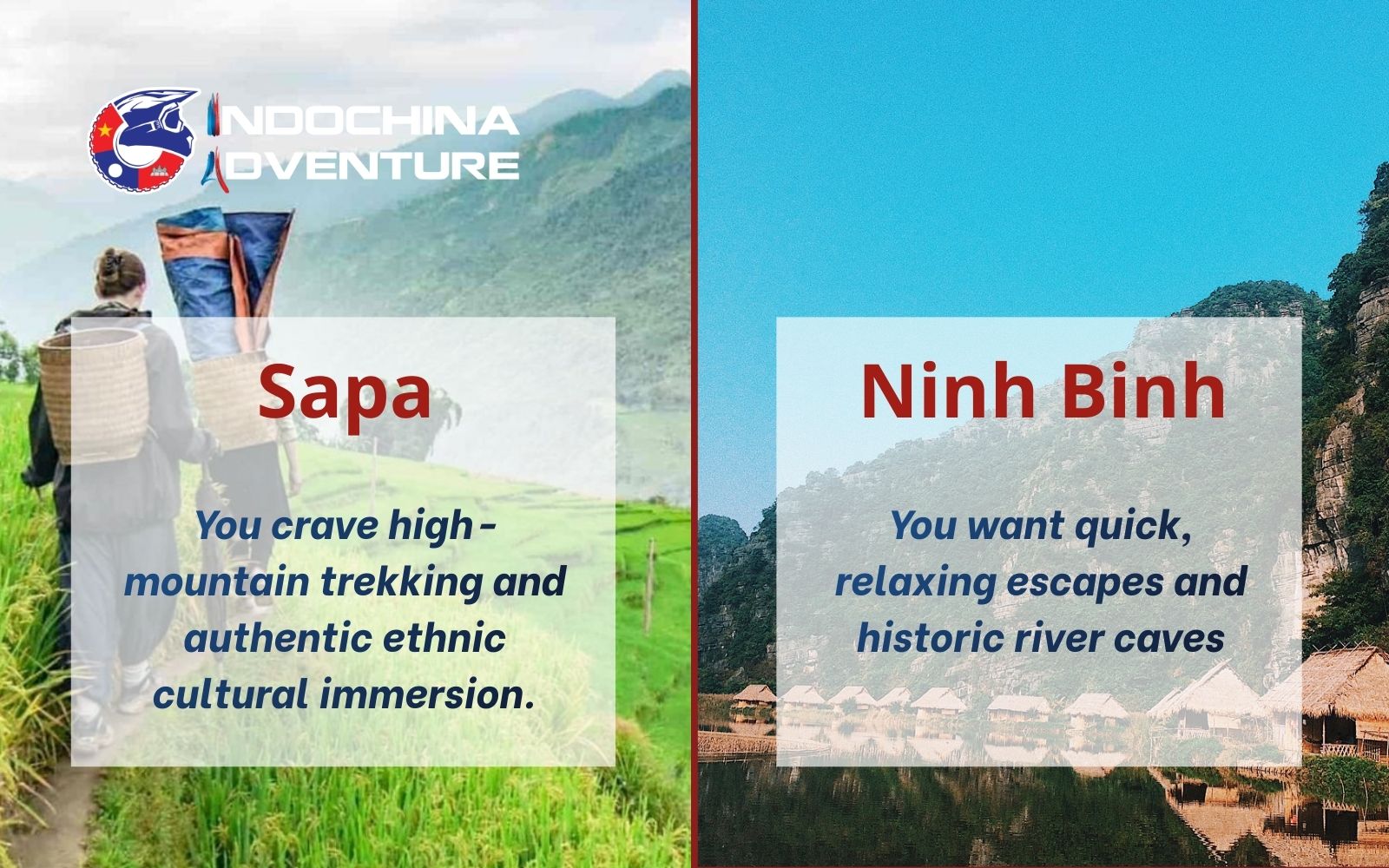
A side-by-side comparison of the majestic highlands and the tranquil lowlands
Travel Sapa and Ninh Binh the right way with Indochina Adventure
Exploring northern Vietnam becomes far more rewarding when your itinerary is thoughtfully designed around distance, terrain, and real on-the-ground experience. With Indochina Adventure, you can choose to explore Sapa, Ninh Binh, or a carefully paced combination of both, depending on time, interests and travel style.
- Sapa tours focus on mountain landscapes, ethnic culture and active exploration. These itineraries are ideal for travelers who want trekking, village immersion, scenic mountain roads and flexible pacing that goes beyond standard sightseeing.
- Ninh Binh tours are designed for shorter escapes and relaxed discovery. Routes highlight limestone karsts, river systems, temples, and countryside life, making them suitable for travelers seeking balance, comfort and cultural depth without long travel times.
- Combined Sapa & Ninh Binh journeys bring together lowland serenity and highland adventure in one seamless route. By structuring travel days efficiently and matching activities to each region’s strengths, Indochina Adventure helps you experience northern Vietnam in a logical, unrushed way.
Whether you prefer a focused destination or a multi-region journey, Indochina Adventure emphasizes local knowledge, responsible travel and well-paced routes, ensuring each trip feels authentic rather than rushed.

Indochina Adventure – Professional guides leading an unforgettable journey through the heart of the North
The choice “Sapa or Ninh Binh” depends on whether you seek the high-altitude thrill of the mountains or the poetic tranquility of ancient river valleys. Sapa offers a rugged, cultural immersion into the clouds, while Ninh Binh provides a serene escape through some of the most iconic landscapes in Southeast Asia. Whichever path you choose, Northern Vietnam promises an encounter with nature that will stay with you long after the journey ends.
Reach out to Indochina Adventure today to co-create your bespoke Northern Vietnam itinerary and let our local experts lead the way to your next great discovery.

The Ma Pi Leng Pass viewpoint is one of Vietnam’s most breathtaking mountain viewpoints, known for its towering limestone cliffs and sweeping river scenery. Along the Ha Giang loop tour, this route features several must-stop Ma Pi Leng Pass viewpoints that reveal different angles of the landscape. In this guide of Indochina Adventure, you’ll find the best stops, safety tips, and the ideal timing photos for your next motorcycle adventure tours.
Where Is Ma Pi Leng Pass Viewpoint Located?
The Ma Pi Leng Pass viewpoint is situated on National Highway 4C, specifically the section known as the Happiness Road, connecting Dong Van and Meo Vac districts. This iconic Ma Pi Leng Pass view point sits at an altitude of about 1,200 meters, perched on the rugged cliffs of the Dong Van Karst Plateau Geopark.
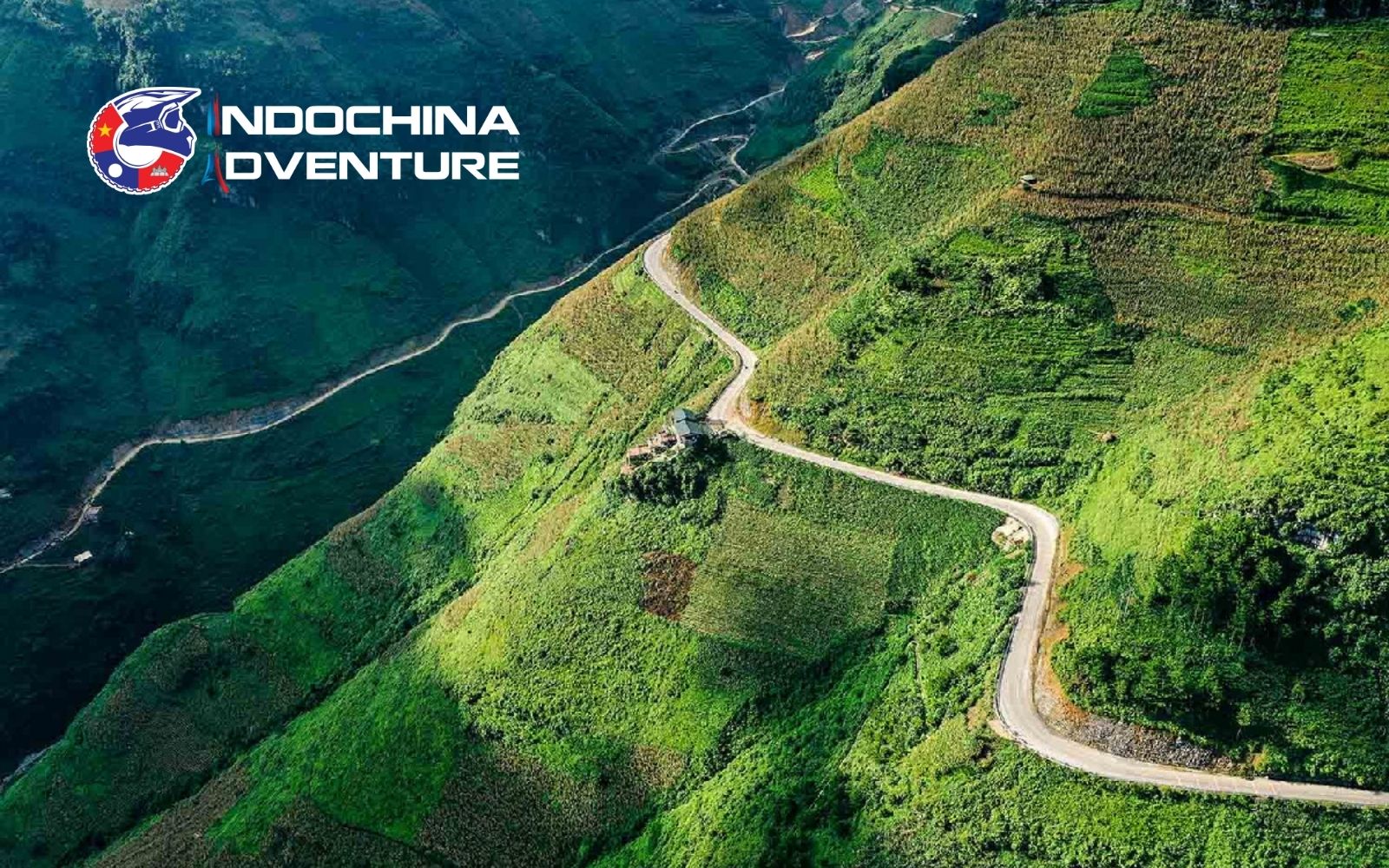
The Ma Pi Leng Pass viewpoint is located on the Happiness Road (Highway 4C)
The Best Ma Pi Leng Pass Viewpoints You Should Stop At
The Classic Viewpoint Over the Nho Que River
This is the most famous viewpoint Ma Pi Leng Pass offers when you join the Northern Vietnam motorbike tour, featuring a stone monument and a rest stop where you can look directly down at the emerald Nho Que River. From this scenic viewpoint, the river looks like a tiny green thread winding through the deep abyss of Tu San Canyon. It is the perfect spot to appreciate the sheer scale of the mountains while standing on a safe, paved platform.
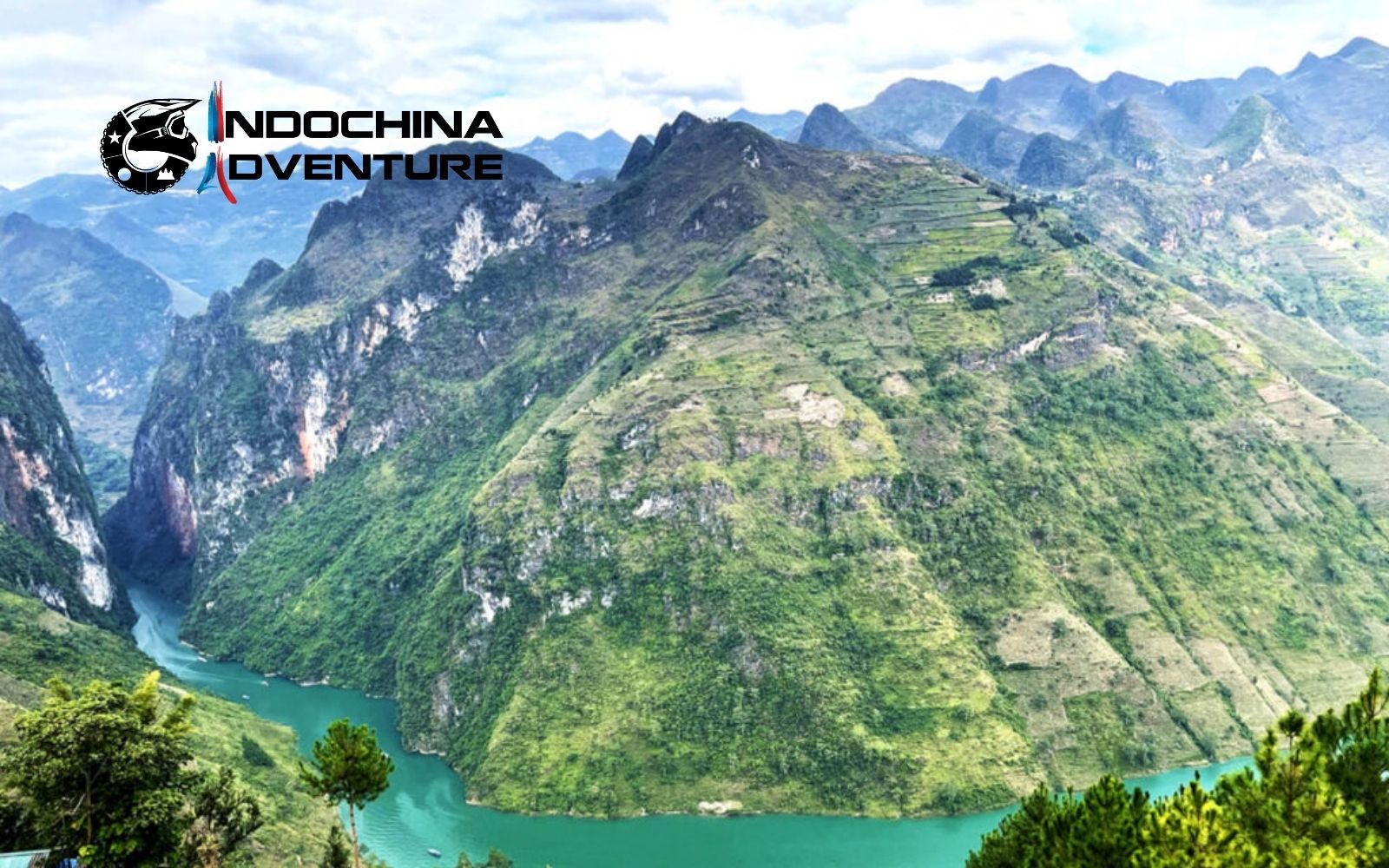
Classic viewpoint Ma Pi Leng Pass stop offers a direct, dizzying view of the emerald Nho Que River
Panorama Viewpoints Along the Dong Van – Meo Vac Section
As you ride along the ridge, several unofficial Ma Pi Leng Pass viewpoints provide a 360-degree perspective of the limestone peaks and winding roads. Stopping at a random Ma Pi Leng Pass lookout along this stretch is one of the best things to do in Ma Pi Leng Pass that allows you to appreciate the rugged beauty of the karst landscape without the crowds. These roadside stops offer the most authentic Ma Pi Leng Pass view, where you can see the “Happiness Road” snaking through the gray rock formations.
Skywalk Area Viewpoints Near Ma Pi Leng
For those seeking adventure during Vietnam motorbike trip, the Skywalk path leads to a high-altitude Ma Pi Leng viewpoint that feels like standing on top of the world. This Ma Pi Leng Pass view is unparalleled, offering a bird’s-eye perspective of the hairpin bends and the dramatic vertical cliffs below. Although the path is narrow, the reward is a unique Ma Pi Leng Pass viewpoint Vietnam experience that captures the most cinematic angles of the entire region.
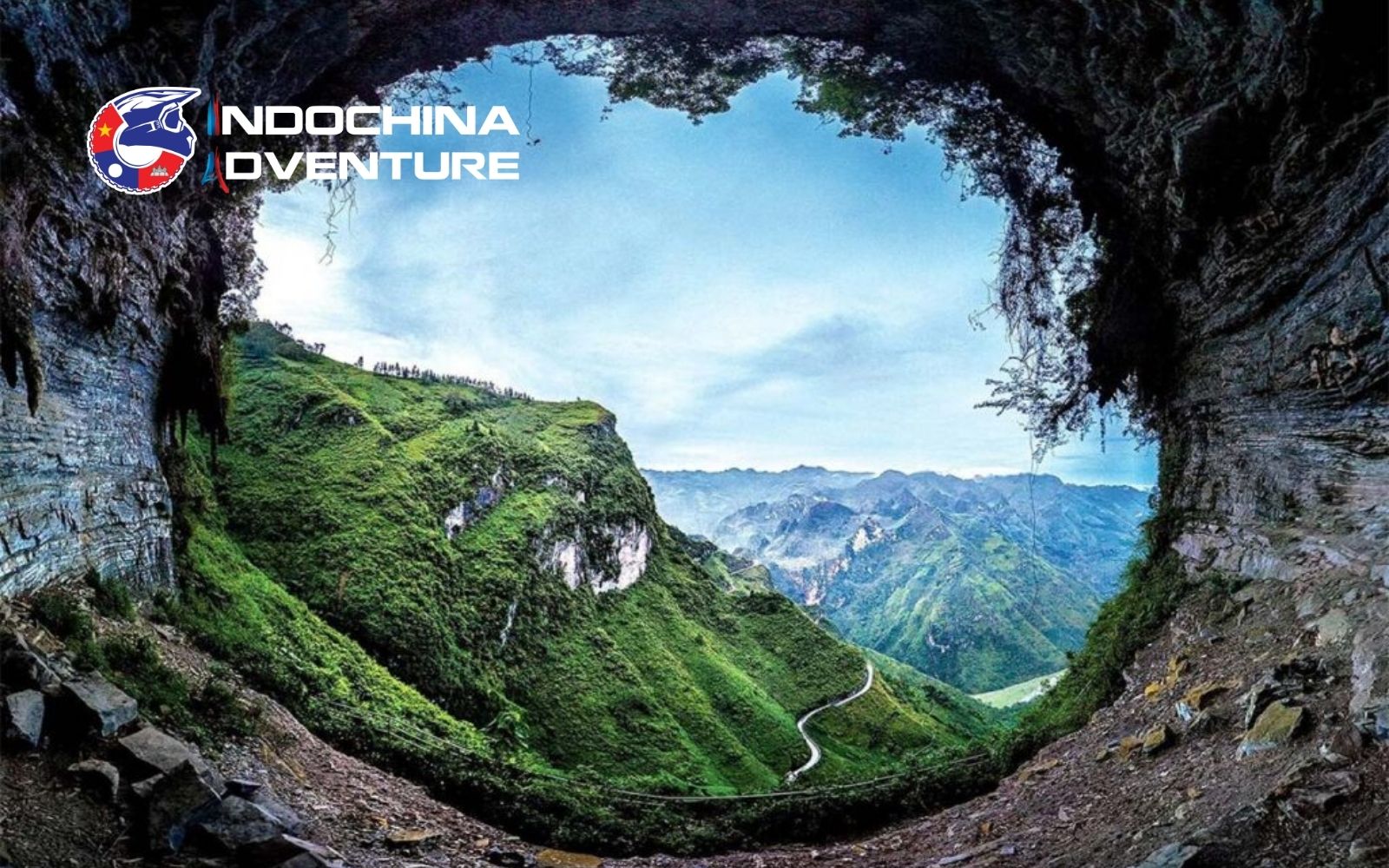
Reaching the Skywalk area rewards you with an elevated viewpoint that overlooks the most dramatic cliffs
Is the Ma Pi Leng Pass Viewpoint Safe to Visit?
Visiting the Ma Pi Leng Pass viewpoint is generally safe provided you maintain a controlled speed and strictly adhere to local safety guidelines. Most official Ma Pi Leng Pass viewpoints are equipped with sturdy protective barriers, but you must remain vigilant at any unofficial Ma Pi Leng Pass lookout where the terrain can be uneven. Always check your brakes and stay alert for local traffic to ensure your experience at this pass remains a highlight of your trip.
To ensure the highest level of safety and peace of mind, we highly recommend joining a professional tour with Indochina Adventure. Our experienced local guides know every curve of the road and will lead you to the best Ma Pi Leng Pass viewpoint locations while managing all the technical risks of the journey.

Best Time of Day to Visit Ma Pi Leng Pass Viewpoint
The beauty of the Ma Pi Leng Pass viewpoint shifts noticeably throughout the year, offering different moods depending on when you visit. The best time to visit Ma Pi Leng Pass might be during one of the following periods of the year:
- October – April: Dry weather, cooler temperatures, and clearer skies make this period perfect for enjoying a sharp Ma Pi Leng Pass view and capturing wide-angle photos.
- May – September: After seasonal rains, the mountains surrounding the Ma Pi Leng viewpoint turn vibrant green, while early-morning mist creates a soft, atmospheric look.
- Sunrise & Late Afternoon: These golden hours bring gentle light and long shadows, enhancing the depth of the pass scenic viewpoint and creating a calm, unforgettable experience in your Dong Van motor tour.
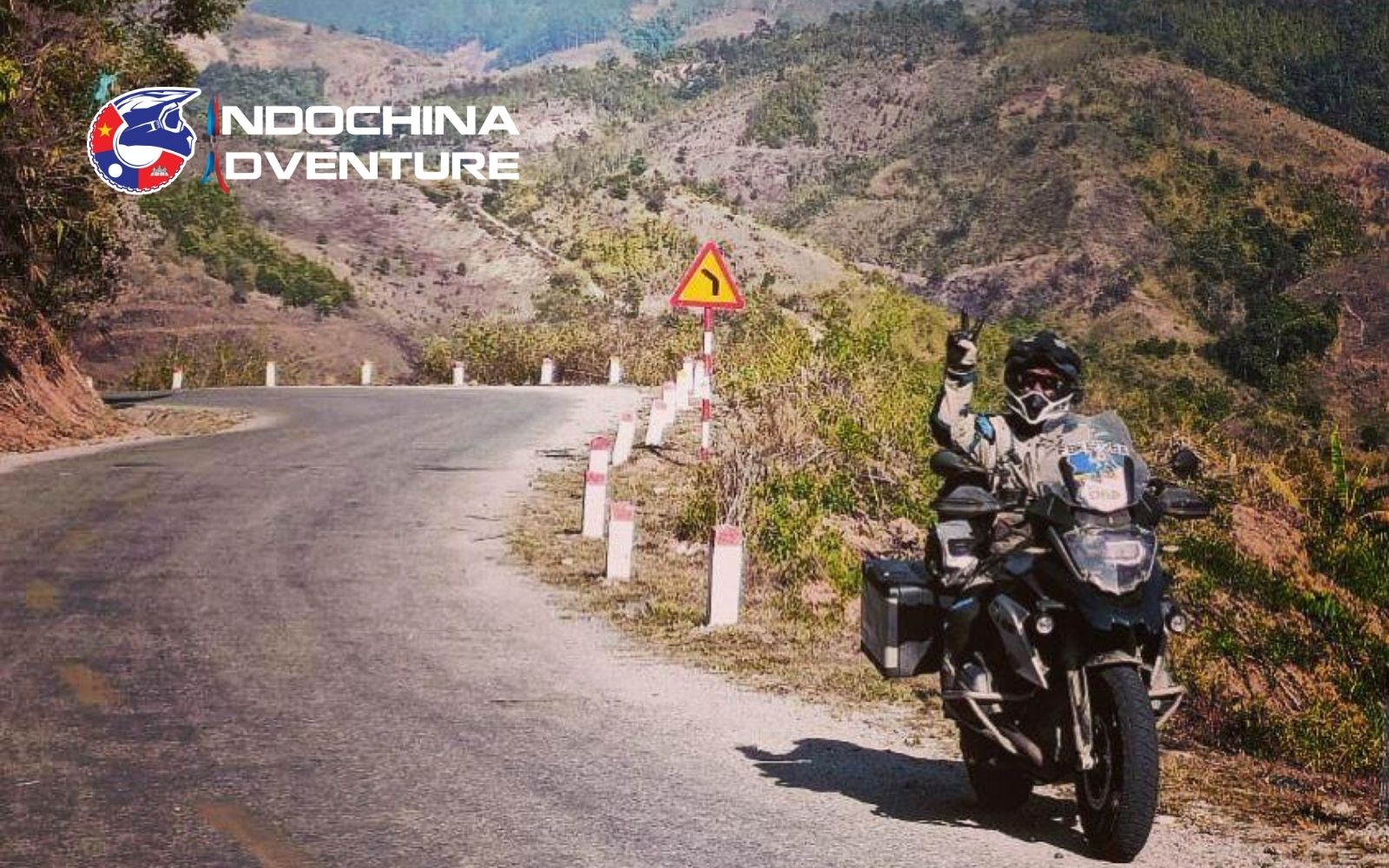
Timing matters, as light and weather strongly affect visibility and the quality of the Ma Pi Leng Pass view
Common Mistakes Travelers Make at Ma Pi Leng Pass Viewpoints
Even though the journey is spectacular, many visitors miss out on the full experience or encounter unnecessary risks due to a few simple oversights. To ensure your trip to is both breathtaking and stress-free, the Ma Pi Leng travel tips below noted what you should avoid these frequent pitfalls:
- Stopping at Dangerous Bends: Many travelers pull over abruptly on sharp curves instead of riding a few meters further to a designated Ma Pi Leng Pass lookout, which creates hazards for other vehicles.
- Underestimating the Fog: It is a mistake to head to a Ma Pi Leng viewpoint during heavy mist expecting it to clear quickly. Often, you’ll find the entire Ma Pi Leng Pass view completely white and invisible.
- Rushing the Experience: Many people only stop at the first viewpoint landmark they see, missing out on the quieter, more dramatic vistas found further along the Skywalk or toward Meo Vac.
- Ignoring Gear Prep: Failing to bring a light jacket or a lens cloth is a common error, as the temperature at a high-altitude best Ma Pi Leng Pass viewpoint can drop suddenly, and mist can quickly smudge your camera lens.
Experience the Ma Pi Leng Pass Viewpoints by Motorcycle With Indochina Adventure
The raw power of Ha Giang is best felt with the wind in your face and the vast horizon of the Ma Pi Leng Pass view stretched out before you. Indochina Adventure transforms a simple drive into a deep exploration of the “King of Passes” connecting you intimately with the limestone giants and deep canyons of the north. We take pride in guiding you to the most majestic pass viewpoint locations, ensuring your Ma Pi Leng Pass motorbike tours are defined by awe-inspiring moments rather than the stress of navigation.
- Skilled Easy Riders: Our local experts manage the treacherous curves, allowing you to focus entirely on the pass scenic viewpoint unfolding around you.
- Safety-First Fleet: We provide high-performance motorcycles and rigorous safety equipment, making every stop at a Ma Pi Leng Pass lookout a secure and confident experience.
- Beyond the Map: Our guides reveal the best viewpoint spots tucked away from the main tourist crowds for a truly serene connection with nature.
- Perfect Timing: We coordinate your arrival at each Ma Pi Leng viewpoint to coincide with the most favorable weather and lighting conditions for your trip.
Indochina Adventure provides the expertise and local knowledge needed to turn a standard road trip into a legendary mountain expedition. You can rely on our professional support to experience the very best of the Ma Pi Leng Pass viewpoint Vietnam.

Discover every hidden Ma Pi Leng Pass lookout safely on a professional motorcycle tour with Indochina Adventure
FAQs
1. Where is the best viewpoint?
The most complete Ma Pi Leng Pass view is found near the Ma Pi Leng Museum and along the high-altitude Skywalk path, which offers a direct look down into Tu San Canyon.
2. Is Ma Pi Leng Pass viewpoint dangerous?
The official viewpoint areas are safe for visitors, though travelers must remain cautious of traffic and steep edges when stopping at any roadside pass lookout.
3. Can cars stop at Ma Pi Leng viewpoints?
Yes, cars can stop at the larger scenic viewpoint areas where there is designated space, but smaller motorbikes have much easier access to the narrowest observation points.
4. What time is best for photos at Ma Pi Leng Pass viewpoint?
For the most vibrant colors, visit a Ma Pi Leng viewpoint during the golden hours of sunrise or late afternoon when the sunlight emphasizes the textures of the limestone mountains.
Standing at a Ma Pi Leng Pass viewpoint is a life-changing experience that captures the true essence of Vietnam’s wild and rugged northern frontier. From the emerald waters of the Nho Que River to the towering limestone peaks, every Ma Pi Leng Pass view tells a story of nature’s immense power and beauty. Book your Northeast Vietnam motorcycle tours with Indochina Adventure today to ensure you don’t miss a single spectacular moment at the best spot on the Ma Pi Leng Pass.
If you are planning a trip to Ha Giang, timing your visit with the famous festivals in Dong Van is the best way to witness the local culture at its peak. Known for their unique musical instruments and stunning ethnic costumes, Dong Van festivals provide a deep connection to the history of the Karst Plateau. This Dong Van festival travel guide of Indochina Adventure will highlight the top 4 must-see events to help you plan an unforgettable adventure motorcycle riding through the land.
The Most Famous Dong Van Festivals You Should Know
H’Mong Khen (Pan Pipe) Festival in Dong Van Plateau
- Time: Late March – early April
The Khen is the most iconic musical instrument of the H’Mong people you must join during the Ha Giang Loop tour, and this festival is a dedicated stage for their artistry. This Dong Van festival experience centers around a spirited competition where men perform acrobatic dances while playing the panpipe. The music is a language of love and history, echoing through the mountains. Meanwhile, women and children gather in their most elaborate, colorful handmade skirts, creating a vibrant atmosphere that makes it one of the most famous festivals in Dong Van.
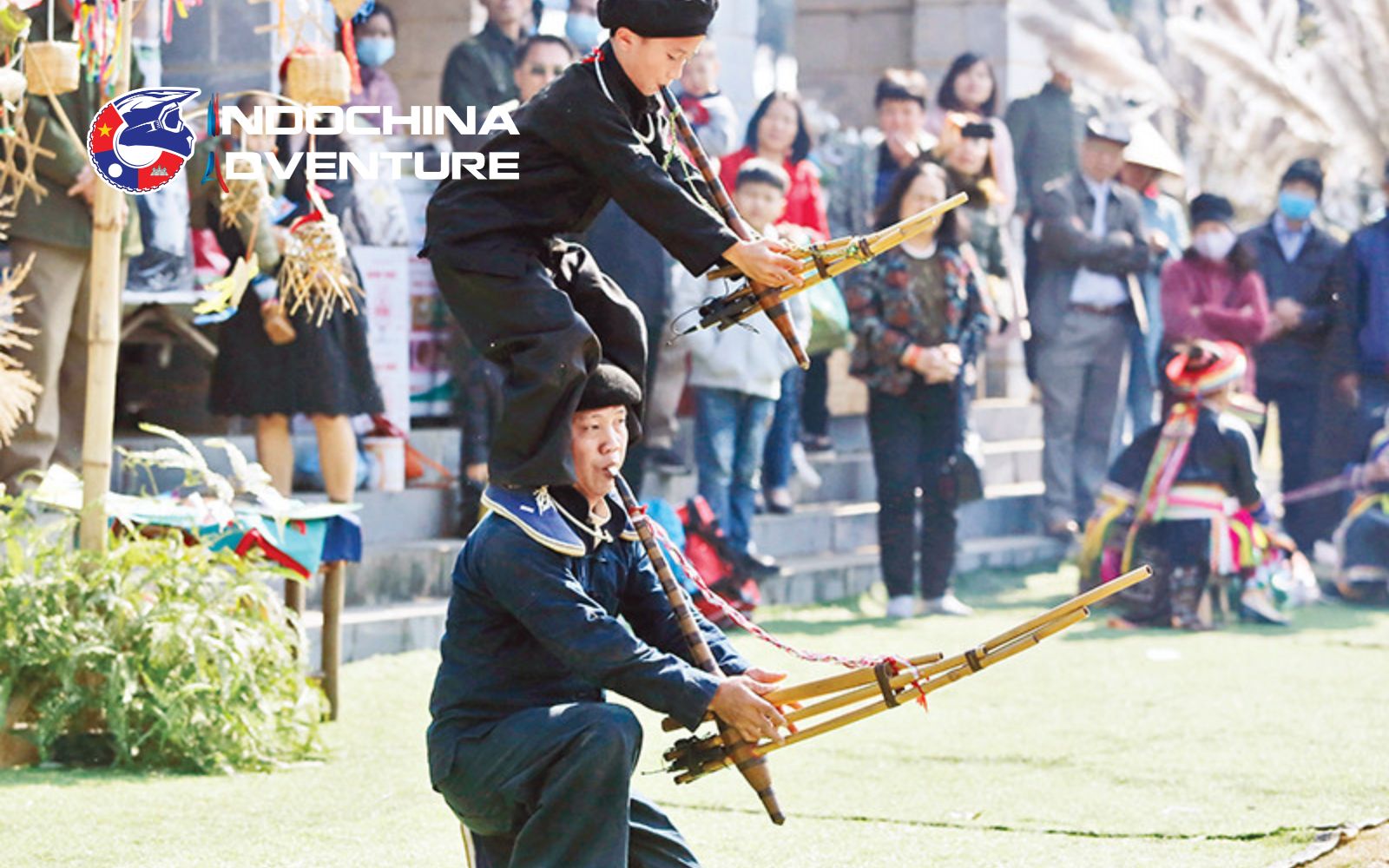
H’Mong Khen is one of the most iconic Dong Van festivals, highlighting pan pipe music and H’Mong cultural identity
Lunar New Year and Ethnic New Year Festivals in Dong Van
- Time: Late January – February (Lunar Calendar)
Lunar New Year celebrations are the spiritual heart of Dong Van traditional festivals. Alongside Tet, many ethnic groups such as the H’Mong, Tay, and Dao celebrate their own New Year with rituals, folk games, and ancestral offerings. These Dong Van cultural festivals highlight beliefs about renewal, luck, and family unity, making them a meaningful part of any motorcycle tour in Vietnam.
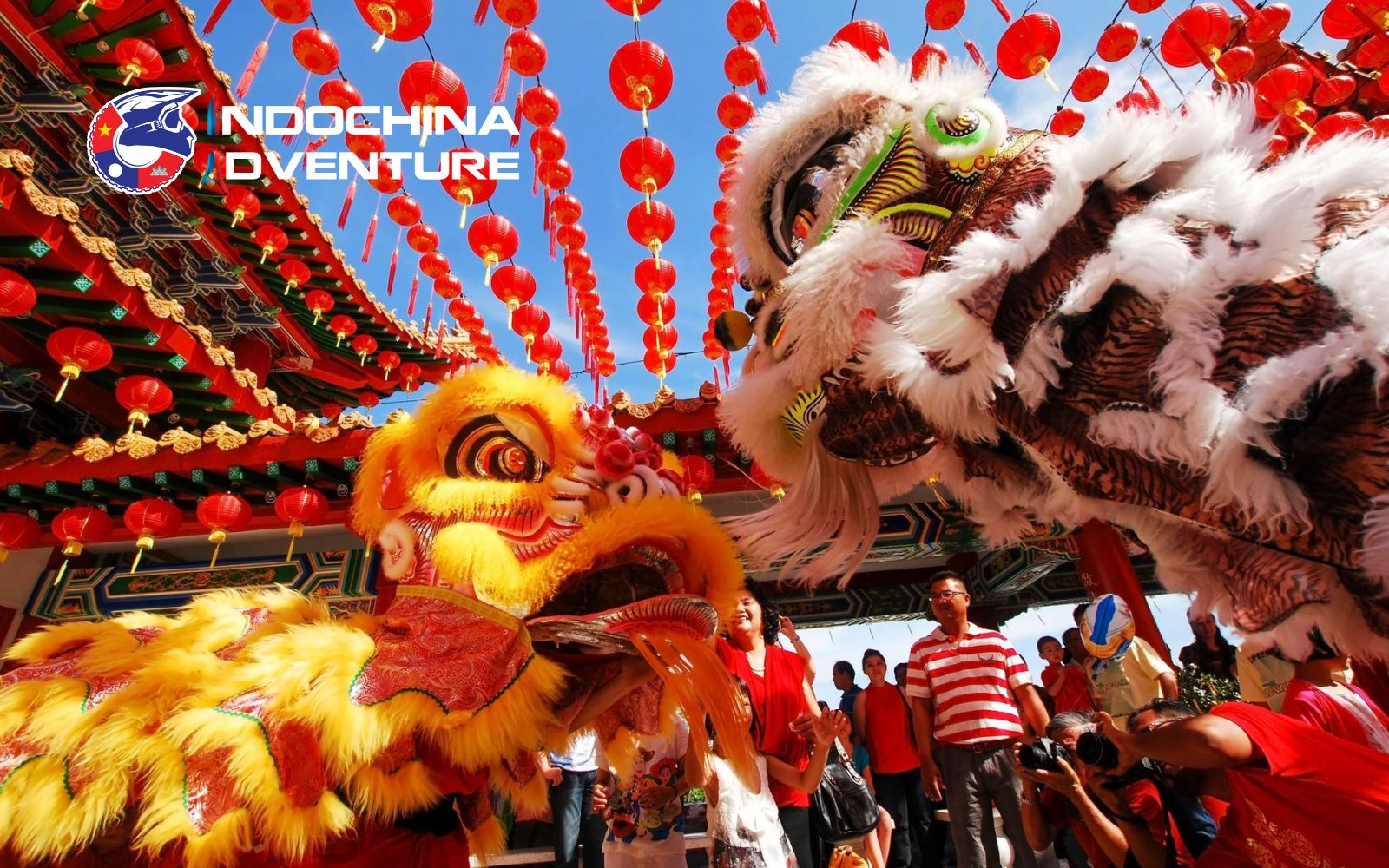
These New Year celebrations reflecting spiritual beliefs and community life
Dong Van Spring Festivals After Tet
- Time: February – March
Once the main Tet rituals conclude, the Dong Van festivals enter their most festive phase with various folk games. This is a time for a lot of things to do in Dong Van through activities like “Pau Play” (throwing cloth balls), horse racing, and crossbow shooting. These Dong Van festivals Vietnam are less about formal ceremony and more about joy, laughter, and the chance for young men and women to find their life partners through soulful “Sli” and “Lượn” singing exchanges during North Vietnam motorcycle tours.
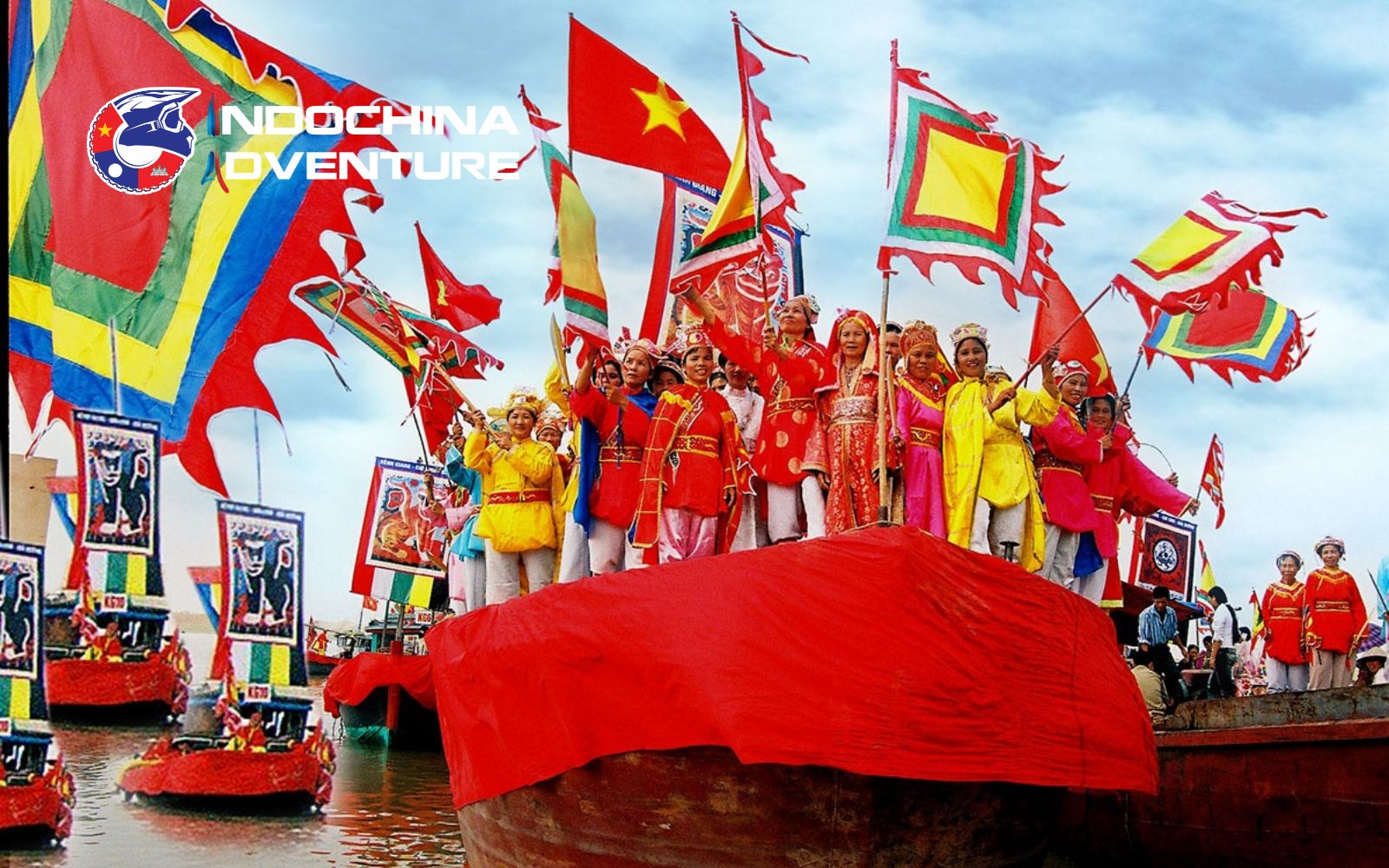
Spring events are lively festivals in Dong Van marking renewal through folk games and traditional music
Dong Van Old Quarter Market Festivals
- Time: Weekends and special lunar market days (year-round)
The ancient town became the heart of Dong Van traditional festivals during market days. Unlike a typical commercial market, these festivals are a social hub where people from remote peaks travel miles to meet friends and relatives. You can see the full diversity of the region’s ethnic costumes in one place. It is a sensory Dong Van festival travel guide come to life, filled with the sounds of bargaining, the smell of “Thang Co” (horse stew), and the sight of locals sharing bowls of corn wine.
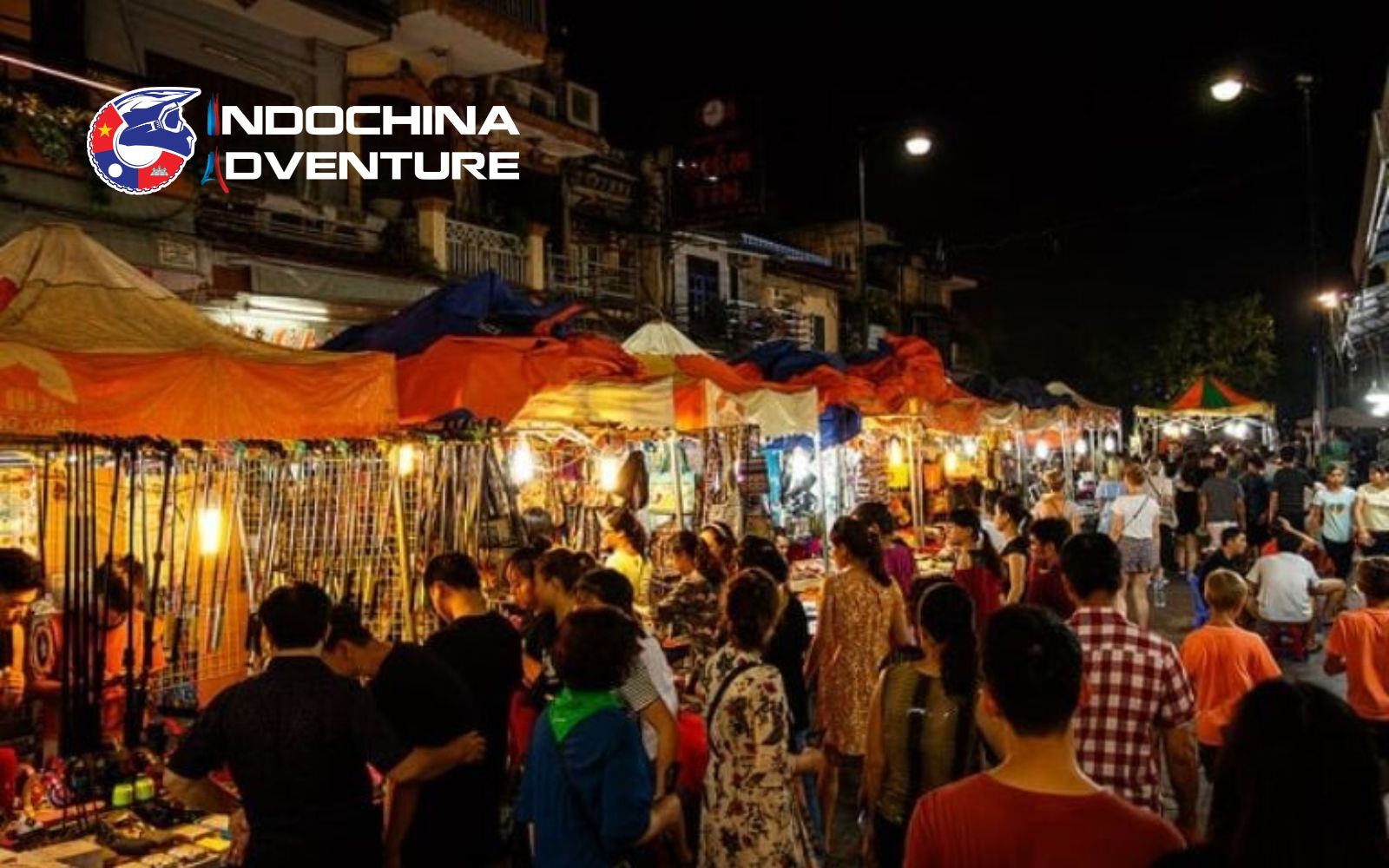
Dong Van Old Quarter Market Festivals transform the ancient town into a colorful hub
Read more: Top 7+ Places to Visit in Dong Van You Shouldn’t Miss
What Travelers Should Expect When Visiting Dong Van During Festivals?
During festival seasons, villages become lively gathering spaces where traditions, music, and costumes shape an unforgettable Dong Van festival experience. Here’s Dong Van travel guide that travelers should be prepared for when planning their trip:
- Bustling village centers during peak festivals in Dong Van, especially on weekends.
- Locals wearing elaborate ethnic costumes throughout the day.
- Traditional music performances happening spontaneously, not just on stages.
- Limited hotels and homestays, early booking is essential for any Dong Van festival travel guide.
- Friendly interactions, but respectful behavior is expected at all Dong Van cultural festivals.
- Cool mountain weather, especially at night, even during spring festival season.
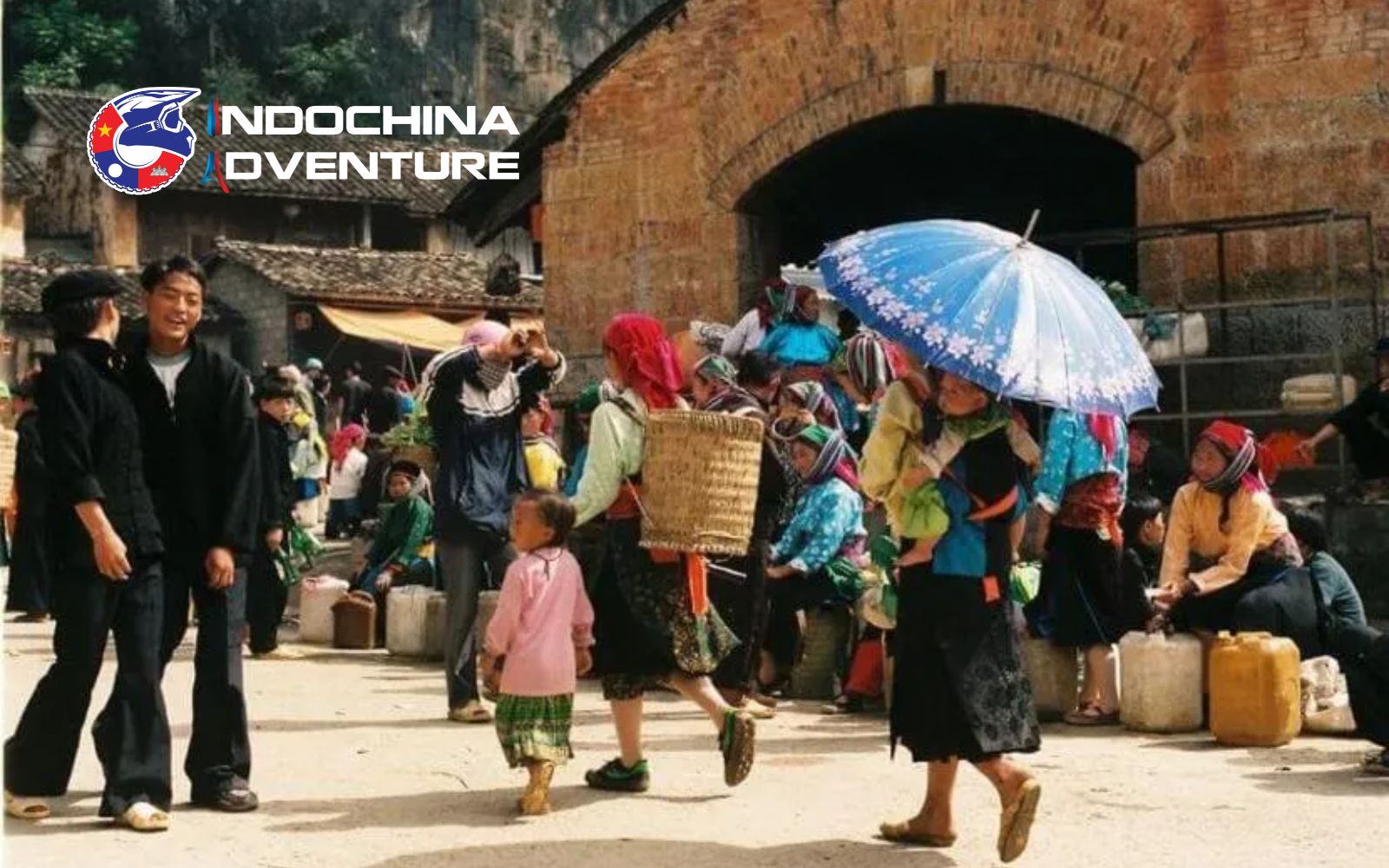
Visitors will experience a high energy atmosphere filled with large crowds and stunning displays of traditional fashion
Ride to Dong Van’s Famous Festivals With Indochina Adventure Tours
Navigating the winding mountain passes to reach the most famous festivals in Dong Van requires both skill and local expertise. Indochina Adventure Tours specializes in creating seamless journeys that take you beyond the typical tourist paths and straight into the heart of Dong Van cultural festivals. Our team ensures you don’t just watch the festivities from the sidelines but truly engage with the soul of the festivals through motorbike tour Dong Van.
- Expert Local Guides: Our guides speak the local dialects and have deep connections within the ethnic communities, granting you exclusive access to private rituals during festivals in Dong Van in Northeast Vietnam motorbike tour.
- Tailor-made Itineraries: We synchronize your travel dates with the lunar calendar to ensure your Dong Van festival experience aligns perfectly with peak celebration times.
- Safe and Thrilling Transport: Whether you prefer a rugged motorbike adventure or a comfortable private car, we handle the challenging terrain of Dong Van festivals Vietnam with professional ease.
- Authentic Stays: We skip the generic hotels to provide stays in traditional homestays, allowing you to wake up right in the middle of the Dong Van traditional festival atmosphere.
Book your professional tour today to secure the best vantage point for the upcoming festive season. Experience the majestic beauty and vibrant heritage of the north by joining our specialized Dong Van festival travel guide expedition.
Indochina Adventure Tours provides expert guidance help you to reach the heart of every festival in Dong Van
FAQs about Dong Van Festivals
1. What is the most famous festival in Dong Van?
The H’Mong Khen (Pan Pipe) Festival is widely considered the most iconic event, celebrating the spiritual music and incredible dancing skills of the H’Mong people. It is a cornerstone of famous festivals in Dong Van.
2. When is the best time to visit Dong Van for festivals?
The ideal time is during the Spring (January to March) for the Lunar New Year celebrations or in early September/October for the vibrant autumn Dong Van cultural festivals.
3. Are Dong Van festivals crowded?
Yes, festivals in Dong Van attract many locals from surrounding villages and curious travelers, so expect a bustling, high-energy atmosphere at the main festival sites.
4. Can travelers join Dong Van festivals?
Absolutely, visitors are encouraged to observe and take part in the communal joy. Most Dong Van traditional festivals are open to the public, provided you show respect for local customs and sacred rituals.
The Dong Van festivals serve as a breathtaking gateway into the soul of the northern mountains. Attending these festivals in Dong Van allows you to witness centuries-old traditions and the vibrant beauty of ethnic heritage firsthand. Reach out to Indochina Adventure Tours today to secure your spot at the next legendary Dong Van festival experience.
After a long day of conquering the legendary Ha Giang Loop, perhaps as part of our challenging off-road motorcycle adventure tours, you might wonder what to do at night in Dong Van to make the most of your stay. The Dong Van nightlife scene is a fascinating mix of quiet stone streets, glowing lanterns, and the aromatic scent of local street food drifting through the cool mountain air. If you’re wondering about nightlife in Dong Van, this guide of Indochina Adventure will help you understand what really happens after dark.
Things to do at night in Dong Van
Dong Van takes on a different charm after sunset, offering quiet moments and local experiences rarely seen during the day. For travelers on a motorcycle tour in Vietnam, the town’s evenings provide a chance to slow down, connect with local life, and enjoy the highland atmosphere. Nighttime in Dong Van is simple, authentic, and deeply memorable.
Explore Dong Van Old Quarter at night
The Old Quarter is the soul of Dong Van at night, where century-old houses are beautifully illuminated by the soft glow of red lanterns. Walking through these ancient streets is one of the most memorable things to do in Dong Van, as you feel the blend of history and the gentle nightlife through local handicraft stalls.
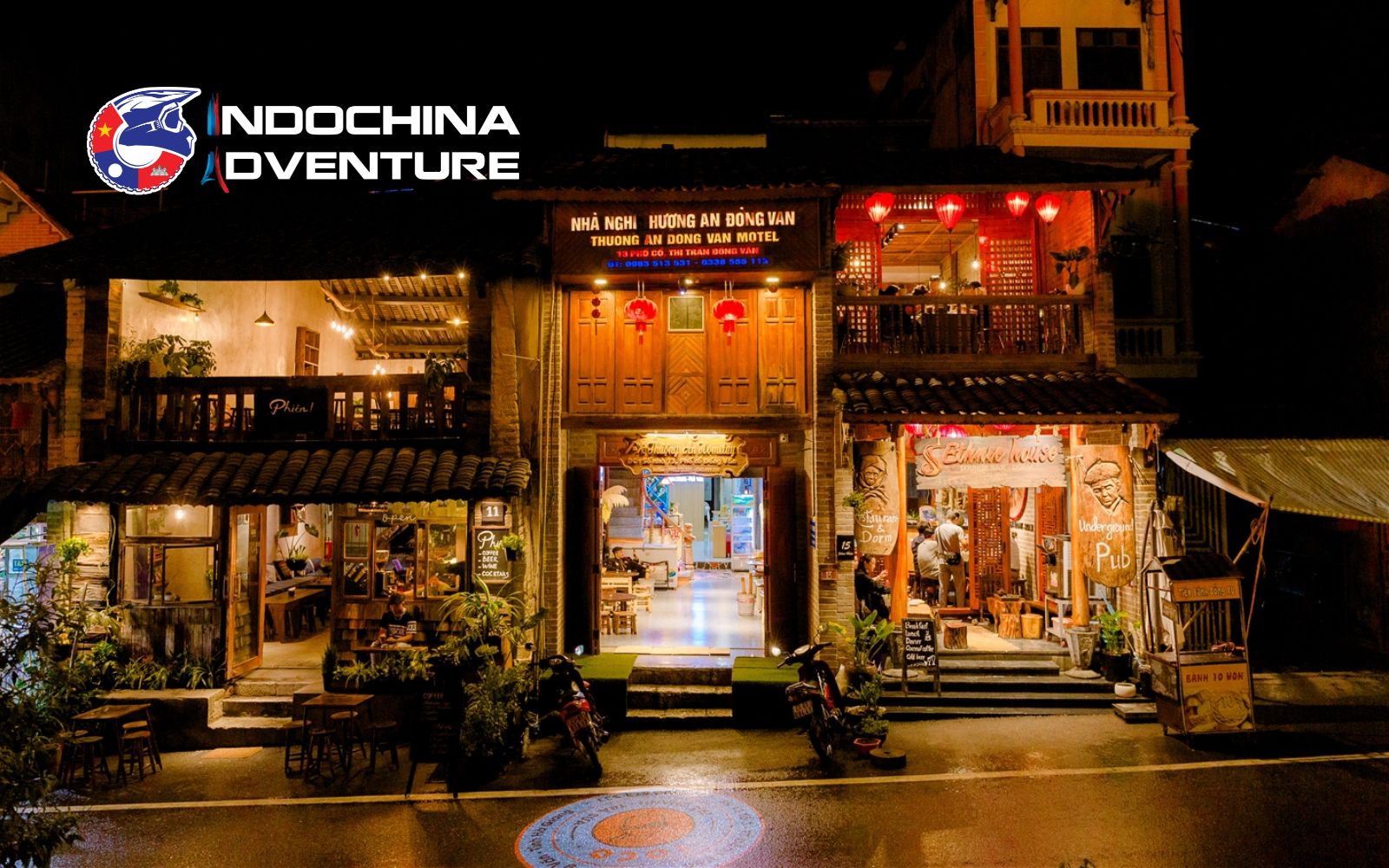
The Old Quarter becomes the most vibrant part of Dong Van at night
The atmosphere here is peaceful yet engaging, making it one of the best Dong Van night activities for those who love photography, especially during a Ha Giang Loop tour. It is a unique place where time seems to slow down under the starry highland sky.
Join bonfires and dancing in Dong Van Old Quarter
Visitors can often find communal bonfires and traditional dancing performances organized right in the heart of the town. This lively atmosphere is a highlight of Dong Van night activities, where ethnic groups share their music and heritage with travelers.
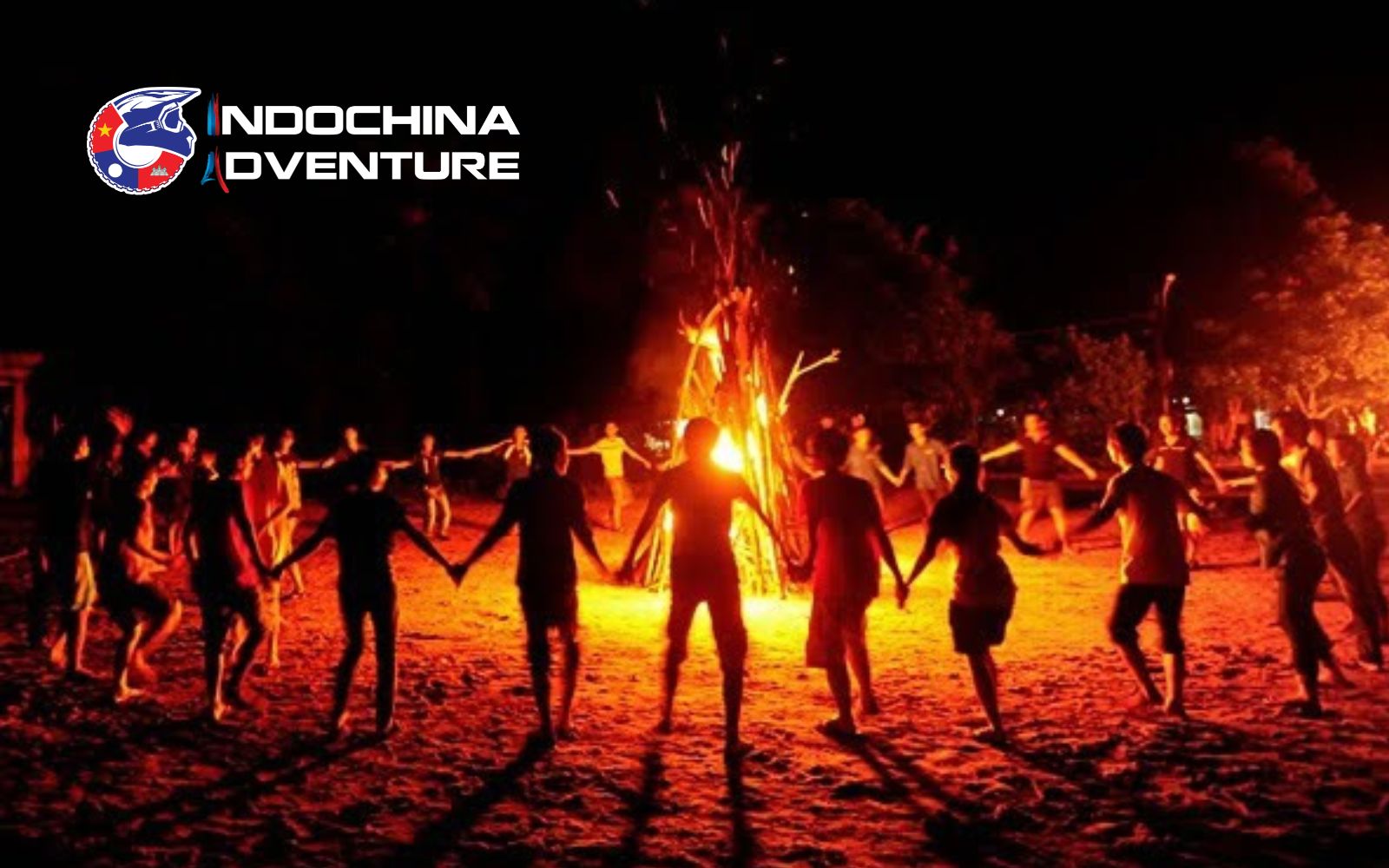
Locals and travelers enjoy a warm bonfire and traditional music in the heart of Dong Van at night
Joining the dance circle around the fire is the best way to immerse yourself in the Dong Van night experience. These cultural exchanges create an energetic and unforgettable Dong Van night scene for everyone involved.
Enjoy local food and simple evening meals
One of the most authentic parts of the Dong Van night experience is gathering around a warm charcoal stove to enjoy hot grilled snacks. You should not miss trying “Thang Co” or colorful sticky rice, which are definite highlights of Dong Van evening activities and a must-try for anyone exploring the region on north Vietnam motorcycle tours.
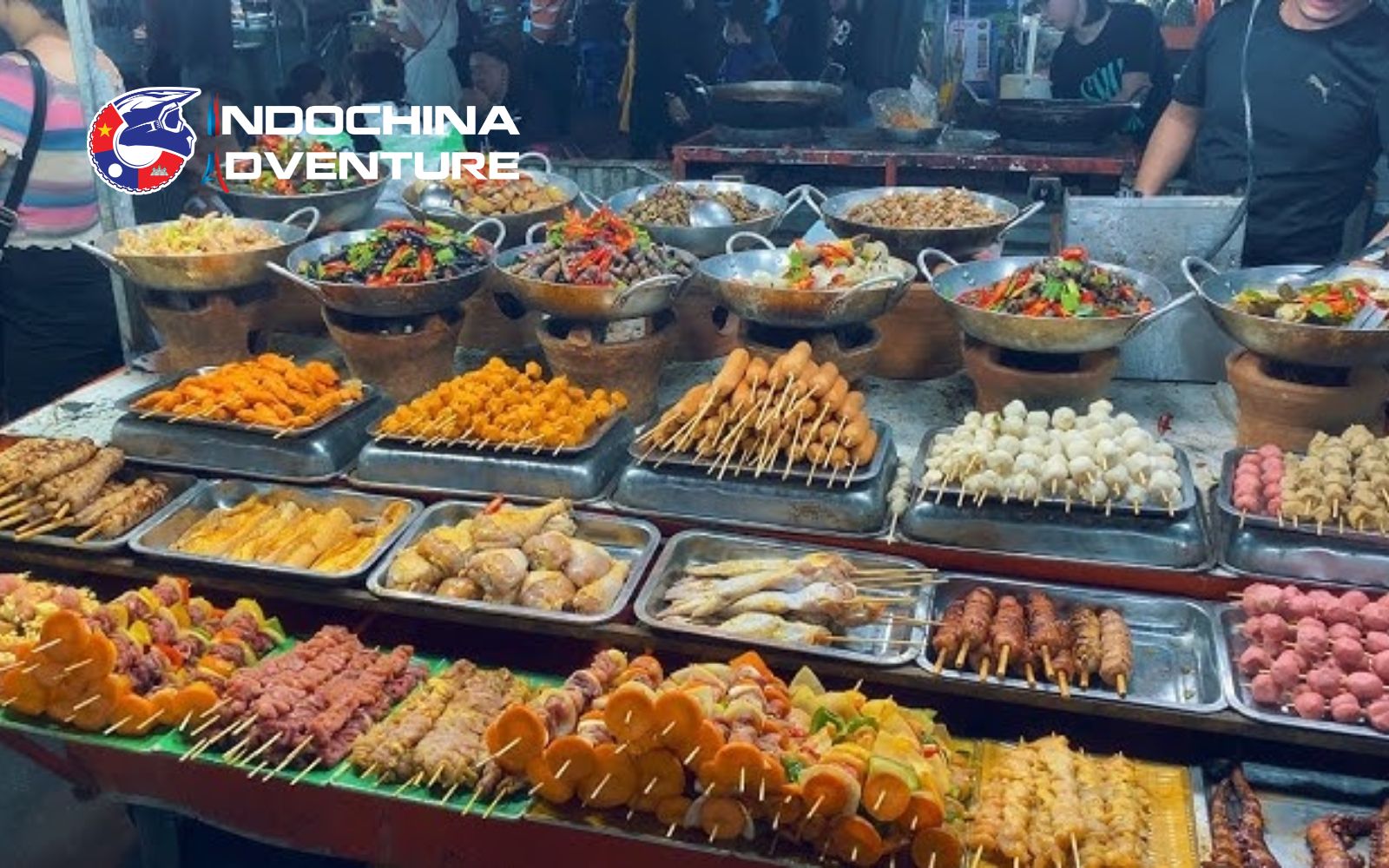
Local eateries offer the most authentic Dong Van night experience through traditional highland flavors
These simple, flavorful meals provide a cozy feeling amidst the chilly mountain air of the northern frontier. Sampling local street food is truly the heart of the Dong Van night scene, connecting travelers to the land.
Don’t miss: 10+ Best Restaurants in Dong Van and Meo Vac: Unforgettable Dining Experiences
Sit at a local cafe or tea spot
For a quieter part of Ha Giang loop nightlife, finding a seat in a rustic cafe overlooking the central market is an excellent choice. Many travelers enjoy sipping hot corn wine or a cup of traditional tea while observing the quiet local life passing by.
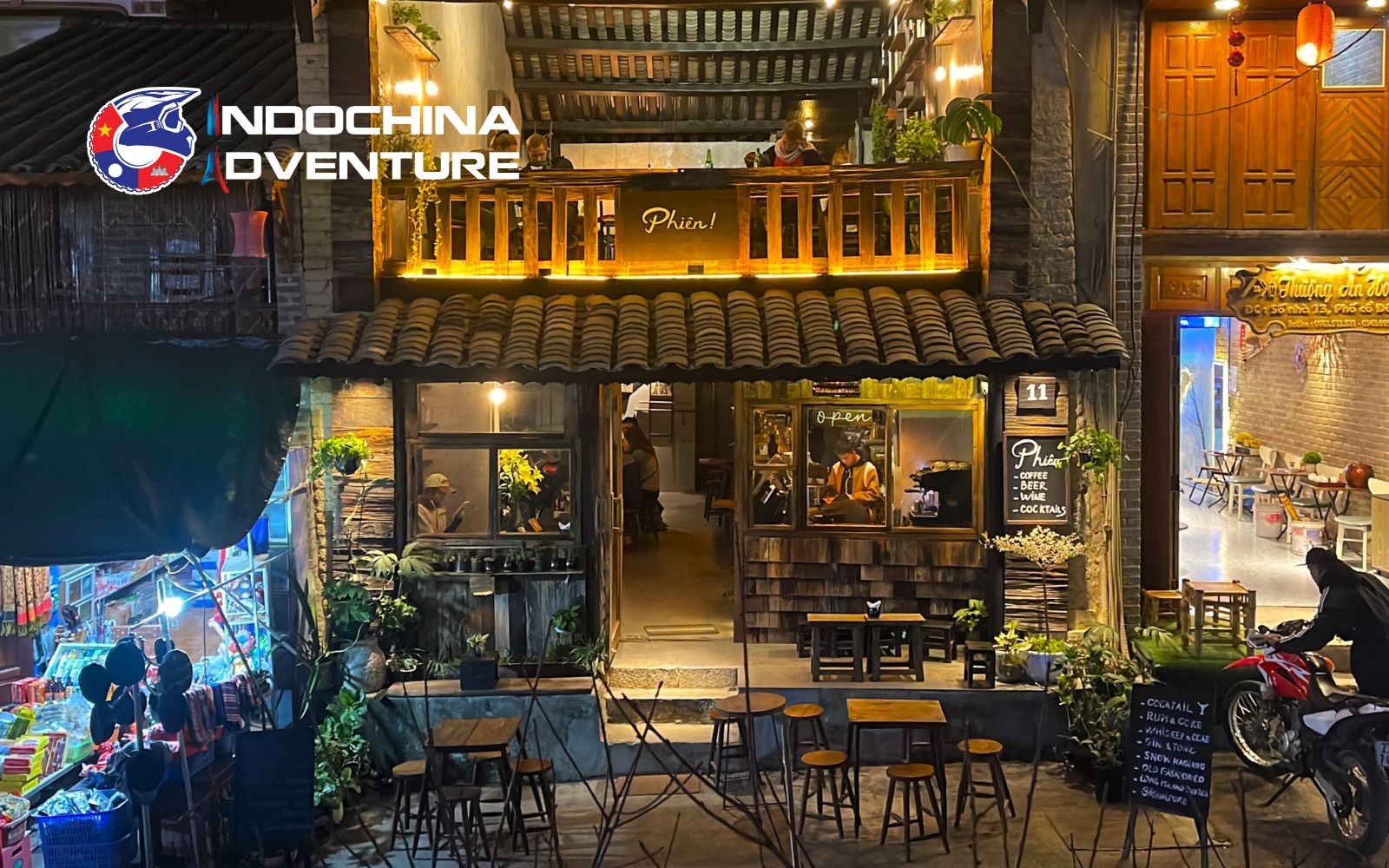
A cozy cafe is the perfect place to enjoy the quiet Dong Van night life
This is a signature part of Dong Van nightlife Vietnam, offering a chance to chat with locals or fellow adventurers. It is a relaxing way to end your day and recharge before another day of trekking or riding.
Explore more: Top 7+ Places to Visit in Dong Van You Shouldn’t Miss
Is Dong Van nightlife safe for travelers?
The nightlife in Dong Van is exceptionally safe, as the local community is very welcoming and the crime rate is almost non-existent. As you’ll find in any reliable Dong Van travel guide, you can freely walk around and discover what to do at night in Dong Van without any major safety concerns, even if you are a solo traveler
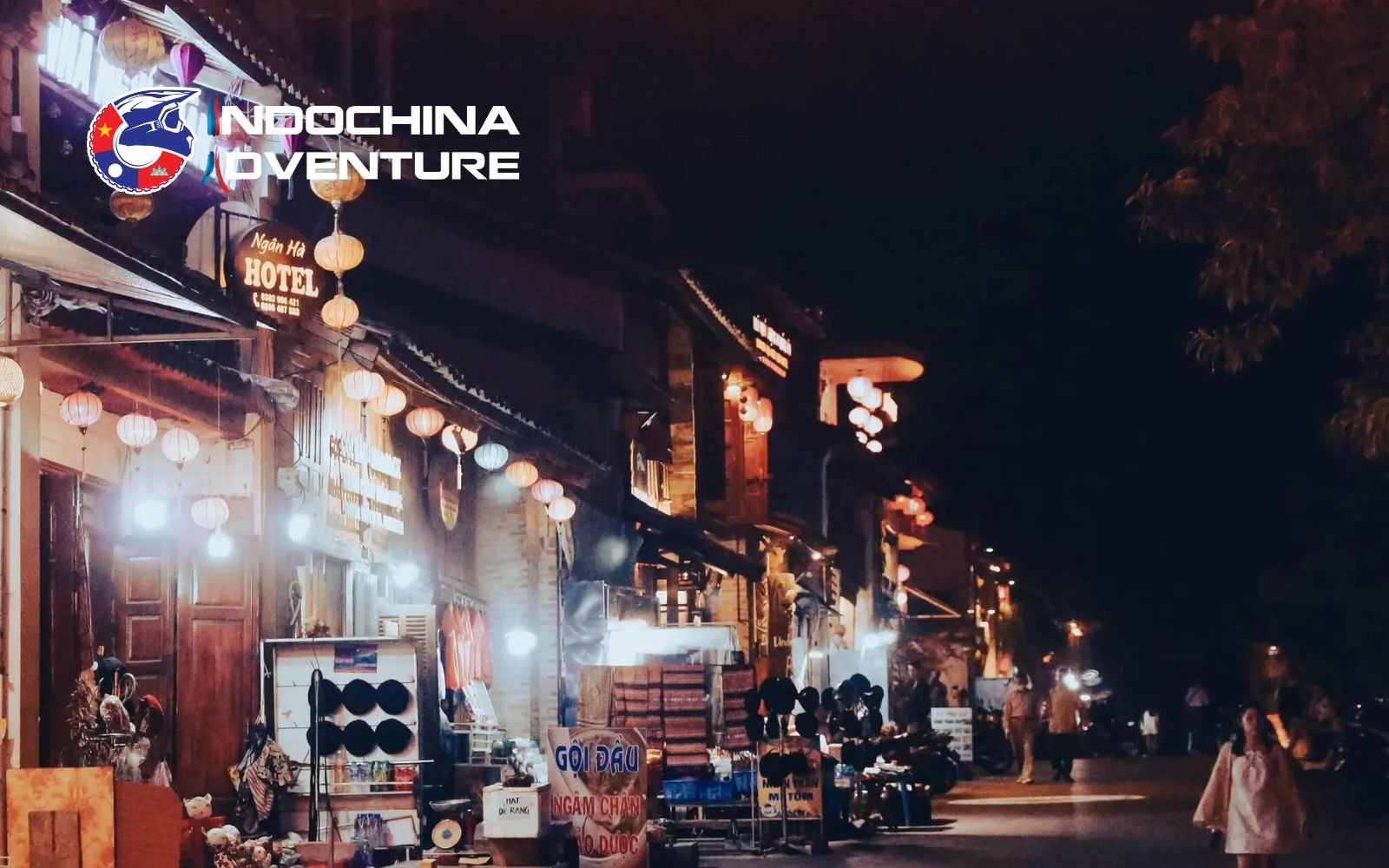
Nightlife in Dong Van is very safe for tourists to explore freely
The streets remain peaceful throughout the evening, allowing you to enjoy the Dong Van night experience with complete peace of mind during your northeast Vietnam motorbike tour. Most locals are friendly and helpful, ensuring that Dong Van nightlife remains a highlight of your journey through the northern highlands.
Turn your Dong Van stay into a motorcycle journey with Indochina Adventure
To truly master the Dong Van night experience and explore every hidden corner of the Ha Giang Loop, a motorcycle trip is the ultimate choice for any thrill-seeker. At Indochina Adventure, we specialize in turning a simple visit into an epic expedition, providing professional local guides and high-quality, reliable bikes tailored for the rugged terrain. Whether you want to witness the Dong Van night scene after a day of riding or find the most secluded viewpoints at sunset, our team ensures your safety and comfort at every turn.
We pride ourselves on offering more than just a tour; we offer an authentic immersion into Dong Van nightlife Vietnam and the majestic landscapes of the northern frontier. Our motorbike tour Dong Van itineraries are designed to give you ample time to enjoy Dong Van evening activities while pushing your boundaries on the legendary Vietnam motocycle routes mountain passes. Let us handle the logistics so you can focus on the wind in your face and the magic of Dong Van at night.
Contact Indochina Adventure today to book your professional motorcycle tour and discover the magic of the northern highlands. We are ready to help you create an unforgettable journey through the majestic landscapes and the unique atmosphere of the local culture.

Transform Dong Van nights into a memorable motorbike adventure
Exploring the northern frontier is an experience that stays with you long after you leave the limestone plateaus. The unique charm of Dong Van nightlife provides the perfect balance of peace and cultural discovery for every traveler. Contact Indochina Adventure today to book your professional motorcycle tour and start your journey into the heart of Ha Giang.
With powerful cascades and vibrant summer landscapes, Ban Gioc waterfall in June offers a different experience compared to the dry season. While occasional rain showers are expected, the increased water flow creates one of the most impressive views of the year. This Ban Gioc June travel guide of Indionchina Adventure will help you answer is June a good time to visit Ban Gioc, and top things to do for your next off road motorcycle adventure tours.
What Ban Gioc Waterfall Looks Like in June
Early June — Rising Water After Spring
In early June, Ban Gioc waterfall in June begins to change as the first waves of the rainy season increase the flow of the Quay Son River. The waterfall becomes wider and more energetic than in spring, while the surrounding rice fields and forests turn a vivid shade of green, this makes many travelers confirm that this is best time to visit Ban Gioc waterfall.
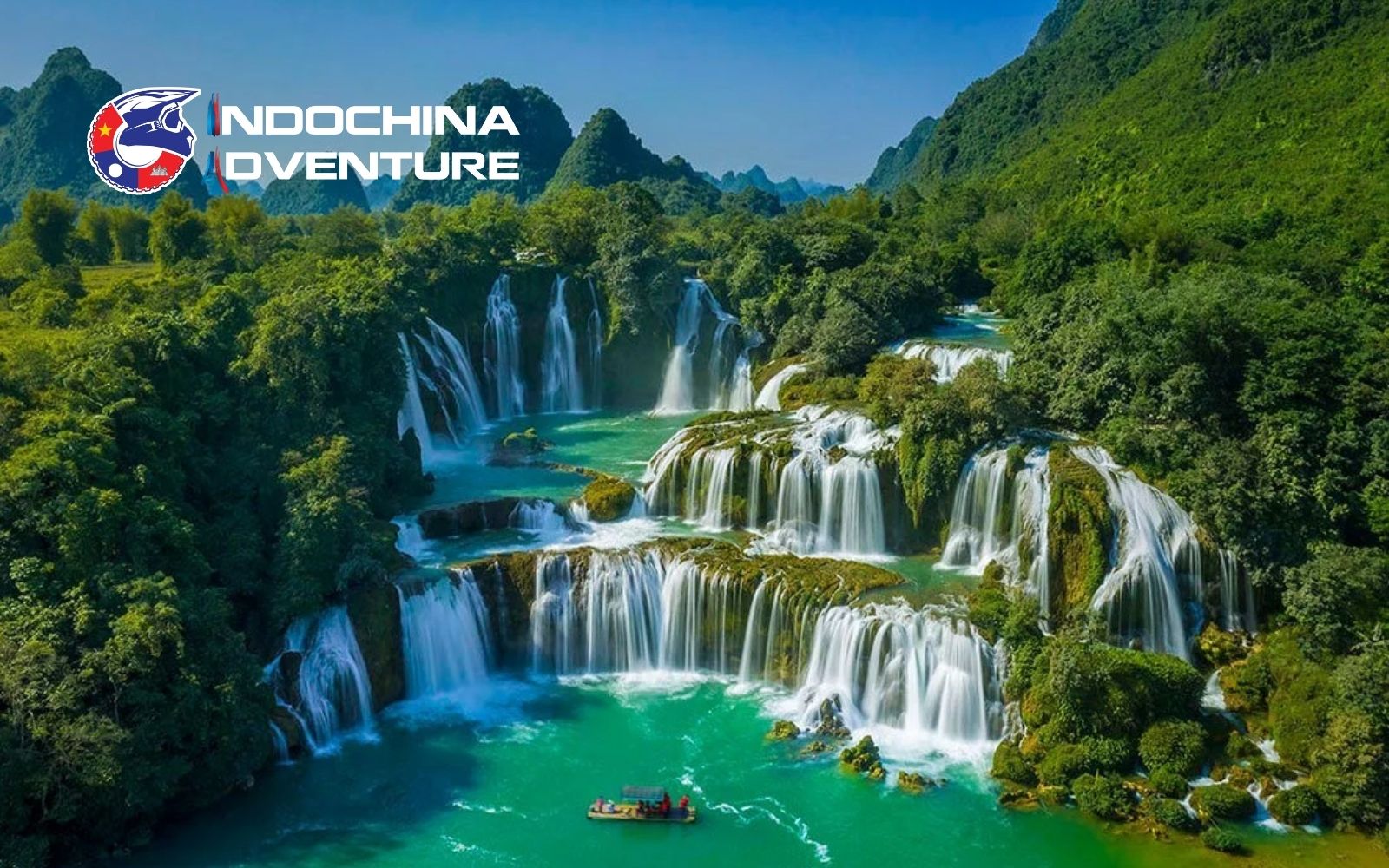
Water levels begin to rise as early rainy-season flows increase
Late June — Near Peak Flow Season
By late June, this Vietnam waterfalls approaches its powerful rainy-season appearance. Larger volumes of water pour over the limestone tiers, creating dramatic white curtains and mist rising from the base of the falls. For many travelers following a Ban Gioc waterfall June guide, this period offers some of the most impressive scenery of the waterfall.
Ban Gioc Waterfall Weather in June
The average temperature during this time typically ranges from 26°C to 29°C, with daytime highs sometimes reaching around 30–32°C. Mornings are often fresh and slightly misty around the waterfall, while afternoons can feel humid before rain showers arrive.
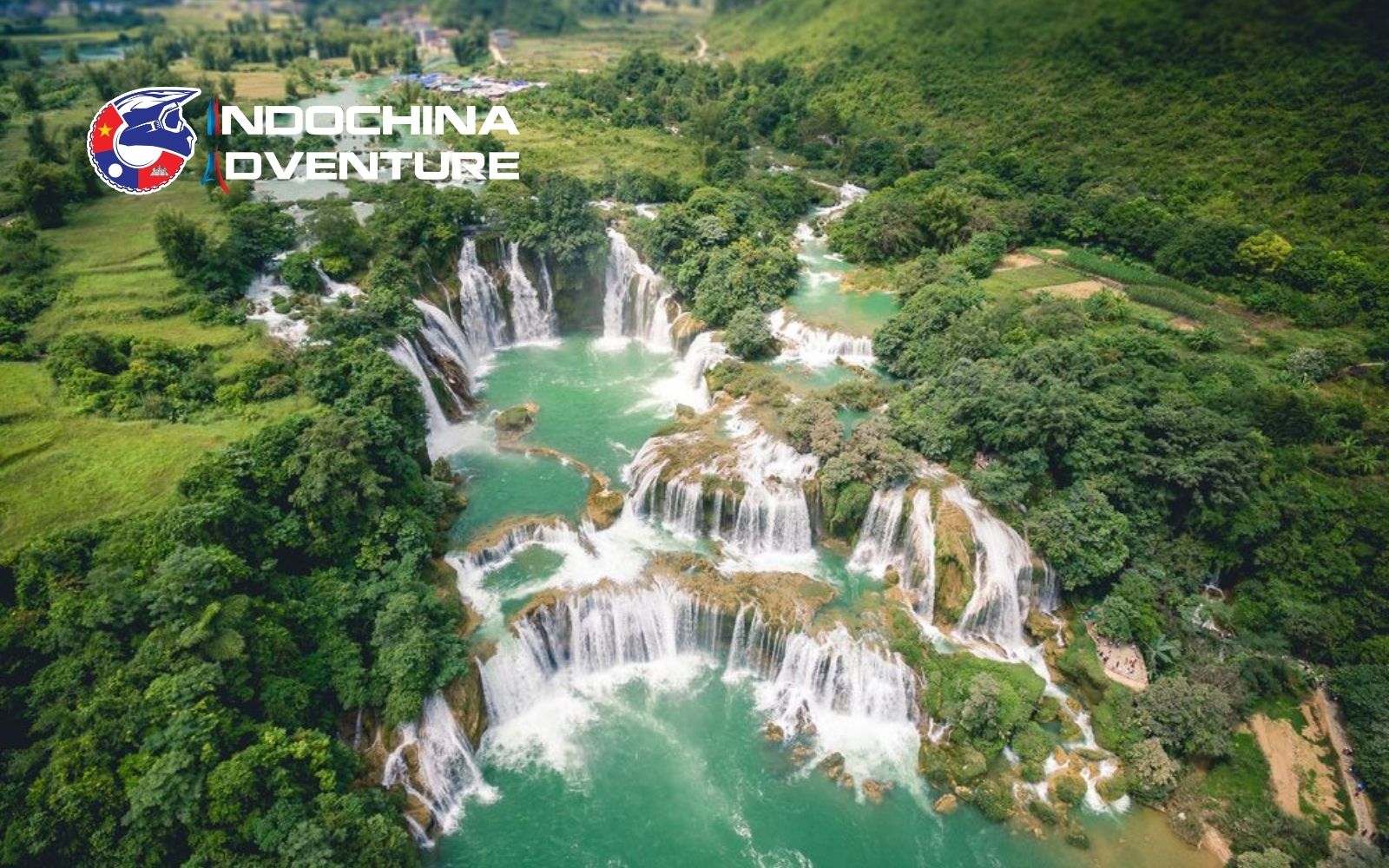
June brings warm temperatures, humidity, and frequent short rain showers
Things to Do at Ban Gioc Waterfall in June
Ride to Ban Gioc Waterfall in June With an Indochina Adventure Tours
One of the best ways to experience Ban Gioc waterfall in June is by joining a guided journey with Indochina Adventure Tours, especially if you want a smooth and well-organized trip to Cao Bang. The scenic route to the waterfall passes through dramatic limestone mountains, winding rivers, and remote villages, turning the journey itself into a memorable part of the adventure. With experienced guides, comfortable transportation, and carefully planned stops, this option makes visiting Ban Gioc in June both convenient and enriching.
If you’re looking for a deeper travel experience, Indochina Adventure Tours also offers multi-day itineraries that combine Ban Gioc Waterfall with other northern highlights such as Ba Be Lake, Nguom Ngao Cave, and local ethnic villages. Their knowledgeable guides help travelers understand the culture, landscapes, and unique Ban Gioc June conditions while ensuring a safe and enjoyable journey.
Book your Ban Gioc Waterfall motorcycle tours with Indochina Adventure Tours today and enjoy a carefully designed journey through Cao Bang’s most breathtaking landscapes. Contact the team now to plan your itinerary and secure your spot for an unforgettable trip visiting Ban Gioc in June.

Immerse the beauty of Ban Gioc Waterfall with Indochina Adventure
Viewing Platforms and Photo Spots
Several viewing platforms around the waterfall offer spectacular panoramic perspectives. From these spots, visitors can admire the full width of the cascading water and capture photos of the surrounding karst mountains during the Northern Vietnam motorcycle tours. Early morning is often the best time to visit, when the light is soft and the area is quieter.
Nguom Ngao Cave in Rainy Season
Located about 3 km from the waterfall, Nguom Ngao Cave is one of the largest and most impressive caves in northern Vietnam, this is one of the best places to visit in Ban Gioc Waterfall. Inside, visitors can see massive stalactites and stalagmites illuminated by subtle lighting along a well-maintained pathway. Exploring the cave is a great addition to a Ban Gioc June travel guide, especially if rain interrupts outdoor plans.
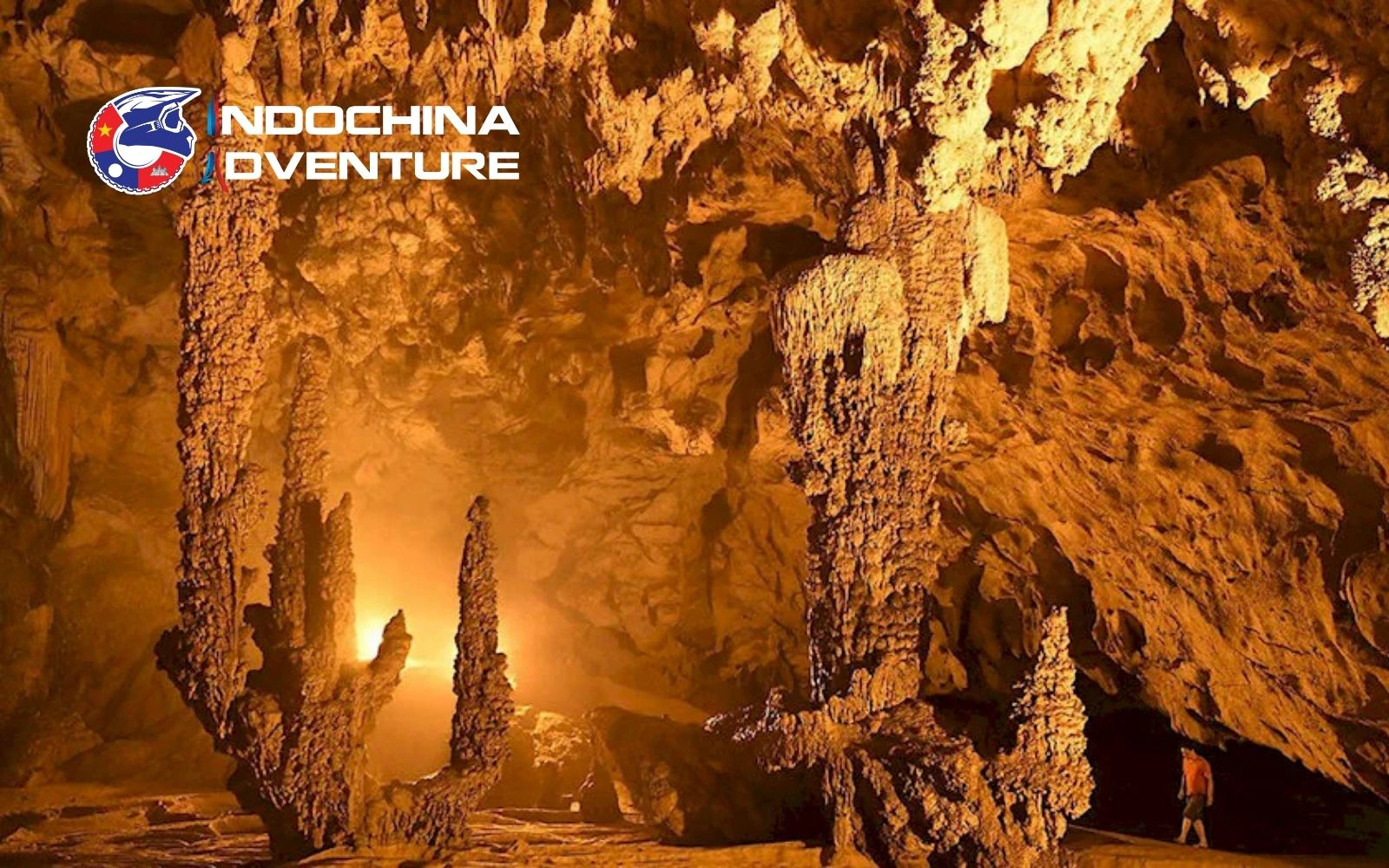
Nguom Ngao Cave offers impressive limestone formations near the waterfall
Walking Around the Border Area
Ban Gioc Waterfall sits along the Vietnam–China border, giving the area a unique geographical setting. Walking along the pathways near the border markers allows visitors to enjoy peaceful views of the Quay Son River valley. The surrounding landscape feels calm and spacious, making it perfect for slow exploration Ban Gioc waterfall in June.
Explore local villages
Small ethnic minority villages around the waterfall offer a glimpse into traditional life in Cao Bang. Travelers while joining Northeast Vietnam motorbike tour can observe farming activities, wooden stilt houses, and friendly local communities. Visiting these villages adds cultural depth to the experience of visiting Ban Gioc in June.
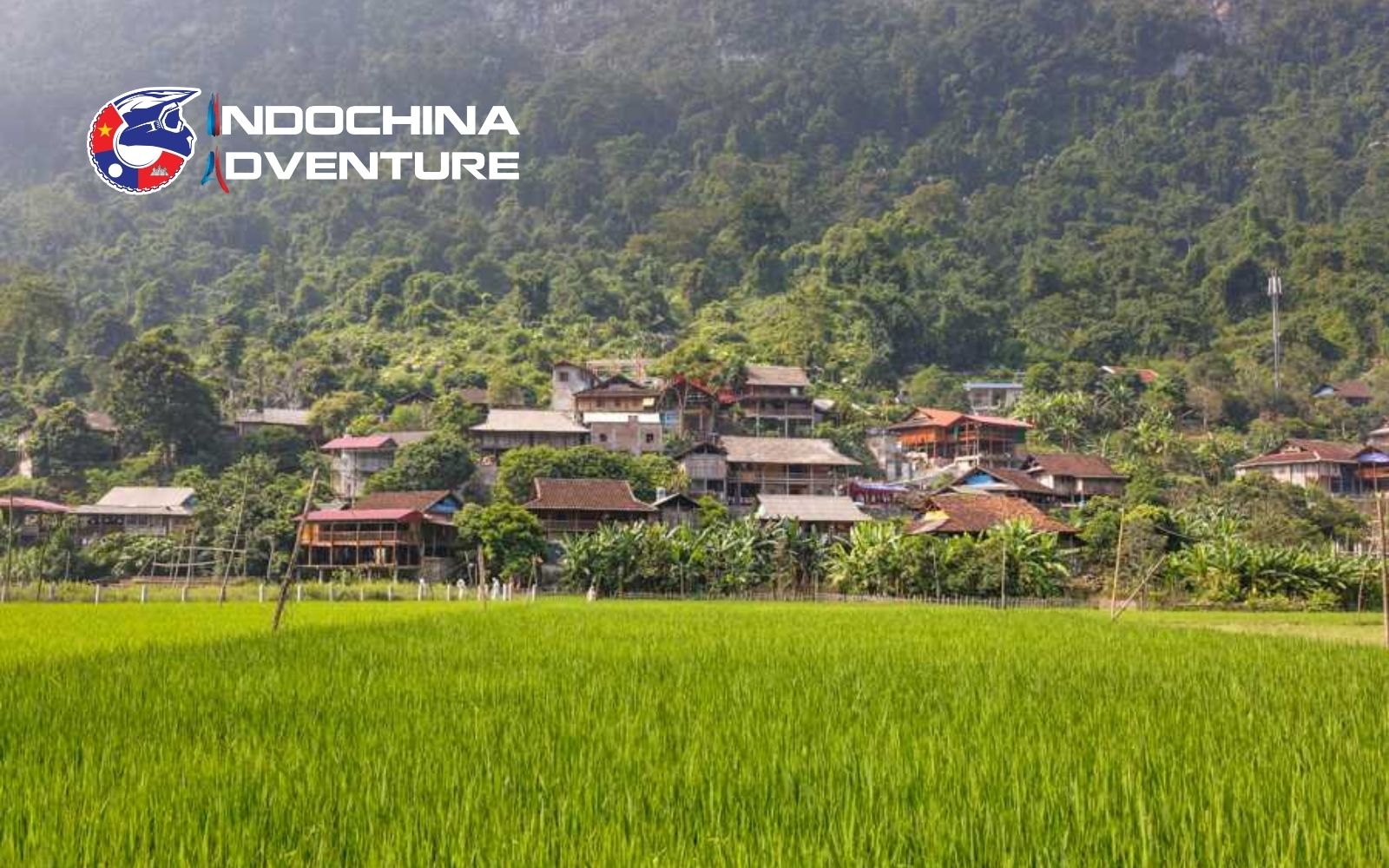
Travelers can discover local culture in nearby ethnic villages
Boat on the Quay Son River
Taking a bamboo raft ride on the Quay Son River brings visitors closer to the base of the waterfall. From the water, you can feel the cool mist and appreciate the impressive scale of the cascades. It’s one of the most popular activities during Cao Bang motorbike tours.
Taste regional cuisine
After exploring the area, don’t miss the chance to try Cao Bang’s regional dishes. Local specialties such as grilled river fish, sticky rice, and fresh mountain herbs reflect the flavors of northern Vietnam’s highlands. Enjoying these dishes at small local eateries is a simple but memorable part of the journey.
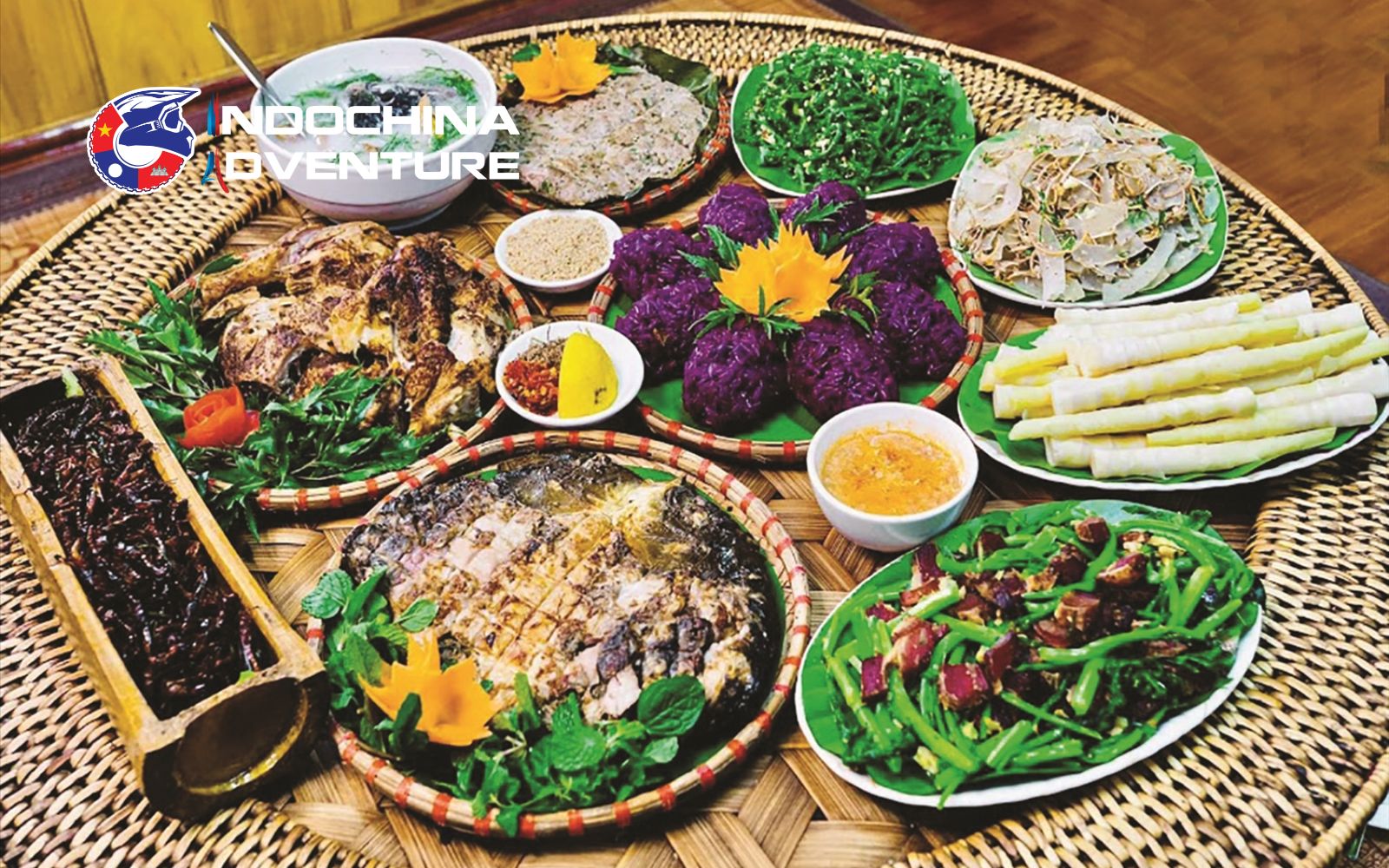
Local restaurants serve traditional Cao Bang dishes
Packing Tips for Ban Gioc Waterfall in June
Because Ban Gioc weather in June can be warm, humid, and occasionally rainy, packing the right items will help you stay comfortable during your motorbike tours of Vietnam. If you’re visiting Ban Gioc in June, a few practical travel essentials can make exploring the waterfall and nearby attractions much easier.
- Lightweight, breathable clothing for warm and humid weather
- A light rain jacket or poncho for sudden rain showers
- Comfortable walking shoes with good grip for wet paths
- Waterproof bag or phone pouch to protect electronics near the waterfall
- Insect repellent for outdoor areas and nearby villages
- Sunscreen, sunglasses, and a hat for sunny periods between showers
- A small towel or quick-dry cloth for mist and humidity around the falls

Travelers should pack light items suitable for warm and rainy weather
Ban Gioc waterfall in June offers a vibrant and powerful view of one of Vietnam’s most spectacular natural wonders. With rising water levels, lush landscapes, and unique cultural experiences nearby, it can be a rewarding time for travelers who enjoy nature and scenic exploration. Book your Ban Gioc tour with Indochina Adventure Tours today to experience the waterfall at its most dramatic and make the most of your journey to northern Vietnam.
Exploring the Ha Giang Loop in May reveals northern Vietnam at one of its most vibrant times of the year. As the rainy season begins, mountains turn deep green, rice terraces fill with water, and the scenery becomes incredibly dramatic. If you are wondering is Ha Giang Loop good in May, this guide of Indochina Adventure will walk you through the weather, landscapes, and best experiences for your adventure motorcycle riding.
What Ha Giang Loop Looks Like in May — The Deep Green Mountain Season
Early May Scenery
The Ha Giang Loop in early May begins the transition from the dry season to the lush green period. Terraced rice fields start filling with water as farmers prepare for planting, creating beautiful mirror-like reflections across the valleys. The scenery of Ha Giang during this time feels fresh and vibrant, with a mix of golden earth tones and emerging greenery.
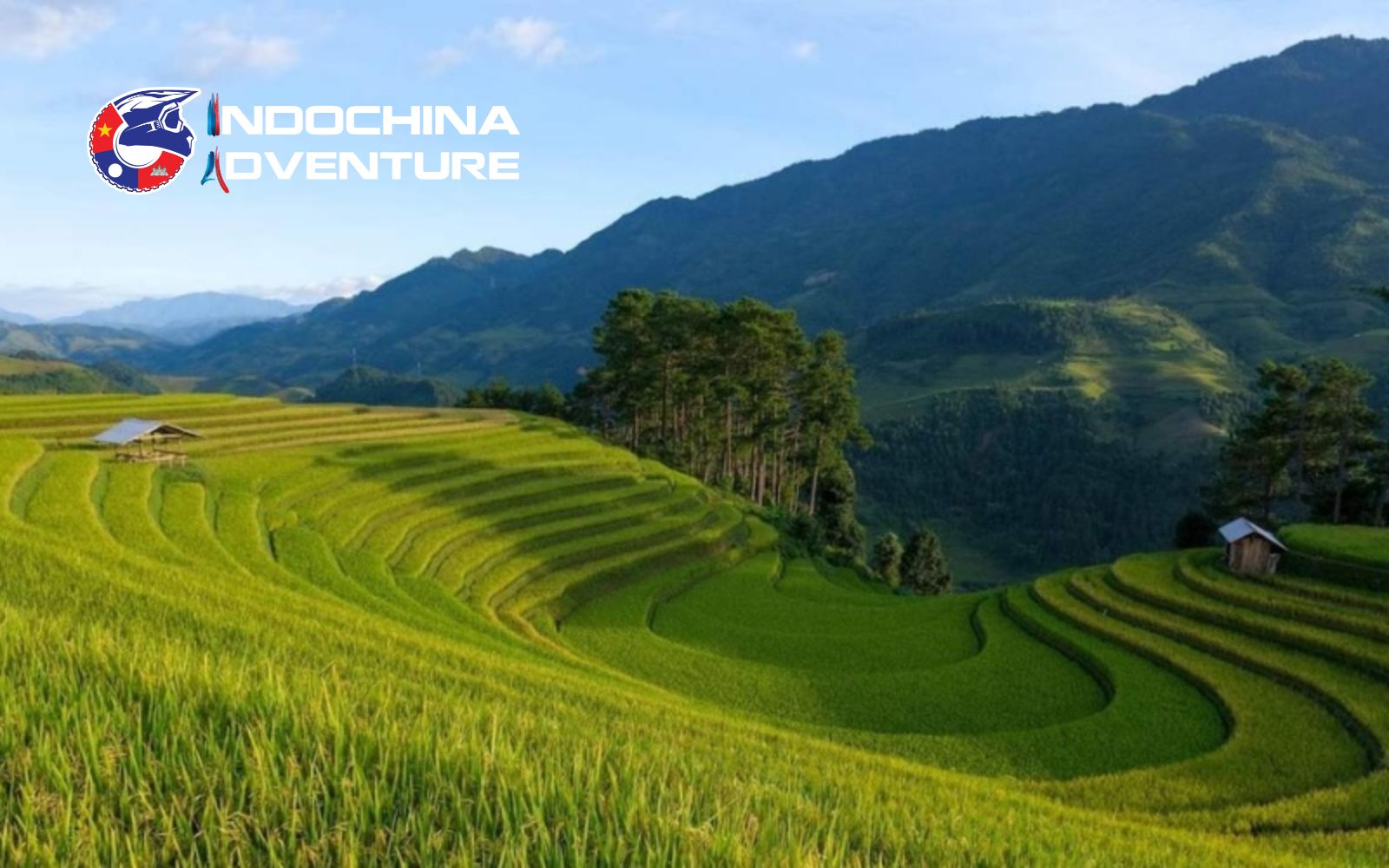
The Ha Giang in early May features reflective rice terraces and fresh greenery
Mid May Scenery
By Ha Giang Loop mid May, the mountains become noticeably greener as rice cultivation progresses across the terraces. Valleys and hillsides are covered with young rice plants, and light mist often drifts through the mountain passes. This stage of the Ha Giang during May is known for its rich natural colors and dramatic landscapes.
Late May Scenery
The Ha Giang in late May reveals the full beauty of the green season. Rice terraces develop deeper shades of green while tropical vegetation flourishes throughout the region. Combined with the typical May weather, occasional rain and drifting clouds create atmospheric views that make the mountains look even more majestic.
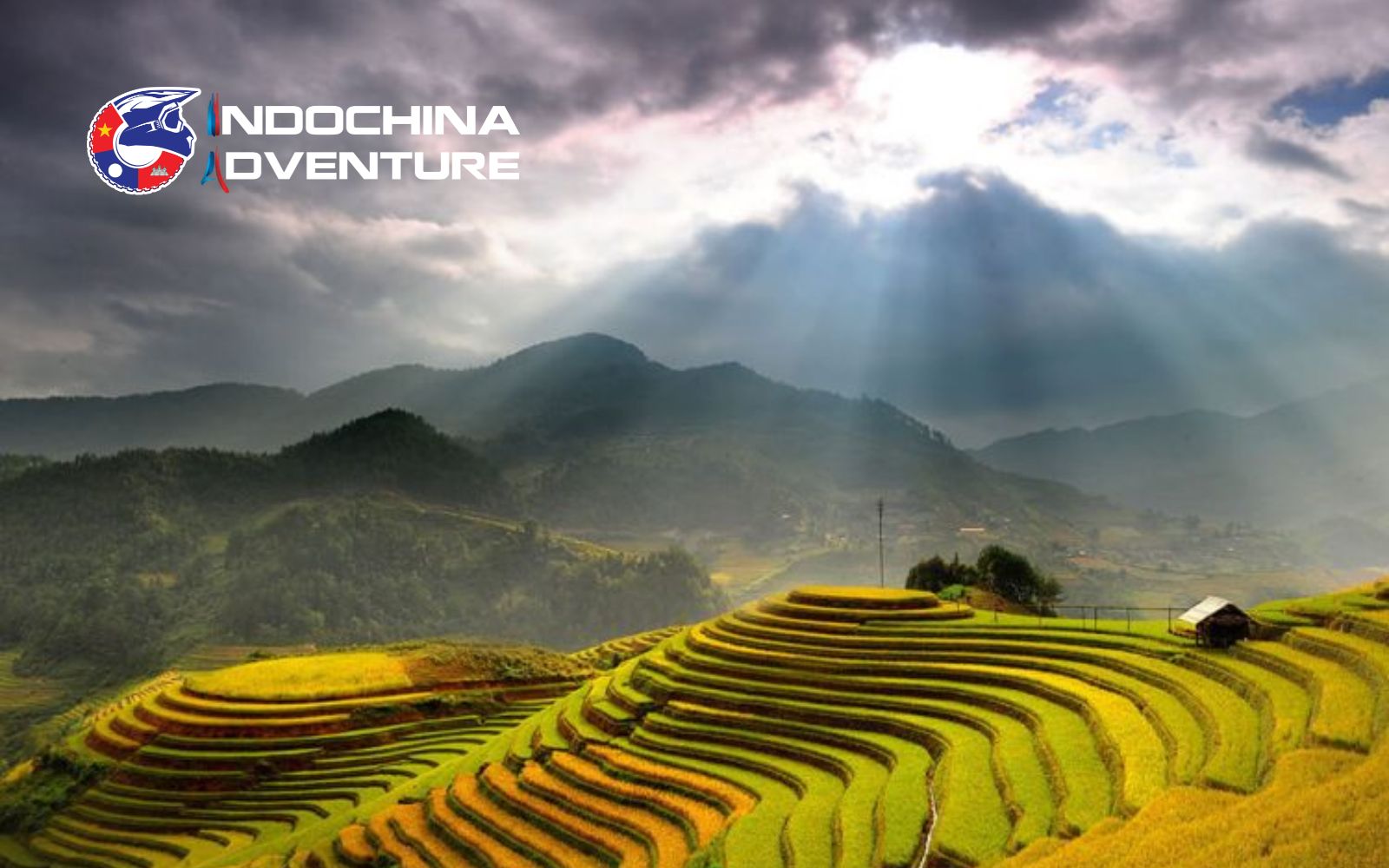
The Ha Giang Loop in late May shows deeper green landscapes and misty mountains
Ha Giang Loop Weather in May
The Ha Giang Loop weather in May is one of the best time to visit Ha Giang, which is generally warm, humid, and comfortable for outdoor exploration. Average temperatures range from 20°C to 28°C (68°F–82°F), though higher mountain areas may feel cooler, especially in the early morning and evening. Overall, the temperature in May creates favorable conditions to join Northeast Vietnam Motorbike Tours and sightseeing.
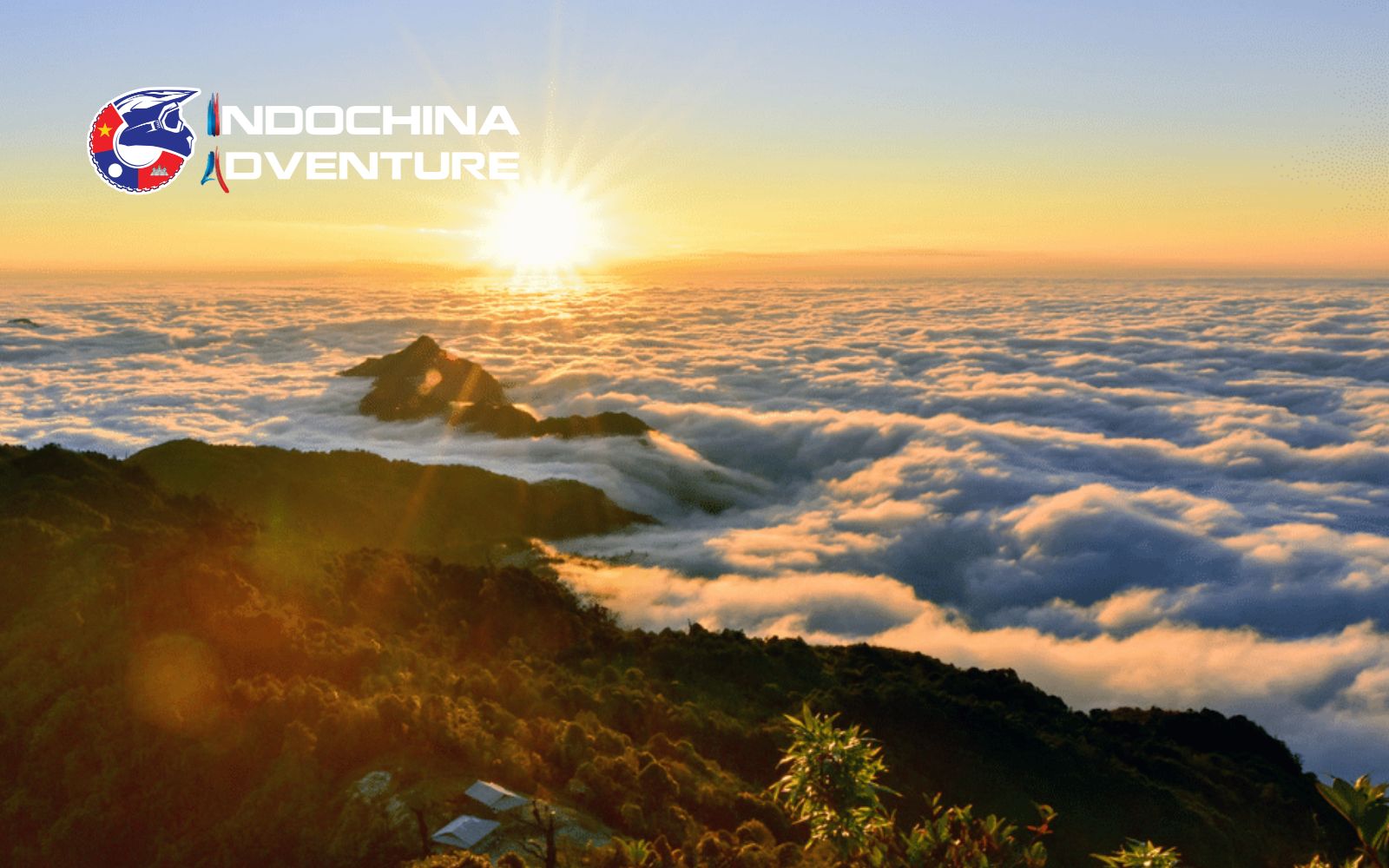
Weather in May is warm and comfortable, averaging around 20–28°C
Road Conditions – Is Ha Giang Loop Safe in May?
Traveling during May is generally safe as the roads are mostly dry and offer excellent visibility. The stable weather in Ha Giang in May ensures that you can navigate the winding passes without the dense fog often found in winter.
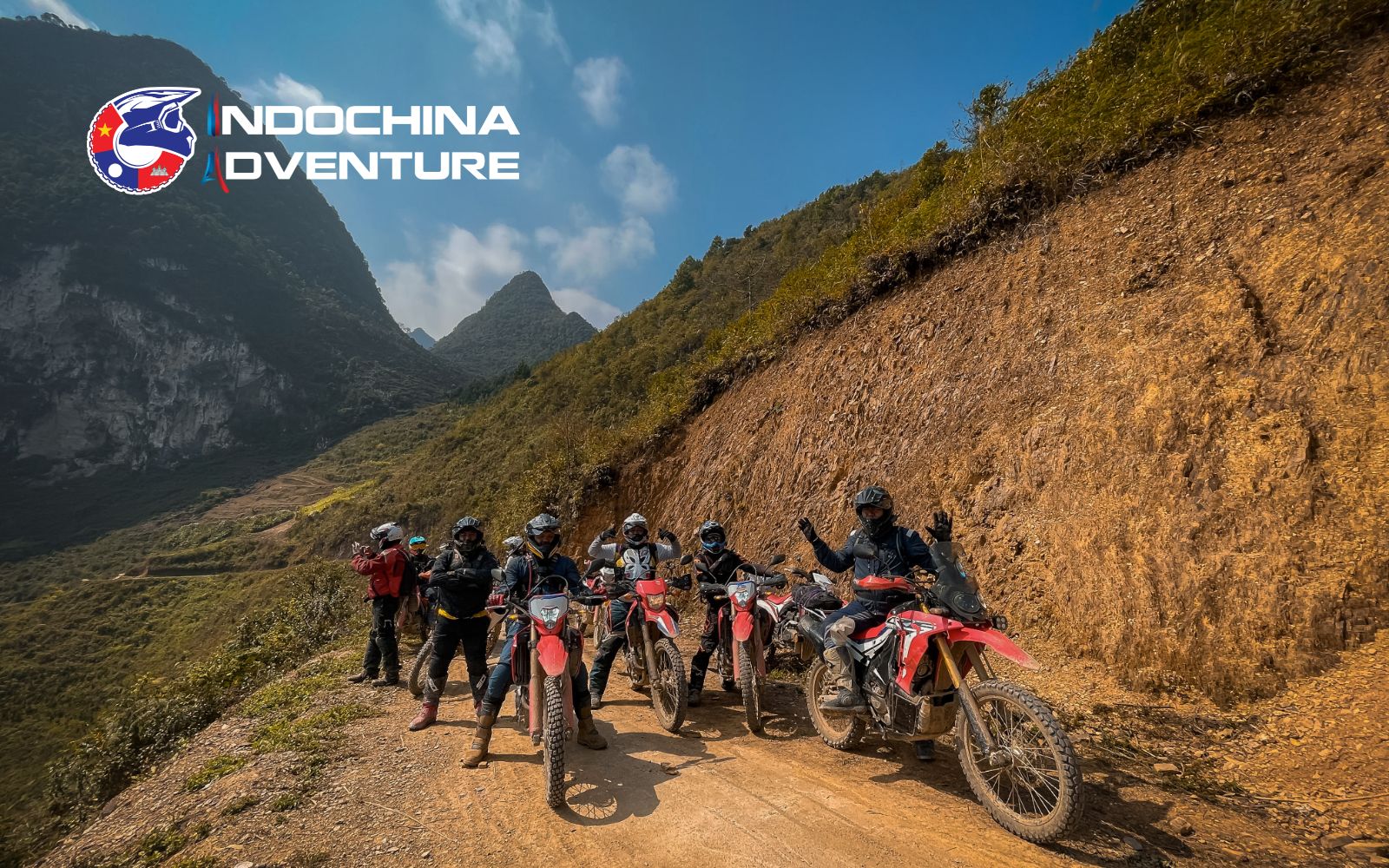
Roads on the Ha Giang in this month are mostly good with occasional rain
However, since the rainy season begins late in the month, some sections can become slippery after sudden showers. It is essential to check the Ha Giang weather forecasts daily and drive cautiously on steep descents.
Top Activities for Your Ha Giang Loop in May Adventure
Ride the Green Season With a Ha Giang Loop Motorbike Tour by Indochina Adventure
Riding through the lush mountains of the Ha Giang in May is one of the most unforgettable travel experiences in Northern Vietnam. During this time, the landscapes of Ha Giang in May turn vibrant green as rice terraces fill with water and mist drifts through the mountain passes. This Vietnam motorbike tour allows travelers to fully experience the dramatic scenery and remote ethnic villages along the route.
For travelers who want a safe and well-organized journey, Indochina Adventure offers professionally guided motorbike tours across the Ha Giang route. With experienced local guides and skilled drivers, the company helps visitors explore the list of places to visit in Ha Giang such as Dong Van Karst Plateau, Ma Pi Leng Pass, and traditional ethnic minority villages. Their tours are designed to combine adventure, culture, and authentic local experiences.
Book a Ha Giang loop tour with Indochina Adventure to discover the most scenic routes, local culture, and breathtaking landscapes of the land during May season with expert guides.

Explopre the Ha Giang Loop in May with Indochina Adventure
Cloud Hunting on Tay Con Linh Peak
One of the most magical experiences during the North Vietnam motorbike tour is cloud hunting on Tay Con Linh Peak. Early mornings often bring layers of mist drifting over the mountain ranges, creating a stunning “sea of clouds” effect. With the cool mountain air and the typical May weather, this spot becomes a dream destination for photographers and nature lovers.
Conquering the Iconic Passes: Ma Pi Leng and Beyond
Ma Pi Leng Pass is the crown jewel of the Ha Giang Loop adventure. The road winds dramatically along limestone cliffs above the turquoise Nho Que River, offering some of the most breathtaking views in Vietnam. Clear mornings during the weather in May often provide spectacular panoramic views of the surrounding mountains.
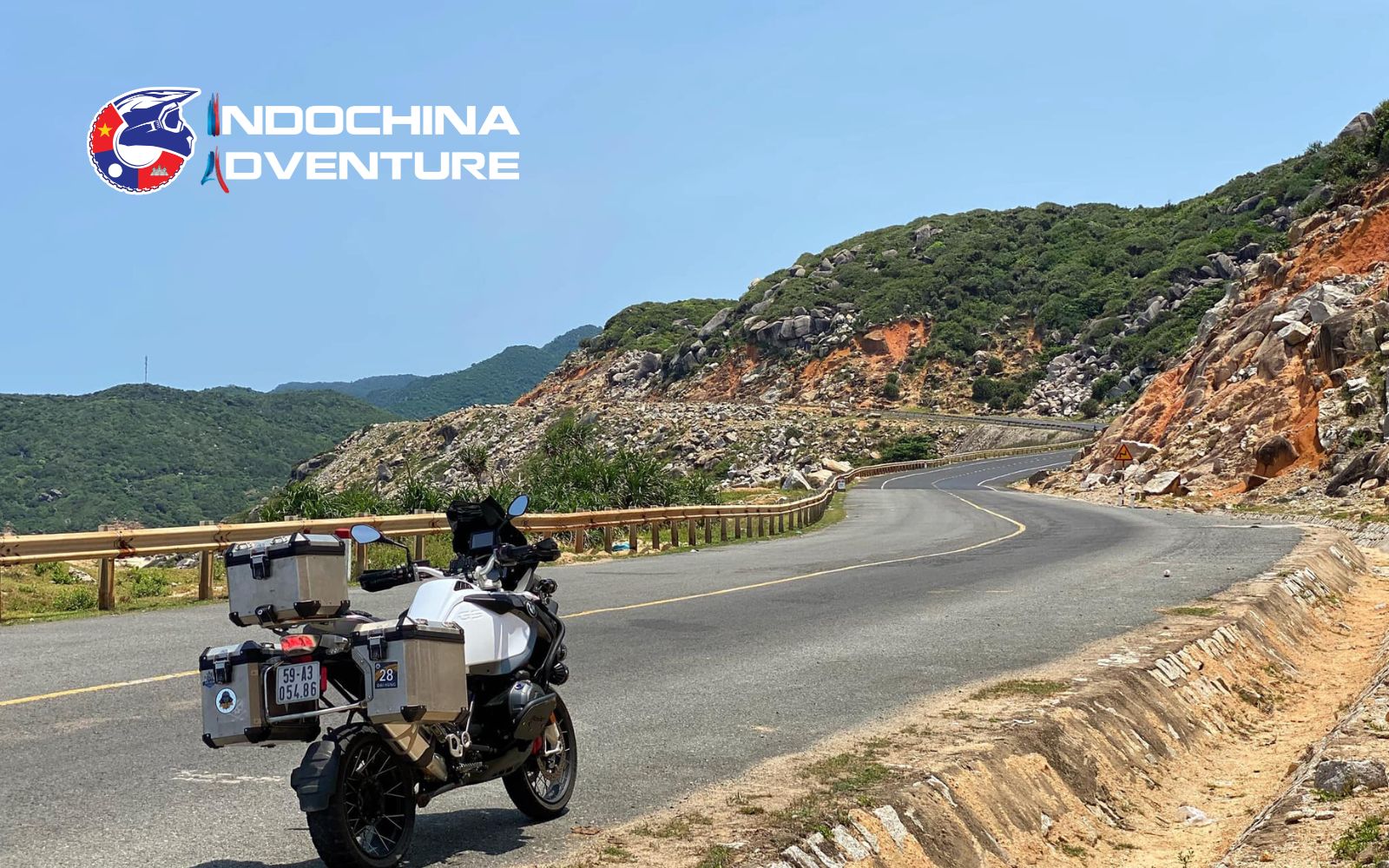
Ma Pi Leng Pass is a must-see highlight in May
Read more: How to get an IDP for the Ha Giang loop (International Driving Permit guide)
Cultural Immersion in Local Markets and Festivals
Traveling the Ha Giang Loop during May also offers opportunities to experience vibrant local culture. Weekly ethnic markets in Dong Van or Meo Vac bring together communities from surrounding mountain villages. Visitors exploring in May can witness colorful traditional clothing, local cuisine, and lively cultural exchanges that reflect the unique heritage of the region.
Read more: Ha Giang Loop Nightlife – What Really Happens After Dark on the Loop
What to Pack for Ha Giang Loop in May?
Ha Giang packing list properly is important for a comfortable journey, as the weather can shift between warm sunshine and occasional rain showers. Here are some recommended items if you wondering for what to pack for Ha Giang Loop in May:
- Lightweight, breathable clothing for warm daytime temperatures
- Waterproof jacket or rain poncho for sudden showers
- Comfortable riding shoes or sturdy sneakers
- Light jacket or hoodie for cooler mountain mornings
- Sunglasses and sunscreen for sunny riding days
- Small backpack for daily essentials
- Gloves for motorbike riding
- Basic first-aid items and personal medications
- Phone or camera for capturing the scenic landscapes
- Cash for small purchases in local villages and markets
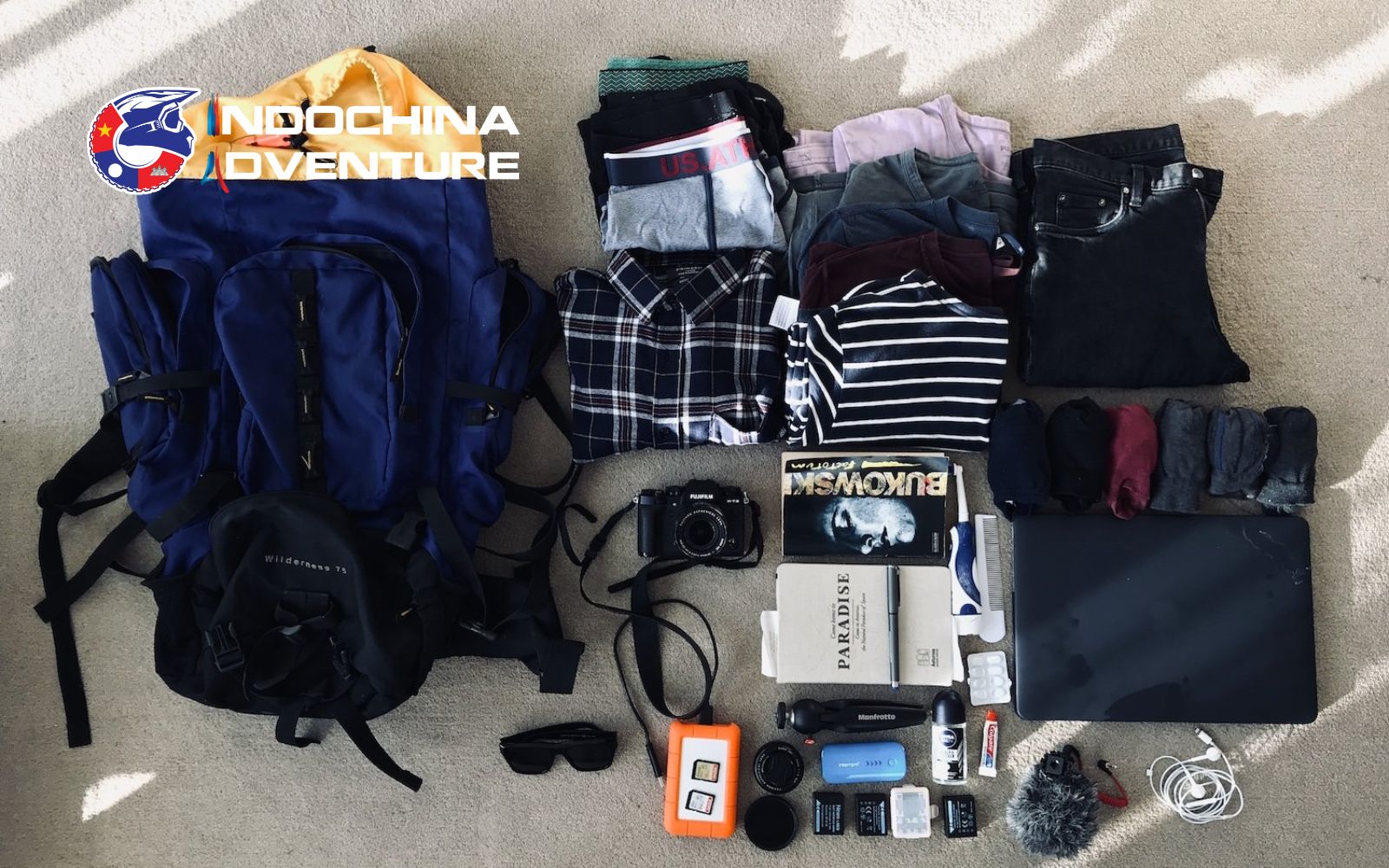
Pack light clothes and rain gear for the Ha Giang in May
Read more: Practical Ha Giang Travel Tips Every Adventurer Should Know
FAQs
1. Can I do the Ha Giang loop in May?
Yes, May is comfortable as it is one of the best months to enjoy the “Deep Green” scenery before the peak monsoon season.
2. Is the Ha Giang cold in May?
Generally no, the weather is warm and pleasant, though high-altitude districts like Dong Van can feel breezy and cool at night.
3. What to wear for the Ha Giang Loop in May?
Prioritize lightweight, quick-dry clothes and always keep a light windbreaker handy for the mountain passes.
4. Does it rain a lot in May?
The weather in May includes occasional tropical showers, but they are usually brief and help clear the dust, making the landscapes look even more vibrant.
5. Is it too hot to ride?
While the Ha Giang temperature in May is warm, the constant wind from riding and the high elevation make the atmosphere much more comfortable than the sweltering plains.
6. Are the mountains green in May?
Absolutely, the weather brings out the most intense shades of green, transforming the entire loop into a lush, emerald paradise.
Exploring the Ha Giang Loop in May offers a perfect blend of lush green landscapes, comfortable weather, and unforgettable mountain adventures. From scenic passes and cloud-covered peaks to vibrant ethnic markets, Ha Giang during May is an incredible time to experience the natural beauty and culture of northern Vietnam. Book your Ha Giang motorbike tour with Indochina Adventure today to ride through the stunning mountains and enjoy a safe, well-organized journey with experienced local guides.