Sapa Vs Ha Giang: Honest Breakdown For First-Time Travelers


Choosing Sapa or Ha Giang can be challenging for first-time travelers, especially when both destinations promise stunning mountain scenery and rich local culture. While Sapa offers accessible trekking and cultural charm, Ha Giang stands as the ultimate frontier for those seeking off road motorcycle adventure tours through dramatic mountain passes. With the guidance of Indochina Adventure, you can move beyond surface-level sightseeing, experience northern Vietnam through authentic routes and local perspectives.
Quick comparison: Sapa vs Ha Giang at a glance
Before diving into the details, this quick overview helps highlight the core differences between Sapa vs Ha Giang loop at a glance. This comparison is especially useful for travelers considering motorcycle tours Vietnam, where road conditions, terrain and overall adventure level play a major role in choosing the right destination.
|
Criteria |
Sapa |
Ha Giang Loop |
|
Difficulty level |
Easy |
Moderate – Challenging |
|
Best suited for |
First-timers, families, relaxed travelers |
Adventure seekers, experienced travelers |
|
Landscape style |
Terraced rice fields, misty valleys |
Dramatic karst mountains, deep passes |
|
Activities |
Trekking, village walks, Fansipan cable car |
Ha Giang Loop, motorbiking, remote village stays |
|
Crowd level |
High, especially weekends & peak season |
Low to moderate, less mass tourism |
|
Cost |
Medium to high |
Low to medium, good value for money |
|
Accessibility |
Very easy from Hanoi (train/bus) |
Remote, long road journey required |
|
Minimum trip duration |
2 – 3 days |
3 – 4 days (ideal for the full loop) |
Explore more: Hai Van Pass vs Ha Giang Loop – Which Motorbike Route Is Better?
Sapa or Ha Giang? An in-depth comparison of key travel factors
To help you decide Sapa or Ha Giang which one to visit, it is essential to look beyond the surface of their stunning landscapes. While Sapa is the king of mountain trekking, those seeking a world-class North Vietnam motorbike tour will find Ha Giang’s wild, high-altitude passes absolutely unbeatable.
Landscape & scenery
- Sapa: Famous for its iconic, gold-tinted terraced rice fields and the towering Fansipan peak. The scenery is lush, soft and feels like a living painting, especially during the harvest season.
- Ha Giang Loop: Offers a rugged and dramatic “karst” landscape, being home to the UNESCO-protected Dong Van Geopark and its jagged limestone peaks. The scenery is defined by epic, deep canyons like Tu San and the emerald Nho Que River winding beneath the massive Ma Pi Leng Pass – one of the most iconic places to visit in Ha Giang for travelers seeking raw, unforgettable mountain views.
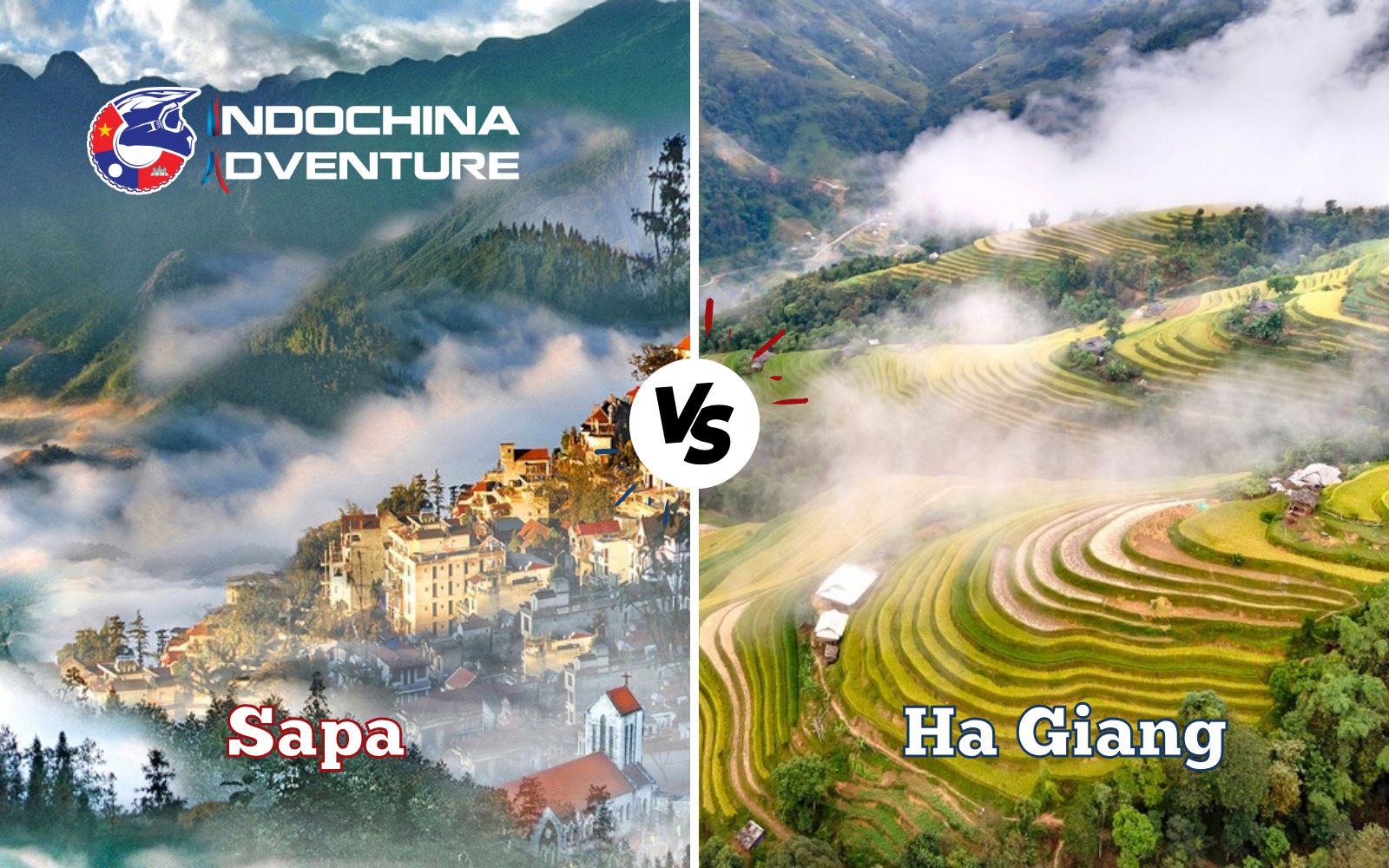
Witness the breathtaking contrast of Sapa vs Ha Giang scenery from above
Accessibility
- Sapa: Highly accessible via the modern Hanoi – Lao Cai highway, taking only 5 – 6 hours by luxury cabin bus or a romantic overnight train. Its well-developed infrastructure makes it a convenient gateway for those starting a northwest Vietnam motorbike tour toward the neighboring border provinces.
- Ha Giang: Much more remote and time-consuming to reach, requiring a 6–7 hour bus journey from Hanoi just to reach Ha Giang City. From there, you must navigate narrow, steep and winding mountain roads for several more hours to reach the main attractions in the northern highlands.
Embrace the thrill of motorbike tours in Vietnam from Ha Giang
Adventure level
- Sapa: Adventure here is primarily centered on trekking, ranging from gentle walks through the Muong Hoa Valley to the challenging ascent of Fansipan. For those who want to pick up the pace, a Sapa motor tour offers a thrilling way to conquer high-altitude passes while still enjoying the safety of well-paved roads and nearby support services.
- Ha Giang: Delivers a high-adrenaline experience with steep mountain passes, long riding days, and constantly changing terrain. When comparing Sapa vs Ha Giang travel, Ha Giang clearly stands out for those seeking raw adventure, where navigating remote roads and isolated villages becomes a core part of the journey rather than a side activity.
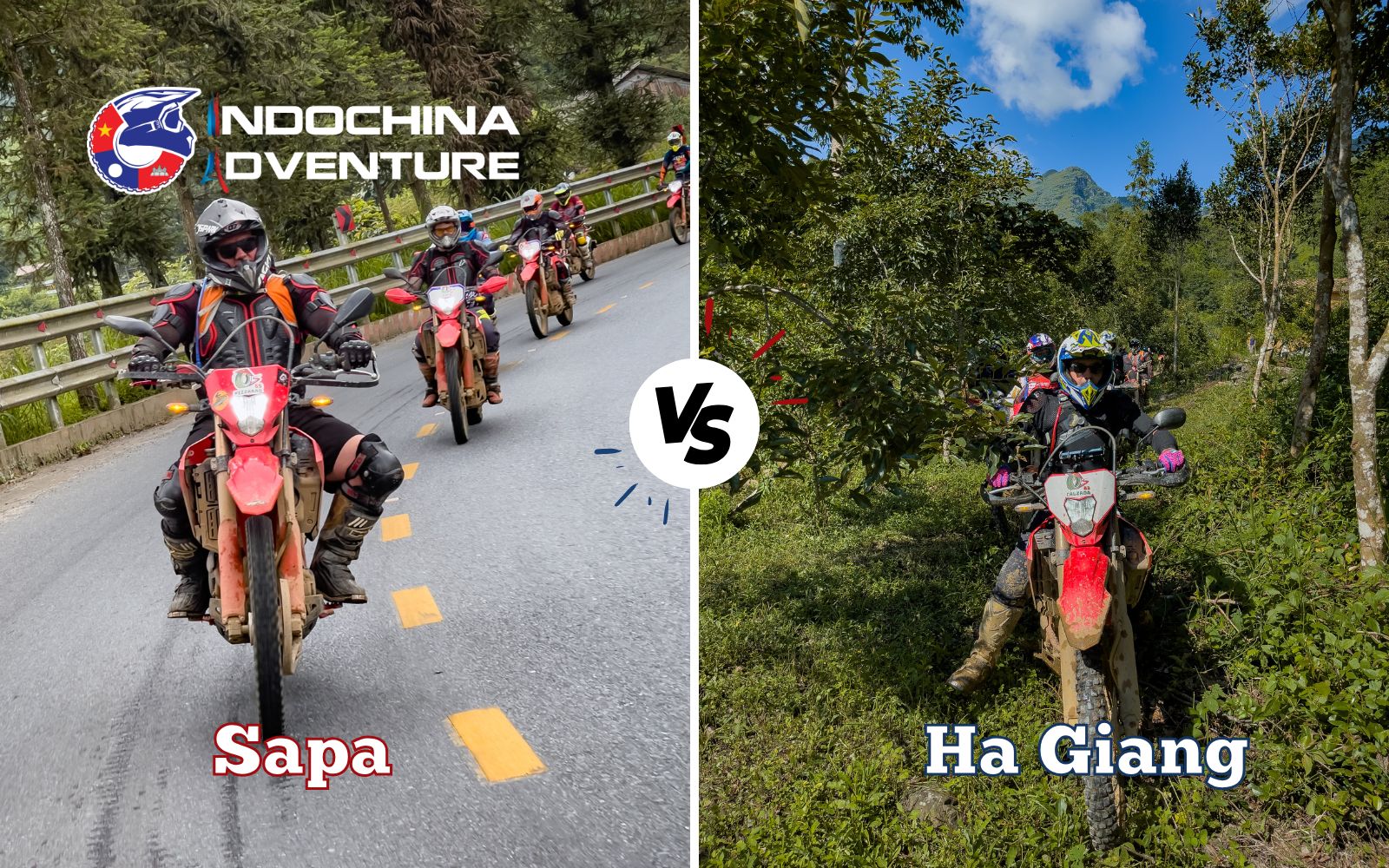
From gentle trekking paths to challenging mountain passes and remote routes
Motorbike experience
- Sapa: Riding in Sapa is generally easy and beginner-friendly, with smooth roads connecting the town to nearby villages like Cat Cat and Ta Van, a common highlight of Lao Cai motorbike tours. Short loops and manageable terrain make it ideal for those looking for a relaxed motorbike experience rather than a full-fledged adventure.
- Ha Giang: The crown jewel for riders, this region is the centerpiece of the most legendary northeast Vietnam motorcycle tours. Navigating the Ha Giang Loop requires a high level of skill to manage sharp U-turns and steep limestone inclines, providing a world-class road trip experience that is as challenging as it is beautiful.
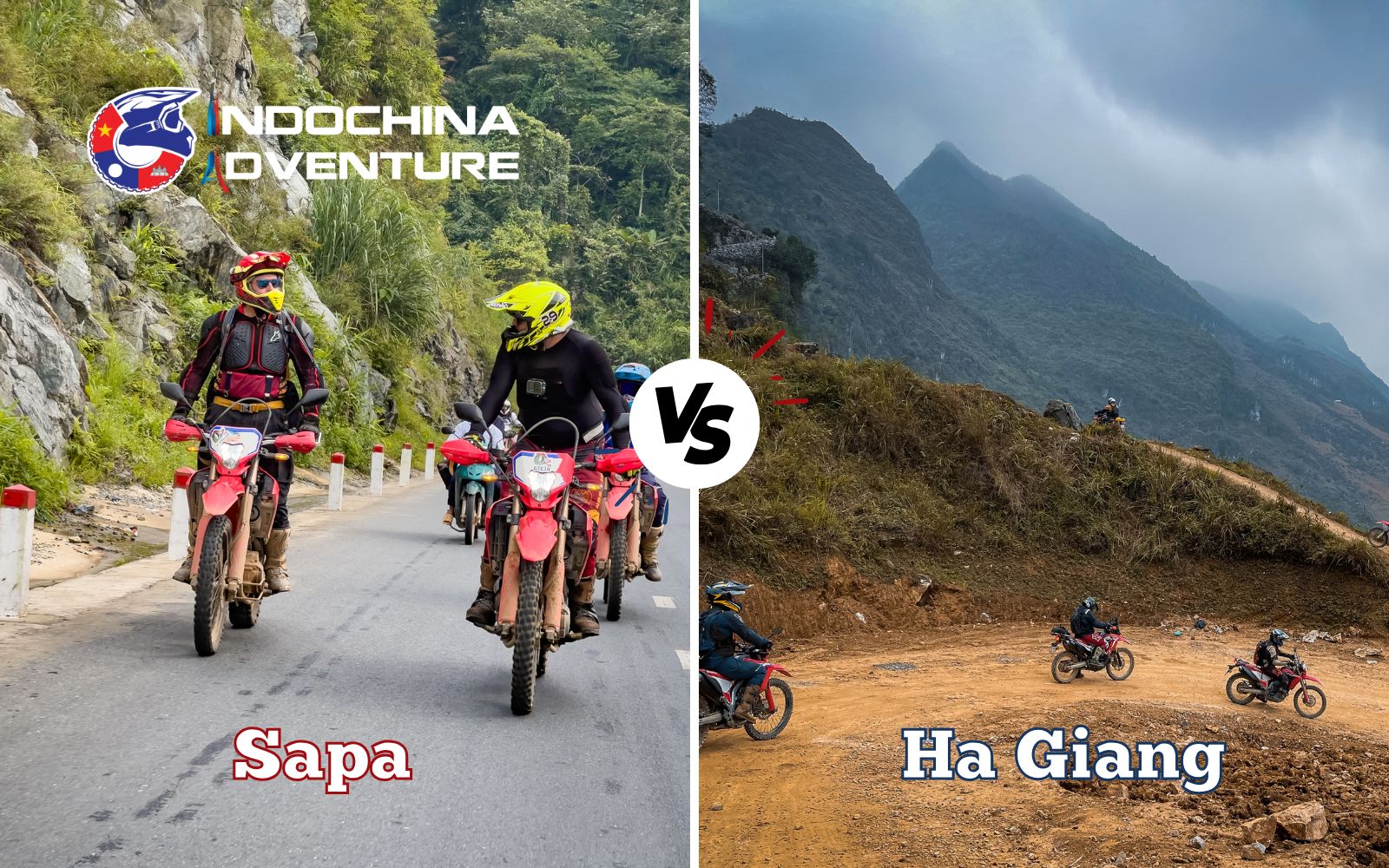
Relaxed village rides versus epic mountain loops and dramatic cliff roads
Local culture & authenticity
- Sapa: This place is home to several ethnic groups such as the Hmong, Dao, and Tay, with cultural experiences often centered around village visits and markets. While tourism is well developed, travelers can still witness traditions through local handicrafts and Sapa traditional festivals, which highlight colorful costumes, music, and community rituals.
- Ha Giang: This region offers a raw and incredibly authentic glimpse into the lives of the Tay, Lolo and Hmong communities who live in traditional stone-walled houses. Ha Giang traditional festivals and events reflect deep-rooted customs, seasonal farming cycles, and spiritual practices that continue largely untouched by mass tourism.
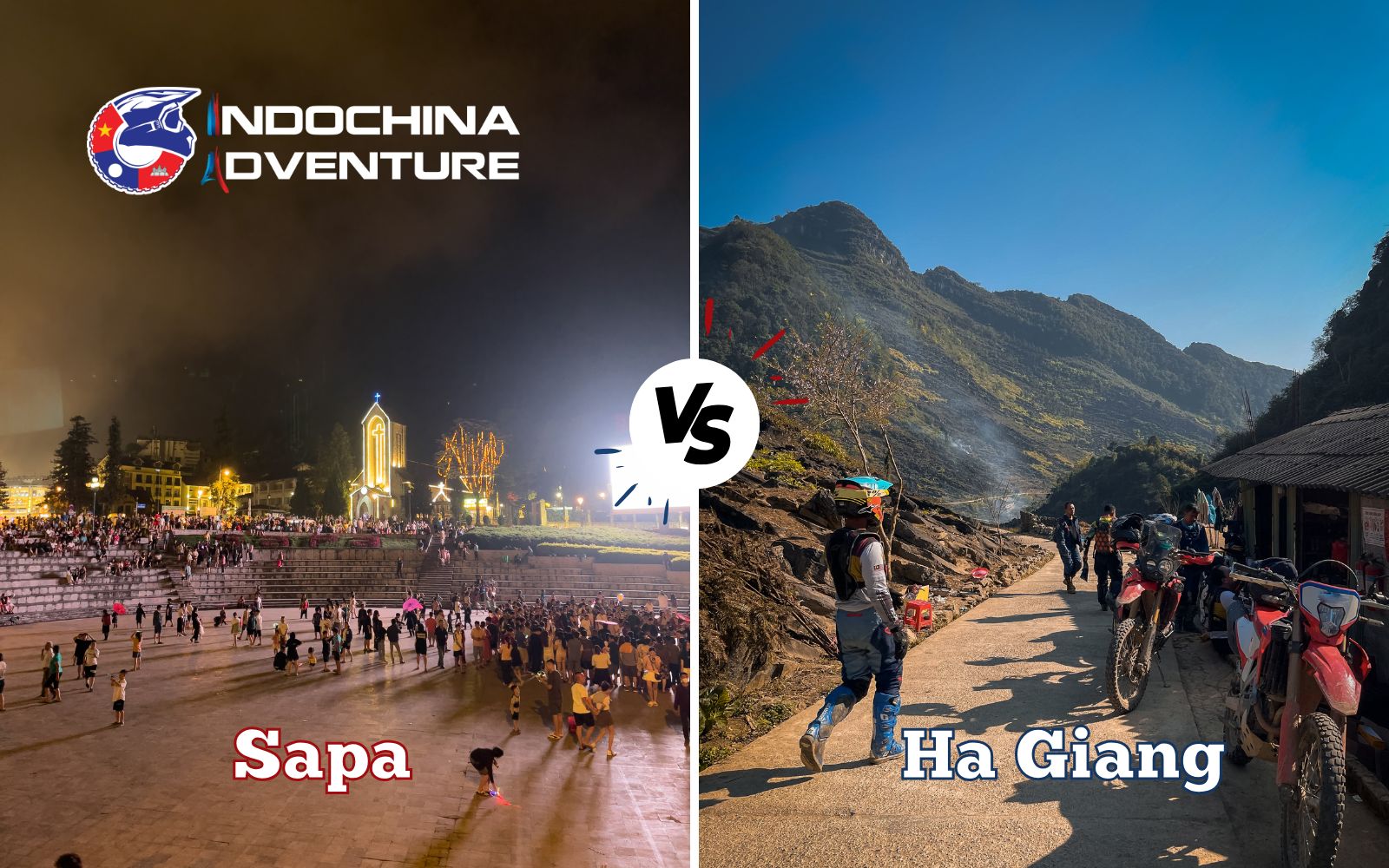
Traditional ethnic communities shaped by tourism levels and geographic isolation
Cost comparison
- Sapa: Offers a wide spectrum of pricing, ranging from affordable $15 hostels to world-class $300 luxury mountain resorts. While budget options exist, the general cost of dining in many best restaurants in Sapa and guided trekking tours is higher due to its status as a premier global tourist destination.
- Ha Giang: Generally much more budget-friendly, as the primary expenses are bike rentals and local homestays. You can expand your horizons in this region without breaking the bank, with many family-run accommodations including a massive “family dinner” for a very modest price.
Crowds & tourism development
- Sapa: As a long-standing tourism hub, Sapa features a highly developed infrastructure with luxury hotels, fine-dining restaurants and the modern cable car. While it offers many world-class places to visit in Sapa, the high density of travelers can make the town center feel quite busy and commercialized, especially during peak weekends.
- Ha Giang: Still largely considered Vietnam’s “final frontier”, Ha Giang remains rugged and relatively underdeveloped compared to its western neighbor. Large stretches of the province allow you to uncover the hidden gems of the landscape in near-total solitude, providing a much quieter and more raw experience for those looking to escape the masses.
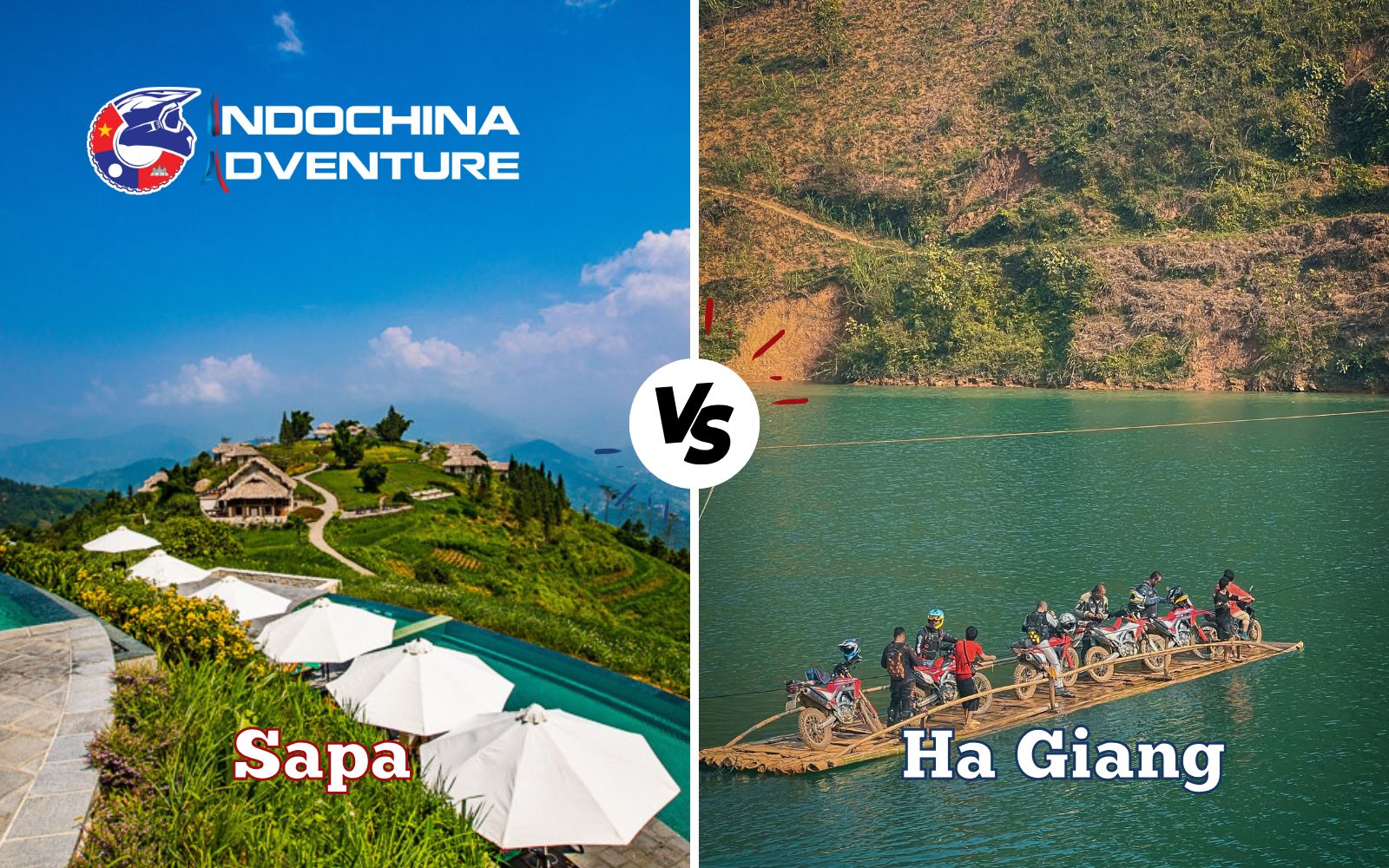
Modern tourist infrastructure versus the raw, untouched beauty of the frontier
Photography
- Sapa: Ideal for travelers who love atmospheric and soft-toned images, Sapa is famous for its terraced rice fields, rolling valleys, and layers of morning mist. Many classic things to do in Sapa, such as trekking through Muong Hoa Valley or visiting ethnic villages, provide excellent opportunities for landscape and lifestyle photography.
- Ha Giang: If you want to behold the grandeur of the limestone karst plateaus, this province offers a cinematic, high-contrast quality that is truly unparalleled. Among the essential things to do in Ha Giang, chasing the sunrise over the Ma Pi Leng Pass provides a wonderful opportunity to photograph the emerald Nho Que River as it winds through the deepest canyon in Southeast Asia.
Weather
- Sapa: Located at a higher elevation, Sapa has a cooler climate year-round, with frequent fog and higher rainfall, especially from May to September. When comparing Sapa vs Ha Giang weather, Sapa is more prone to misty conditions, which can both enhance scenery and limit visibility at times.
- Ha Giang: In contrast, Ha Giang generally enjoys clearer skies and more stable weather during the dry season, making mountain travel more predictable. The best time to visit Ha Giang is from September to November and March to May, when temperatures are comfortable and landscapes are at their most vibrant.
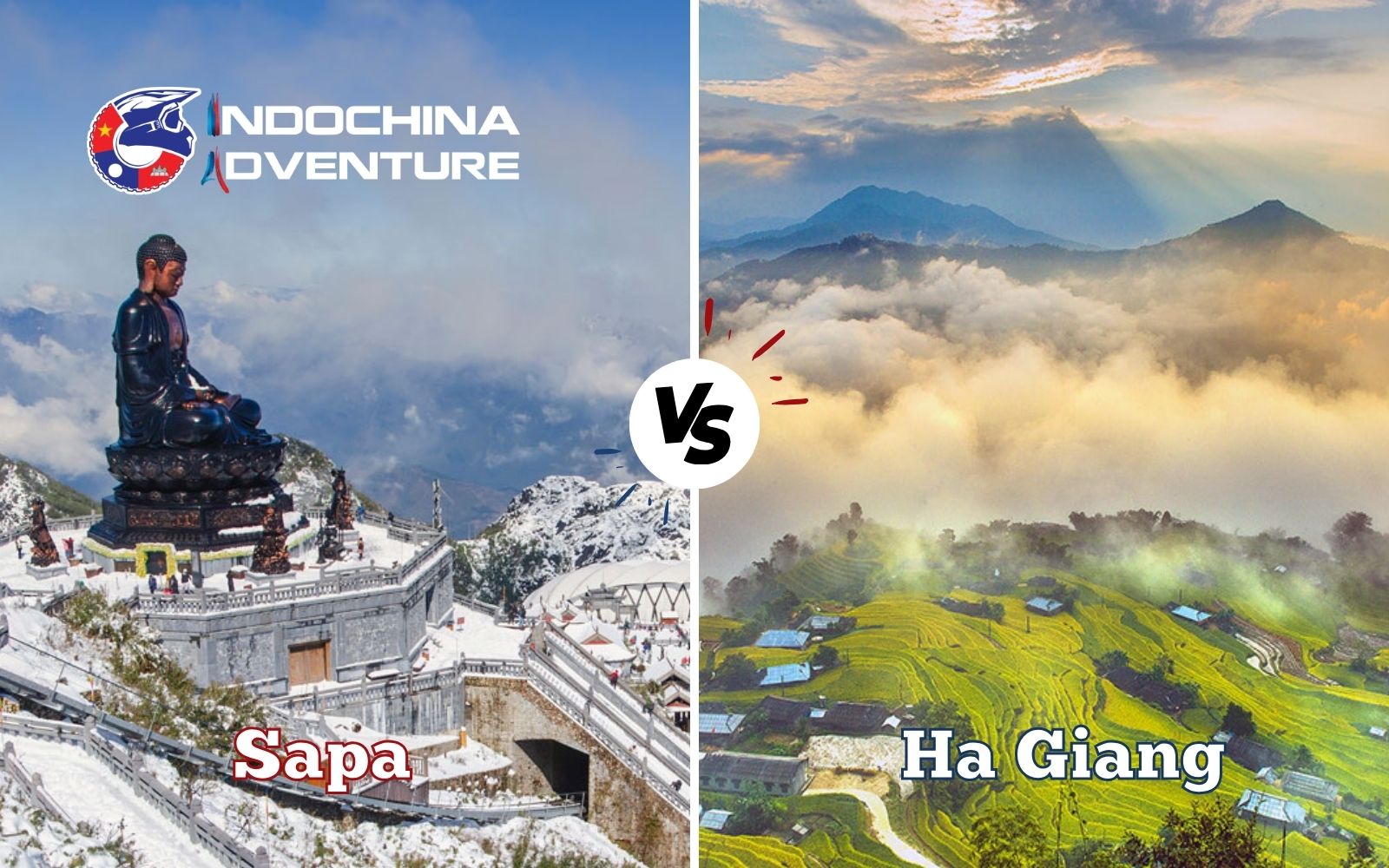
Essential tips for navigating the unpredictable Sapa vs Ha Giang weather patterns
Read more: Choosing the Best Time to Visit Sapa: A Comprehensive Guide
Sapa or Ha Giang? Choose based on your travel style
Travel style plays a decisive role when choosing between these two northern destinations. Instead of asking which is better Sapa or Ha Giang in general, it’s more helpful to consider how you like to travel, slow and comfortable or adventurous and immersive.
|
Travel style |
Better choice |
Reason |
|
Families / First-timers |
Sapa |
For travelers new to northern Vietnam, the question Sapa or Ha Giang for first timers often comes down to comfort and accessibility, and Sapa clearly feels more manageable and family-friendly. |
|
Adventure seekers |
Ha Giang |
In any honest Ha Giang vs Sapa comparison, Ha Giang stands out for its demanding Vietnam motocycle routes mountain passes, long riding days and sense of true exploration. |
|
Photographers |
Ha Giang |
When looking at Sapa vs Ha Giang scenery, Ha Giang delivers bolder compositions with karst peaks, deep canyons, and vast open landscapes. |
|
Culture lovers |
Ha Giang |
If you’re debating Sapa or Ha Giang for cultural immersion, Ha Giang offers deeper connections with ethnic communities living far from mass tourism routes. |
|
Budget travelers |
Ha Giang |
From a cost perspective, Ha Giang remains more affordable for accommodation, food, and transport, especially for longer stays. |
If you find it impossible to choose after seeing this Sapa vs Ha Giang comparison, why not experience the best of both worlds by combining them into one epic northern circuit? This allows you to transition seamlessly from the soft, misty terraced valleys of the northwest to the jagged, cinematic karst peaks of the northeast. It is the ultimate way to witness the full, diverse spectrum of Vietnam’s highland beauty in a single, unforgettable journey.
See Sapa and Ha Giang through local eyes: travel deeper with Indochina Adventure
Traveling through northern Vietnam becomes far more meaningful when guided by people who truly understand the land. Indochina Adventure focuses on immersive journeys that go beyond famous viewpoints, helping travelers experience Sapa and Ha Giang through local perspectives rather than standard tourist routes. From mountain backroads and remote ethnic villages to carefully selected Ha Giang motorbike routes, each itinerary is designed to balance adventure, safety and cultural respect, which allows you to connect deeply with the landscapes and communities you visit.
What sets Indochina Adventure apart is its commitment to responsible, experience-driven travel. Our trips are crafted for travelers who value authenticity and depth, whether riding through lesser-known Sapa motorbike routes or trekking on foot in remote highland regions. This approach ensures every journey feels personal, immersive and rooted in genuine local experiences.
Key highlights include:
- Unique off-the-beaten-path routes: Explore hidden trails and remote ethnic villages that remain largely untouched by mainstream tourism.
- Professional expert team: Our guides are advanced riders and local experts who prioritize your safety while sharing deep insights into regional culture.
- 24/7 personalized support: Enjoy round-the-clock access to personal travel experts and a support team dedicated to your comfort throughout the trip.
- Authentic cultural immersion: Experience the true spirit of the highlands through communal “family dinners” and genuine interactions with local ethnic communities.
With Indochina Adventure, Sapa and Ha Giang are not just destinations, they become stories shaped by local insight and genuine human connections.

Expert-led expeditions exploring the very best of Sapa or Ha Giang routes
Frequently asked questions to decide Sapa or Ha Giang
1. Is it worth going to Ha Giang?
Yes. Ha Giang is widely considered one of Vietnam’s most spectacular regions, known for dramatic mountain landscapes, authentic ethnic culture, and the legendary Ha Giang Loop. It’s especially rewarding for travelers seeking adventure and off-the-beaten-path experiences.
2. Does the Ha Giang Loop go through Sapa?
No. The Ha Giang Loop is a separate route and does not pass through Sapa. Many travelers visit Sapa first, then travel independently to Ha Giang as part of a northern Vietnam itinerary.
3. How long should I spend in each area?
- For Sapa: 2 to 3 days is ideal. This gives you enough time to trek through the Muong Hoa Valley, visit local villages and take the cable car to the summit of Fansipan.
- For Ha Giang: 3 to 4 days is the minimum recommended time for the Loop. A 3-day trip covers the main highlights, but a 4-day itinerary allows for a more relaxed pace and the chance to explore more remote spots like Du Gia.
To sum up, deciding Sapa or Ha Giang depends on what you want to feel from your journey through northern Vietnam. Sapa offers a softer introduction with iconic landscapes, while Ha Giang delivers raw adventure and unmatched mountain scenery. Both destinations have their own magic and experienced travelers often find the best choice is to see them through local insight rather than rushing highlights. With Indochina Adventure, exploring Sapa or Ha Giang becomes a carefully crafted experience, deeper, safer and far more meaningful than traveling alone.



Latest posts

Is Ma Pi Leng Pass Really Dangerous or Just Intimidating?
 Date: 20/01/2026

Best Food in Sapa: 15+ Must-Try Dishes You Shouldn’t Miss
Date: 20/01/2026
What to Pack for Moc Chau Plateau – Essential Packing List
Date: 20/01/2026
Ha Giang Vs Ninh Binh: Which One Is Better For Your Trip?
Date: 20/01/2026
Ha Giang Loop Or Cao Bang Loop? A Clear Decision Guide For Travelers
Date: 20/01/2026
Ha Giang Loop Nightlife: Is It Fun or Totally Quiet?
Date: 20/01/2026
Maybe You Don’t Know
Is Ma Pi Leng Pass Really Dangerous or Just Intimidating?
For many riders planning the Ha Giang Loop, the big question is is Ma Pi…
Date: 20/01/2026

Best Food in Sapa: 15+ Must-Try Dishes You Shouldn’t Miss
Famous for misty mountains and ethnic cultures, Sapa is also a paradise for travelers seeking…
Date: 20/01/2026
What to Pack for Moc Chau Plateau – Essential Packing List
Moc Chau Plateau is a dream destination for nature lovers, famous for its rolling tea…
Date: 20/01/2026
Ha Giang Vs Ninh Binh: Which One Is Better For Your Trip?
Northern Vietnam is home to two of the most iconic landscapes in Southeast Asia, yet…
Date: 20/01/2026
Ha Giang Loop Or Cao Bang Loop? A Clear Decision Guide For Travelers
Northern Vietnam offers some of the most spectacular motorbike routes in Southeast Asia, and two…
Date: 20/01/2026
Ha Giang Loop Nightlife: Is It Fun or Totally Quiet?
After a long day of navigating limestone pinnacles and hair-raising mountain passes on adventure motorcycle…
Date: 20/01/2026