Moc Chau Plateau is a dream destination for nature lovers, famous for its rolling tea hills, blooming flower seasons, and refreshing highland air. However, because of its unique topography, the weather can be quite unpredictable. Knowing exactly what to pack for Moc Chau Plateau is the key to enjoying your trip without being caught off guard by a sudden chill or a tropical downpour. This Moc Chau packing guide of Indochina Adventure will help you prepare everything you need for a perfect adventure motorcycle riding in highland getaway.
What to pack for Moc Chau Plateau based on weather?
The climate in the highlands is significantly different from the delta areas, often featuring four seasons in a single day. These Moc Chau Plateau travel tips are essential when planning what to pack for Moc Chau Plateau, as timing your visit correctly helps you build an effective Moc Chau travel packing list to handle shifting temperatures.
What to pack for Moc Chau Plateau in the Dry Season (Oct–Apr)?
Moc Chau is famous for its “four seasons in one day” climate. Even in the summer, the temperature at night can drop to around 18°C–20°C, making it best time to join Moc Chau tours. To stay comfortable while enjoying popular things to do in Moc Chau Plateau, such as exploring tea hills or visiting ethnic villages, you should pack versatile pieces that can be layered easily. Here is the essential Moc Chau packing list for your wardrobe:
- Layered Tops: Bring a mix of cotton T-shirts for the sunny afternoon and long-sleeved shirts for the cooler mornings.
- Warm Outerwear: A windbreaker is perfect for the rainy season, while a thick puffer jacket is a must for the winter (especially when temperatures hit 8°C).
- Comfortable Pants: Jeans, leggings, or durable trekking trousers are best for navigating the hilly terrain.
- Light Sweater/Hoodie: Ideal for the breezy evenings on the plateau.
- Thermal Wear: Specifically for those wondering what to pack for Moc Chau Plateau in winter, thermal base layers are lifesavers.
- Modest Clothing: A long skirt or scarf is helpful when visiting local villages or sacred sites.

Focus on thermal layers and heat-retaining fabrics when deciding what to pack for Moc Chau Plateau in winter
What to pack for Moc Chau Plateau in the Rainy Season (May–Sep)?
Summer on the plateau offers a cool escape from the city heat, with average temperatures between 20°C and 28°C. However, this is also the season of sudden, heavy tropical showers. If you join Son La Motorbike tours in this period, what to bring to Moc Chau should bring:
- Trekking Shoes/Boots: Best for hiking Pha Luong or walking through the slippery moss near Dai Yem Waterfall.
- Comfortable Sneakers: Your primary choice for a Moc Chau travel packing list, perfect for walking through tea plantations.
- Waterproof Sandals: Highly recommended during the rainy season (May–Sep) to handle puddles and mud.
- Extra Socks: Always pack more than you think you need, especially thick wool socks if you are visiting during the cold months.

Prioritize waterproof gear and quick-dry materials to keep your Moc Chau packing list practical for summer showers
Clothing Essentials – What to wear in Moc Chau Plateau?
The weather on the plateau can be quite fickle, often shifting from bright sunshine to chilly fog within an hour. To stay comfortable, your Moc Chau packing list should be built around the principle of layering, allowing you to adapt to temperatures that can swing from 10°C at night to 25°C during the day. Whether you are posing in the tea heartland or visiting a local H’Mong village during Northwest Vietnam motorcycle tours, here is what to bring to Moc Chau regarding clothing:
- Breathable Base Layers: Lightweight T-shirts or tank tops for when the highland sun is at its peak.
- Insulating Mid-layers: Flannel shirts or hoodies are essential for the breezy afternoon transitions.
- Heavy Outerwear: A high-quality parka or down jacket is a non-negotiable item for any Moc Chau Plateau packing list if you visit between November and February.
- Versatile Bottoms: Pack comfortable jeans or cargo pants that allow for easy movement during outdoor activities.
- Ethnic-friendly Attire: Long skirts or modest dresses are great for cultural respect and provide beautiful photos against the white plum blossoms.
- Thermal Sets: A must-have for what to pack for Moc Chau Plateau in winter to keep your body heat stable during the freezing nights.

A curated selection of versatile layers that are essential for every Moc Chau Plateau what to bring checklist
Footwear – What shoes to pack for Moc Chau Plateau?
Choosing the right footwear is the most critical part of your Moc Chau travel packing list because the terrain is diverse, ranging from red dirt paths to slippery limestone rocks. To ensure you don’t end up with sore feet or ruined shoes, here is what to pack for Moc Chau in terms of footwear:
- Sturdy Hiking Boots: Essential if your Moc Chau packing guide includes conquering Pha Luong Peak or trekking deep into the Na Ka plum valley.
- All-terrain Sneakers: A pair with good traction is perfect for walking through the undulating Moc Chau tea hills.
- Waterproof Sandals: Highly recommended for the rainy season (May–Sep) to navigate muddy paths or for wading through shallow streams at Dai Yem Waterfall.
- Thick Wool Socks: Don’t forget to include these in your Moc Chau Plateau what to bring list to prevent blisters and keep your toes warm at night.
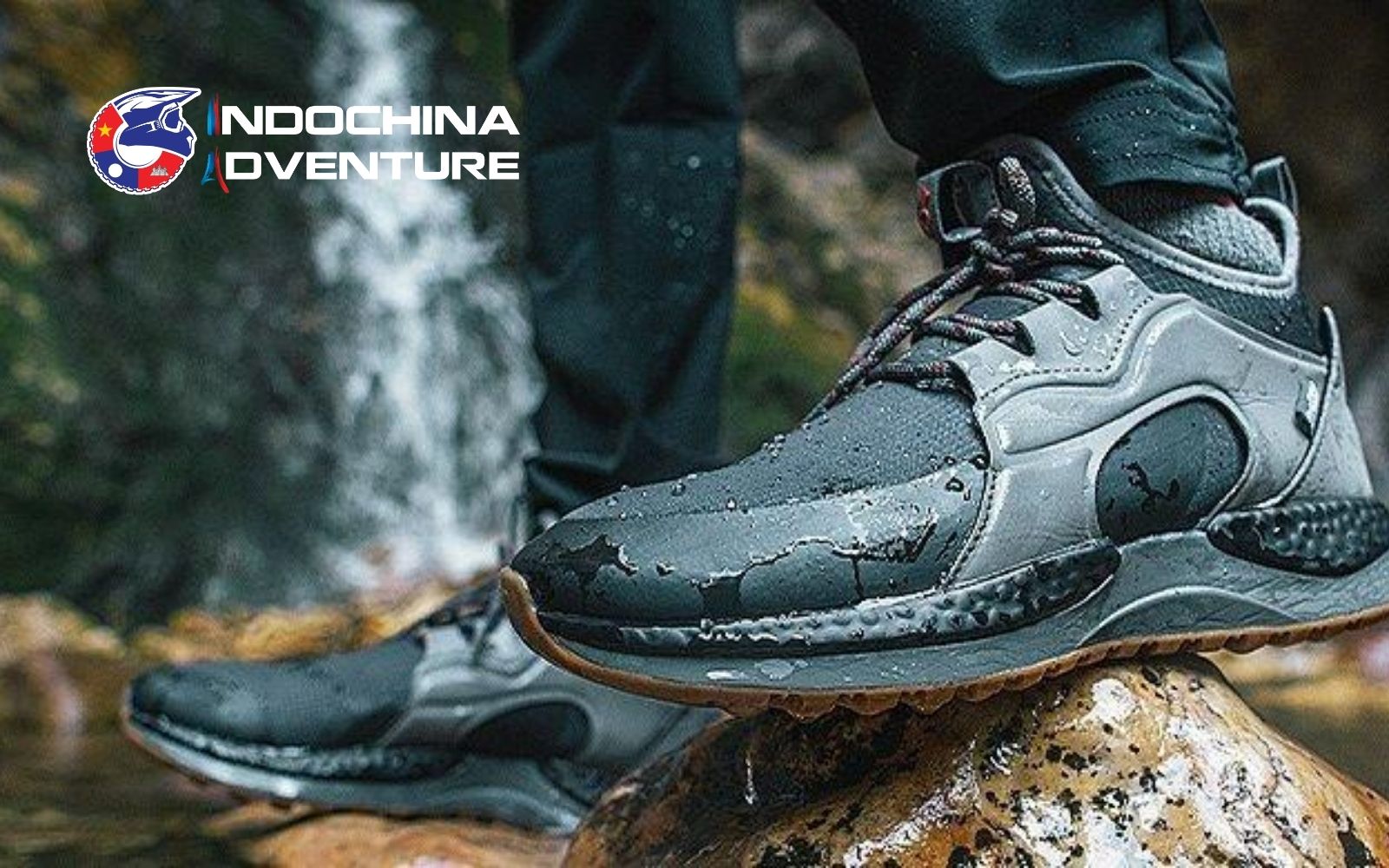
Choose the right soles for the plateau’s terrain in Moc Chau
What to pack for motorbike travel in Moc Chau Plateau?
Riding a motorbike through the winding passes and hidden valleys is the ultimate way to feel the pulse of the Northwest. However, the high altitude and mountain winds require specific gear to ensure your safety and comfort during your North Vietnam motorbike tours. When considering what to pack for Moc Chau Plateau for a two-wheeled adventure, keep these items in your trunk:
- High-Quality Windbreaker: A must-have to block the biting wind while cruising through the plateau.
- Full-Face Helmet & Goggles: To protect your eyes from dust, insects, and the harsh highland sun.
- Rain Poncho and Boot Covers: Essential for the Moc Chau travel packing list to handle sudden mountain mists or heavy rain.
- Reflective Vest: Crucial for safety if you find yourself driving through the dense fog common in early mornings.
- Protective Padding: Elbow and knee guards provide peace of mind on the steep, curvy roads.
- Touchscreen Gloves: Keeps your hands warm while allowing you to check your GPS for the next stunning viewpoint.
If you want to experience Moc Chau without worrying about routes, weather conditions, or logistics, joining a guided tour is the smartest option. Travel through Moc Chau Plateau motorbike tours with Indochina Adventure gives you local expertise, well-planned itineraries, and reliable support throughout your journey. Beside that, our tour will let you experience the Moc Chau traditional festivals with local people, tasting cuisine and homestays for an immersive experience. Contact us now to start planning your perfect escape to the majestic Moc Chau Plateau.

Explore the beauty of Moc Chau Plateau with Indochina Adventure
Preparation is the final step to ensuring your highland adventure is as breathtaking as the scenery itself. By following this guide, you can confidently face the shifting weather and rugged terrain of the Northwest and don’t need to worry about what to pack for Moc Chau Plateau. Book your journey with Indochina Adventure today to experience the very best of Moc Chau Plateau with the experts.

Northern Vietnam is home to two of the most iconic landscapes in Southeast Asia, yet Ha Giang and Ninh Binh offer worlds that could not be more different. One is a soaring mountain frontier defined by adrenaline, ethnic culture and legendary off road motorcycle adventure tours while the other is a serene sanctuary of limestone karsts rising from peaceful river valleys. Deciding on a Ha Giang or Ninh Binh itinerary depends entirely on whether you crave a high-octane adventure or a soulful, relaxing escape. Now, Indochina Adventure will help you clearly compare to decide which destination suits your style best.
Ha Giang or Ninh Binh – Quick answer for first-time travelers
If you are short on time and want to see “the most beautiful place in Vietnam” with minimal effort, Ninh Binh often stands out when comparing Ha Giang vs Ninh Binh travel in terms of convenience. However, if you are looking for a life-changing adventure and do not mind long travel days, the Ha Giang Loop is unmatched in its scale and rugged beauty.
| Feature | Ha Giang Loop | Ninh Binh |
|
Landscapes compared |
Dramatic mountain passes, deep valleys, remote highland scenery |
Limestone karsts, rivers, rice fields, “Halong Bay on land” |
|
Activities & daily pace |
Multi-day road journeys, ethnic markets, mountain exploration |
Boat rides, cycling, temple visits at a slow, relaxed pace |
|
Difficulty & comfort level |
Physically demanding, long travel days, basic accommodation in some areas |
Easy to navigate, comfortable stays, minimal physical effort |
|
Crowds, tourism & atmosphere |
Fewer tourists, off-the-beaten-path, raw and authentic |
More visitors at key sites, calm but touristic atmosphere |
|
Safety & Stress level |
Requires confidence on mountain roads; higher adventure risk |
Low-stress travel with predictable routes and facilities |
|
Best time to Visit |
Best during dry seasons for clear mountain views and road conditions |
Accessible year-round, especially scenic in spring and autumn |
|
How much time do you need? |
3 – 5+ days to fully experience the loop |
1 – 3 days for main highlights |
Explore more: Sapa or Ha Giang? The Ultimate Comparison for Your Vietnam Trip
What kind of experience are you looking for? Ha Giang or Ninh Binh
Deciding Ha Giang or Ninh Binh which is better ultimately depends on your desired pace and comfort. If you are a fan of high-octane motorbike tours of Vietnam, the rugged peaks of Ha Giang offer an unbeatable adrenaline rush. However, for those who prefer peaceful river cruises and accessible beauty, Ninh Binh provides a much more relaxed alternative.
Landscapes compared
Both destinations are iconic highlights of north Vietnam motorcycle tours, yet they offer two completely different geological spectacles.
- Ha Giang: Vast mountain ranges, winding passes, and deep valleys create a dramatic highland environment, with many iconic places to visit in Ha Giang such as Ma Pi Leng Pass and the Dong Van Karst Plateau defining its raw, adventurous appeal.
- Ninh Binh: Gentle limestone karsts rising from rivers and rice fields shape a peaceful, lowland landscape that feels calm, scenic and easy to explore at a slower pace.
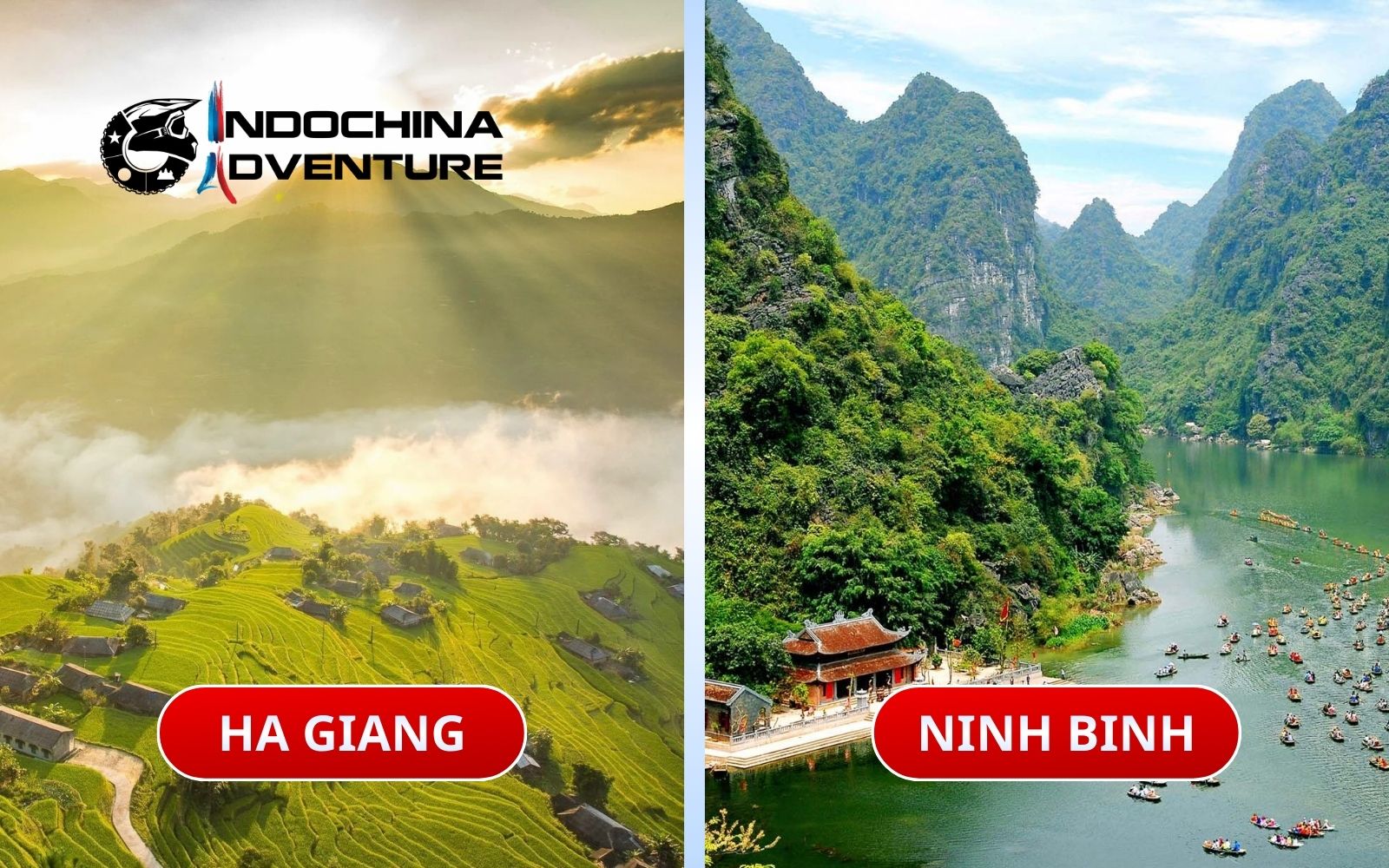
Marvel at the spectacular natural diversity found in Ninh Binh vs Ha Giang
Activities & daily pace
The difference in activities and daily pace is one of the clearest ways to understand the contrast in Ha Giang loop vs Ninh Binh travel styles.
- Ha Giang: Days are built around long rides, changing landscapes and cultural stops with things to do in Ha Giang ranging from conquering mountain passes and visiting ethnic markets to exploring remote villages along the loop.
- Ninh Binh: The rhythm is slower and more relaxed, focused on short excursions such as boat rides, cycling through countryside lanes, and joining a motorbike tour Ninh Binh that links nearby temples, viewpoints, and river valleys without rushing.
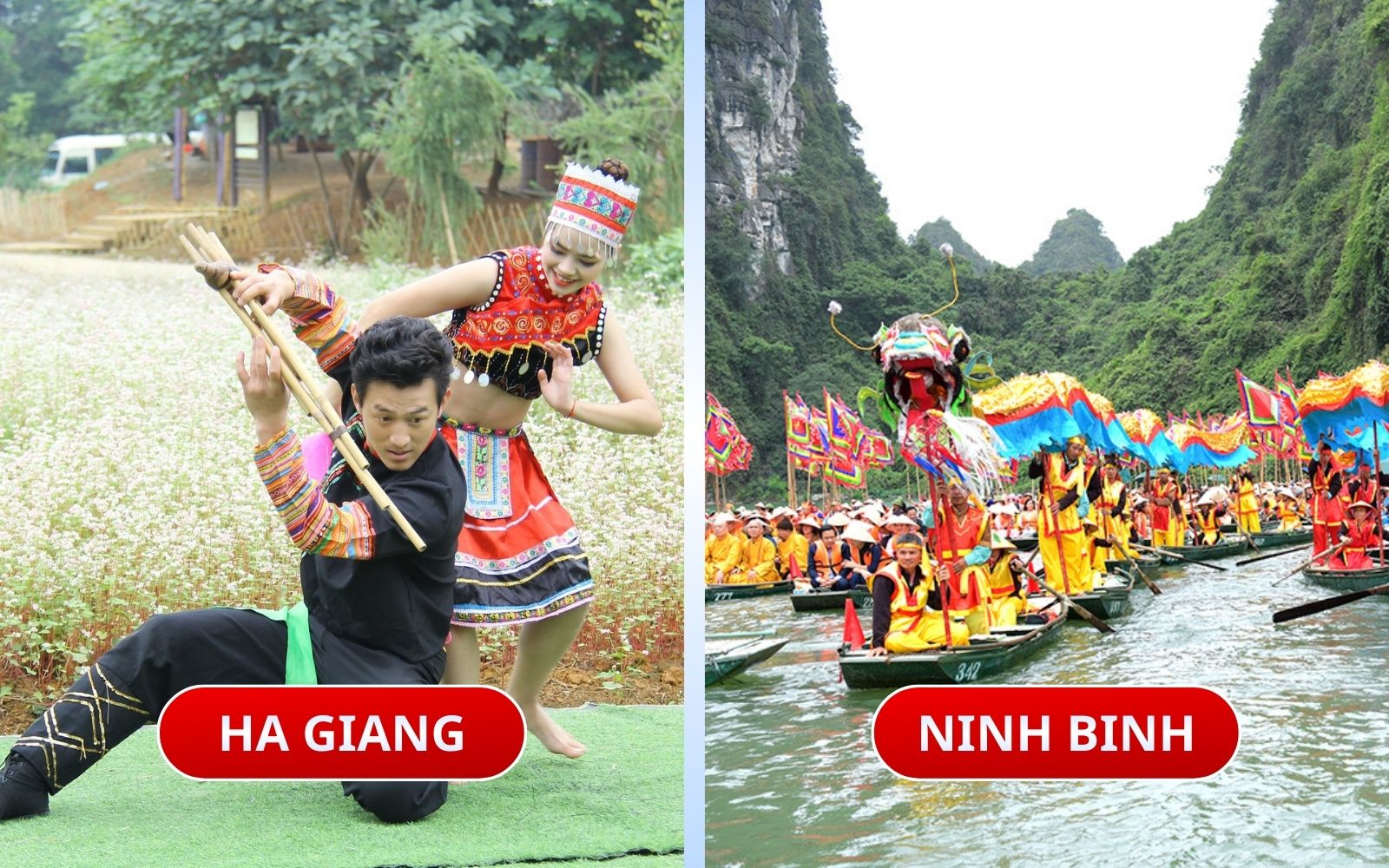
Adventure-filled loops or relaxed sightseeing, choose your ideal travel rhythm
Difficulty & comfort level
The level of difficulty and comfort can greatly shape your overall experience when planning a Ha Giang or Ninh Binh trip, especially for first-time visitors.
- Ha Giang: Long riding days, winding mountain roads, and basic facilities in remote areas make a Ha Giang motorbike tour more physically demanding, but highly rewarding for adventurous travelers.
- Ninh Binh: Easy transportation, short travel distances, and a wide range of comfortable accommodations make it a gentler alternative to more demanding routes such as northeast Vietnam motorcycle tours, offering a smooth, low-effort experience suitable for all travel styles.
Crowds, tourism & atmosphere
The overall mood of a destination is shaped not only by scenery but also by how many travelers you share it with and the atmosphere on the ground, a key factor in any Ha Giang or Ninh Binh comparison.
- Ha Giang: Vast landscapes and remote villages keep crowds low for most of the year, while events like the buckwheat flower festival in Ha Giang add color and cultural life without turning the region overly busy.
- Ninh Binh: Well-known sights and easy access from Hanoi mean a livelier tourism scene, where popular routes and classic things to do in Ninh Binh are often enjoyed alongside other visitors.
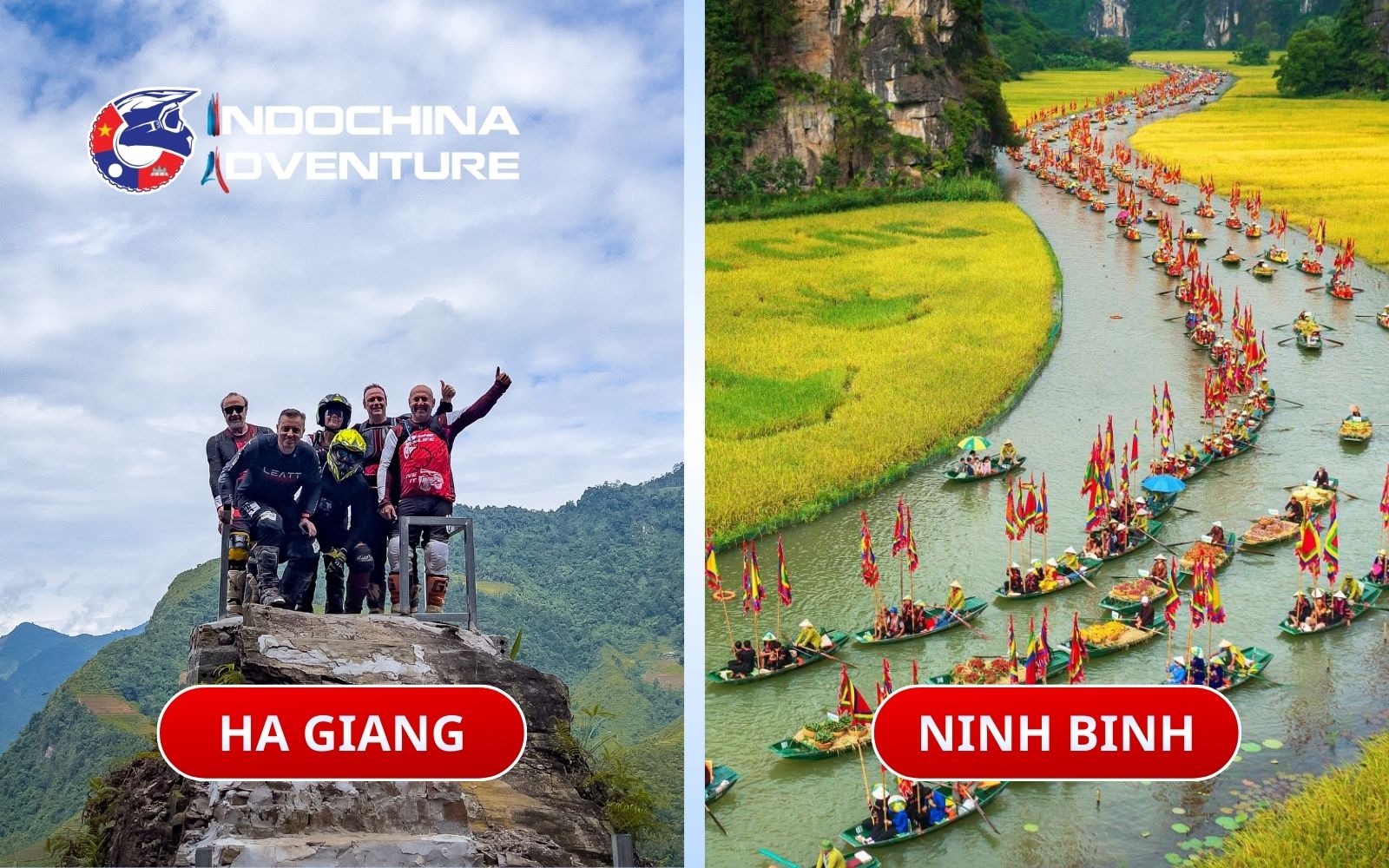
Remote villages or popular sites, each offers a unique travel vibe
Safety & stress level
Safety and stress levels can vary significantly depending on road conditions, travel pace, and overall accessibility, making this an important consideration when deciding between Ninh Binh or Ha Giang Loop.
- Ha Giang: With steep mountain roads, sharp curves, and long riding days, it is common to hear concerns such as Ha Giang loop dangerous, especially among travelers with limited motorbike experience.
- Ninh Binh: Flat roads, short distances, and well-developed infrastructure make getting around feel safe, predictable, and far less stressful for most visitors.
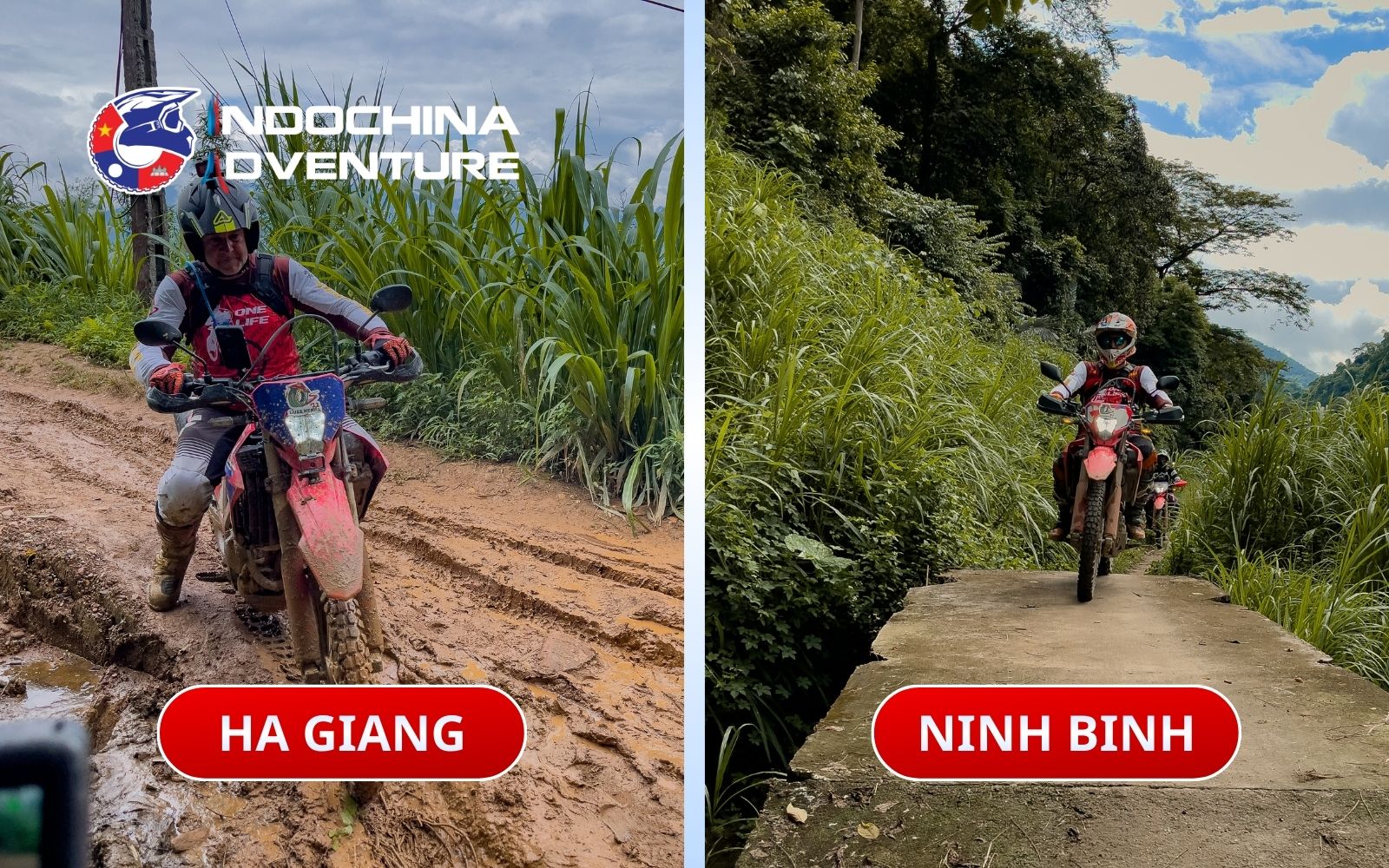
Check which terrain suits you better: the Ha Giang loop or Ninh Binh
Best time to visit
Seasonal conditions play an important role in shaping scenery, road safety, and overall enjoyment, so timing your trip wisely can make a noticeable difference.
- Ha Giang: Clear skies and stable road conditions typically fall between spring and autumn, which many travelers consider the best time to visit Ha Giang for mountain views, festivals and loop riding.
- Ninh Binh: Mild weather and lush landscapes appear in late spring and autumn, often regarded as the best time to visit Ninh Binh for boat trips, cycling, and outdoor sightseeing.
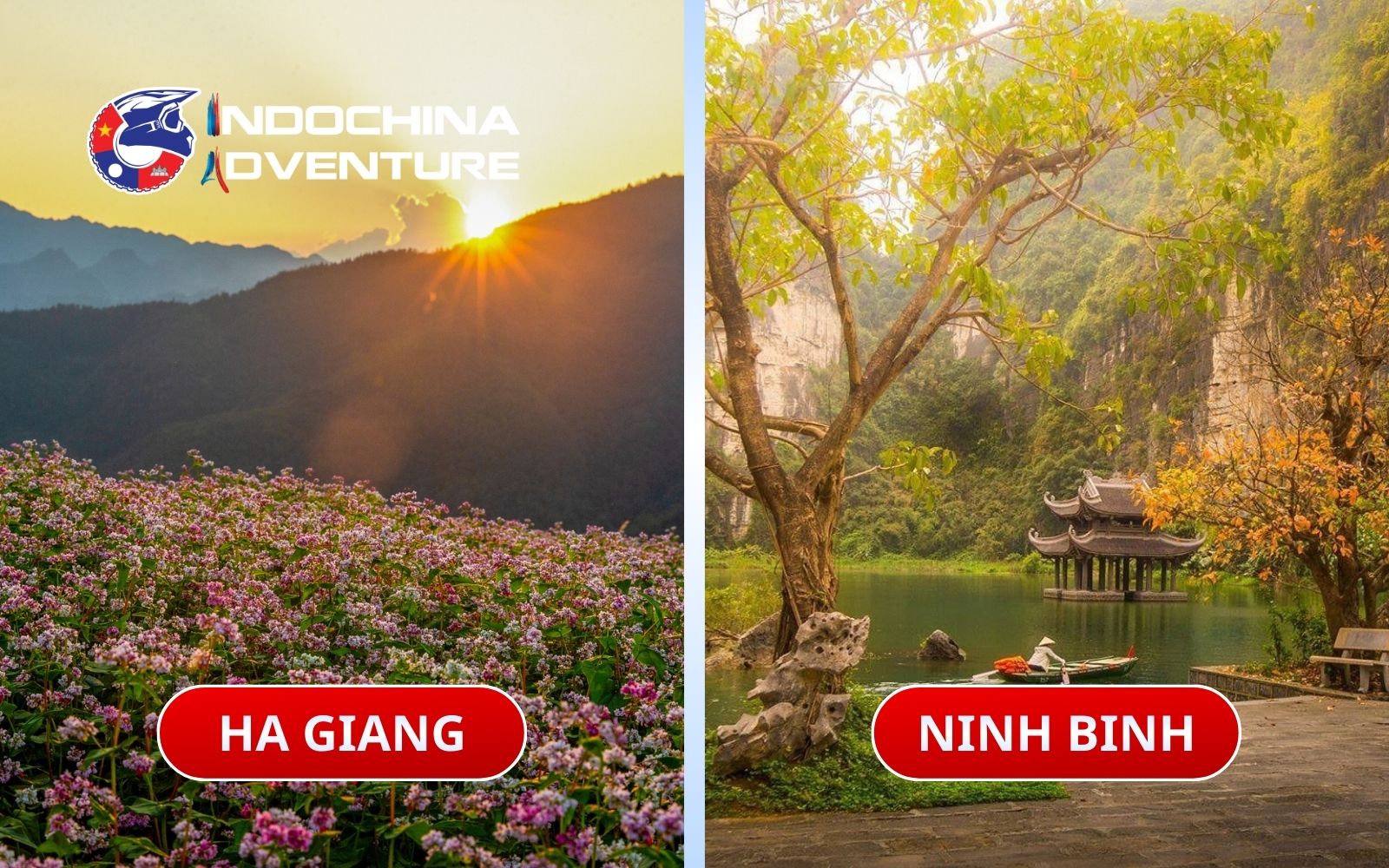
Discover the ideal seasons for mountains, rivers, and scenic beauty
How much time do you need?
Time availability often determines which destination fits better into your itinerary, especially when weighing options in Ha Giang or Ninh Binh Vietnam. The distance, terrain, and pace of travel in each place lead to very different time commitments.
- Ha Giang: A minimum of 3 days is required just to cover the basic loop, though most Ha Giang travel tips recommend 4 to 5 days to avoid spending 8+ hours a day on a bike. This timeframe accounts for the 6-hour journey from Hanoi and allows for essential stops at the Ma Pi Leng Pass and local ethnic villages without feeling rushed.
- Ninh Binh: Because it is only 2 hours from the capital, you can see the major highlights like Trang An and Mua Cave in a single day trip. However, staying for 2 to 3 days is ideal if you want a more immersive experience, allowing time to explore hidden pagodas, cycle through the countryside and enjoy the serene atmosphere at a slower pace.
Related read: Hidden Gems on Northwest Vietnam Motorcycle Routes
Who should choose Ha Giang or Ninh Binh?
Different travel styles naturally align with different destinations, and this is where the contrast between Ha Giang vs Ninh Binh becomes most practical. Rather than asking which place is better overall, it helps to consider who each destination suits best. Below is a quick breakdown to help you see where your travel preferences fit most naturally.
| Travel type | Ha Giang | Ninh Binh |
|
Solo travelers |
Ideal for Ha Giang Loop solo travelers seeking adventure, long road journeys, and deeper cultural immersion in remote mountain regions |
Well-suited for solo trips with easy transport, clear routes and a relaxed pace |
|
Couples & families |
Best for active couples who enjoy adventure, less suitable for families with young children due to long travel days |
Comfortable, scenic and family-friendly with gentle activities and convenient facilities |
|
First-time Vietnam visitors |
Suitable for confident travelers looking for a memorable, off-the-beaten-path experience |
A safe and accessible introduction to Vietnam’s landscapes, culture and travel style |
Can you visit both Ha Giang and Ninh Binh in one trip?
Yes, it is absolutely possible to visit both destinations in one journey, and for many travelers it is the most balanced way to experience northern Vietnam. Ha Giang and Ninh Binh are usually connected via Hanoi, with overnight buses or private transfers making the route manageable despite the distance.
A common approach is to start with Ha Giang for the more demanding mountain loop, then continue to Ninh Binh to slow down and recover with gentle sightseeing and river landscapes. If you are asking should I visit Ha Giang or Ninh Binh, combining both allows you to enjoy adventure and relaxation in a single, well-rounded trip, as long as you have at least 6 – 8 days available and plan the logistics carefully.
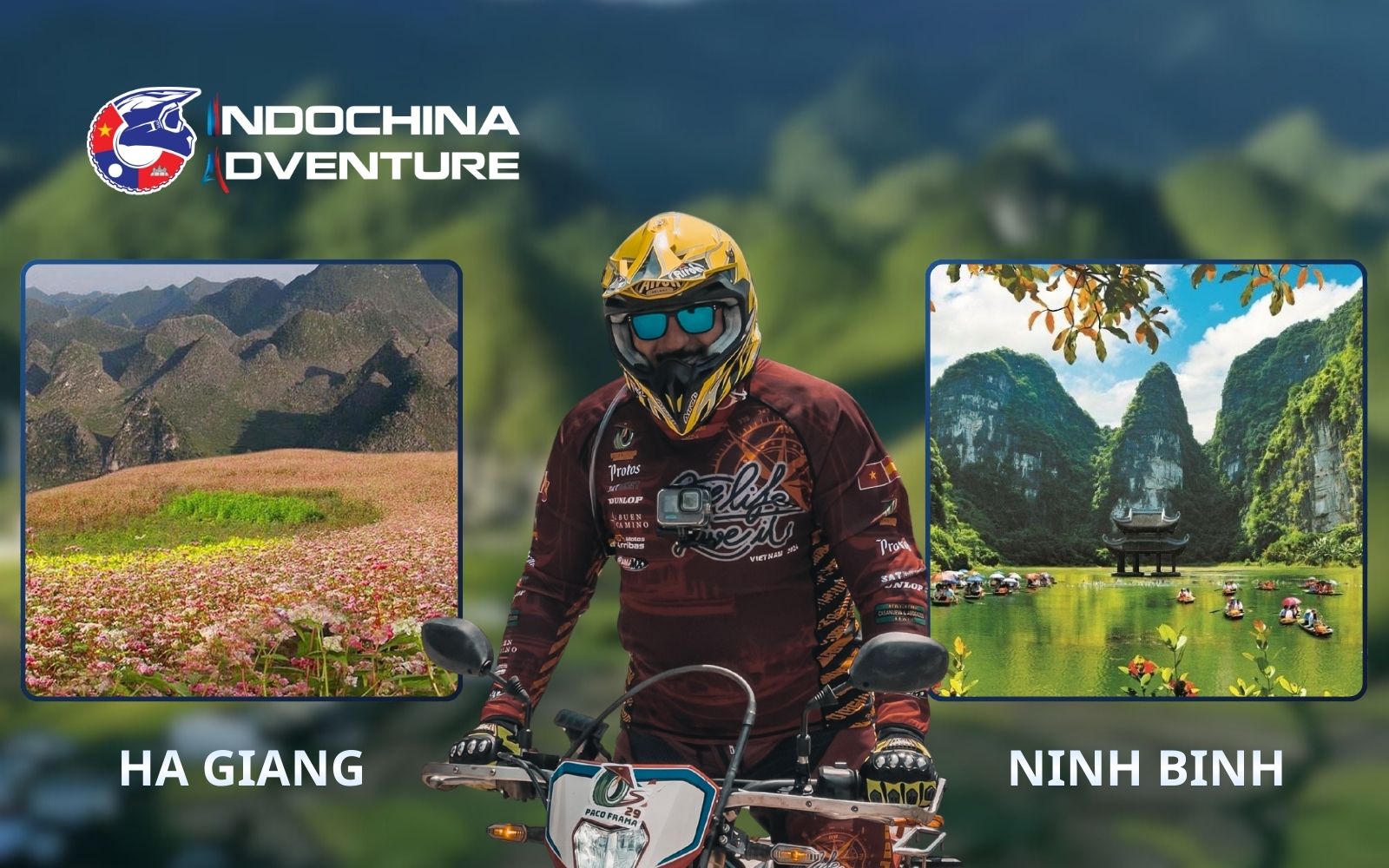
Seamlessly connect your journey from the emerald rivers to the northern peaks
Not sure between Ha Giang or Ninh Binh? Let Indochina Adventure help you experience both
Whether you have your heart set on the rugged peaks of the far north, the poetic river valleys of the lowlands, or a grand expedition that combines them both, Indochina Adventure is your dedicated partner in crafting the ultimate Northern Vietnam journey. We specialize in transforming complex logistics into seamless, life-changing experiences tailored to your personal travel style.
For travelers seeking dramatic scenery and true adventure, Indochina Adventure’s Ha Giang Loop tours are carefully designed to showcase the region’s most iconic mountain passes, ethnic villages, and remote landscapes. If your preference leans toward relaxation and scenic exploration, the Ninh Binh tours focus on calm river boat rides, countryside cycling, historic temples and limestone karsts.
For those who want the best of both worlds, Indochina Adventure also offers combined Ha Giang and Ninh Binh itineraries, seamlessly linking highland adventure with lowland tranquility. With expert planning, reliable logistics and local insight, you can focus on the experience itself, knowing every detail of your journey is thoughtfully handled from start to finish.

Indochina Adventure designs tours for one place or both destinations
The decision to visit Ha Giang or Ninh Binh boils down to the type of story you want to tell: one of quiet reflection among ancient river valleys or one of pure adrenaline atop the “roof of Vietnam”. Both regions stand as pillars of Southeast Asian beauty, and choosing between them is simply a matter of matching your current energy to the right landscape. No matter which path you take, the warmth of the local people and the sheer scale of the scenery will leave an indelible mark on your heart.
Stop dreaming about the horizon and start crossing it – get in touch with Indochina Adventure to map out your path today.
Northern Vietnam offers some of the most spectacular motorbike routes in Southeast Asia, and two names always come up in the debate: Ha Giang Loop vs Cao Bang Loop. Both deliver jaw-dropping mountain scenery, cultural depth, and unforgettable rides, making them a top choice for travelers seeking authentic off road motorcycle adventure tours. If you’re wondering which is better, Ha Giang Loop or Cao Bang Loop, this guide will help you decide clearly, drawing from real experience on every Vietnam motorcycle tour operated by Indochina Adventure.
|
Factor |
Ha Giang Loop |
Cao Bang Loop |
|
Overall vibe |
Dramatic, social, high-energy |
Peaceful, remote, slow-paced |
|
Landscape |
Extreme karst mountains, deep valleys |
Forested mountains, rivers, waterfalls |
|
Riding difficulty |
More challenging, sharp passes |
Easier, smoother roads |
|
Crowd level |
Busy, especially peak season |
Very quiet, off-the-beaten-path |
|
Social scene |
Hostels, group rides, nightlife |
Local homestays, early nights |
|
Best for |
First-timers, social travelers |
Nature lovers, experienced riders |
|
Time needed |
3 – 4 days |
2 – 3 days |
Key differences that matter when choosing Ha Giang loop vs Cao Bang loop
When comparing Ha Giang Loop vs Cao Bang Loop Vietnam, the difference isn’t just about scenery, it is about how each journey feels on the road. From riding conditions and daily rhythm to crowd levels and overall atmosphere, these contrasts shape the experience of north Vietnam motorcycle tours far more than most travelers expect.
What kind of experience do you want?
Both destinations offer incredible landscapes, but the “vibe” of your journey depends entirely on whether you prefer high-altitude drama or serene riverside beauty.
- Ha Giang: Choosing a Ha Giang loop tour means immersing yourself in a world of towering limestone peaks and deep canyons. This route is designed for those who want to feel small against the backdrop of massive, jagged mountains and experience the thrill of legendary mountain passes.
- Cao Bang: When comparing Cao Bang Loop vs ha giang, the former stands out for its lush, fairy-tale scenery. You will trade rocky cliffs for the thunderous Ban Gioc Waterfall, emerald-green rivers and hidden caves, making it ideal for those seeking a peaceful connection with nature.
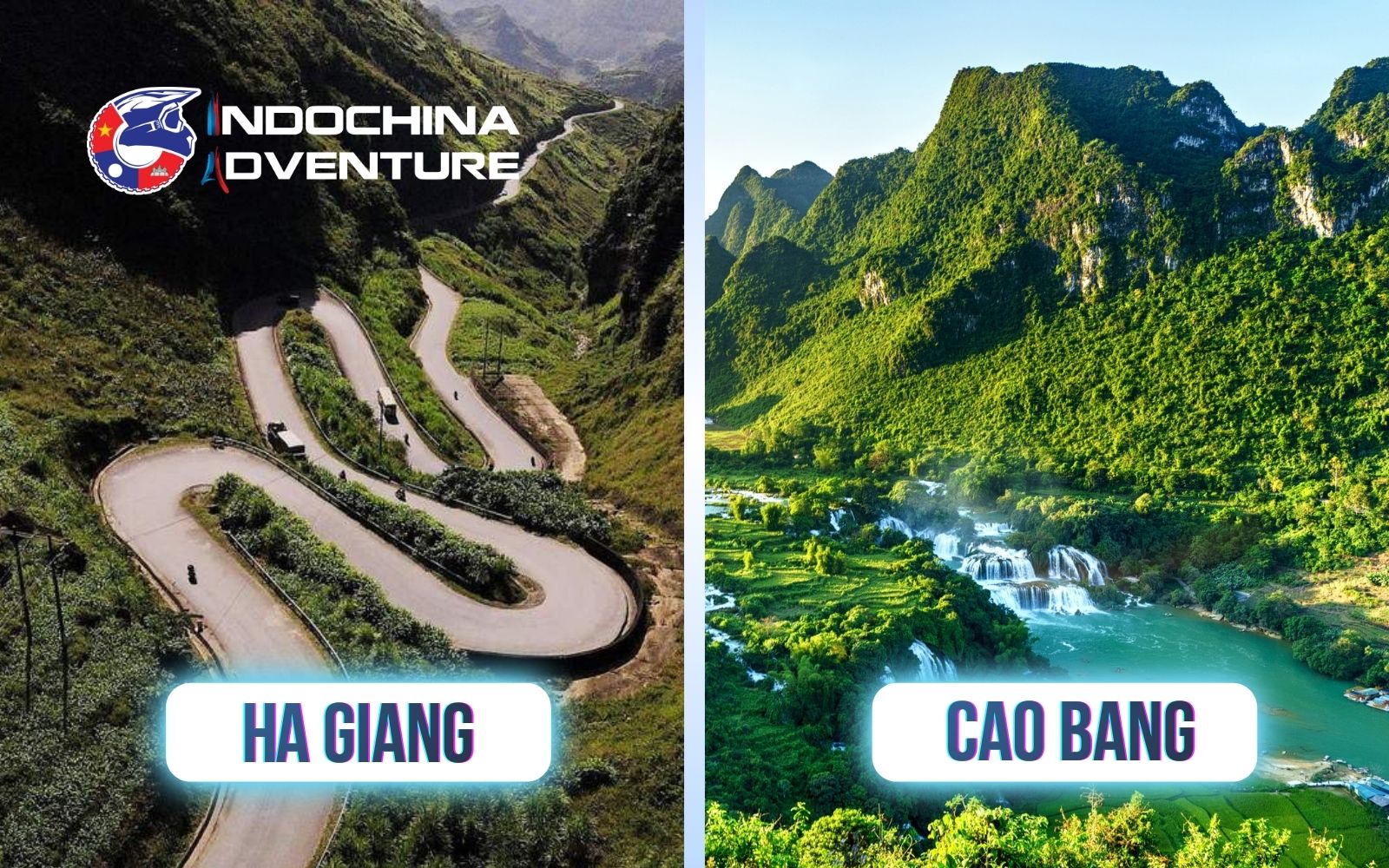
Define your journey style before choosing Ha Giang Loop or Cao Bang Loop adventure
Riding feel & difficulty – Which loop is easier on the road?
Riding conditions play a major role in any motorbike tour northeast Vietnam, and the contrast becomes clear when looking at the Ha Giang vs Cao Bang motorbike loop side by side.
- Ha Giang Loop: Feature steep mountain passes, tight hairpin turns, and heavier traffic, especially during peak season, making each riding day more demanding and high-focus.
- Cao Bang Loop: Offer wider roads, smoother gradients and far lighter traffic, creating a more relaxed riding flow that’s easier on both the body and the mind.
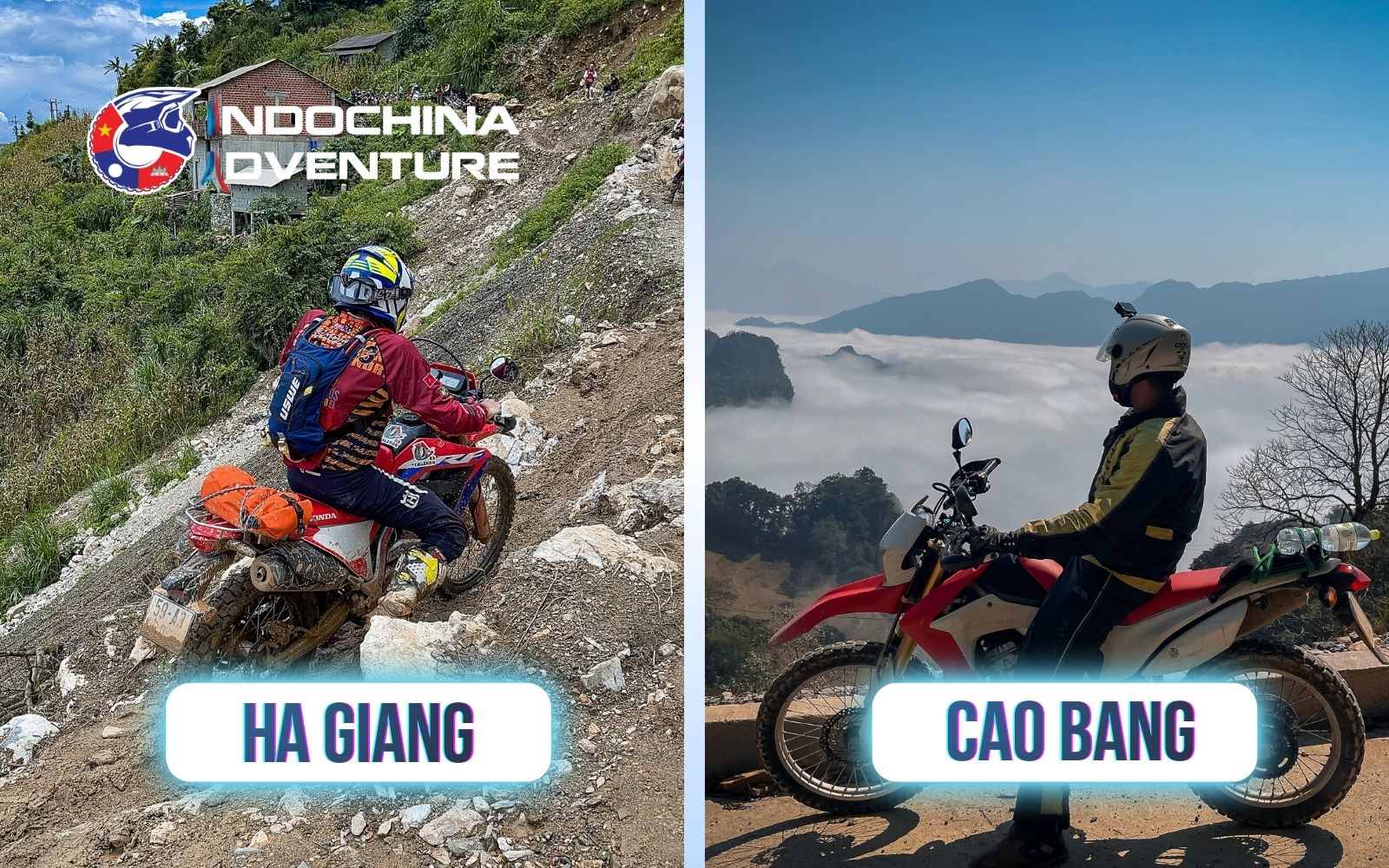
Compare technical mountain hairpins against smoother, wider roads for your journey
Daily rhythm – How each loop feels from morning to night
Beyond the scenery, the Ha Giang Loop vs Cao Bang Loop difference becomes most noticeable in how each day naturally unfolds from morning to evening.
- Ha Giang Loop: Days start early and move fast, filled with packed viewpoints, café stops, and lively evenings at hostels where travelers share stories and energy late into the night.
- Cao Bang Loop: Follow a slower pace, with unhurried mornings, scenic rides, and quiet evenings shaped by local meals and simple things to do in Cao Bang, like short walks, village visits or waterfall stops.
Crowds, people & social energy
The social atmosphere is perhaps the most striking difference between the two, depending on whether you want a vibrant backpacker scene or a quiet local immersion.
- Ha Giang’s vibrant social scene: This loop is a social hub where you’ll meet travelers from around the world, especially during Ha Giang traditional festivals like the Buckwheat Flower Festival when the ethnic markets come alive with color and music.
- Cao Bang’s authentic solitude: There are fewer tourists at the major places to visit in Cao Bang, allowing for genuine, quiet interactions with Nung and Tay villagers who still follow a very traditional way of life.

Decide between a vibrant, social atmosphere and a quiet, authentic local immersion
Safety, stress & police presence
Safety and mental comfort are often overlooked, yet they make a noticeable difference in any northern Vietnam motorbike loop comparison.
- Ha Giang Loop: Tend to involve more police checkpoints and higher traffic density, requiring riders to stay alert and well-informed about traffic law in Vietnam, especially during peak travel months.
- Cao Bang Loop: Generally feel calmer, with fewer checkpoints, lighter traffic and smoother enforcement conditions, making a motorbike tour Cao Bang less stressful and more relaxed overall.
Timing matters – Which loop fits your travel month?
Seasonal changes can completely reshape the riding experience, making timing just as important as route choice when planning a Vietnam motorbike loop Ha Giang vs Cao Bang journey.
- Ha Giang Loop: From March to May and September to November, widely considered the best time to visit Ha Giang thanks to clear skies, cooler temperatures and dramatic mountain visibility.
- Cao Bang Loop: Shines from April to October, when waterfalls are full and forests are lush, marking the best time to visit Cao Bang for riders who prefer greener landscapes and quieter roads.
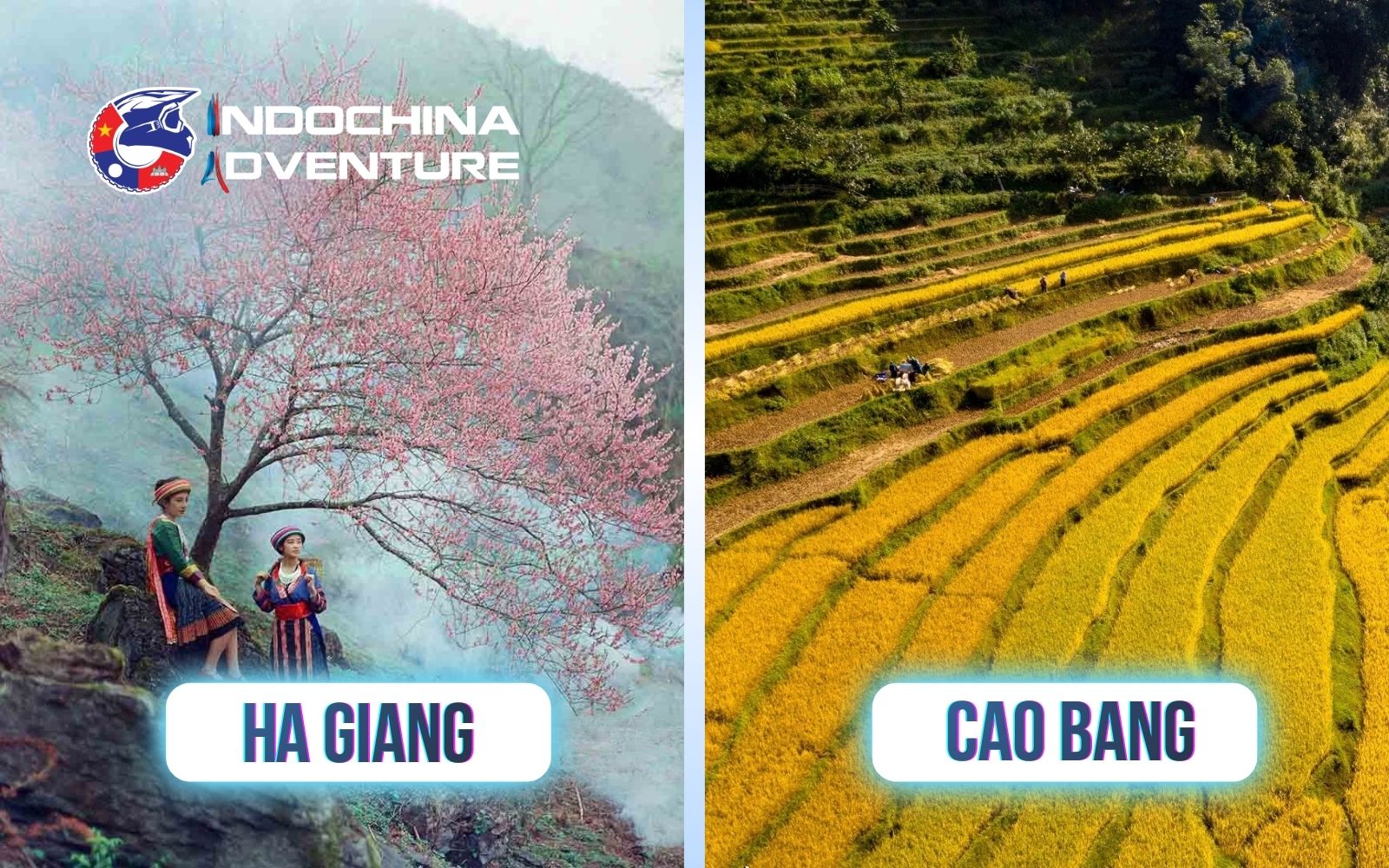
Pick the best season for golden harvests or powerful, majestic rushing waterfalls
How much time do you need for Ha Giang loop vs Cao Bang loop?
Finding the right balance between time on the road and time spent exploring is essential to ensure you do not miss the hidden gems tucked away in these northern provinces.
- Ha Giang Loop: Typically take 3 – 4 days, enough to cover key routes and signature viewpoints while still leaving time for popular things to do in Ha Giang along the way.
- Cao Bang Loop: Can be comfortably completed in 2 – 3 days, focusing on major highlights and applying practical Cao Bang travel tips to keep the ride smooth and efficient.
Choose the right loop based on who you are
While both routes showcase northern Vietnam’s raw beauty, the better choice of which is better Ha Giang Loop or Cao Bang Loop depends on your riding confidence, travel style, and what you want to feel at the end of each day. Deciding on the best motorbike loop northern Vietnam ultimately comes down to whether you prefer the high-octane energy of jagged mountain cliffs or the quiet, emerald beauty of lush river valleys.
|
Travel type |
Recommended Loop |
Why this fits you |
|
First-time riders |
Cao Bang Loop |
Calmer roads, lighter traffic and lower riding pressure make Cao Bang more forgiving for first-time riders or those new to mountain routes. |
|
Experienced riders |
Ha Giang Loop |
Steeper passes, tighter curves and dramatic elevation changes offer the challenge and intensity seasoned riders often seek. |
|
Solo travelers |
Ha Giang Loop |
A strong social scene, shared hostels and frequent group rides make it easy to meet others and avoid isolation. |
|
Couples and nature lovers |
Cao Bang Loop |
Quieter landscapes, slower pace and intimate homestays create a more romantic, nature-focused journey. |
Explore more: Sapa or Ha Giang? The Ultimate Comparison for Your Vietnam Trip
Can you do both Ha Giang Loop and Cao Bang Loop in one trip?
Yes, and for many riders, combining both is the most rewarding way to experience the Ha Giang Loop vs Cao Bang Loop in a single journey. Starting in Ha Giang allows you to tackle the most iconic Ha Giang motorbike routes first, before easing into the quieter, more relaxed roads of Cao Bang. With around 6 – 8 days, the transition feels natural, balancing high-energy mountain riding with slower, nature-focused exploration.
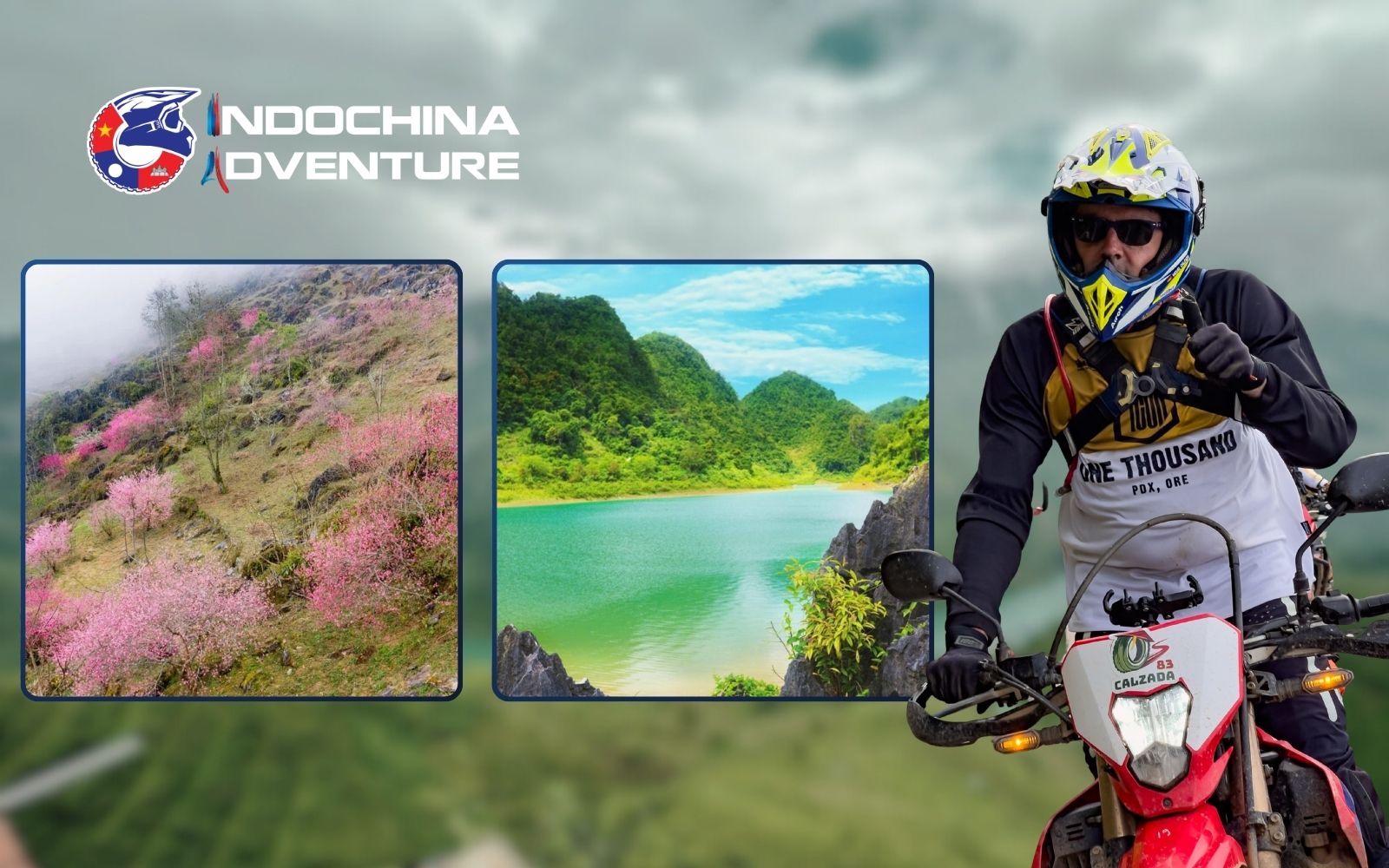
One continuous ride connecting dramatic passes with quiet borderland landscapes
Two loops, one journey – Exploring Ha Giang and Cao Bang with Indochina Adventure
With Indochina Adventure, Ha Giang and Cao Bang are not two separate routes, but two complementary chapters of one seamless journey through northern Vietnam. The ride begins with the dramatic mountain passes and iconic viewpoints of Ha Giang, where every curve delivers a rush of altitude and emotion. As the journey flows eastward, the road softens into Cao Bang’s quieter valleys, waterfalls and forested borders, allowing riders to slow down, breathe deeply, and truly absorb the landscape rather than rush through it.
What sets Indochina Adventure apart is the way each day is carefully paced around real riding conditions, local knowledge and authentic encounters. Routes are chosen not just for scenery, but for rhythm, balancing challenge and comfort, freedom and safety. From remote homestays, lesser-known backroads to the best restaurants in Cao Bang, Ha Giang the experience feels less like a tour and more like a shared expedition, designed for riders who want more than photos, they want stories worth carrying home.

A seamless adventure balancing challenge, culture and unforgettable scenery with Indochina Adventure
The choice between Ha Giang Loop vs Cao Bang Loop is not about which route is better, it is about which journey fits your rhythm, confidence and sense of adventure. One offers raw intensity and dramatic mountain riding, the other delivers calm roads and deep connection with nature. Both reveal a different side of northern Vietnam, and both leave lasting impressions long after the ride ends.
Are you ready to start your engine? Contact Indochina Adventure today to customize your perfect northern loop itinerary!
After a long day of navigating limestone pinnacles and hair-raising mountain passes on adventure motorcycle tours, you might be wondering: does the adventure stop when the sun goes down? If you’re looking for the neon-lit clubs of Hanoi or the beach raves of Da Nang, you’re in the wrong place. However, the Ha Giang Loop nightlife has its own unique, addictive energy that most travelers end up loving even more. Join Indochina Adventure as we dive into the local secrets and vibrant social scenes that make every night on the road just as thrilling as the ride itself.
What Ha Giang Loop nightlife is really like
So, is there nightlife on the Ha Giang Loop? Yes, but it is nothing like city nightlife, and that’s exactly why most travelers love it. The vibe is cozy, communal and fun in a low-key way, shaped by the rhythm of the road rather than loud music or late-night crowds.
After a full day riding the mountain passes on a Ha Giang Loop tour, evenings naturally slow down. Nights usually revolve around shared family-style dinners, glasses of local rice or corn wine, soft music playing in the background, and long conversations where strangers turn into riding buddies. Stories from the day’s ride get swapped, laughter fills the room, and time seems to stretch effortlessly.
This is nightlife built on connection, not consumption. Setting the right expectation helps avoid disappointment, if you’re chasing clubs, you will be bored; if you’re open to warmth, storytelling and simple mountain moments, Ha Giang Loop nights often become the highlight of the journey.
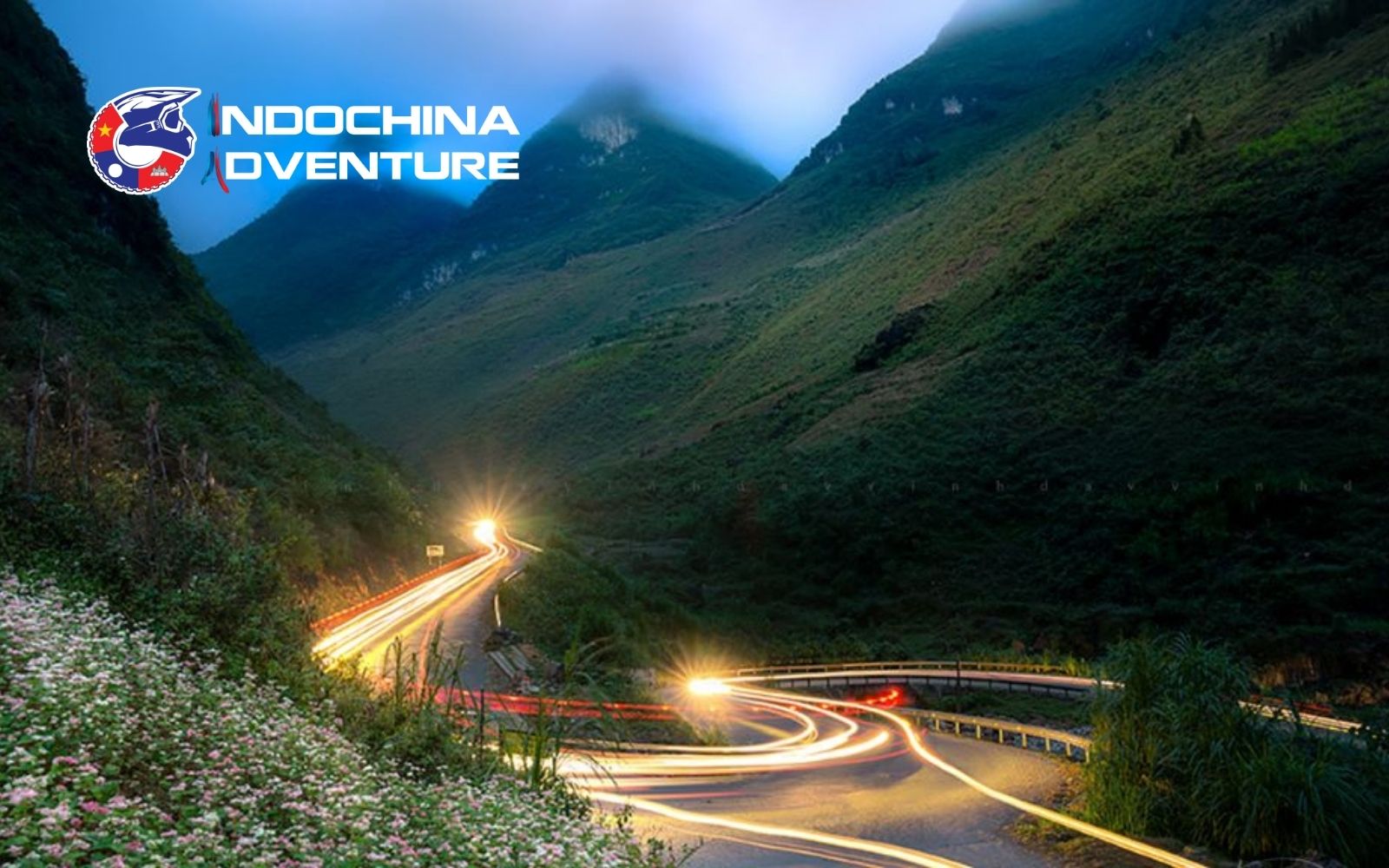
Ha Giang Loop night life – Cozy mountain evenings with shared meals, stories, music, and quiet laughter
Learn more: Ha Giang Travel Tips: Your Essential Guide for Highland Exploration
Where to experience Ha Giang Loop in the evening (By Location)
Nightlife on the loop isn’t found in one single hotspot, it shifts subtly from town to town. From casual bars to quiet evenings filled with local flavor, Ha Giang Loop night activities depend heavily on where you stop along the route. If you’re riding as part of northern Vietnam motorbike tours, knowing what each location offers after dark helps you plan the right balance between rest, social time and exploration.
Ha Giang City
As the primary gateway for most riders, Ha Giang City offers a blend of local riverside chill and urban convenience. The signature experience here is grabbing a craft beer or a strong Vietnamese coffee at a street-side cafe while finalizing your route – one of the essential things to do in Ha Giang before hitting the high passes. It’s the perfect spot for travelers who prefer a “civilized” start to their journey with easy access to comfortable lounges and diverse food options.
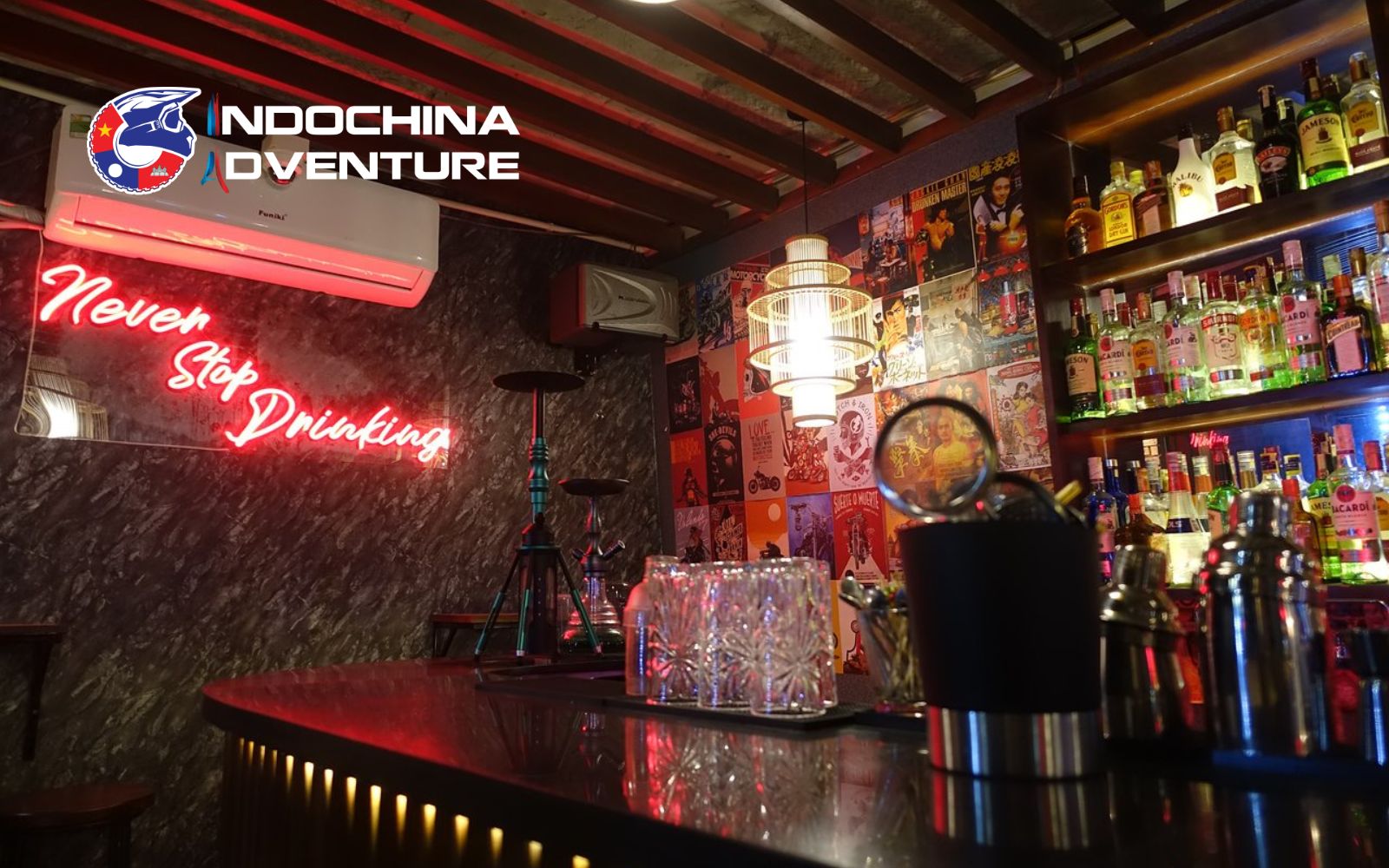
Chilling by the river is a highlight of the Ha Giang nightlife experience
Dong Van Old Quarter
Nestled among ancient stone houses, the Old Quarter is the undeniable crown jewel of the Ha Giang Loop nightlife scene. Travelers gather here to browse the night market or sip drinks at iconic spots like Cafe Pho Co, making it one of the most atmospheric places to visit in Ha Giang after sunset. If you are looking for the best social atmosphere and a chance to meet fellow adventurers, Dong Van is where you need to be.
Discover: Top 12+ Things to Do in Dong Van, Vietnam For Motorbike Riders
Meo Vac on the Ha Giang Loop
Nightlife in Meo Vac is defined by its rugged, rural charm, often centered around the local Hmong culture. Instead of bars, you’ll find yourself gathered around a fire at a traditional clay-walled homestay, sharing “Happy Water” with local families – a perfect answer to what to do at night on the Ha Giang Loop if you value connection over crowds. Among the most memorable places to visit in Meo Vac, these evenings are ideal for travelers seeking an authentic, deep-culture experience that prioritizes meaningful conversation over high-energy partying.

Evenings reveal what to do at night on the Ha Giang Loop
Activities at homestays & hostels
For many travelers, the true soul of Ha Giang loop nightlife is not found in a city center, but within the walls of a local homestay or a bustling hostel. These communal hubs serve as the perfect sanctuary after a day on northeast Vietnam motorcycle tours, offering a mix of cultural immersion and high-energy social bonding.
Here are the signature Ha Giang Loop evening activities you can expect at your accommodation:
- The family dinner: This is the ultimate highlight where everyone sits together to share a massive spread of Vietnam food, making it incredibly easy to meet fellow travelers.
- “Happy water” toasts: Be prepared for endless rounds of local rice wine, it is the traditional way to celebrate a successful day of riding and bond with your hosts.
- Acoustic jam sessions and karaoke: Whether it is a local singing Hmong folk songs or travelers taking over a mic for 90s rock, music is the universal language of the Loop.
- Starlit bonfires: In higher altitudes like Meo Vac or Du Gia, gathering around a crackling fire is the go-to way to stay warm and swap travel stories.
- Cultural performances: Many traditional homestays arrange for local ethnic groups to perform traditional dances or play the Khen (panpipe) for a deep dive into the region’s heritage.
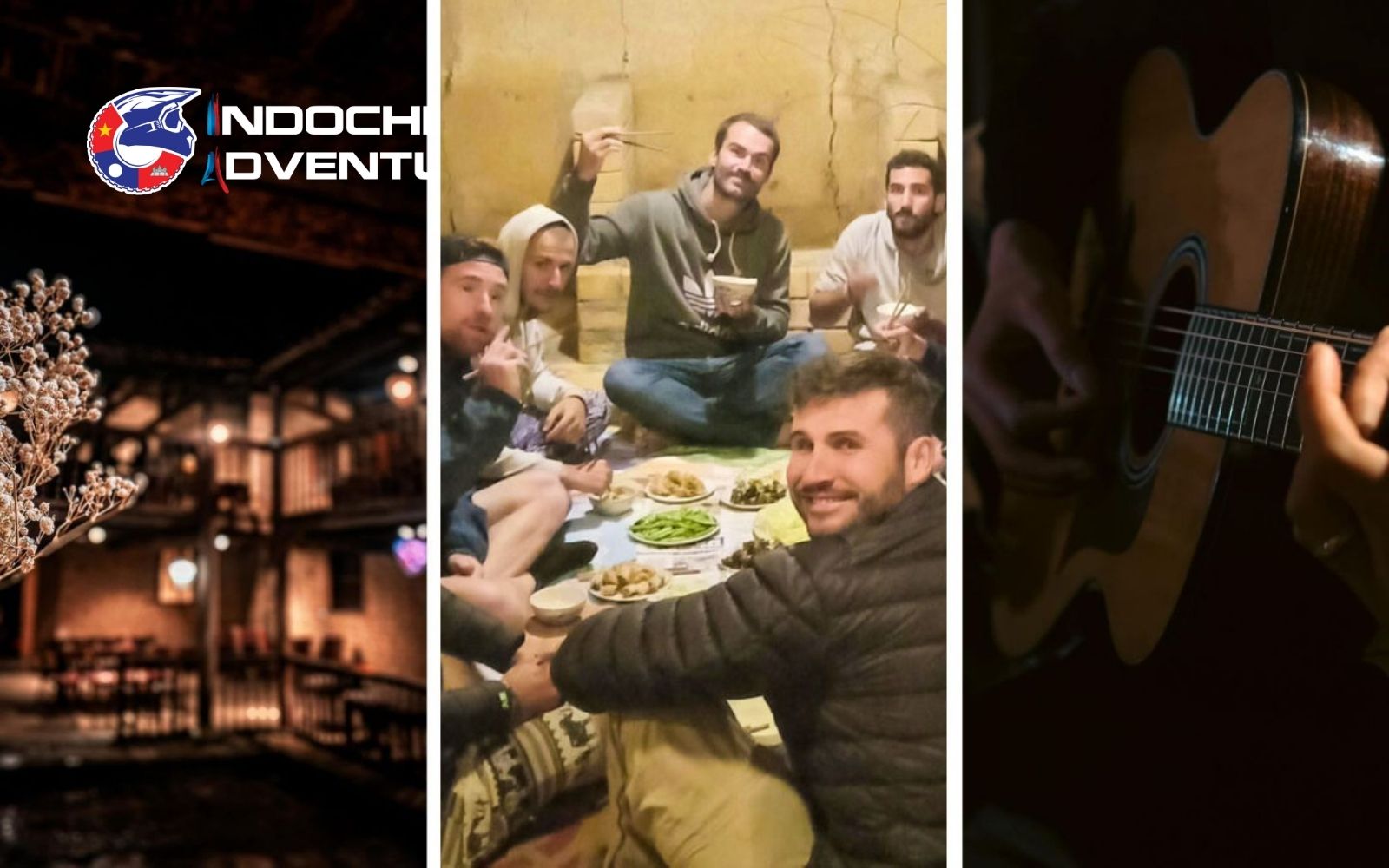
Communal dinners, karaoke, campfires and friendships formed after sunset
Don’t miss: Ha Giang Traditional Festivals: Unveiling an Ancestral Tapestry in Vietnam’s Breathtaking Northwest
Is Ha Giang Loop nightlife safe?
Yes, Ha Giang Loop nightlife is generally safe, especially because most evening activities take place at homestays, hostels, or small local venues rather than busy urban streets. Ha Giang Loop after dark is typically calm and community-focused, with travelers gathering in familiar, well-managed spaces alongside hosts and fellow riders.
As with any motorbike tours in Vietnam, basic awareness is enough: drink responsibly, keep personal belongings close and avoid riding long distances late at night on unfamiliar roads.

Stay safe and enjoy the Ha Giang Loop after dark with friends
Related read: Ha Giang Loop Dangerous: Tips And Guide For A Safe Journey
Tips to enjoy Ha Giang Loop in the evening the right way
To help you navigate the evenings like a pro, this Ha Giang Loop nightlife guide focuses on balancing social fun with the realities of mountain travel.
- Set expectations: Nights are about connection and recovery, not loud parties.
- Join group dinners: Shared meals naturally create conversation and friendships.
- Drink responsibly: “Happy Water” is fun, but pacing yourself matters.
- Dress warmly: Mountain temperatures drop quickly after sunset, so a Ha Giang Packing list should always include a light jacket or extra layers.
- Respect local culture: Most mountain villages wind down by 10 PM, keep noise levels low to respect local families and sleeping riders.
- Avoid late riding: Ban Gioc Waterfall or Ma Pi Leng Pass motorbike tours are safer and more enjoyable in daylight.
Ha Giang Loop nightlife guide helps you party safely in the mountains
Explore more: Best Time to Visit Ha Giang for Once-in-a-Lifetime Memories
Experience authentic Ha Giang Loop nights with Indochina Adventure Tours
Indochina Adventure specializes in immersive motorbike journeys that go beyond sightseeing, focusing on genuine cultural exchange and responsible travel. With deep local knowledge and long-standing partnerships, the team designs Ha Giang routes and stays that align naturally with the rhythm of the mountains. Each journey is paced to balance adventure by day and meaningful downtime by night. Rather than rushing from point to point, Indochina Adventure emphasizes quality moments, local insight and authentic encounters.
- Thoughtfully selected overnight stops: Accommodations are chosen for atmosphere, comfort, and cultural value, ensuring evenings feel welcoming rather than commercial. These settings encourage natural interaction without forcing a “touristy” vibe.
- Balanced group dynamics: Group sizes are kept manageable, creating space for real conversations and shared experiences without overwhelming local hosts or fellow travelers. This balance helps nights feel social yet personal.
- Local insight after dark: Guides do not just lead the ride, we help interpret local customs, evening traditions and unwritten social norms, adding depth to nighttime experiences that travelers might otherwise miss.
- Safety-first evening planning: Routes and daily pacing are designed so riding ends before nightfall, allowing travelers to fully relax in the evening without worrying about late, risky road conditions.

Ready to experience Ha Giang beyond the ride? Join Indochina Adventure and discover nights on the loop that feel as unforgettable as the road itself.
Indochina Adventure Tours take you to the heart of the Ha Giang Loop nightlife scene
FAQs about Ha Giang Loop nightlife
1. Is there partying on the Ha Giang Loop?
Yes, but it’s informal and low-key. They are usually small group gatherings with drinks and music at homestays or hostels, not club-style parties.
2. Are there bars on the Ha Giang Loop?
There are a few casual bars in Ha Giang City and Dong Van, but Ha Giang bars are limited and secondary to homestay-based social nights.
3. What time does Ha Giang Loop nightlife usually end?
Most evenings wind down by 10 – 11 PM, as riders rest early for the next day’s mountain roads.
4. Is Ha Giang Loop nightlife good for solo travelers?
Yes, shared dinners, group stays and relaxed social settings make it easy for Ha Giang Loop solo travelers to connect naturally.
Ha Giang loop nightlife is not about chasing the next party, it is about slowing down, sharing stories and feeling connected after a long day on the road. From warm homestay dinners to quiet mountain evenings, these moments often become the most memorable part of the journey. When expectations are set right, the nights on the loop feel just as rewarding as the ride itself. If you’re ready to experience Ha Giang beyond daylight and discover its true after-dark charm, contact Indochina Adventure and ride the loop the way it is meant to be lived.
The Hai Van Pass is a bucket-list destination for every rider, but are there police checkpoints on the Hai Van Pass that could interrupt your adventure? Many travelers hear rumors about a Hai Van Pass police strict enforcement, making them hesitant to hit the road. In this full safety guide, Indochina Adventure will dive into where you might encounter a Hai Van pass police checkpoint and why this is usually nothing to fear if you’re prepared for your off road motorcycle adventure tours.
Is There a Hai Van Pass Police Checkpoint? Quick Answer for Travelers?
Yes, there is occasionally a Hai Van Pass police checkpoint, but hikers and tourists are rarely targeted or harassed. These points of Hai Van Pass police control are primarily established to monitor heavy truck traffic and ensure safety on the steep, winding inclines. Essentially, the Hai Van Pass traffic police focus on preventing accidents and maintaining order rather than looking for minor technicalities with foreign riders.

A Hai Van Pass traffic police officer directing traffic to ensure safety for both trucks and motorbike tourists
Where Is the Hai Van Pass Police Checkpoint Usually Located?
The Hai Van pass police checkpoint is not set up continuously along the route. However, based on traveler reports and local traffic patterns, there are three areas where a Hai Van Pass checkpoint is most likely to appear, usually for safety and traffic control reasons.
Near the Da Nang Side Entrance (South Gate)
A Hai Van Pass traffic police presence is often found at the foot of the mountain near the bypass entrance to manage the heavy flow of trucks. This Hai Van Pass police stop ensures that large vehicles follow their designated routes and do not obstruct the path of smaller motorbikes entering the ascent.

The Da Nang entrance is a busy gateway where traffic density often leads to temporary police checks
Midway Scenic Viewpoints (Occasional Patrol Presence)
The middle section of the pass includes popular viewpoints where riders often stop and traffic becomes unpredictable. Police patrol this area to control speeding, unsafe overtaking, and congestion, rather than maintaining a fixed Hai Van Pass police checkpoint.
Lang Co / Hue Side Junction (North Gate)
As you descend toward the Hue side, a Hai Van Pass police check is frequently stationed at the junction leading to Lang Co Bay. This location serves as a critical Hai Van Pass police control point to monitor speed and ensure riders do not mistakenly attempt to enter the restricted tunnel entrance.

The northern descent toward Lang Co Bay, a common spot for Hai Van Pass police control activities
What Do Officers Check at the Hai Van Pass Police Checkpoint?
If you happen to be flagged for a Hai Van Pass police check, the process is usually quick if you have your documents in order. For travelers, these Hai Van Pass travel tips can help you navigate a police license check smoothly, which typically involves verifying the following:
- Valid Driving License: Either a Vietnamese license or a home country license paired with a legitimate Hai Van Pass police International Driving Permit (IDP) check (1968 Convention).
- Motorbike Registration: The original “Blue Card” (or a valid notarized copy) belonging to your rental bike.
- Proof of Insurance: Valid motorbike insurance, which is often provided by reputable rental companies.
- Helmet Compliance: Ensuring your helmet is properly fastened and meets safety standards.
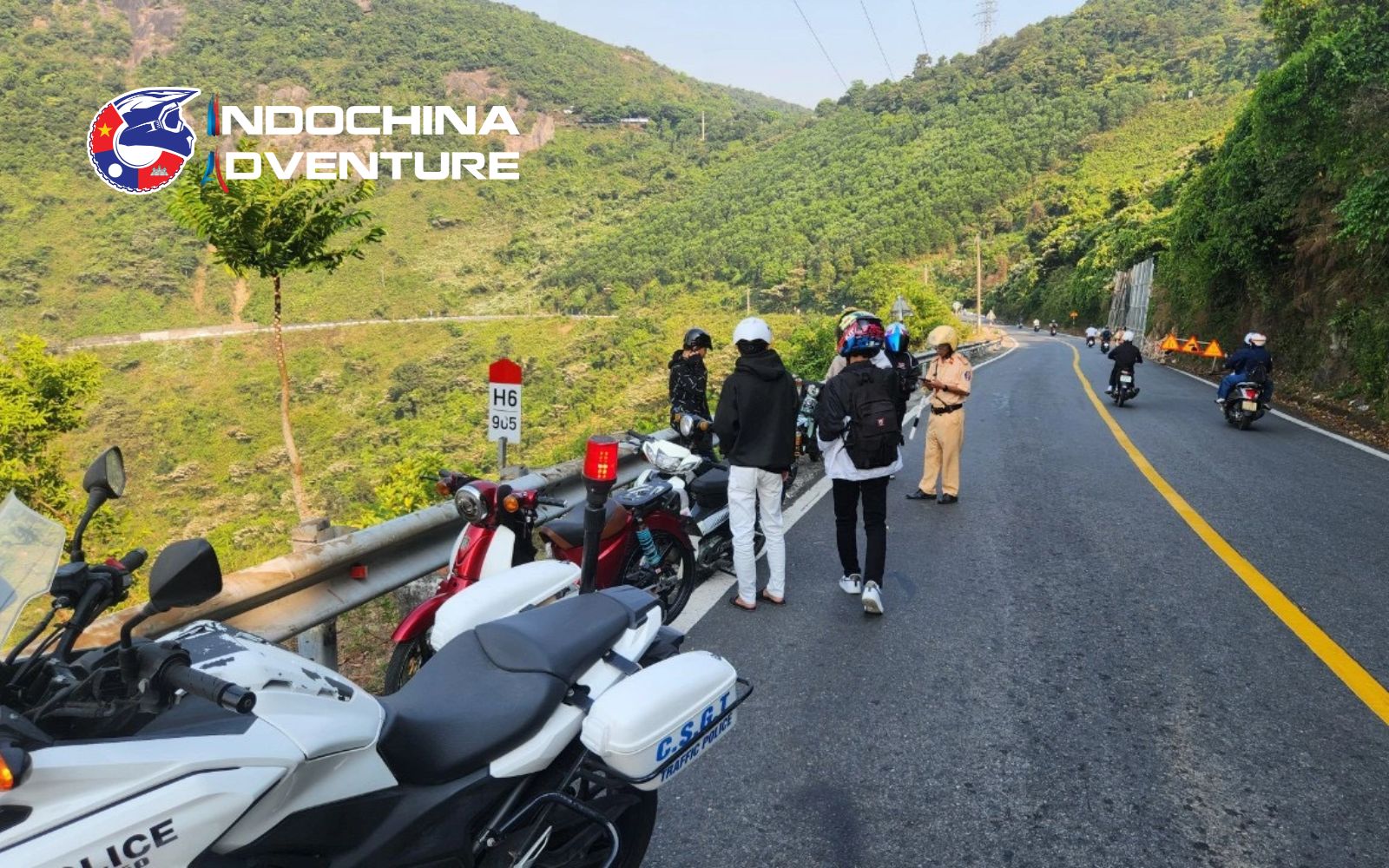
Ensuring you have the right documents for a Hai Van Pass police license check
Is the Hai Van Pass Police Checkpoint Strict for Foreign Riders?
Generally, the Hai Van Pass police strict reputation is much lower than other regions in Vietnam, as officers are typically helpful and lenient toward tourists. A Hai Van Pass police stop for foreigners is quite rare unless you are clearly violating safety rules or riding a bike that looks unsafe. Most riders pass through the police checkpoint Hai Van Pass with just a friendly wave from the officers, provided they are wearing helmets and driving at a sensible speed.
Read more: What to Know Before Riding a Motorbike in Vietnam?
What Can Get You Stopped at the Hai Van Pass Police Checkpoint?
Riding Without a Helmet
When joining motorbike tours in Vietnam, wearing a helmet is a strictly enforced law, and failing to do so is the most common reason for a Hai Van Pass police stop. Even if you are just moving between viewpoints, you should always keep your helmet securely buckled to avoid being flagged. A Hai Van Pass police control encounter for this violation is almost guaranteed if an officer spots you.
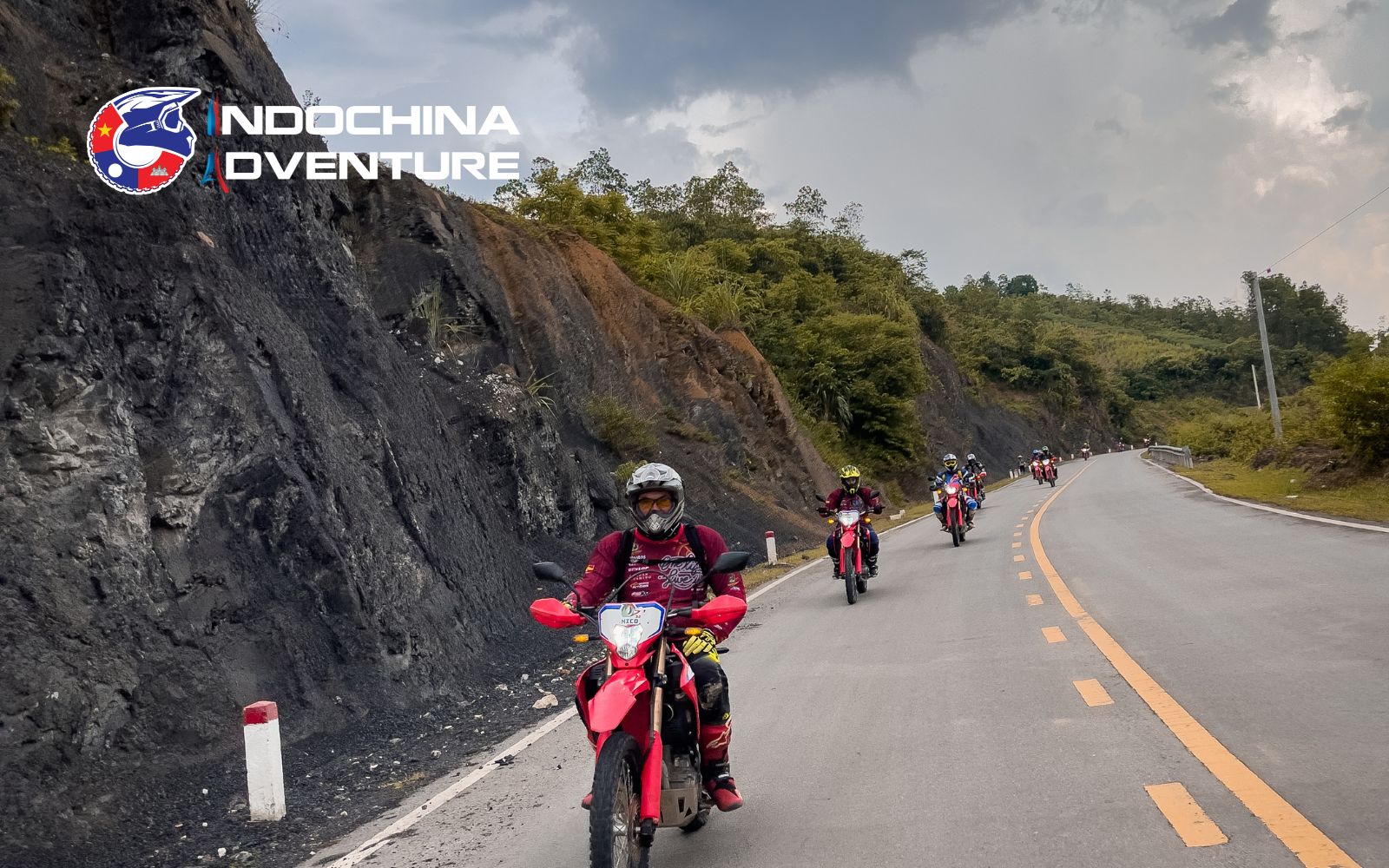
Always wear a helmet to avoid a Hai Van Pass police stop
Speeding on Curves
The Hai Van Pass traffic police frequently monitor the dangerous “S-curves” and steep descents to prevent high-speed accidents. If you are caught speeding or overtaking dangerously on these sharp bends, you will likely be flagged at the next Hai Van Pass checkpoint. Maintaining a steady, moderate speed is the best way to stay safe and avoid any unwanted police attention.
Attempting to Enter the Tunnel on a Motorbike
Motorbikes are strictly prohibited from entering the Hai Van Tunnel, which is reserved for larger vehicles only. This is an important rule to note when joining Central Vietnam Motorbike Tours or riding independently, as ignoring the signs and attempting to enter will result in being intercepted immediately by a police checkpoint Hai Van Pass stationed at the tunnel mouth. You will then be forced to turn back or pay for the specialized shuttle service to transport your bike through.
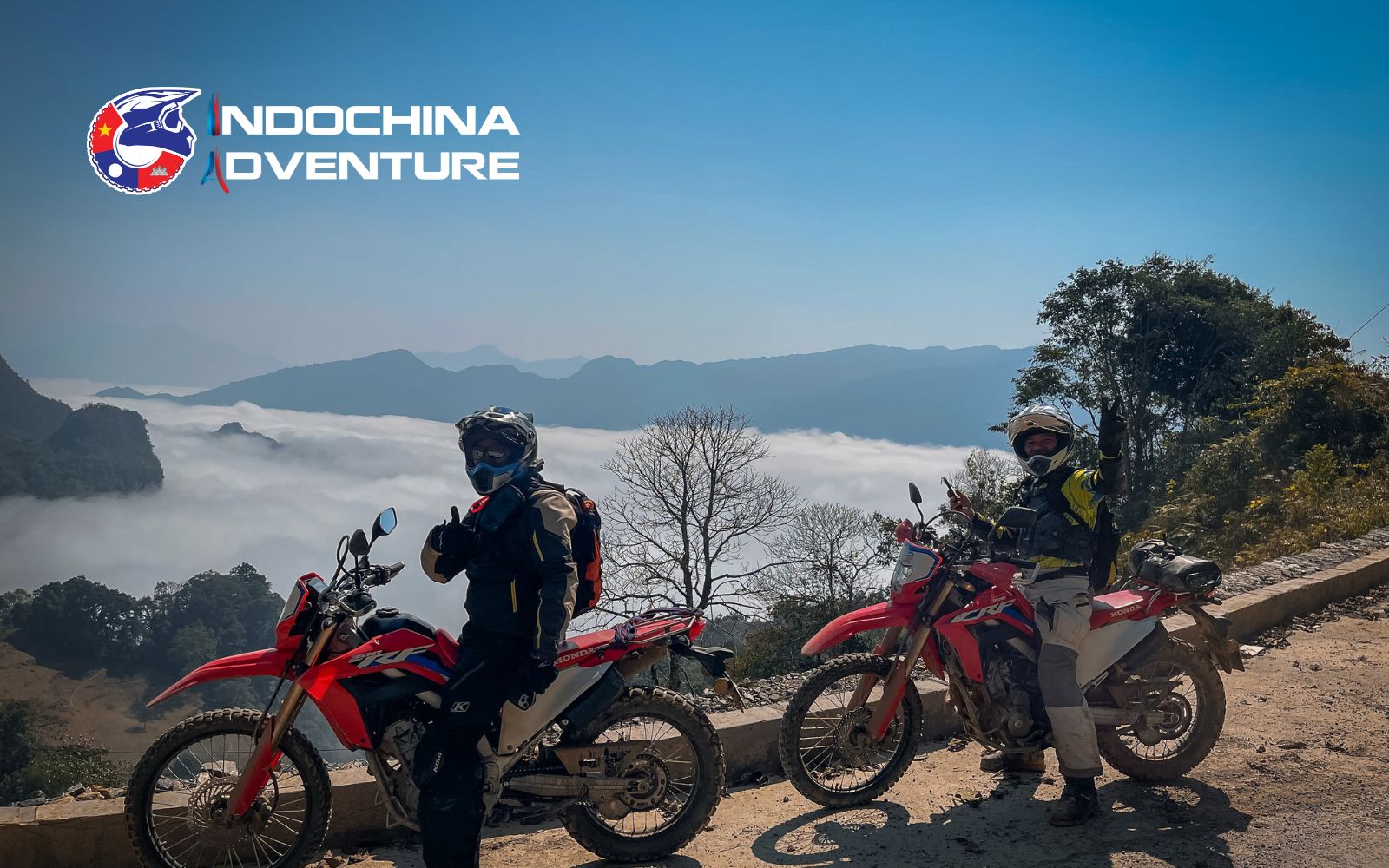
The restricted tunnel entrance where Hai Van Pass police control prevents motorbikes from entering for safety reasons
Overloaded or Unsafe Rental Bikes
Riding a bike with excessive luggage or visible mechanical issues, such as broken lights or missing mirrors, may lead to a Hai Van Pass police license check. Officers at a Hai Van Pass checkpoint prioritize road safety, so they may stop you if they believe your vehicle is a risk to yourself or others. Ensure your rental bike is in top condition and properly packed to ensure a smooth journey over the pass.
Enjoy the Hai Van Pass Without Worrying About Police Checkpoints – Ride With Indochina Adventure
The best way to navigate the Hai Van Pass police checkpoint concerns is to ride with experts who understand the local roads inside and out. With Indochina Adventure’s Hai Van Pass Motorbike Tour, we specialize in providing seamless, high-quality motorbike tours and rentals that take the stress out of your journey. Our team ensures that every rider is fully prepared, legally compliant, and equipped with the best machinery, so you can focus entirely on the breathtaking coastal scenery rather than looking out for a Hai Van Pass police stop.
- Fully legal routes that avoid restricted areas and tunnel violations, reducing the risk of any Hai Van Pass police stop.
- Well-maintained motorbikes that meet safety standards and pass routine Hai Van Pass police check requirements.
- Experienced local guides who understand Hai Van Pass traffic police patterns and ride timing.
- Clear safety briefings so riders know exactly how to handle any Hai Van Pass police control situation.
- Support vehicles and on-road assistance, ensuring a smooth ride from Da Nang to Hue without unnecessary delays.

Join Hai Van Motorbike tour with Indochina Adventure
Ride with Indochina Adventure and enjoy a safe, scenic journey with zero stress about the Hai Van pass police checkpoint. Book your ride today and let experienced local riders handle the route while you focus on the adventure.
FAQs About the Hai Van Pass Police Checkpoint
1.Do police really stop tourists on the Hai Van Pass?
Yes, but it is uncommon. Most tourists pass through without issue, and a Hai Van pass police checkpoint usually focuses on clear safety violations rather than stopping riders randomly.
2.Do I need an IDP to ride Hai Van Pass?
Technically yes, but a Hai Van Pass police IDP check is rare unless you are involved in an accident or stopped for another violation. Riding responsibly greatly reduces the chance of document checks.
3.Are police strict during holidays or peak season?
Enforcement can be slightly tighter during busy periods, especially for speeding and tunnel access. Even then, Hai Van Pass police strict behavior is mainly directed at unsafe riding.
4.Is the pass safer than the Ha Giang Loop?
Yes. The Hai Van Pass has better road conditions, clearer traffic flow, and more predictable Hai Van Pass police control compared to the remote mountain roads of Ha Giang.
5.What time of day is safest to ride?
Early morning is ideal, with lighter traffic, cooler temperatures, and minimal Hai Van Pass traffic police activity.
6.Can beginners ride Hai Van Pass?
Yes. With basic riding skills, a proper helmet, and a reliable bike, beginners can ride comfortably while staying clear of any Hai Van Pass police stop.
The Hai Van Pass police checkpoint is simply a part of keeping this iconic road safe for everyone to enjoy. As long as you respect the local regulations and ride with proper gear, you are set for one of the most beautiful rides in Southeast Asia. Let Indochina Adventure handle the logistics and provide you with a fully compliant, high-quality bike for your ultimate road trip. Contact us today for more information!
Riding the Ha Giang Loop is a bucket-list experience, but the last thing you want is for a minor document issue to halt your adventure. Many travelers worry about encountering a police checkpoint in Ha Giang loop, which is a reality of driving in this spectacular region. These checks exist for safety and compliance, making preparation essential for every foreign rider joining off road motorcycle adventure tours. Don’t let uncertainty slow you down! This comprehensive guide of Indochina Adventure will detail every key location and document required so you know exactly how to pass police checkpoints on Ha Giang loop.
Do police checkpoints exist on the Ha Giang Loop?
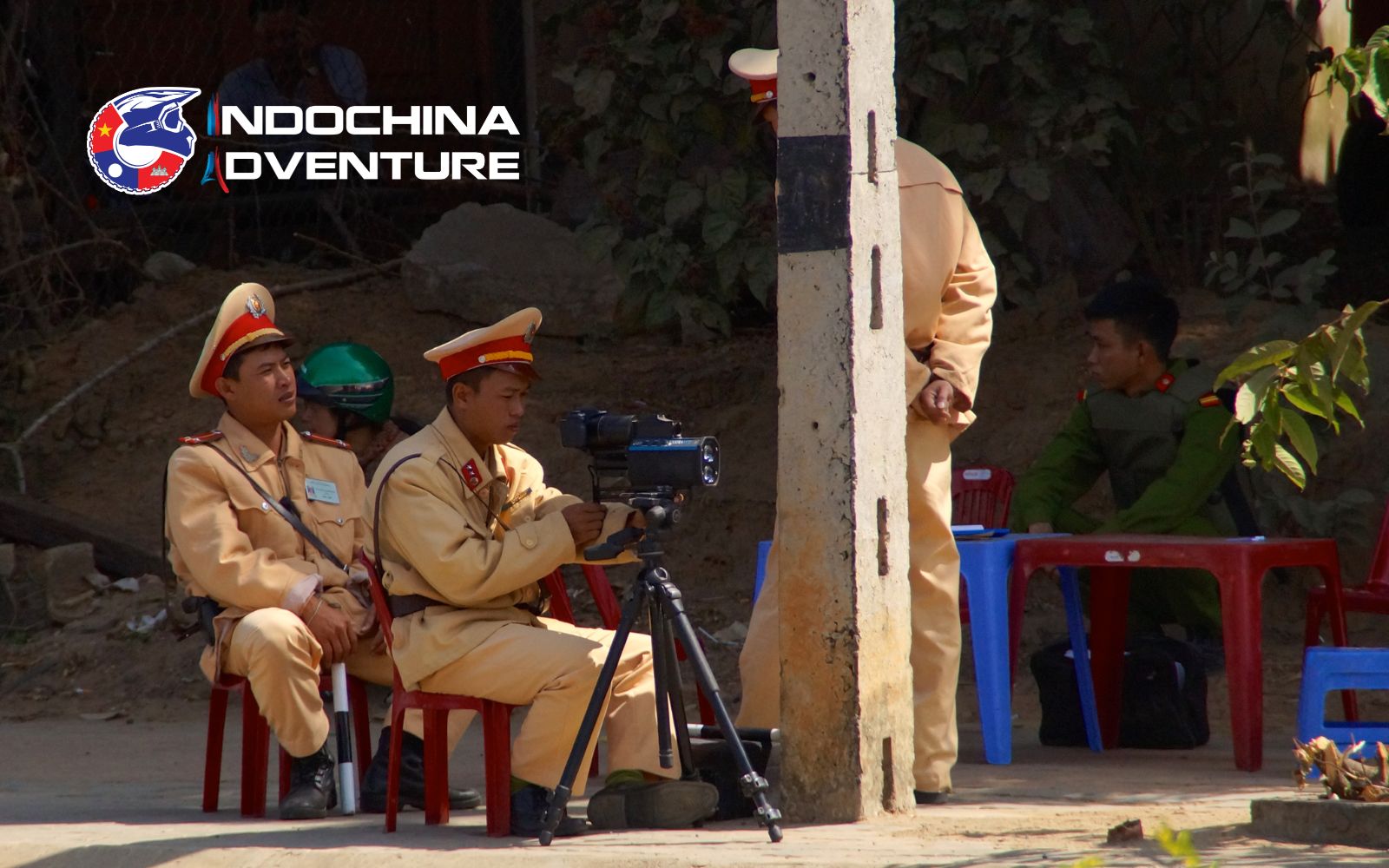
Yes, police checkpoints on Ha Giang loop tour do exist, but they are not everywhere and are generally calm and non-aggressive. These checkpoints are mainly set up to ensure road safety, check driving licenses, and manage the growing number of motorbikes on mountain roads. In most cases, officers are friendly and professional, especially with tourists who cooperate. During peak tourist seasons, weekends, and public holidays, police checkpoints on the Ha Giang loop are more common due to increased traffic and accident prevention efforts.
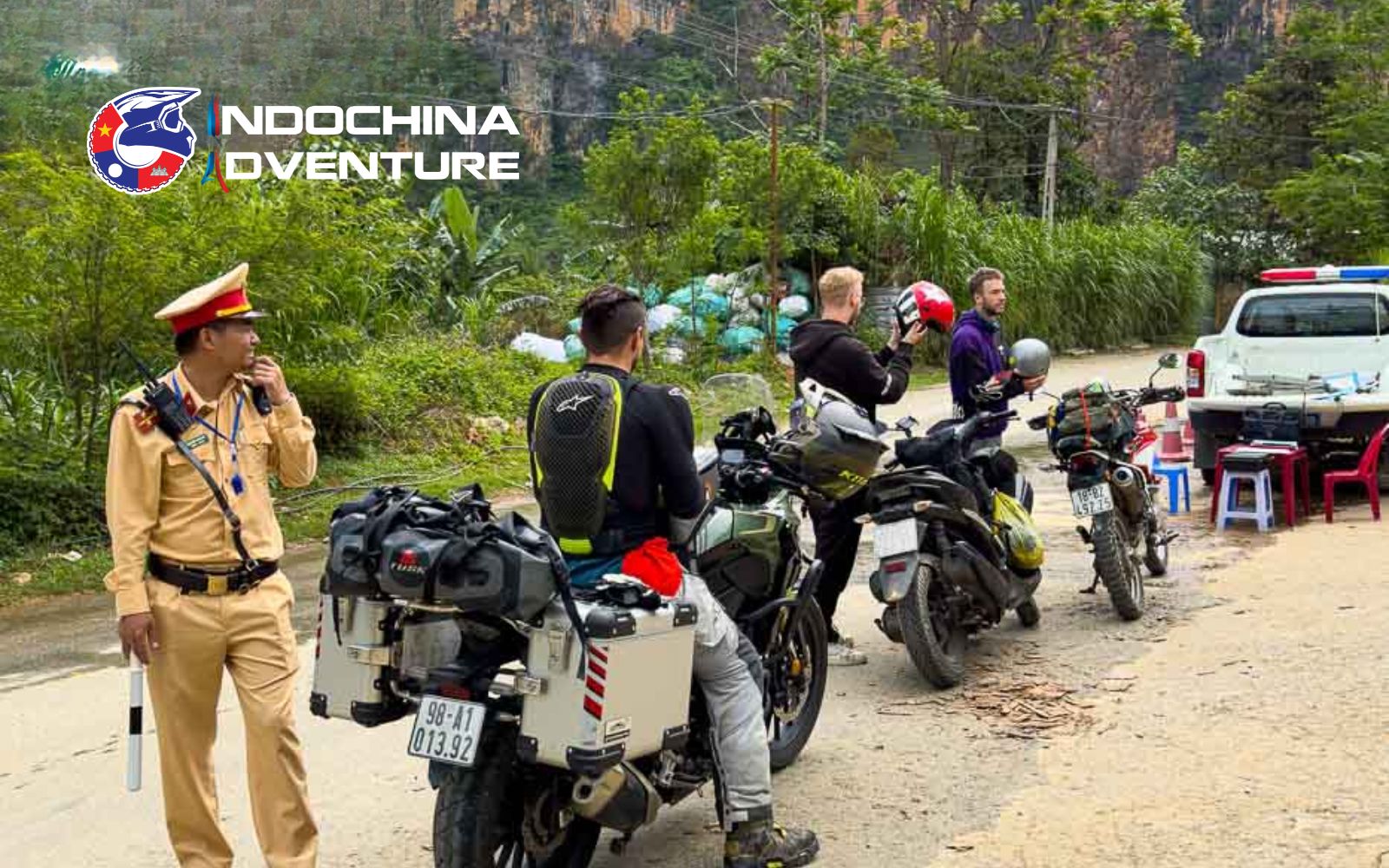
Be prepared! Police checkpoints on the Ha Giang loop are real, especially during peak travel times
Read more: What to Know Before Riding a Motorbike in Vietnam?
Where are the police checkpoints on Ha Giang Loop?
Knowing the general locations where authorities might set up a police checkpoint Ha Giang is helpful, but remember that locations can change daily. This is not a definitive Ha Giang loop police checkpoints map, but highlights common spots you must noticed for your motorbike tours in Vietnam:
Near Quan Ba Heaven Gate Area
This is a critical area, often featuring a police checkpoint in North Vietnam motorbike tour right at the entry point to the high mountain section after passing Quan Ba town. Officers strategically check for valid licenses (especially IDPs) and vehicle registration (Blue Card) as you begin the ascent.
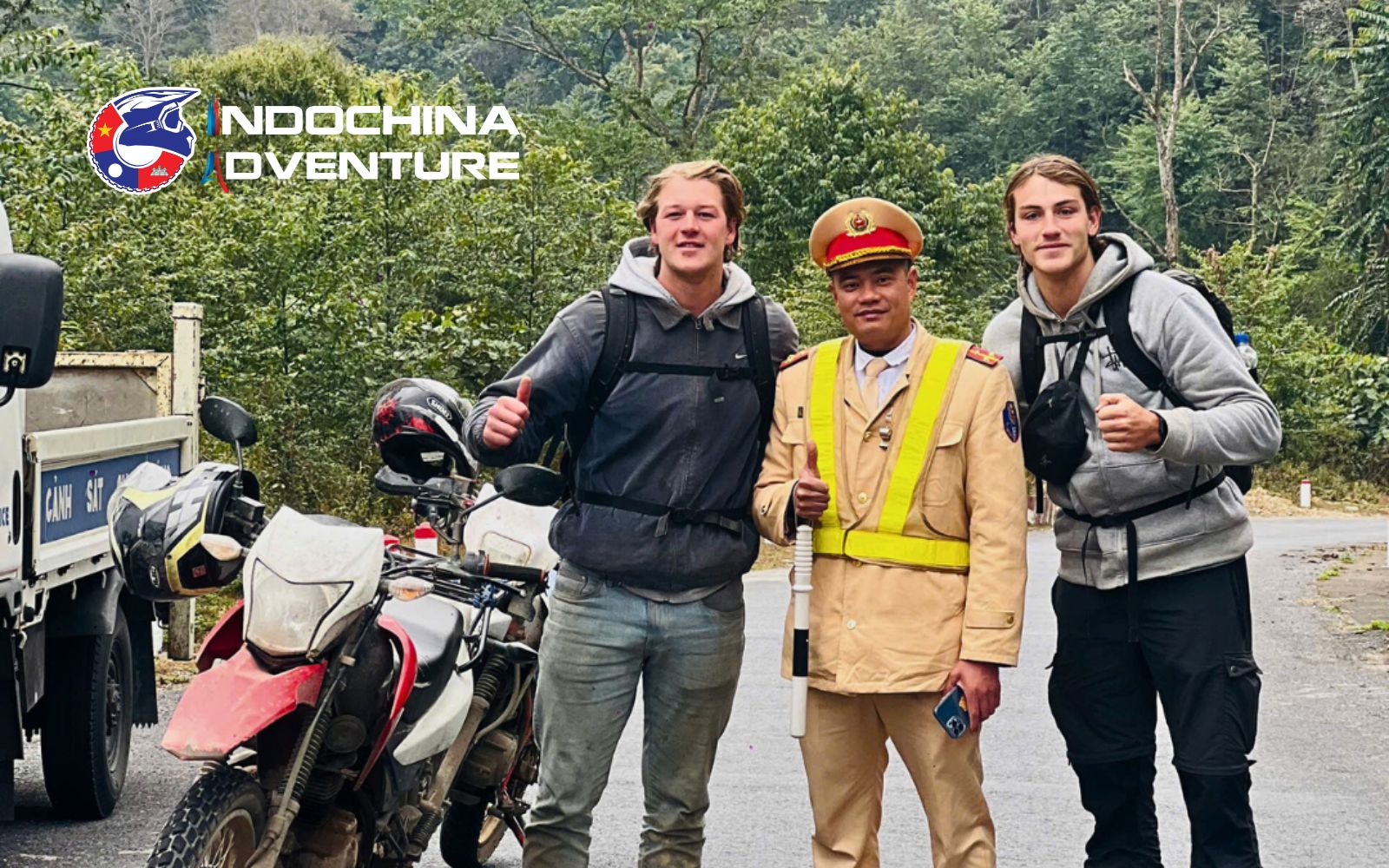
The Quan Ba area is a frequent police checkpoint in Ha Giang loop as you enter the mountainous terrain
Yen Minh → Dong Van Stretch
Expect potential checks along the main road of Highway 4C, particularly near the intersections leading into Yen Minh or major rest stops. These police checkpoints on route to Ha Giang often focus on speed enforcement and ensuring mandatory helmet use.
Dong Van Town Entrance / Exit
As the administrative and tourism hub of the geo-park, checks are frequently set up either upon entering or leaving Dong Van town. This Ha Giang police stop location aims to monitor the high volume of tourist traffic, verifying bike safety and necessary documents.
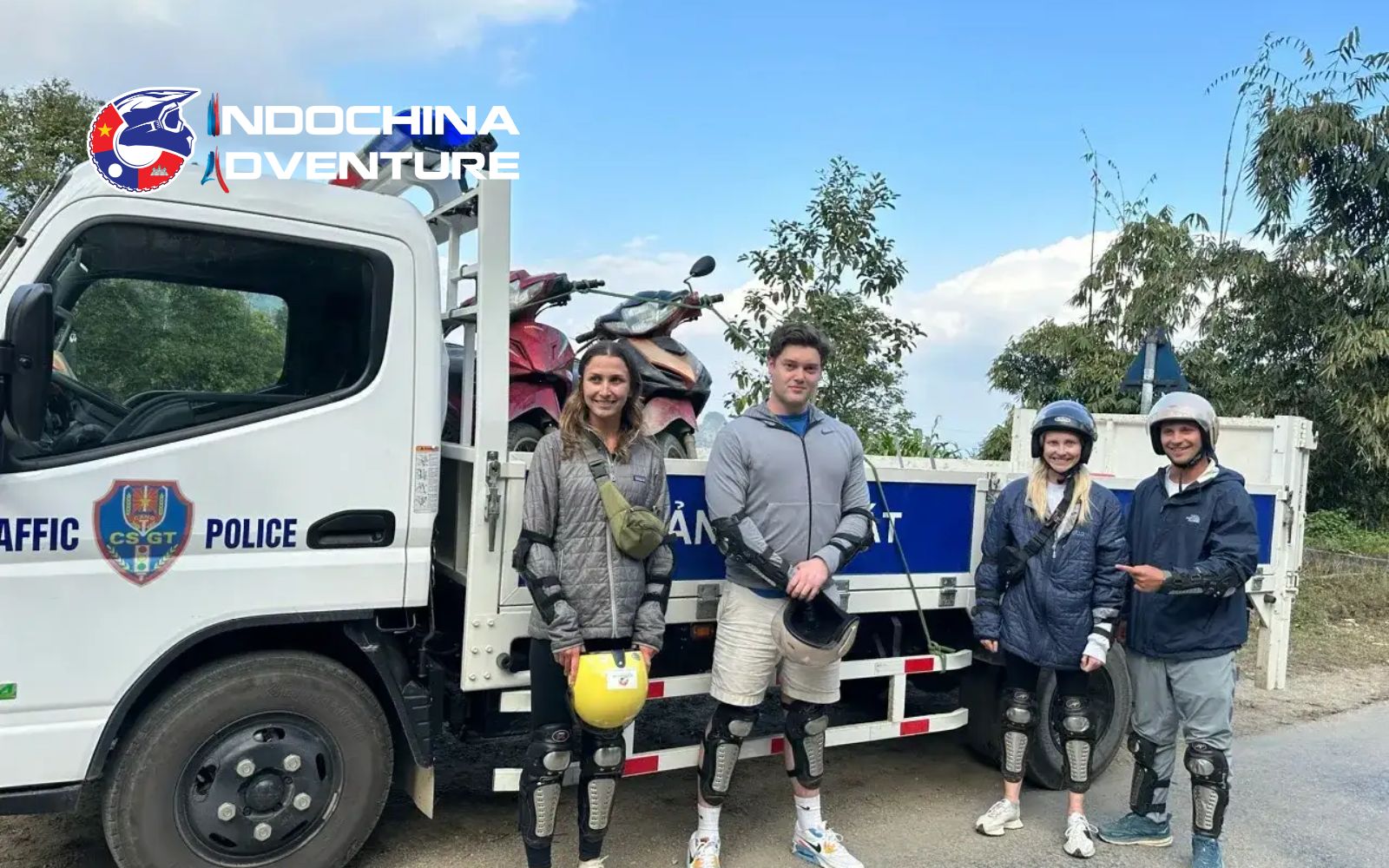
Checks are common at the edges of Dong Van town to manage tourist traffic flow
Tham Ma Pass Area
While less common right on the winding pass itself, temporary motorbike checkpoints Ha Giang may appear on the flatter sections of road immediately preceding or following the pass. The checks here are often quick stops focused on helmet quality and license validity before riders proceed to high-risk mountain roads.
Meo Vac (especially near Ma Pi Leng Pass)
The town of Meo Vac and the junction leading to the famous Ma Pi Leng are key areas for regulatory police checkpoints on Ha Giang loop. Given the proximity to the border and the challenging nature of the road, officers here often look for the Border Zone Travel Permit in addition to general riding compliance.
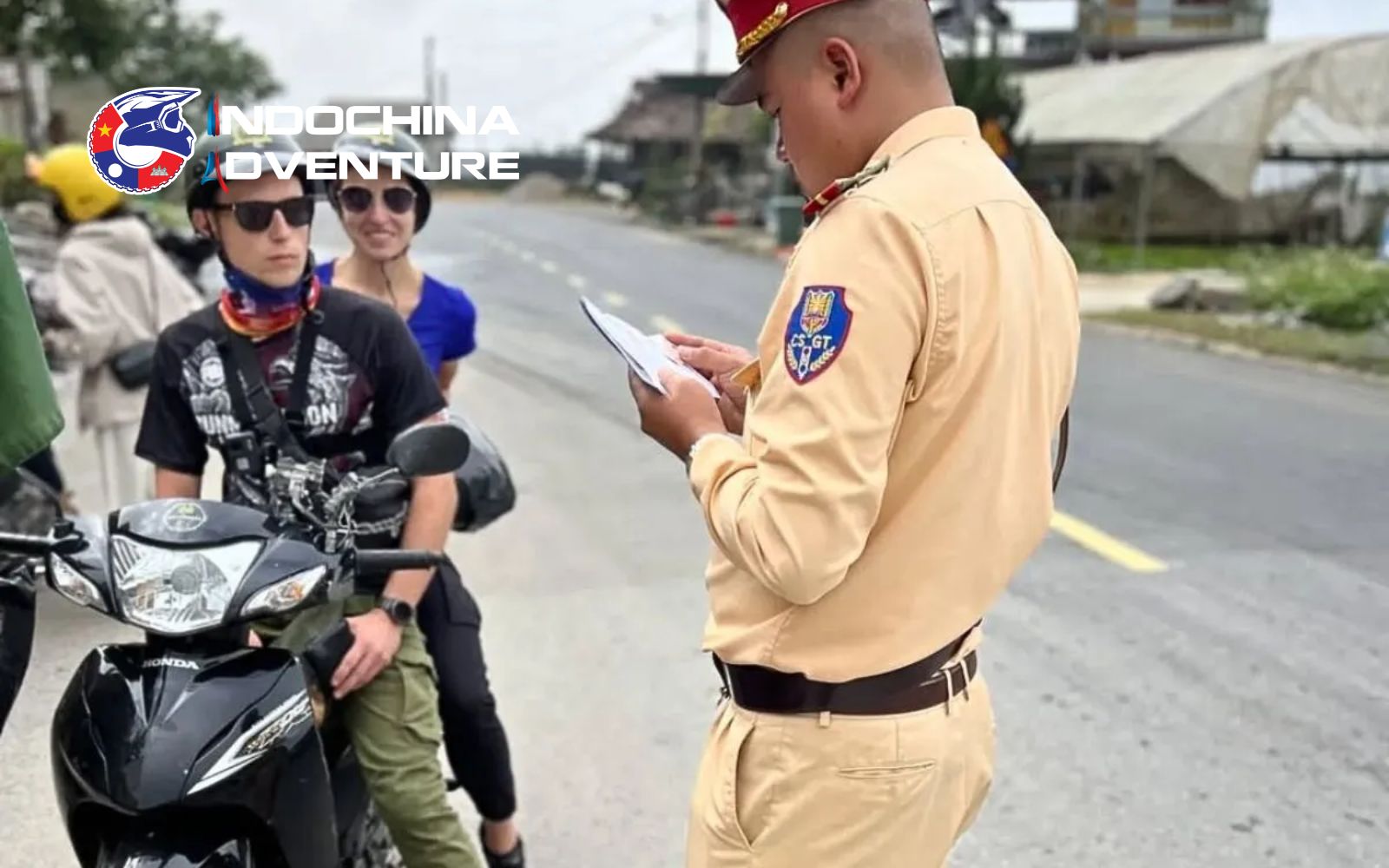
The Meo Vac area, including roads near Ma Pi Leng, is a key location for motorbike checkpoints Ha Giang
Border Zone Near Lung Cu & Lo Lo Chai
As a sensitive border area, this zone often has a permanent Ha Giang police checkpoint. Officers usually check passports and the mandatory border travel permit rather than driving skills.
In general, Ha Giang loop checkpoints are more common during peak tourist seasons, weekends, and Vietnamese public holidays, when traffic volume and safety risks increase significantly
What documents do you need at police checkpoints on Ha Giang Loop?
Being fully prepared with the right paperwork is the best way to know how to pass police checkpoints on Ha Giang loop quickly and without hassle. Ensure you have originals or high-quality digital copies of the following documents to present upon request during your Northeast Vietnam motorbike tour:
Passport or Passport Photo (Digital Copy)
Police use your passport to verify identity, especially at major Ha Giang license check locations and town entrances. A clear digital copy on your phone is usually accepted, though carrying the original is safest.
- Document Needed: Original passport or clear photo on phone
- Cost: Free
- If missing: Warning or request to return to town for verification
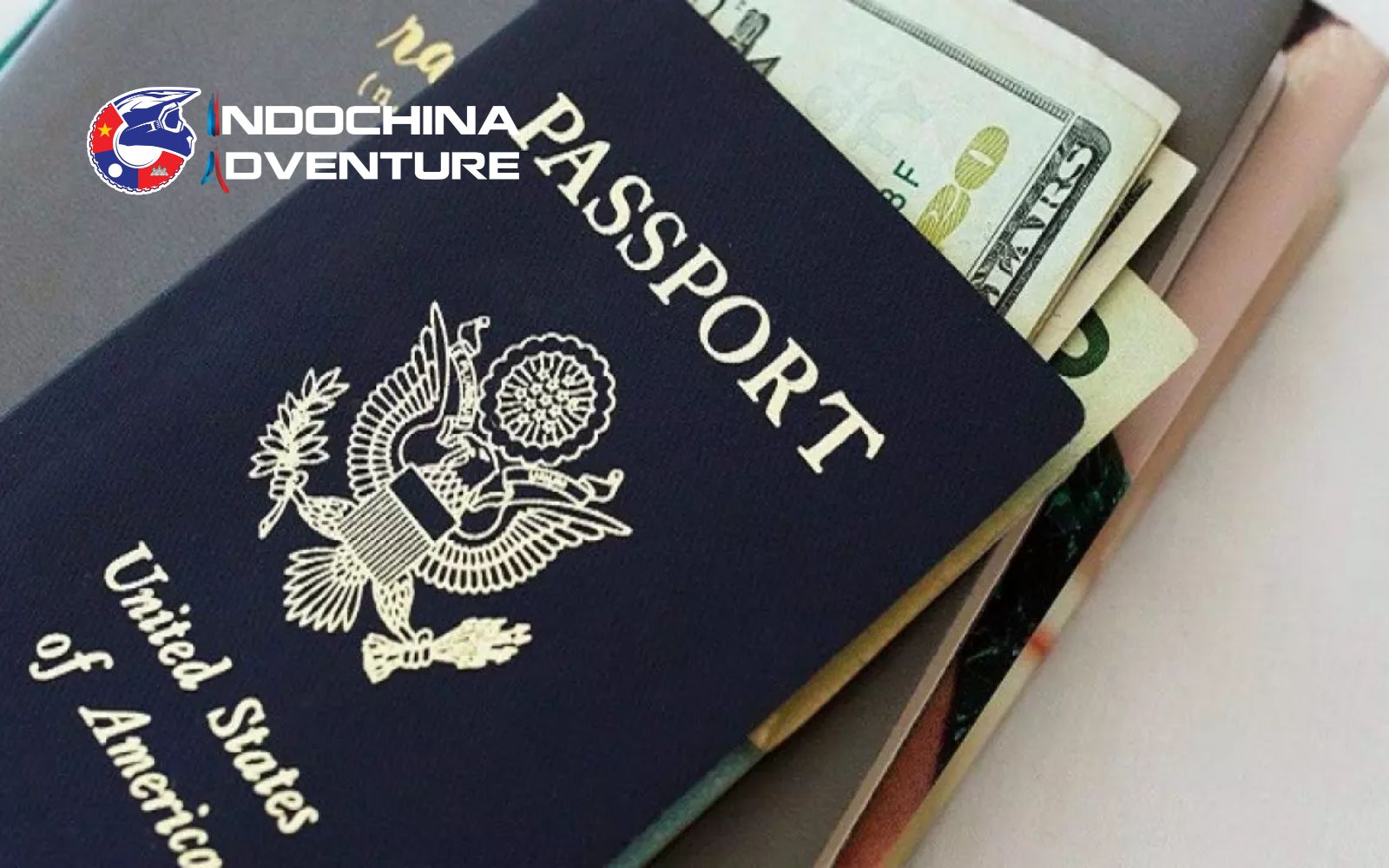
Keep your ID handy, you must be able to prove your identity instantly at any check
Valid driving license + International driving permit (IDP)
This is the key requirement during any Ha Giang loop license check. Vietnamese traffic law requires foreign riders to carry both their home license and a 1968-format International Driving Permit (IDP).
- Document Needed: Home country driving license + 1968 International Driving Permit
- Cost: Usually USD 20–40 (issued in your home country before arrival)
- If missing: Fine typically 1,000,000–1,500,000 VND at police checkpoints Ha Giang loop
Motorbike rental agreement
The rental agreement confirms the bike is legally rented and is commonly checked at a police checkpoint Ha Giang loop. Reputable rental shops in Ha Giang always provide this document.
- Document Needed: Printed or digital motorbike rental agreement
- Cost: Free (included with rental)
- If missing: Possible fine or temporary motorbike detention

Carry your rental contract to confirm the legal status and ownership of your bike
Blue card registration (Provided by Rental Shop)
The blue card is the motorbike’s official registration and is frequently requested at motorbike checkpoints Ha Giang. Rental shops usually give a photocopy rather than the original.
- Document Needed: Blue card registration copy
- Cost: Free
- If missing: Fine may be issued depending on the checkpoint and office
What happens if police stop you on the Ha Giang Loop?
If you encounter a Ha Giang loop police stop, staying calm and cooperative is the best way to pass smoothly. Based on real traveler experiences and local guidance, here’s what usually happens at police checkpoints on Ha Giang loop and how you should respond:
Typical questions officers ask
At most police checkpoint Ha Giang loop locations, officers will ask simple questions such as where you are going, where you rented the bike, and to see your license. Communication is usually basic and straightforward, often using simple English or gestures. The best way to pass is to smile, answer honestly, and hand over your documents neatly without arguing.
Fines you may receive
Fines are most commonly issued for missing IDP, improper helmets, or incomplete bike documents during a Ha Giang loop license check. Officers normally explain the issue and the fine amount clearly. You can avoid this situation by preparing all required documents in advance and following traffic rules when passing police checkpoints Ha Giang loop.
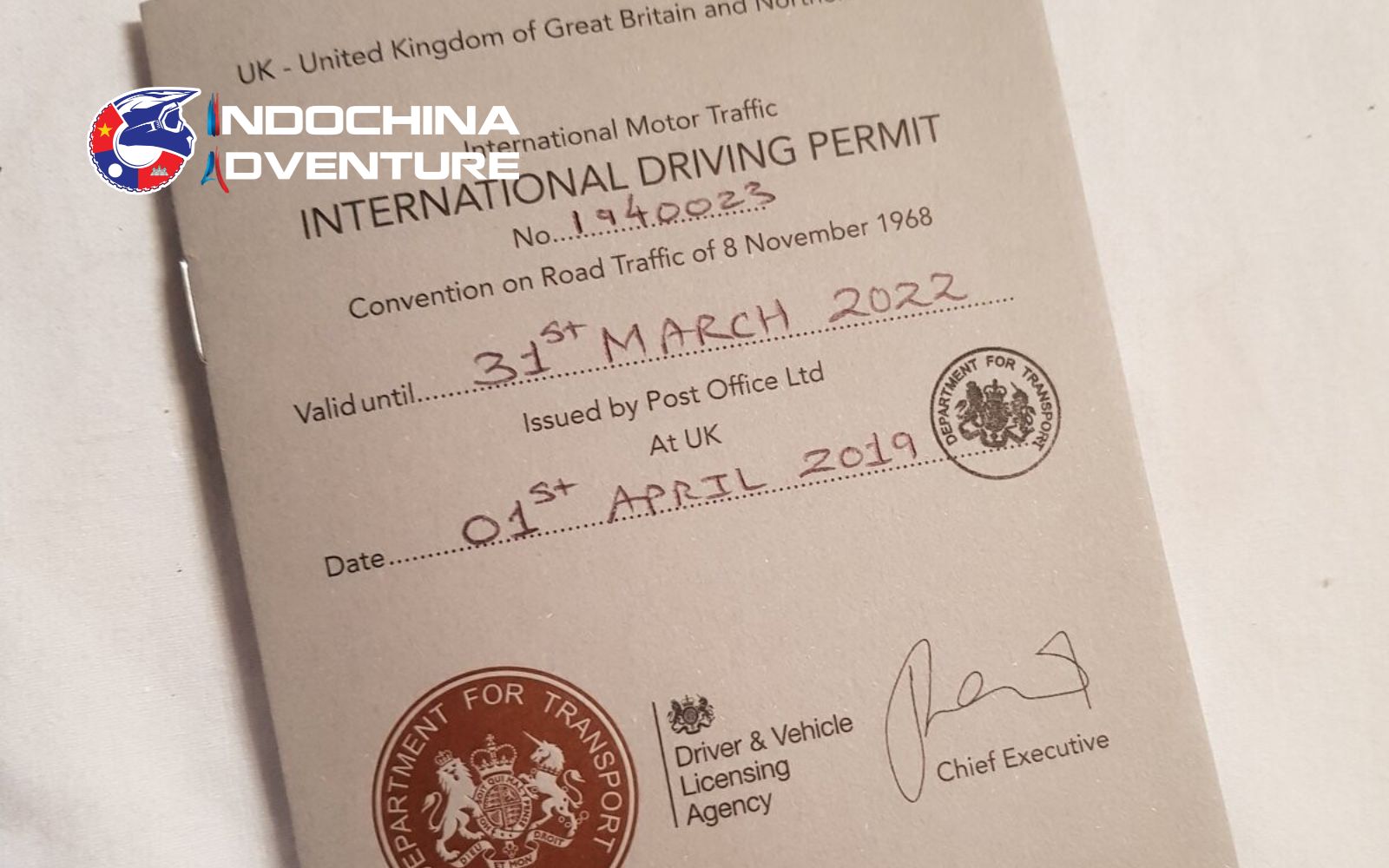
Avoid costly fines by ensuring your IDP is valid and your helmet is secure
What if you don’t have an IDP?
If you don’t have an IDP, police will usually inform you that you are riding illegally under Vietnamese law. In many cases, a fine will be issued, and you may be advised not to continue riding. The safest way to pass this situation is to remain polite, accept the decision calmly, and avoid arguing at the Ha Giang police checkpoint.
How to avoid issues at police checkpoints on Ha Giang Loop
Passing police checkpoints on Ha Giang loop smoothly is mostly about preparation, attitude, and riding responsibly. Travelers who understand the rules and respect local regulations rarely face serious problems. Follow the practical Ha Giang travel tips below to minimize risks and ride the loop with confidence:
- Keep all important documents together in a waterproof pouch so you can show them quickly when asked.
- Always wear a proper helmet and protective gear to avoid attention from traffic police.
- Make sure your driving license and International Driving Permit are valid before starting the loop.
- Rent your motorbike from a reputable shop that provides full legal paperwork.
- Follow speed limits, especially near towns, intersections, and downhill sections.
- Avoid riding at night, when visibility is poor and accident risk is higher.
- Never try to turn around or avoid a checkpoint, as this often raises suspicion.
- Ask your rental shop or tour operator about common police stop areas before you ride.
- Stay calm, polite, and cooperative if stopped, respectful behavior goes a long way.
Follow these essential tips to ensure a legal and stress-free adventure
Ride the Ha Giang Loop with Confidence: Let Indochina Adventure Handle the Routes, Rules & Local Checkpoints
If you want to enjoy the Ha Giang Loop without worrying about paperwork, routes, or unexpected police stops, Indochina Adventure is the smart choice. With years of local experience, the team understands where checks commonly happen and how to plan routes that are both scenic and compliant with local regulations.
By riding with Indochina Adventure, you get legally registered motorbikes, complete documentation, and up-to-date guidance from locals who know the area inside out. Whether you choose a guided tour or supported self-ride, everything is arranged so you can focus on the mountains, not the rules.
Ride with confidence, ride legally, and enjoy the Ha Giang Loop the right way. Contact Indochina Adventure today to plan a safe and unforgettable journey.

Travel with Indochina Adventure and let us handle the police checkpoints on the Ha Giang loop hassle for you
FAQs About Police Checkpoints on Ha Giang Loop
1. Are there police checkpoints at Ma Pi Leng pass?
Yes. Ma Pi Leng Pass is one of the most common areas where police may stop riders, especially during busy tourist seasons and weekends.
2. Are police in Ha Giang strict with foreign riders?
Police are generally professional and fair. Riders with proper documents and safe riding behavior rarely face serious issues.
3. Do I need an IDP for Ha Giang?
Yes. Under Vietnamese law, foreign riders must have a valid driving license and a 1968-format International Driving Permit
4. What if I get fined in Ha Giang loop?
If fined, stay calm, follow instructions, and pay the official fine if required. Avoid arguing or offering unofficial payments
5. Are checkpoints frequent at Ma Pi Leng?
They are not constant, but checks appear regularly during peak travel periods due to traffic volume and safety concerns
6. How do police treat tourists in Ha Giang loop?
Most officers are polite and helpful, especially toward cooperative and respectful tourists.
7. Can I avoid checkpoints legally in Ha Giang loop?
You should not try to avoid checkpoints. The legal way to pass them is to carry the correct documents and follow traffic laws.
Riding the Ha Giang Loop becomes far more enjoyable when you understand how police checkpoints on Ha Giang loop work and prepare properly in advance. With the right documents, safe riding habits, and a respectful attitude, most checkpoints are quick, routine, and stress-free. For the safest and easiest way to handle police checkpoints on Ha Giang loop, choose Indochina Adventure and let local experts manage the routes, rules, and on-the-road support for you.