Dong Van Sunday Market is far more than a typical mountain market in Ha Giang. Every Sunday morning, ethnic communities gather here to trade, socialize, and preserve traditions that have existed for generations. Surrounded by the dramatic landscapes of the Dong Van Karst Plateau, this vibrant cultural hub becomes a memorable stop during many motorcycle adventure tours through northern Vietnam. In this guide, Indochina Adventure will take you through the highlights of Dong Van’s weekly market, local experiences and useful tips for your Ha Giang journey.
What makes Dong Van Sunday Market so special
Dong Van Sunday Market is not just a place for buying and selling. This vibrant Ha Giang ethnic market brings together local communities from remote mountain villages every Sunday morning, creating a lively atmosphere filled with traditional clothing, local food, and cultural interaction.
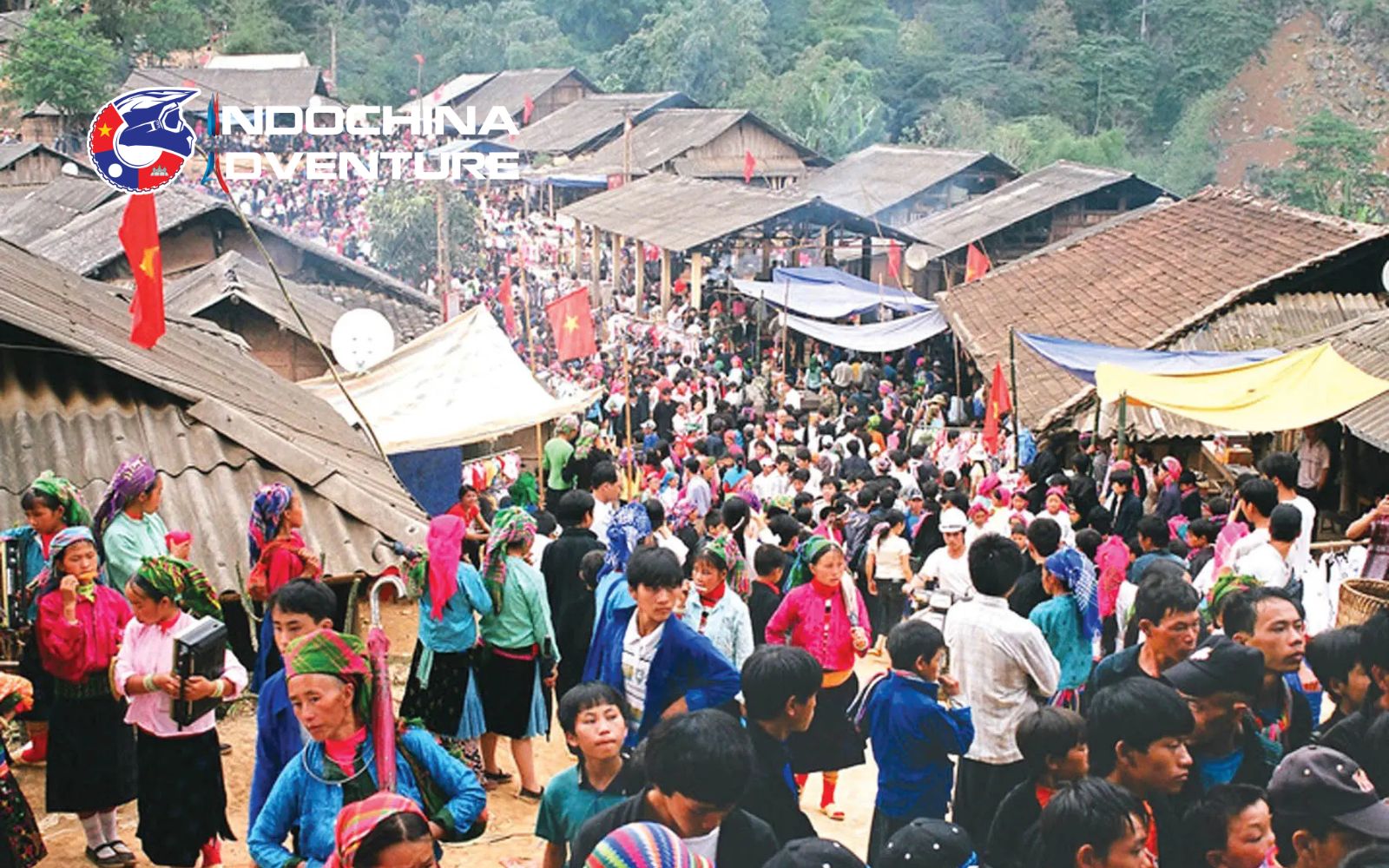
A vibrant cultural hub where tradition meets the majestic northern mountains
Surrounded by the dramatic landscapes of the Dong Van Karst Plateau, the market becomes a memorable highlight for many travelers exploring northern Vietnam. Visitors joining a motorbike tour Dong Van often stop here to experience the authentic local life that makes Ha Giang so unique.
Dong Van Sunday Market Opening hours & location
To help you plan your itinerary, this Dong Van travel guide highlights the essential logistics for catching the action at the right time. While the town is quiet during the week, it transforms into a bustling hub at daybreak every weekend, so checking the Dong Van market opening hours is crucial to ensure you don’t miss the peak atmosphere.
- Market day: Every Sunday morning
- Best visiting time: 6:00 AM – 9:00 AM
- Location: Dong Van Town, near the Dong Van Old Quarter

Plan your morning right by checking the official Dong Van market time
What to expect at Dong Van Sunday Market in Ha Giang
If you are looking for the most immersive things to do in Dong Van, stepping into the organized chaos of the Dong Van market Vietnam is an absolute necessity. It is a place where every corner offers a new discovery, from vibrant textiles to the unique sights and sounds of highland commerce.
Ethnic groups gathering
One of the most fascinating parts of Dong Van Sunday Market comes from the gathering of ethnic communities across the northern mountains. Hmong, Dao, Tay, and Lo Lo people travel from remote villages to meet, trade goods, and connect with relatives and friends after a long week.
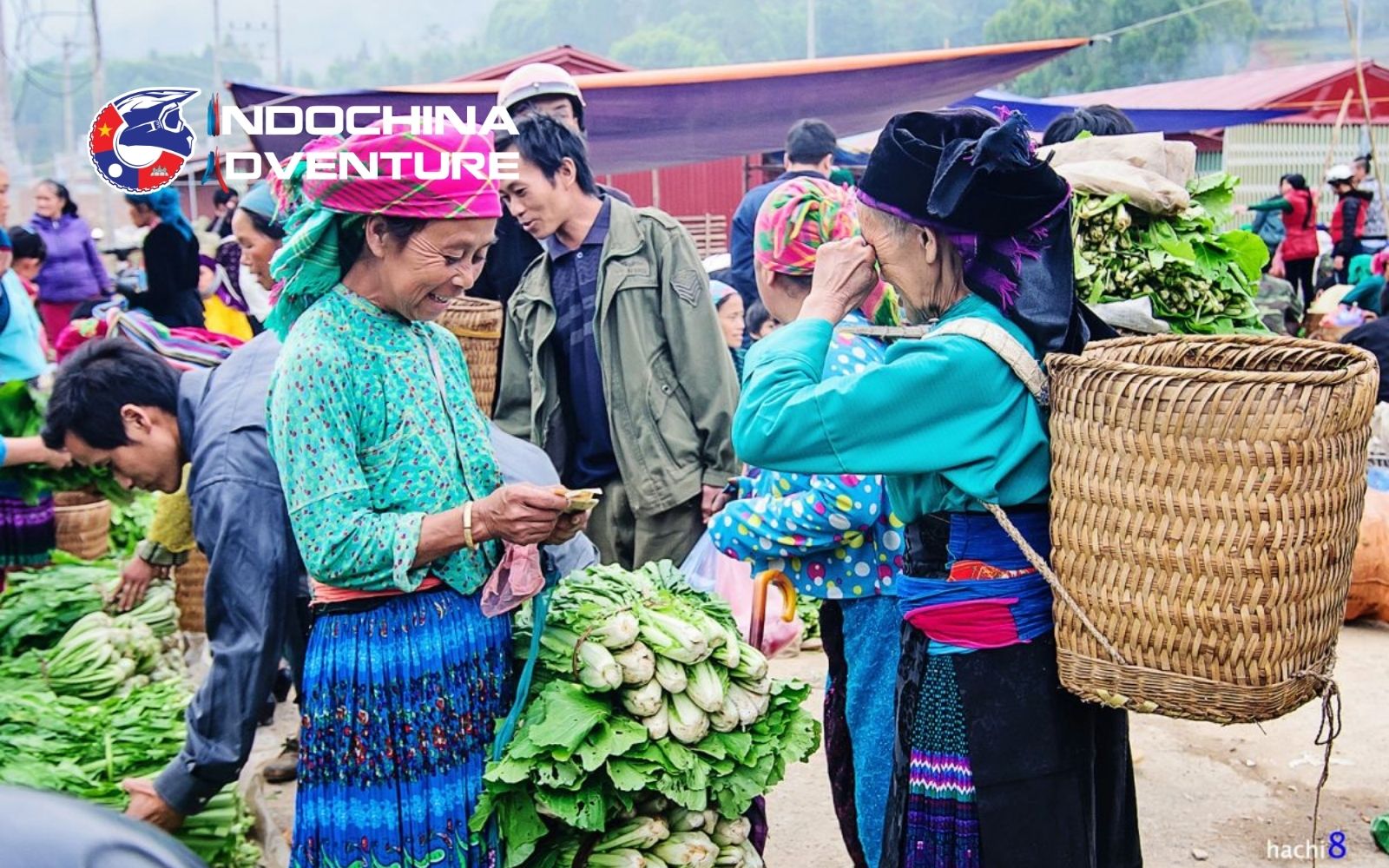
Ethnic communities gathering after long mountain journeys through Ha Giang
The market becomes especially colorful during the early morning hours, with traditional handmade clothing creating a vibrant atmosphere throughout the town. Many travelers joining a Ha Giang Loop tour consider this cultural experience one of the most memorable moments of their journey through northern Vietnam.
Traditional food experience
The food section of Dong Van Sunday market Ha Giang is a dream for adventurous eaters looking to dive into highland flavors. You will find long wooden tables packed with locals enjoying Thang Co, a traditional horse meat stew that has been a staple of the H’mong people for generations. While you might be searching for the best restaurants in Dong Van, nothing quite beats the raw energy of eating steaming bowls of Men Men (steamed corn) or buckwheat cakes right in the heart of the market chaos.
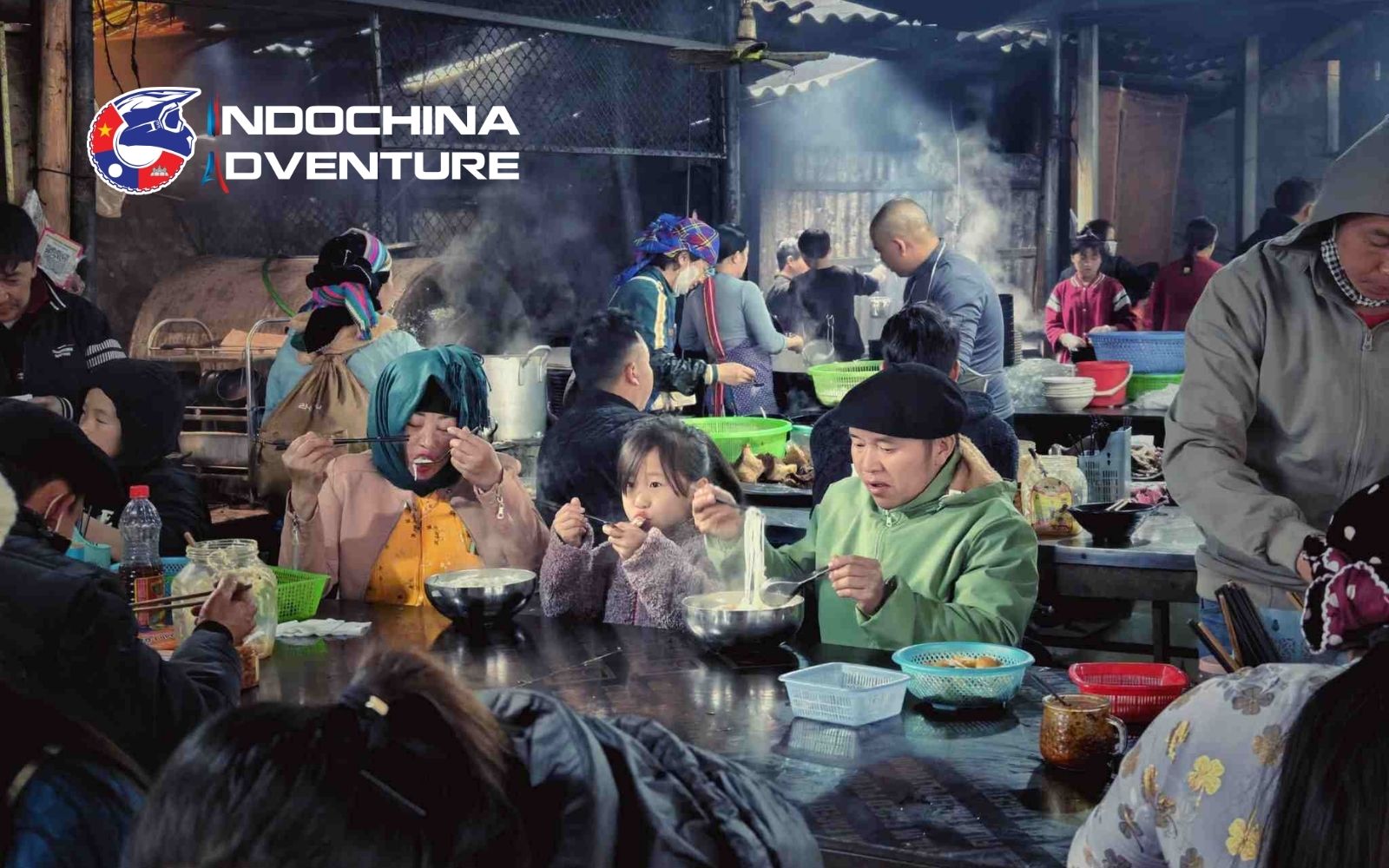
Steaming local dishes warm the chilly mountain morning air
Beyond the main dishes, the air is filled with the sweet aroma of grilled sticky rice and the sizzle of lard from local sausages. It is the perfect place to sit down, grab a stool, and join the locals for a shot of spicy corn wine – a true gesture of highland hospitality.
Livestock & local trading
Long before sunrise, local farmers begin arriving at the market with buffaloes, pigs, chickens, and baskets full of mountain produce. The livestock area feels noisy, crowded, and full of movement, offering visitors a rare glimpse into the trading culture of Ha Giang’s highland communities.
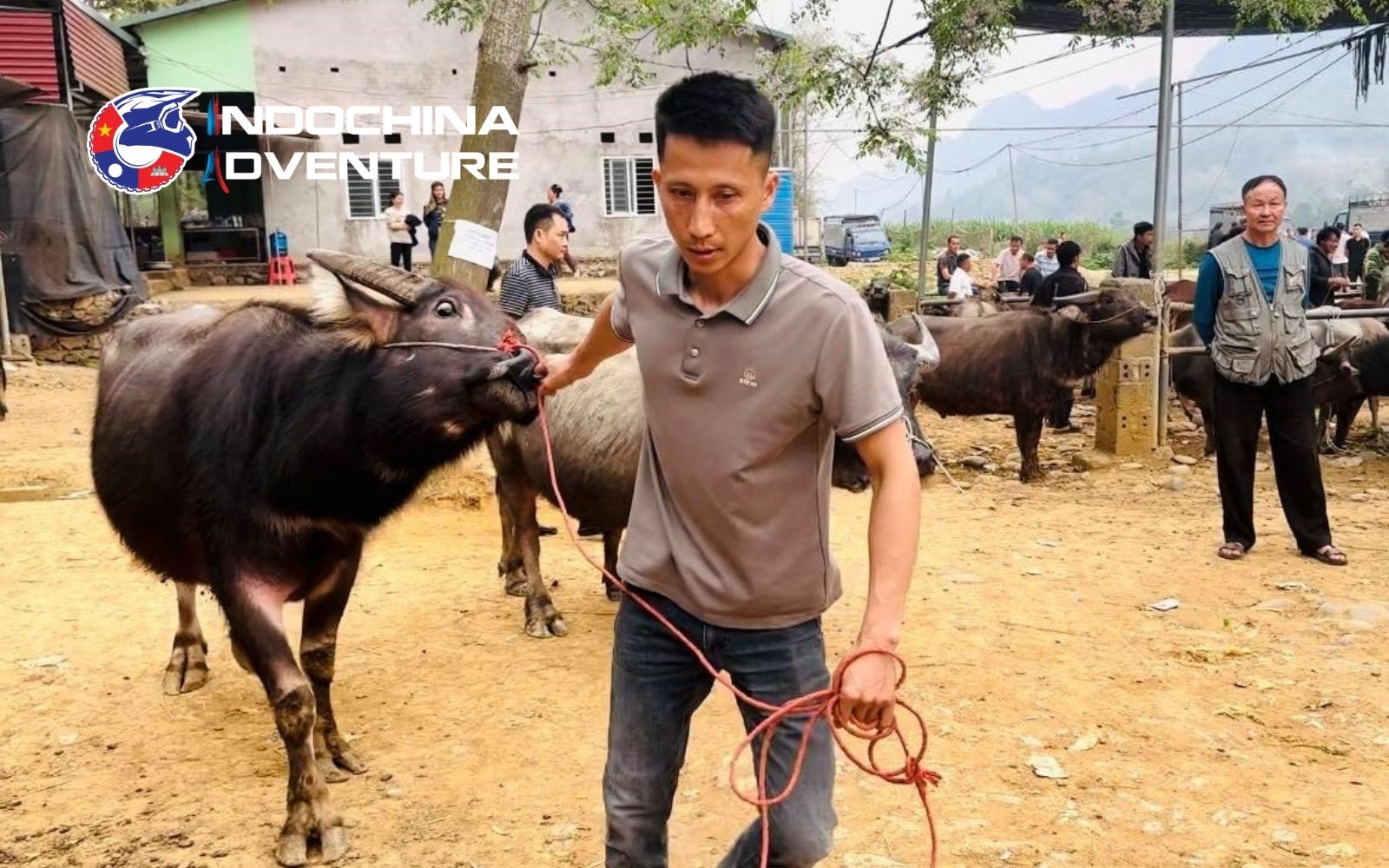
Traditional trading scenes at the lively Sunday market in Ha Giang
Beyond the animal market, rows of stalls display handmade tools, woven fabrics, local herbs, and seasonal products collected from nearby villages. Anyone curious about what to buy at Dong Van Sunday Market will find plenty of authentic items that reflect the everyday life and traditions of northern Vietnam.
Handmade & daily goods
For those seeking authentic souvenirs, the marketplace is a treasure trove of artisanal craftsmanship that reflects the identity of the northern highlands. You can find beautifully hand-woven hemp fabrics, intricate indigo-dyed scarves and traditional silver jewelry crafted by skilled ethnic artisans. Among the many cultural places to visit in Dong Van, this section of the weekly market offers the most direct access to genuine local products that haven’t been mass-produced for tourists.
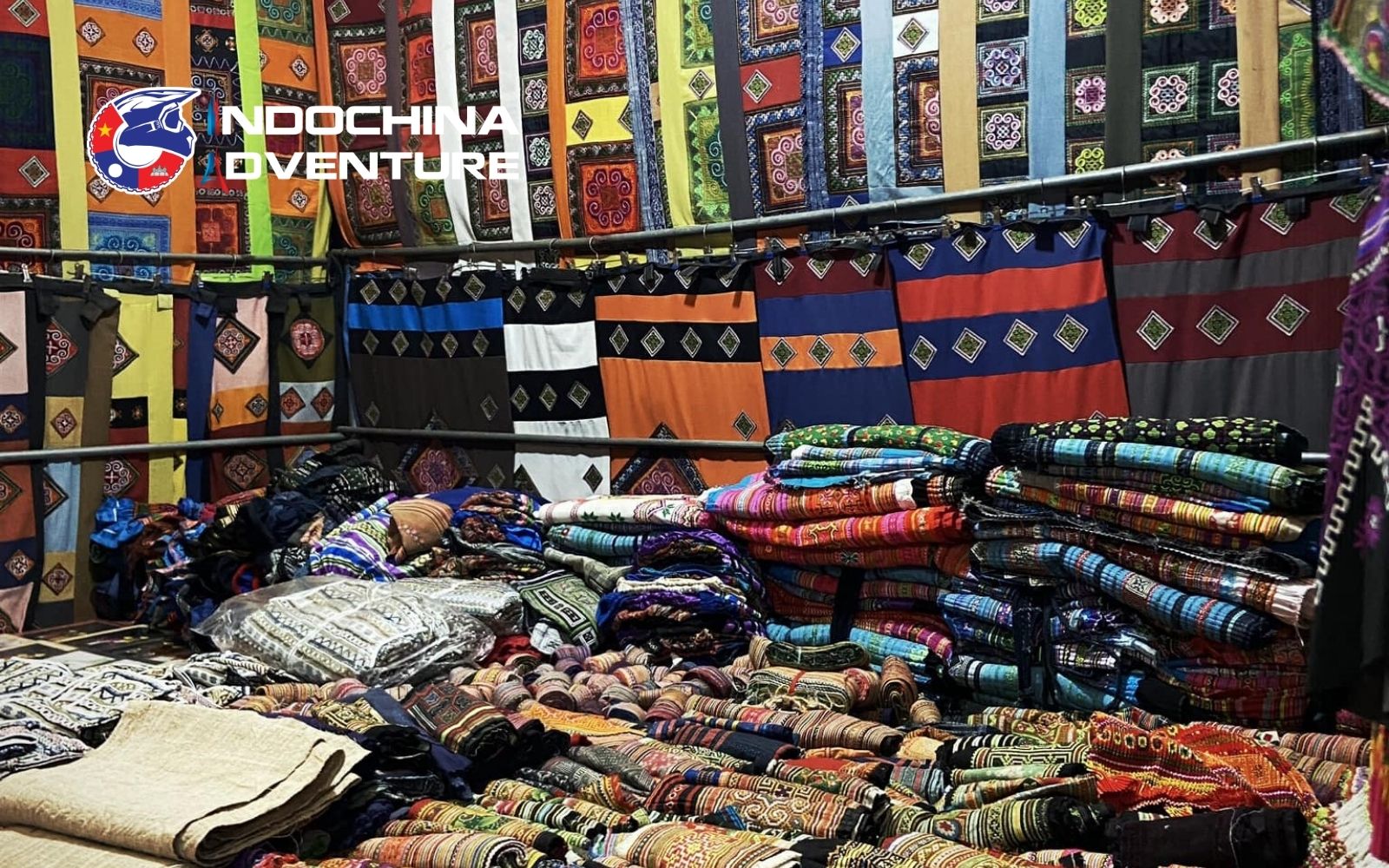
Handmade textiles and daily goods reflect northern Vietnam’s mountain culture
Beyond textiles, the stalls are packed with essentials like forged tools, medicinal forest herbs, and seasonal fruits. It is a fascinating look at the self-sufficient lifestyle of mountain tribes in their rugged environment.
Why it’s a highlight of the Ha Giang Loop
While the loop is famous for its hairpin turns and limestone peaks, the Dong Van’s weekly market provides the human connection that makes the journey complete. It adds a layer of soul to the scenery, serving as one of the most essential things to do in Ha Giang to truly understand the people who call these mountains home.

A cultural highlight during every Ha Giang Loop adventure
Witnessing the explosion of color and culture here is often the most talked-about moment of a northeast Vietnam motorbike tour. It transforms a scenic ride into a deep cultural immersion, proving that the heart of the highlands is found in its vibrant community gatherings.
To truly capture the soul of the northern highlands, most travelers experience this Sunday market as a key stop on a broader journey through the region. If you are looking for a seamless route packed with local insights and hidden gems, Indochina Adventure offers expertly planned itineraries tailored for discovery. Don’t just pass through the scenery – immerse yourself in the authentic pulse of the mountains with a team that knows every corner of the karst plateau. Check out this curated option to elevate your adventure:

Indochina Adventure designs immersive journeys through Dong Vans hidden routes
Best time to visit Dong Van Sunday Market
The best time to visit Dong Van Sunday Market depends on both the season and the hour you arrive. Sunday mornings between 6:00 AM and 9:00 AM offer the liveliest atmosphere, when ethnic communities gather in traditional clothing and the market becomes full of trading activities, local food, and cultural interaction.
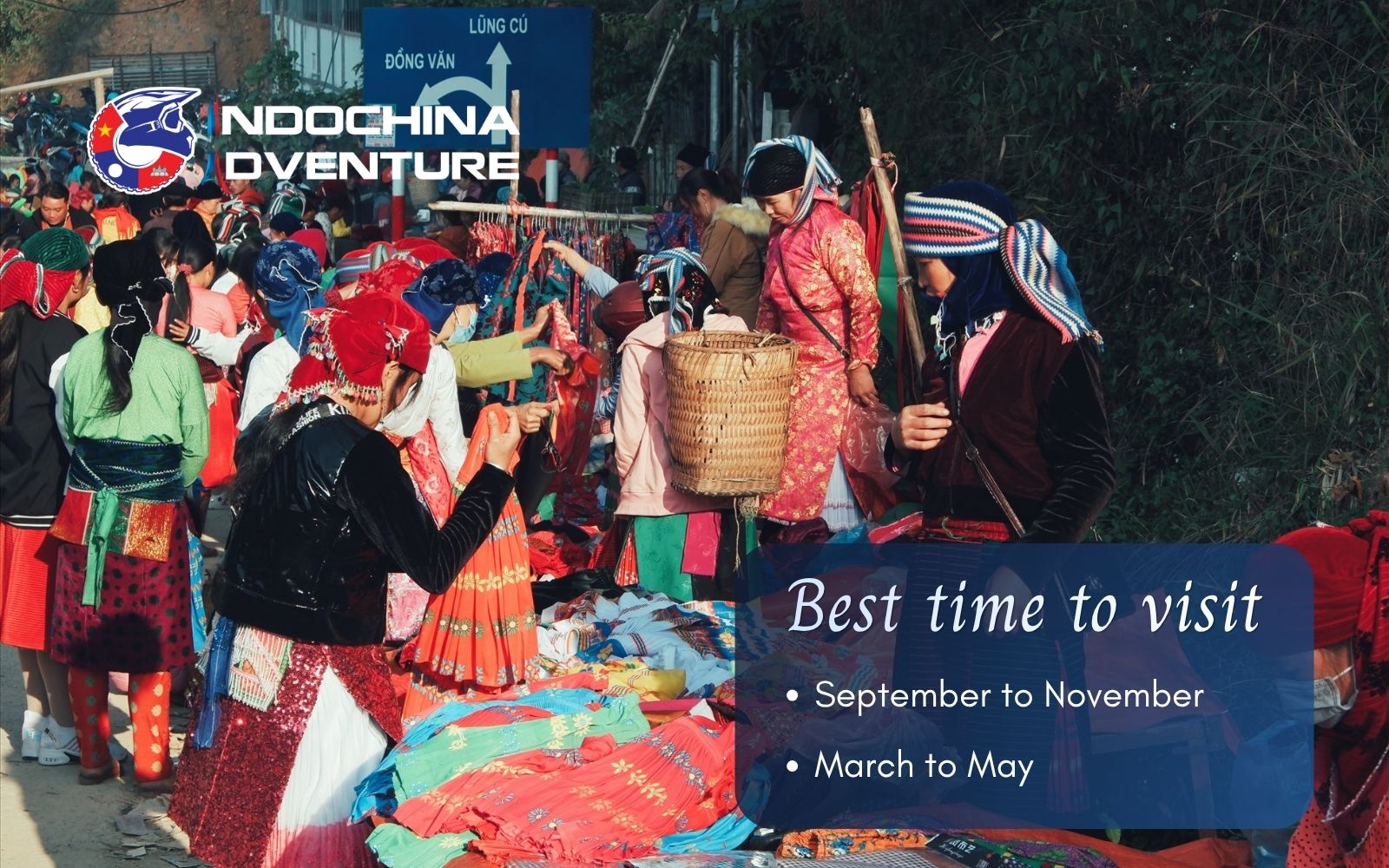
Autumn mornings bring ideal weather to explore this Ha Giang ethnic market
For weather and scenery, many travelers consider September to November and March to May the best time to visit Dong Van. Autumn brings cool temperatures, clear skies, and golden rice terraces across the mountains, while spring adds blooming flowers and fresh green landscapes to the Ha Giang Loop experience.
Winter months between December and February can feel very cold in the early morning, especially in the highlands around Dong Van. However, foggy mountain views and the quieter atmosphere create a unique charm for photography lovers and adventurous travelers.
Tips for visiting Dong Van Sunday Market
Navigating the bustling chaos of a north Vietnam motorbike tour requires a bit of local know-how to ensure you get the most out of every stop. To help you blend in and enjoy the Dong Van market Vietnam like a pro, keep these practical tips in mind:
- Bring plenty of cash: Most vendors are local farmers who only accept Vietnamese Dong in small denominations; card readers are non-existent here.
- Respect the locals: Always ask for permission before taking close-up portraits of people in their traditional attire to ensure a respectful exchange.
- Dress modestly: You are entering a traditional community space, so it is best to keep your shoulders and knees covered out of respect for local customs.
- The early bird wins: If you want to see the fascinating livestock trading, you need to arrive by 7:00 AM, as most of these deals are finished by mid-morning.
- Watch your step: The market can get crowded and muddy, especially in the livestock area, so wear sturdy, closed-toe shoes.

Helpful travel tips for a smoother and more authentic market experience
Is Dong Van Sunday Market worth visiting in Ha Giang?
Absolutely. If you want to move beyond the typical tourist bubbles and see the authentic pulse of the highlands, missing this event would be a massive mistake. Given the convenient Dong Van market location right in the heart of town, it is incredibly easy to integrate into any northern itinerary.
It remains the most concentrated dose of culture you can find in the region, making it a definitive highlight of any motorcycle tour in Vietnam. For many, the human connections and vibrant energy found here become the most cherished memories of their entire journey.
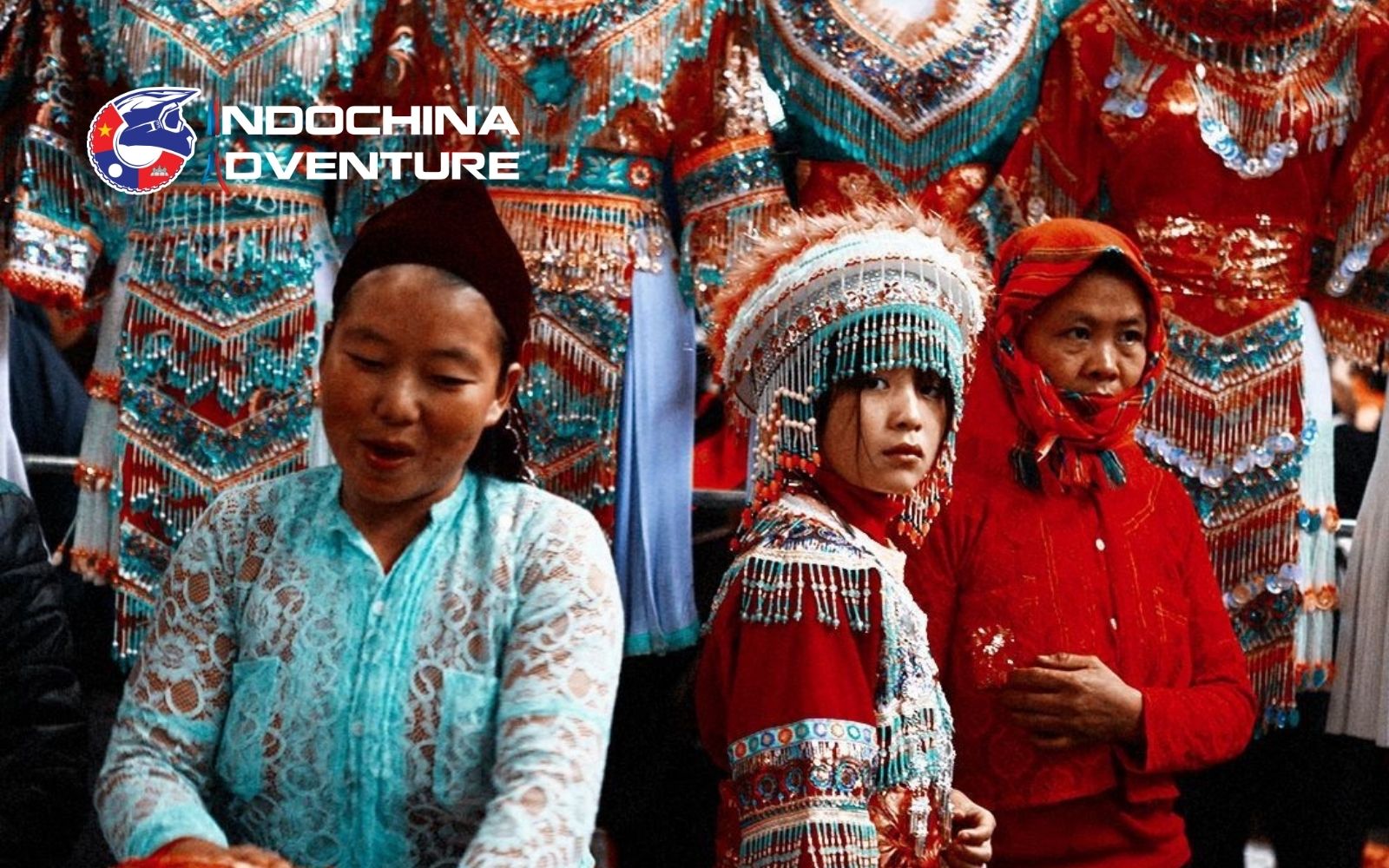
Dong Van Market offers culture, scenery, food and unforgettable local encounters
Dong Van Sunday Market Ha Giang offers far more than a typical weekend market experience. Between the colorful ethnic culture, lively trading atmosphere, traditional food, and stunning mountain surroundings, this destination leaves a lasting impression on many travelers exploring northern Vietnam.
Ready to experience the authentic atmosphere of Dong Van Sunday Market for yourself? Book your Ha Giang motorbike adventure with Indochina Adventure today and explore the cultural heart of northern Vietnam with experienced local guides.

Perched at an altitude of over 1,200 meters, Ma Pi Leng Pass is the “King” of Vietnam’s mountain passes. Because it sits so high up in the Ha Giang highlands, the weather in Ma Pi Leng Pass is a completely different beast compared to the humid lowlands of Hanoi. At Indochina Adventure, we believe that whether you are chasing clouds or looking for sun-drenched canyons, knowing the local climate is the key to a legendary trip. Staying ahead of the forecast ensures your adventure motorcycle riding journey remains safe, smooth, and absolutely epic.
What is the weather like in Ma Pi Leng Pass?
The weather in Ma Pi Leng Pass follows four distinct seasons, similar to Dong Van – Meo Vac sub-climate region. Ma Pi Leng Pass temperature can drop below 0°C in winter and spring, sometimes bringing light snow, while summer and autumn stay warmer, around 25 – 30°C. Because of its high altitude, the weather often feels much cooler than other areas, making it an important factor for planning any Ma Pi Leng Pass motorcycle tour.
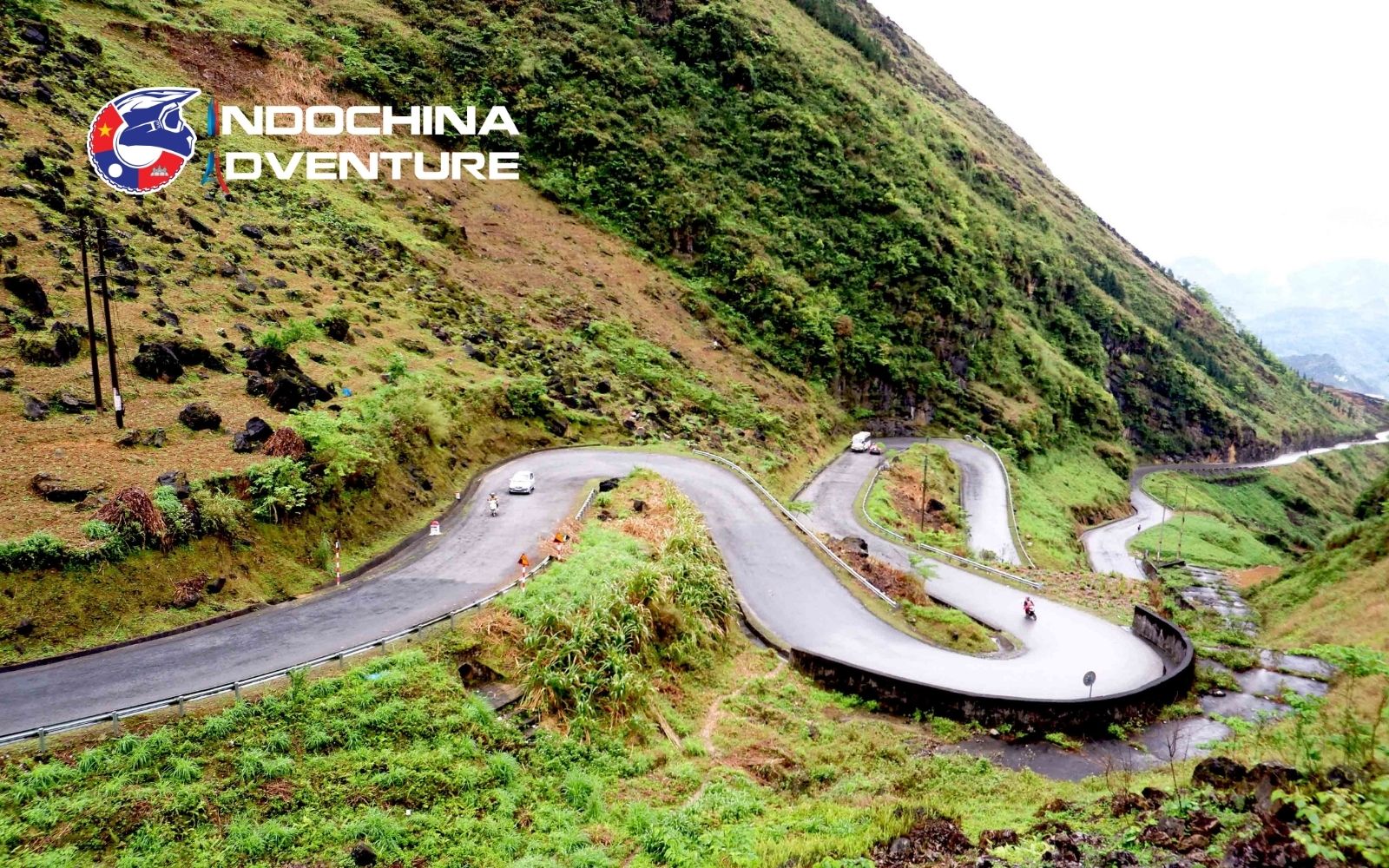
Overview of weather in Ma Pi Leng Pass across seasons and climate patterns
Weather in Ma Pi Leng Pass: seasonal conditions travelers should expect
Reaching the summit of the pass reveals just how much the Ha Giang Ma Pi Leng weather dominates the local landscape, often sitting several degrees cooler than the surrounding valleys. For anyone embarking on a Ha Giang loop tour, these high-altitude conditions create a seasonal “personality” for the road that can range from misty and mysterious to bright and panoramic.
Spring (March to May) – mild weather and green mountain views
Spring brings a refreshing transition as the biting cold of the highlands begins to fade. The landscape wakes up with lush greenery and sprouting corn fields that cling to the limestone cliffs. This weather in Ma Pi Leng Pass offers a mild climate and pleasant breezes, making it a fantastic window for Vietnam motorcycle tours looking to avoid both the summer heat and the winter frost.
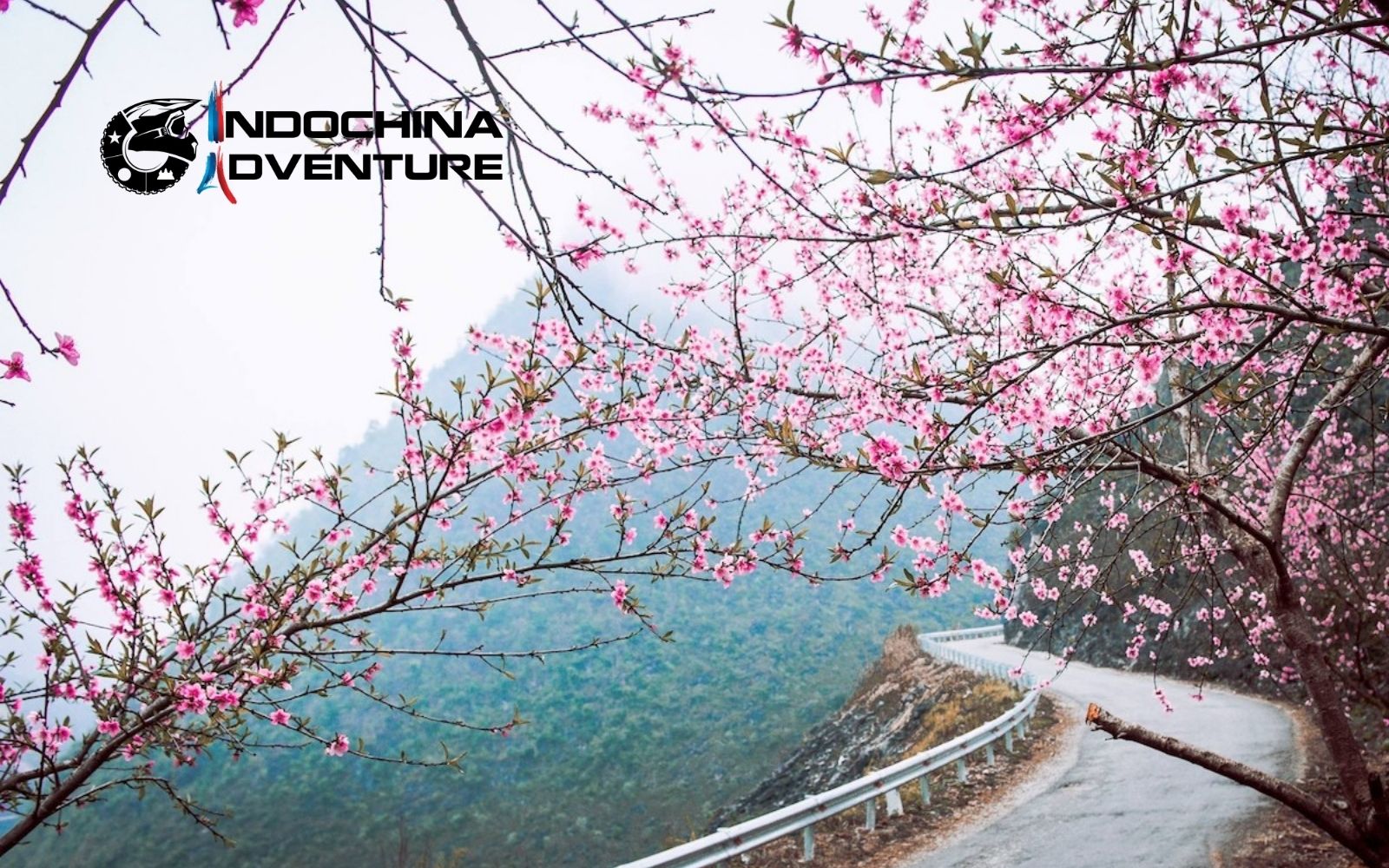
Spring highlights with Ma Pi Leng weather and lush green mountain scenery
Summer (June to August) – rainy days and slippery roads
While the scenery stays incredibly vibrant and the valleys are draped in deep emerald hues, summer is synonymous with the monsoon season. Heavy rains can turn the winding roads slippery and may cause the Nho Que River to run a muddy brown. If this is your chosen time to visit Ma Pi Leng Pass, always keep a close eye on the daily forecast to stay ahead of sudden mountain downpours.
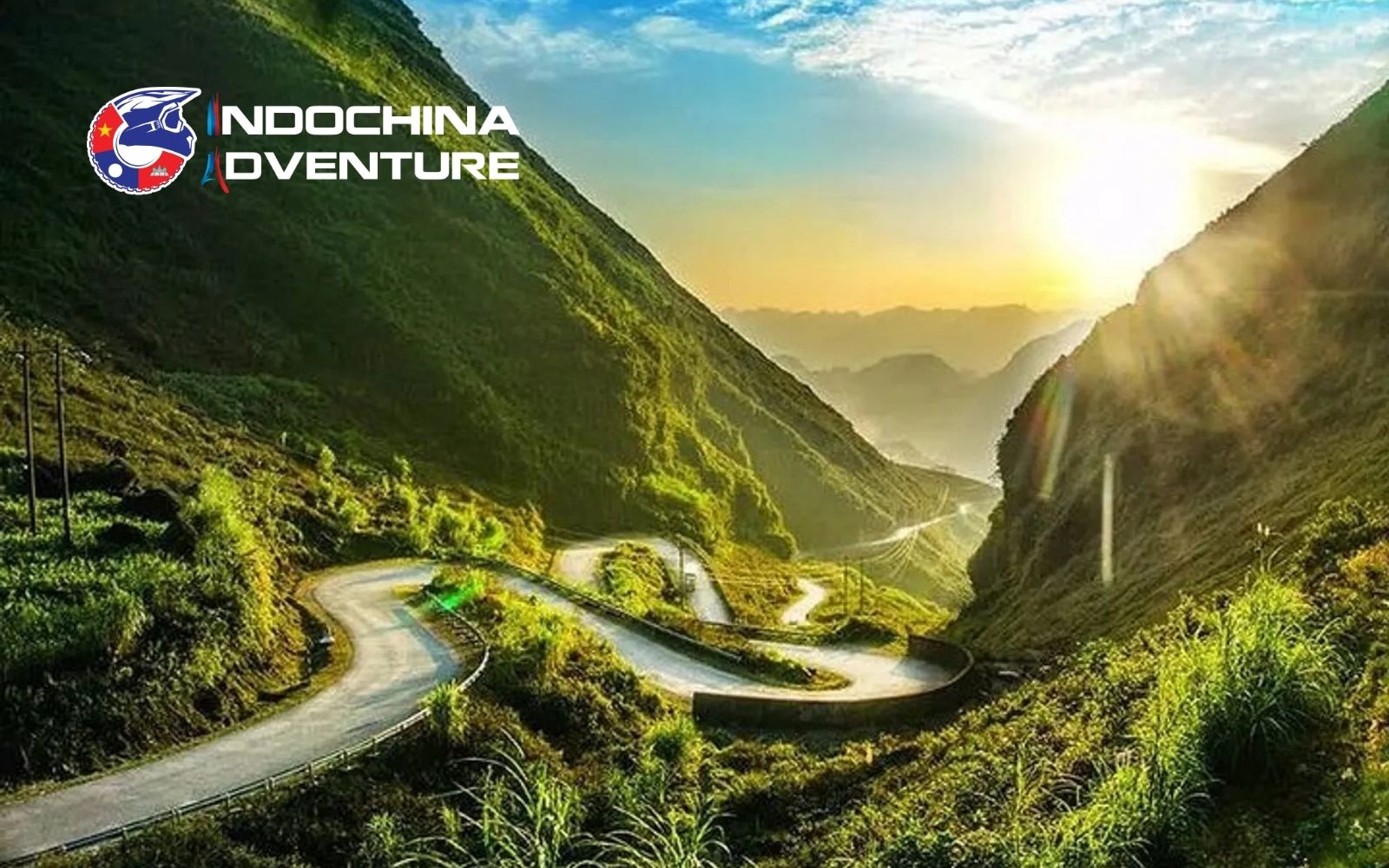
Rainy season travel risks under Ma Pi Leng Pass weather and wet road conditions
Autumn (September to November) – clear skies and ideal travel conditions
Often called the “Golden Season”, autumn treats travelers to incredibly clear blue skies and gentle sunshine. The vast terraced rice fields below the Ma Pi Leng Pass viewpoint transform into a shimmering carpet of ripe yellow gold. Without the summer rain or the winter fog, the visibility is at its peak, offering the most breathtaking panoramic views of the entire Tu San Canyon.
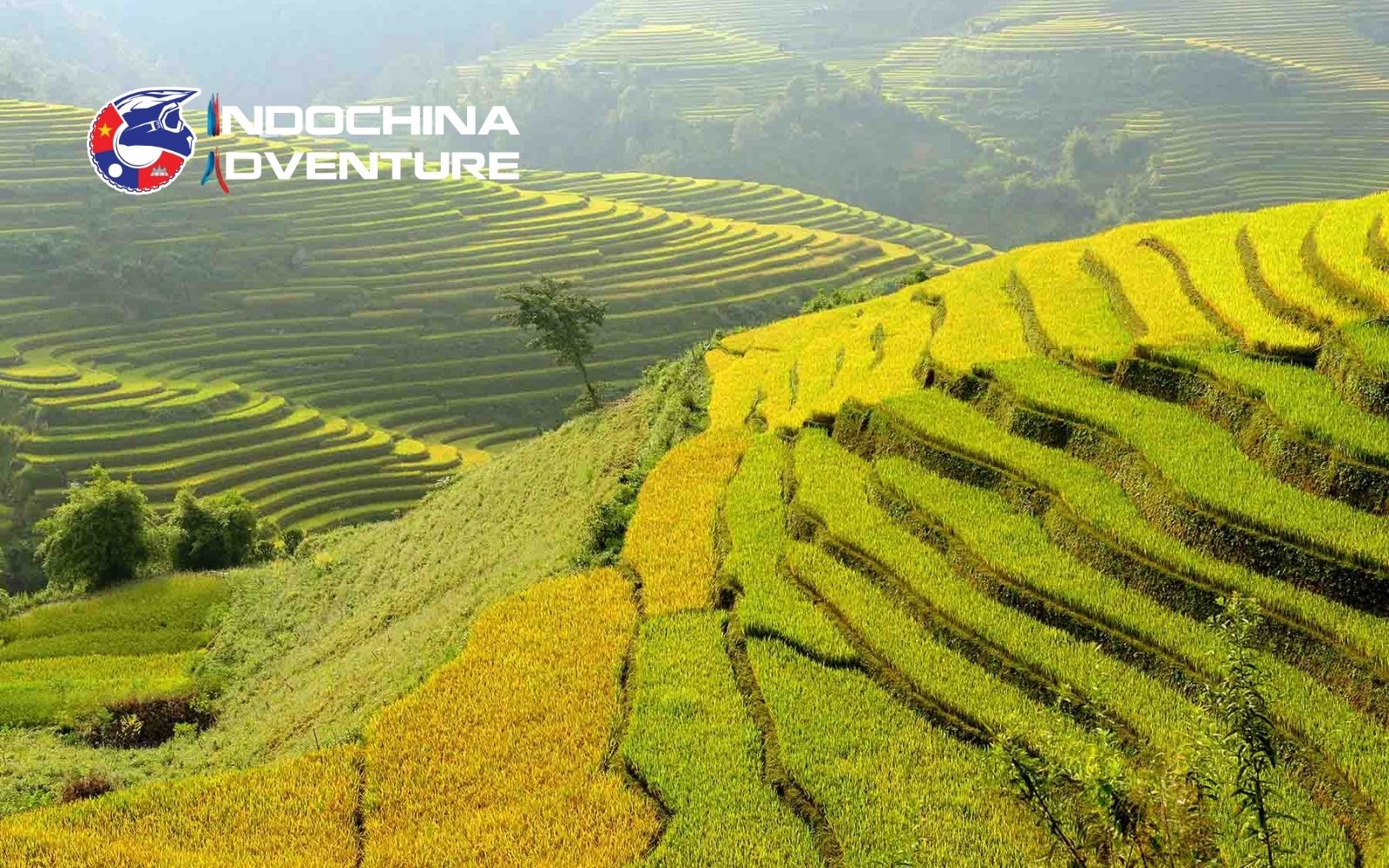
Golden rice fields shine under the clear and perfect autumn Ma Pi Leng Pass weather
There is no better time than autumn to hop on a bike and witness the full majesty of the canyon. Contact now to book your Ma Pi Leng Pass motorcycle tour with Indochina Adventure today and conquer the pass during its most stunning months!
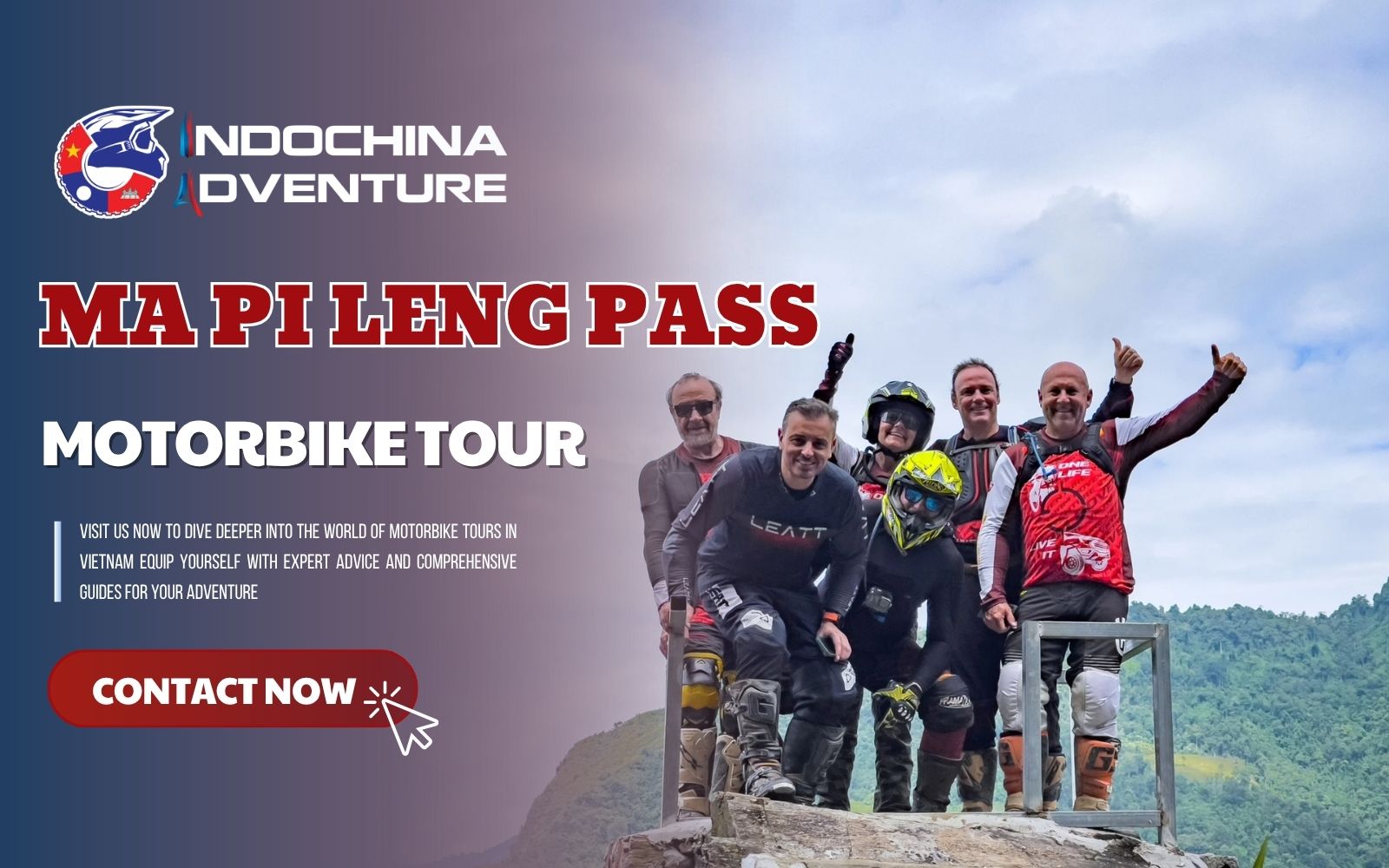
Join our professional tour to conquer the pass regardless of the changing mountain climate
Winter (December to February) – cold weather, fog, and flower season
Winter turns the pass into a moody, dramatic masterpiece where temperatures can plummet below zero and frost occasionally coats the peaks. Despite the chill, the dry atmosphere keeps the roads manageable, and the hills come alive with the pink and purple hues of the blossoms. Many visitors brave the cold specifically to catch the buckwheat flower festival in Ha Giang, which celebrates the region’s most iconic winter bloom.
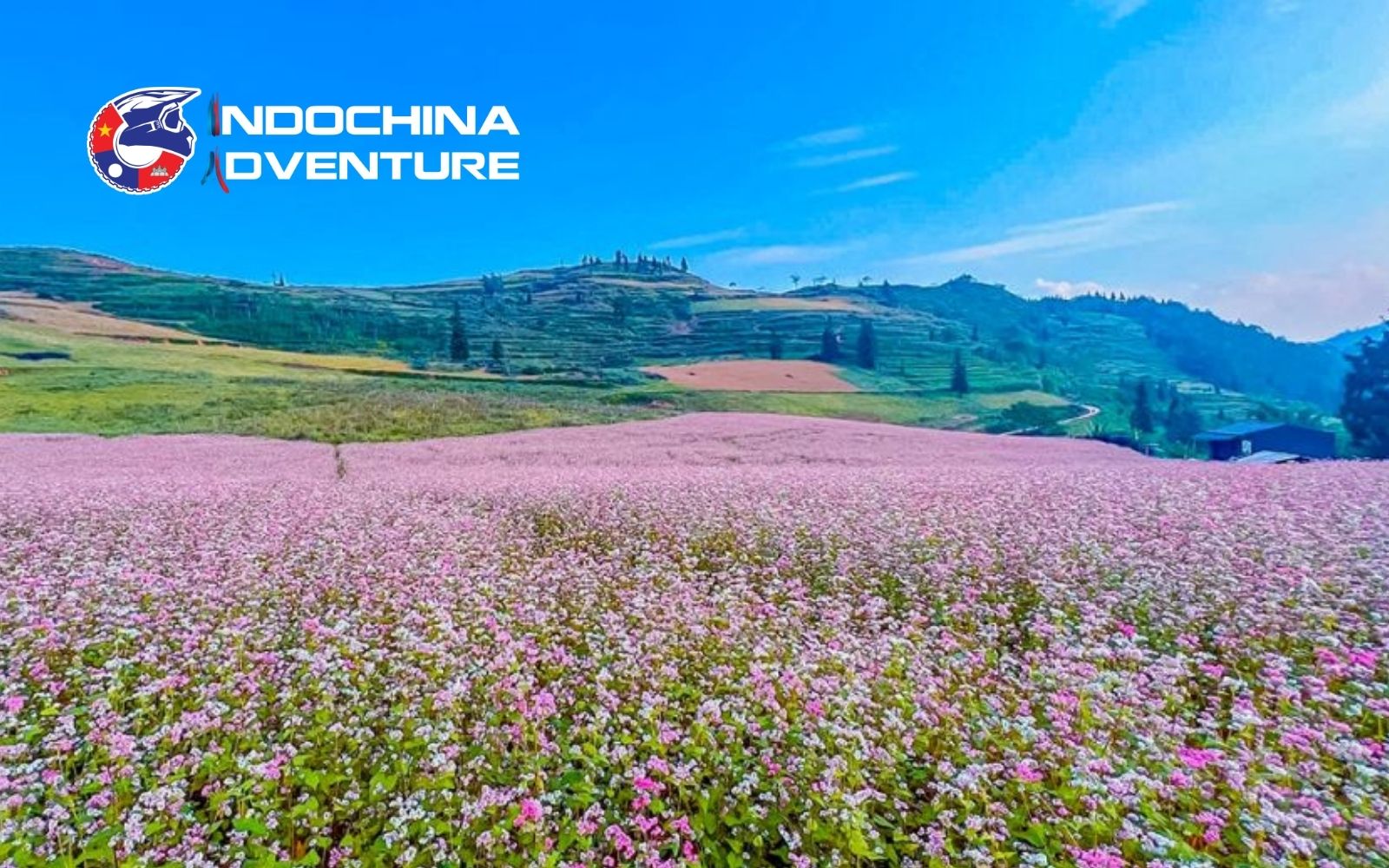
Blooming buckwheat flowers and mysterious morning fog create a romantic winter atmosphere
How weather affects the travel experience at Ma Pi Leng Pass
The Ma Pi Leng Pass weather acts as a silent guide, fundamentally shaping the mood and safety of your journey across the cliffs. For those on a north Vietnam motorbike tour, these shifting conditions can mean the difference between a sun-drenched ride above the clouds or a mysterious, slow-paced trek through a thick mountain mist.
- Fog reduces riding confidence and visibility: At Ma Pi Leng Pass, early mornings and winter months often come with dense fog that can limit sight distance to only a few meters. Riders on a mountain route need slower speeds and stronger focus, especially on sharp curves and cliffside sections.
- Rain reshapes road difficulty and timing: The weather in Ma Pi Leng Pass during the rainy season can turn the road surface wet and unstable, especially after heavy downpours. Small rockfalls and muddy patches may appear along the route, so flexible timing and careful braking become essential for safety.
- Cold air changes endurance on long rides: High altitude brings noticeably lower temperatures, especially at night and early morning. This affects stamina during long-distance travel and makes layered clothing important for comfort on extended journeys.
- Scenery and activities shift with conditions: Clear weather opens full canyon views and enhances photography spots, while misty or rainy days create a more dramatic atmosphere but limit visibility. This directly influences things to do in Ma Pi Leng Pass, from viewpoint stops to slow scenic riding experiences.
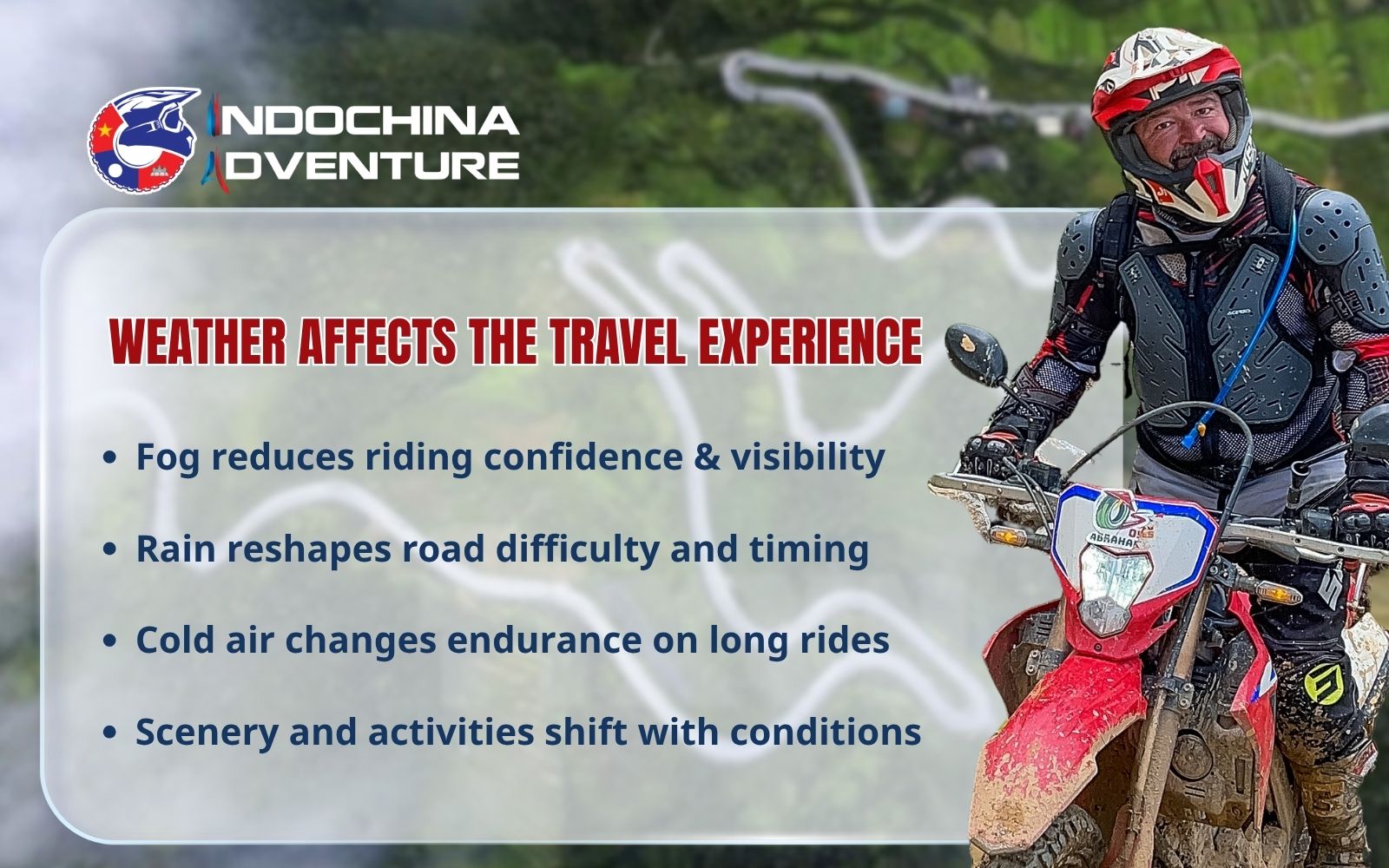
Mist and sun dramatically change how you experience the weather in Ma Pi Leng
Explore more: Is Ma Pi Leng Pass Dangerous? A Realistic Safety Guide
What to pack for different weather conditions in Ma Pi Leng Pass
Packing the right gear is essential to comfortably exploring the many places to visit in Ma Pi Leng Pass, from the high-altitude museums to the hidden trekking trails. Since conditions can shift from sun-scorched cliffs to shivering mist in a single afternoon, your bag needs to be as versatile as the mountain landscape itself.
- Layered clothing for shifting conditions: The weather in Ma Pi Leng Pass can change quickly within the same day, so multiple light layers help adapt from warm valleys to cold mountain peaks.
- Warm protection for low temperatures: At higher altitude, Ma Pi Leng Pass temperature may drop sharply in winter and early mornings, so a windproof jacket, fleece, and thermal wear become essential.
- Proper footwear for rocky terrain: Sturdy hiking shoes or motorbike boots provide better grip when walking on gravel paths and viewpoint trails compared to sandals or casual shoes.
- Weather protection gear: Raincoat, waterproof pants, and a backpack cover help manage sudden showers that often appear in the mountainous region.
- Riding safety equipment: A full-face or ¾ helmet improves protection against wind, dust, and insects during long rides along steep mountain roads.
- Sun and UV protection: High-altitude sunlight can feel intense even on cool days, so sunscreen, sunglasses, and lip balm help prevent sunburn and dehydration.
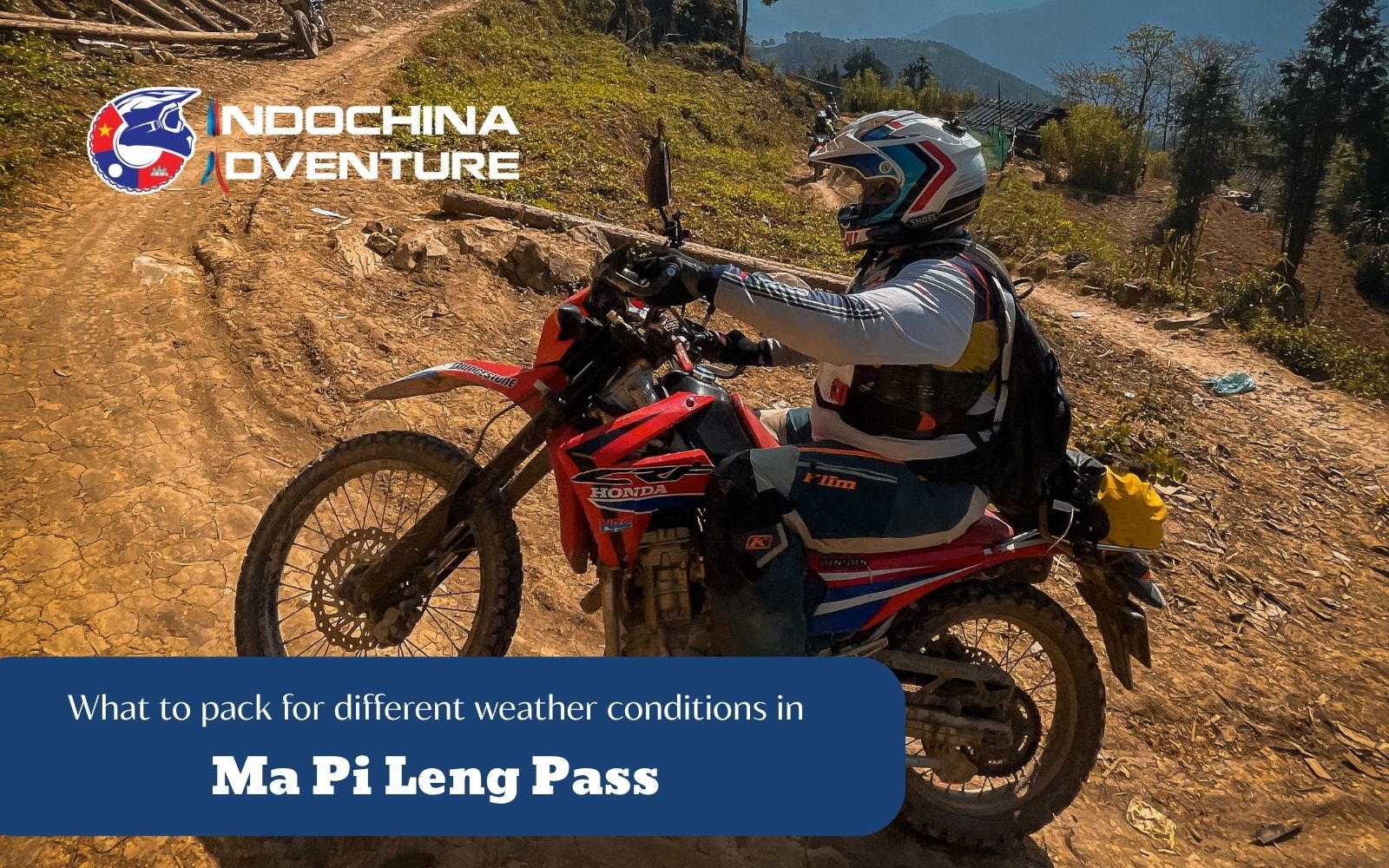
Pack smart with layers to stay comfortable in the unpredictable high-altitude mountain air.
FAQs
Does Ma Pi Leng Pass have heavy rain?
Yes. Heavy rain is common during the summer months, especially from June to August. Short but intense showers can make roads slippery and increase the risk of landslides in some sections.
What month has the best weather in Ma Pi Leng Pass?
The best time is usually September to November. This period offers dry weather, clear skies, and stable road conditions, making travel safer and scenery more impressive.
Is fog common in Ma Pi Leng Pass?
Yes. Fog appears quite often due to the high altitude. It is most frequent in winter and early mornings, sometimes reducing visibility along mountain curves.
While the weather in Ma Pi Leng Pass remains an unpredictable force of nature, its shifting moods, from golden autumn sunshine to the ethereal winter mist, only add to the raw, untamed beauty of the journey. To truly embrace the spirit of the highlands, having an expert team like Indochina Adventure by your side ensures every twist and turn is navigated with confidence. Let the professionals handle the logistics and the timing while you simply focus on the horizon. Contact us now to turn those bucket-list dreams into a reality on the legendary road to Ha Giang!

Ma Pi Leng Pass is widely celebrated as one of the “Four Great Passes” of Northern Vietnam. While the winding roads and steep limestone cliffs provide plenty of thrills, nothing beats the experience of pulling over to enjoy a warm cup of coffee while you gaze out over the Nho Que River. If you are planning your Ha Giang Loop journey, these best coffee shops in Ma Pi Leng Pass offer the perfect combination of caffeine and breathtaking scenery. For those who seek the ultimate thrill, Indochina Adventure provides premium motorcycle adventure tours that ensure you don’t miss a single iconic viewpoint along this legendary route.
Best coffee shops in Ma Pi Leng Pass
Travelers often look for the perfect stop to rest and recharge along the pass, especially during a motorbike tour Ma Pi Leng Pass where breaks are essential. Choosing the right café is not just about drinks, but about finding a viewpoint that captures the full beauty of the mountains. If you are wondering where to drink coffee in Ma Pi Leng Pass, the spots below offer both convenience and unforgettable scenery.
Cafe Mỷ
Address: 6CJ7+5JX, Ma Pi Leng Pass, Pa Vi, Meo Vac, Ha Giang, Vietnam.
Cafe Mỷ stands out as a unique destination that seamlessly blends a refined coffee space with a brand-new camping site on the pass. As one of the top cafes in Ma Pi Leng Pass Ha Giang, it offers a rare opportunity to trade the noise of the city for the serene whispers of the highlands.
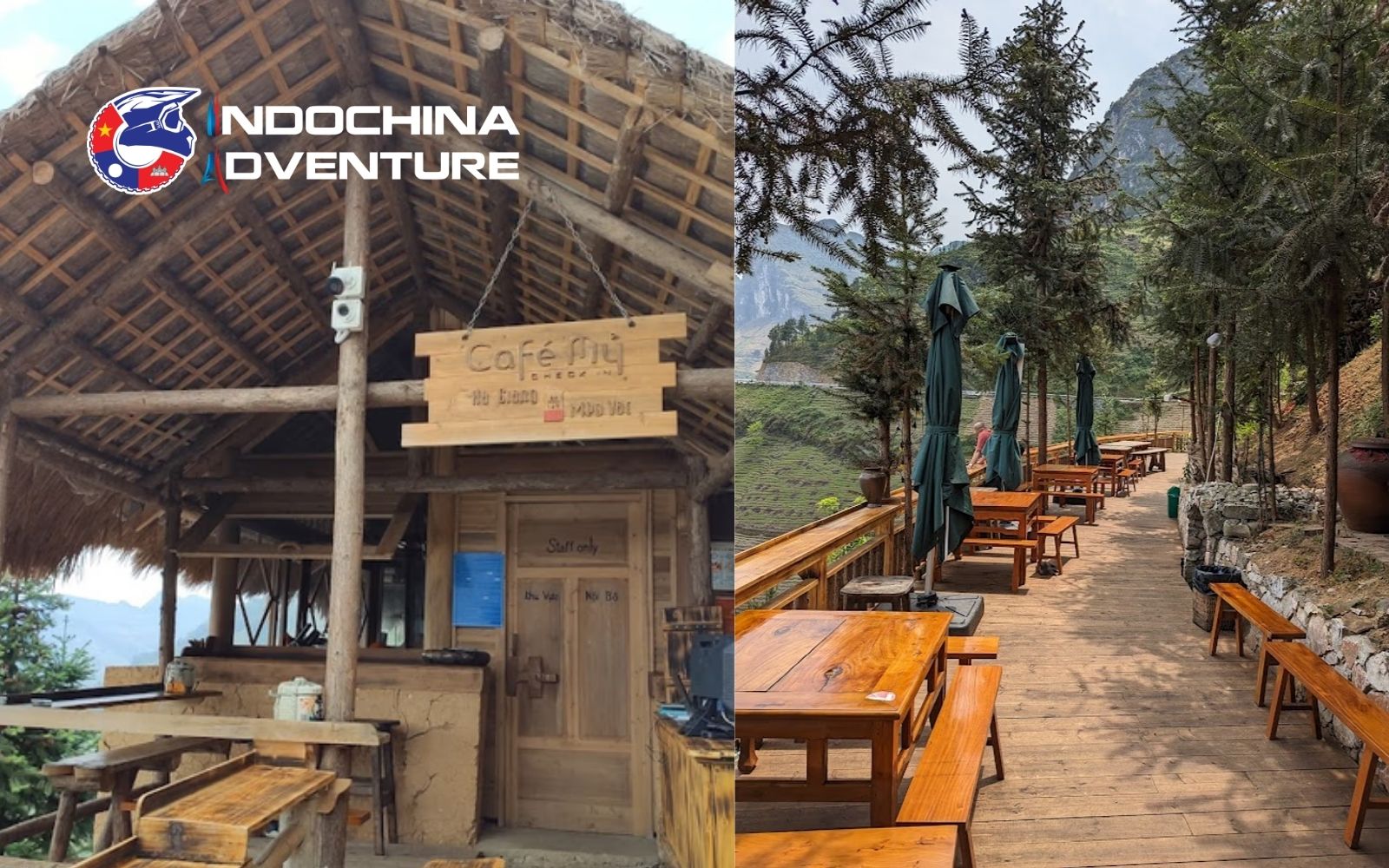
Cafe Mỷ offers peaceful vibes with sweeping canyon views and quiet mountain charm
The highlight of this location is the incredible panoramic view looking directly into Tu San Canyon and the emerald curves of the Nho Que River. Beyond a quick caffeine stop, it is one of the most rewarding places to visit in Ma Pi Leng Pass for those who wish to camp overnight and wake up surrounded by majestic nature.
Tu San Coffee (Tu Sản Coffee Đèo Mã Pí Lèng)
Address: Ma Pi Leng Pass, Pa Vi Commune, Meo Vac District, Ha Giang
Tu San Coffee is widely known as one of the best viewpoint cafes Ma Pi Leng Pass, offering a breathtaking vantage point over the emerald Nho Que River. This stop is perfect for travelers who want a quiet break with stunning scenery, where the river curves gently through the deep canyon below.
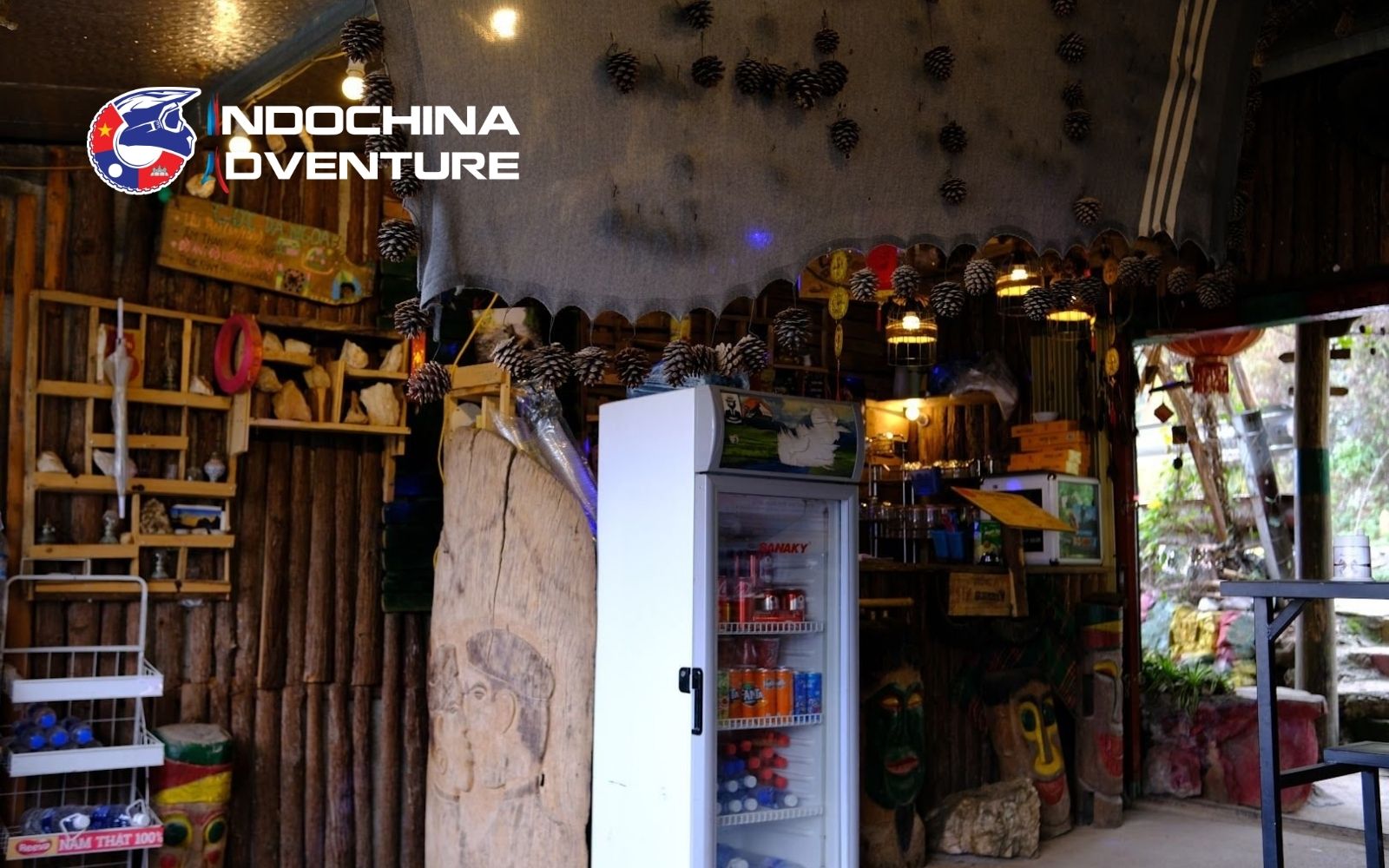
Tu San Coffee stands out among best viewpoint cafes Ma Pi Leng Pass
The café features a peaceful atmosphere, friendly service, and reasonably priced drinks, making it a favorite stop on any Ha Giang Loop tour. Beyond coffee, visitors can also enjoy unique experiences such as camping or joining local excursions, turning a simple stop into a memorable highlight of the journey.
Ma Pi Leng Cafe
Address: 69XV+VMH, Ma Pi Leng Skywalk, QL4C, Pai Lung Commune, Dong Van District, Ha Giang, Vietnam
Perched right beside the main road of Ma Pi Leng Pass, this café offers one of the most convenient and scenic points along the route. Its location next to the Youth Volunteer Monument and near the path leading to the Skywalk makes it a natural stop during a motorcycle tour north Vietnam, where travelers can pause without straying far from the journey.
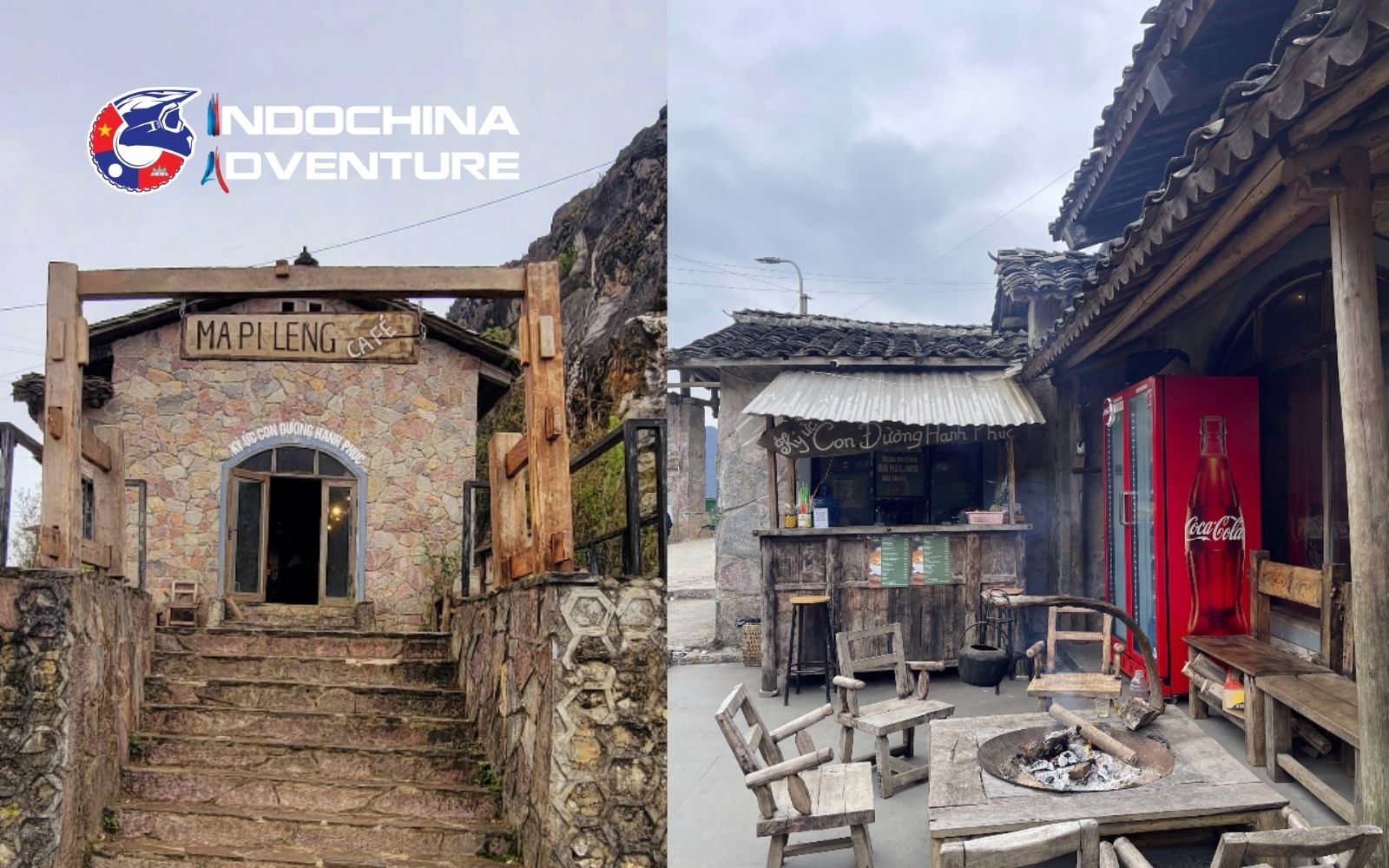
This is a must-stop in best coffee shops in Ma Pi Leng Pass
From here, a short walk brings you to iconic viewpoints overlooking Tu San Canyon and the Nho Que River. Sitting back with a cup of coffee while listening to stories about the legendary Happiness Road adds depth and meaning to any Vietnam motorcycle tour through this remarkable landscape.
Café Panorama (Cliffside café)
Address: Happiness Road, Meo Vac District, Ha Giang, Vietnam
Few places along the pass capture attention as quickly as this cliffside café, thanks to its striking position above the Nho Que River. Known as one of the best coffee shops in Ma Pi Leng Pass, it offers a rare combination of dramatic scenery and a comfortable place to pause between mountain rides.
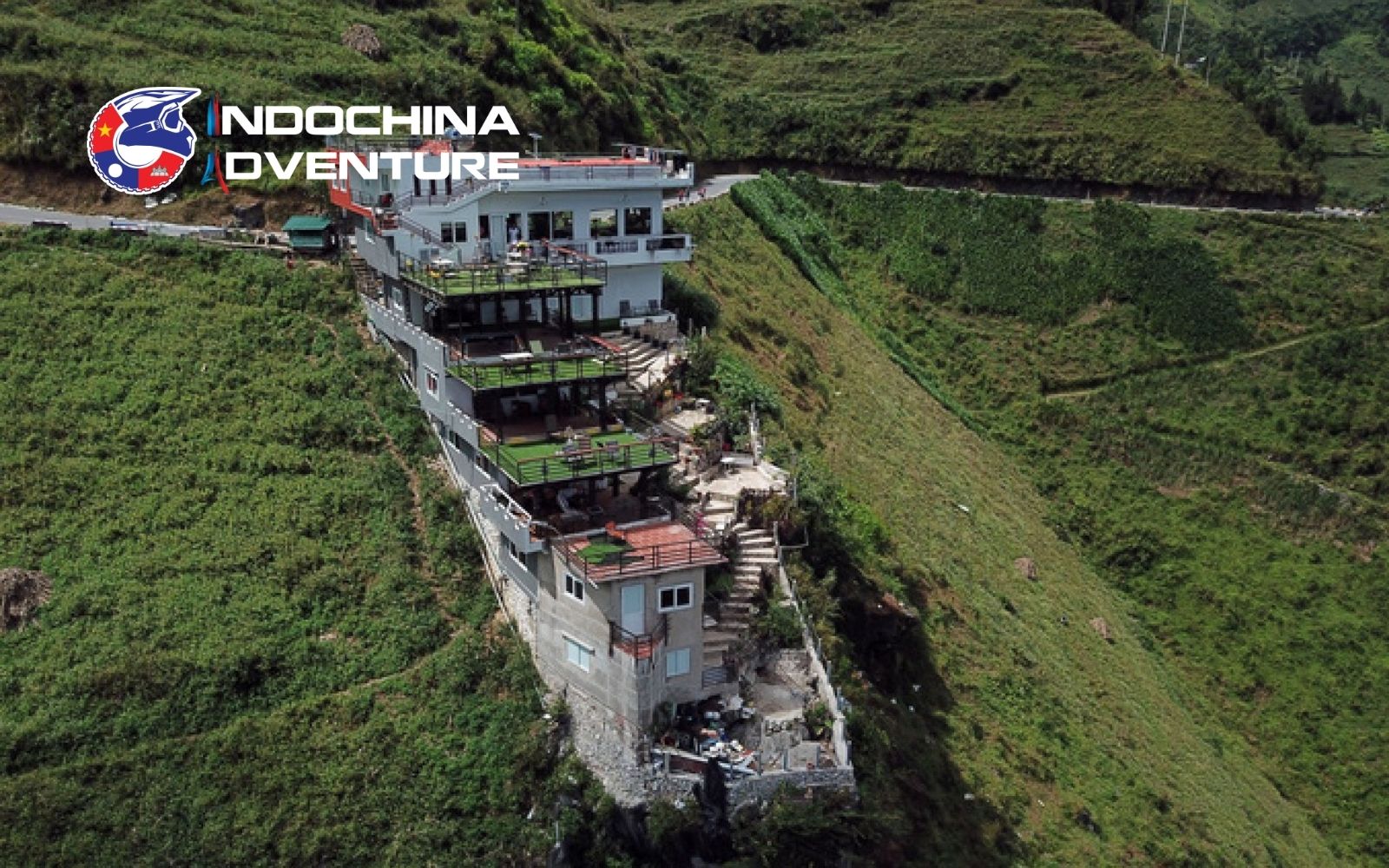
Panorama Café ranks among best cafes in Ma Pi Leng Pass with iconic cliffside views
The spacious layout includes both indoor seating and open terraces, all facing the valley below. As a standout Ma Pi Leng Pass viewpoint, this spot allows visitors to enjoy coffee while taking in sweeping canyon views, making every stop feel like a highlight of the journey.
Café A Páo
Address: Pai Lung Commune, Meo Vac District, Ha Giang, Vietnam
Tucked near the entrance of Ma Pi Leng Pass, this café offers a peaceful retreat surrounded by towering mountains and drifting clouds. Known for its raw, natural charm, it has become a favorite stop for travelers seeking an authentic Ma Pi Leng Pass coffee experience with uninterrupted views across the valley.
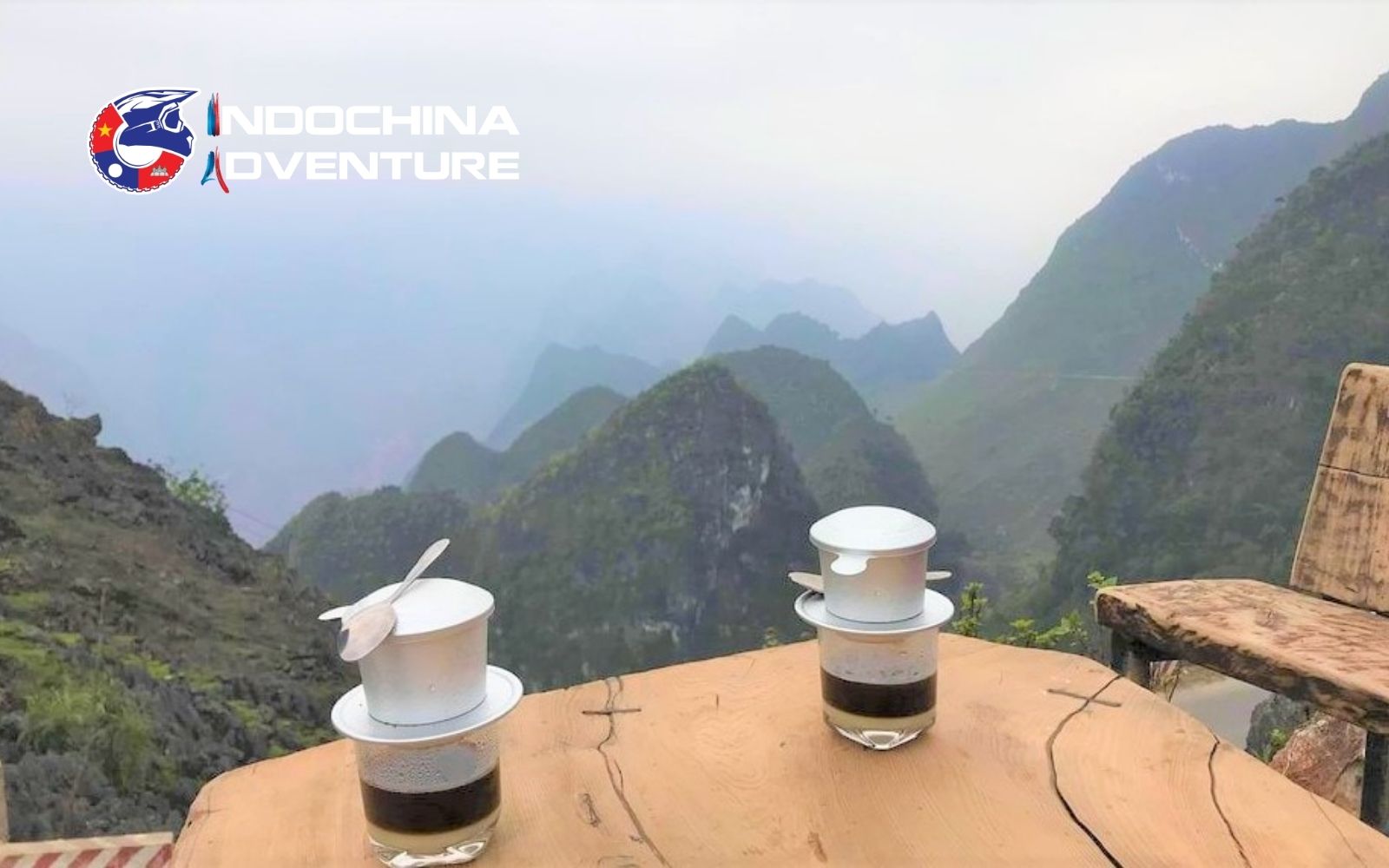
Cultural melodies and mountain views define these best viewpoint cafes Ma Pi Leng Pass
Simple stone seating, cool mountain air, and sweeping landscapes create a relaxing atmosphere, especially during sunrise or sunset. Among the most authentic Ma Pi Leng Pass cafes, this spot also brings a cultural touch with traditional H’Mong flute music, making it a memorable highlight for those exploring the region through northeast Vietnam motorcycle tours.
Explore: 10 Must-Try Best Restaurants near Ma Pi Leng Pass Ha Giang
Explore Ma Pi Leng Pass the way it was meant to be experienced with breathtaking viewpoints, hidden café stops, and stories only locals can share. Let Indochina Adventure lead you through the most scenic routes while you relax and take in every moment. Book your Ma Pi Leng tour now and make every kilometer count!

Ride with Indochina Adventure to explore hidden trails and the best spots in Ma Pi Leng Pass
Best time to visit coffee shops in Ma Pi Leng Pass
The time to visit Ma Pi Leng Pass plays a key role in how you experience each café along the route. Light, weather, and seasonal changes can completely transform the scenery, from mist-covered valleys to glowing mountain sunsets.
- Sunrise view: Arriving between 6:00 AM and 7:30 AM allows you to see the sun peak over the limestone jagged ridges. The soft morning light creates a golden reflection on the Nho Que River, providing a calm and mystical start to your journey.
- Cloud hunting season: If you visit between October and February, you have a high chance of hunting thick seas of clouds. This is one of the most magical things to do in Ma Pi Leng Pass, as sitting at a cliffside cafe during this time feels like floating in the sky while the white mist rolls through the deep canyons.
- Sunset photography: Late afternoon, specifically from 4:30 PM to 5:30 PM, is a photographer’s dream. The fading sun casts dramatic shadows across the canyon walls, turning the entire landscape into a vibrant palette of deep oranges and purples.
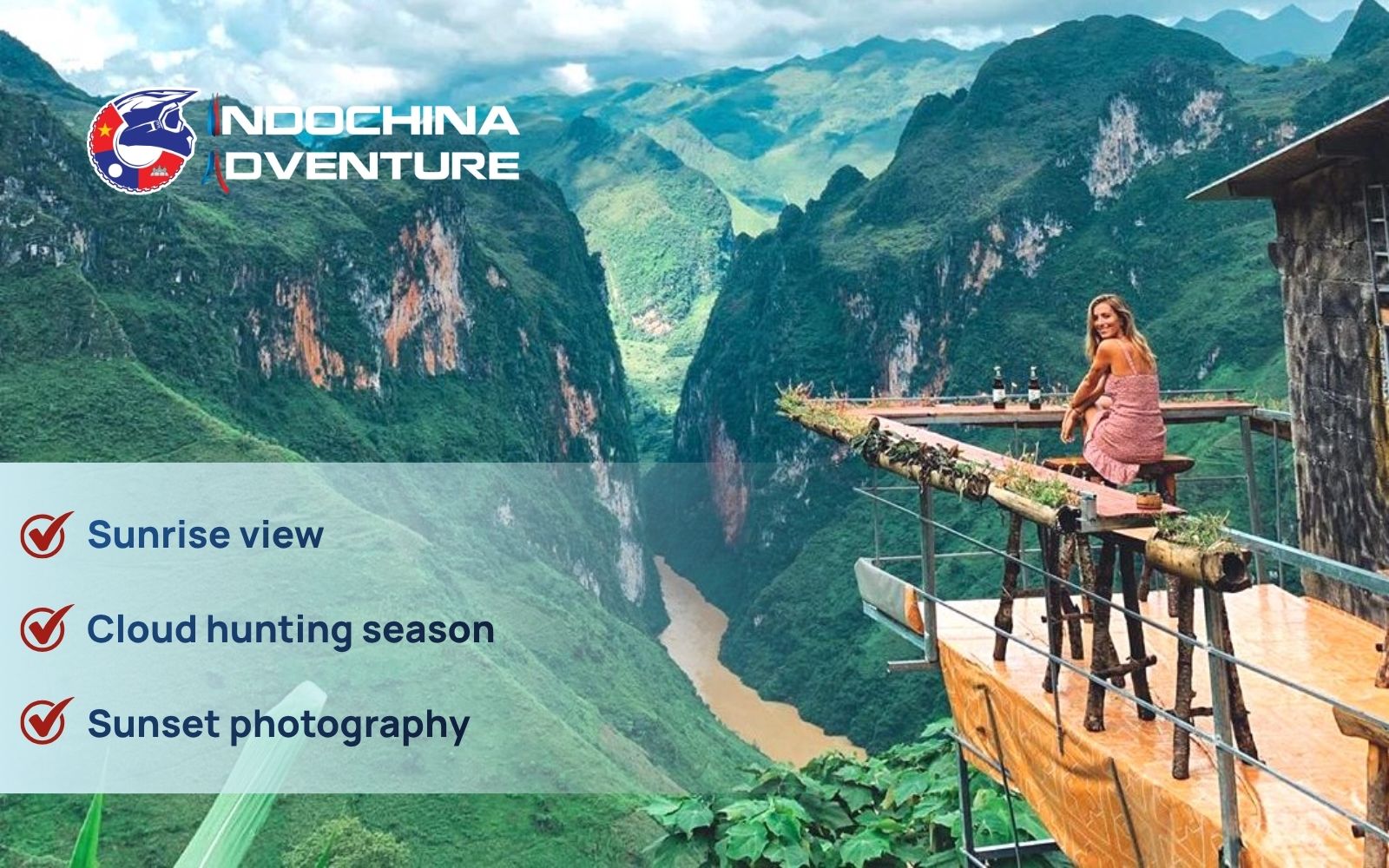
Best time to visit Ma Pi Leng cafes for clear views and golden light
Tips for visiting coffee shops in Ma Pi Leng Pass
A smooth and enjoyable stop at these scenic cafés depends on a bit of preparation. These simple Ma Pi Leng Pass travel tips help you avoid common inconveniences and make the most of your time along the route.
- Bring cash: Most establishments on the pass are small, local operations that do not have card terminals or reliable internet for digital transfers. Always carry enough Vietnamese Dong in small denominations to pay for your drinks, snacks, and parking fees.
- Weather considerations: The climate at the summit is unpredictable and often much colder than in the valleys. Even if it feels warm in Dong Van or Meo Vac, the wind chill on the pass can be intense, so keeping a windbreaker or a light jacket handy is a wise move for a comfortable break.
- Parking for motorbikes: The road is narrow and shared with heavy trucks and tour buses. When stopping at a cafe, always park your bike within the designated area, ensuring it is on stable ground and well away from the traffic lane to avoid any safety hazards.
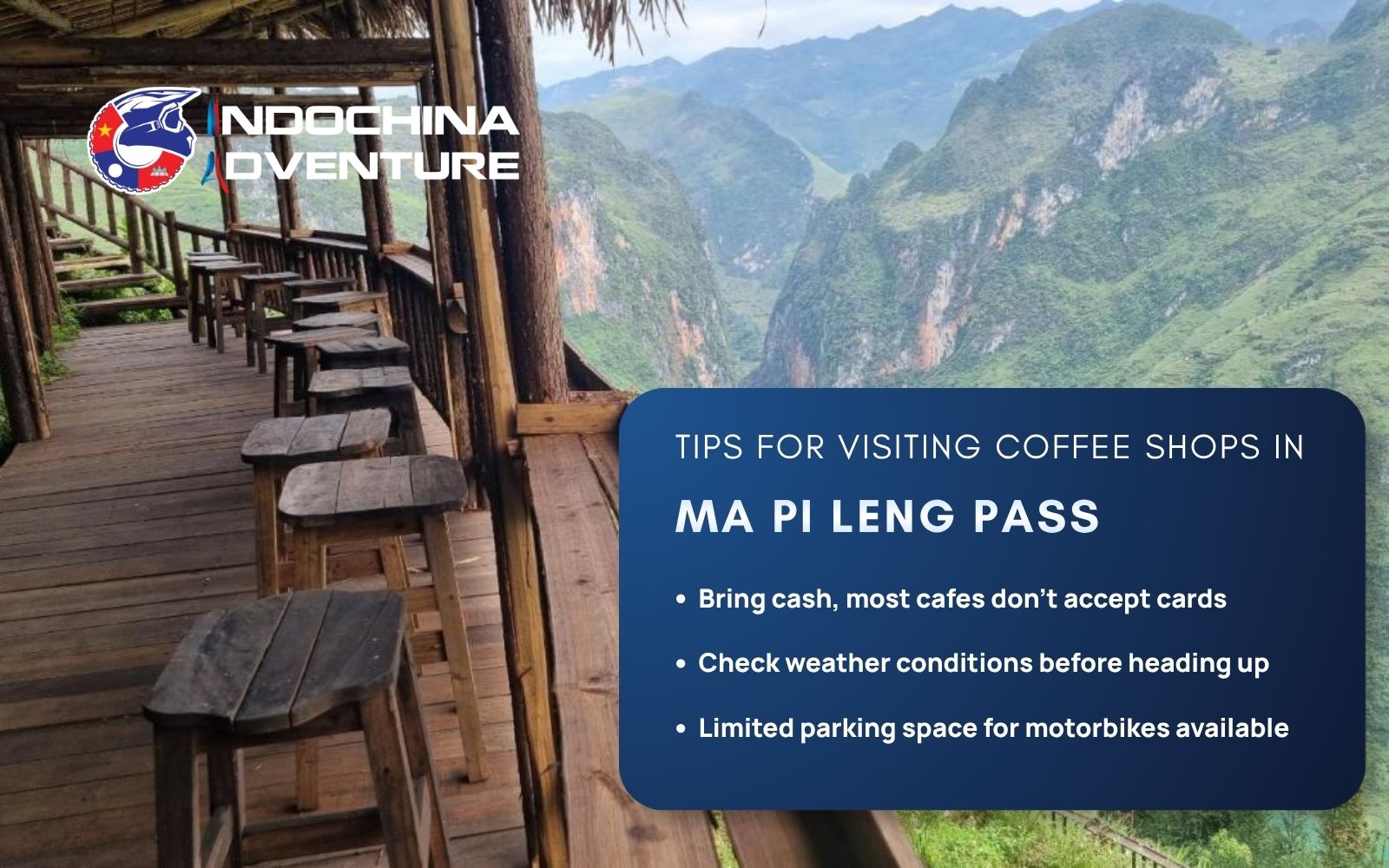
Useful tips to enjoy Ma Pi Leng cafes comfortably during your journey
Best coffee shops in Ma Pi Leng Pass FAQs
Which coffee shop has the best view in Ma Pi Leng Pass?
Café Panorama is often considered the top choice thanks to its cliffside position overlooking the Nho Que River and Tu San Canyon. Its elevated layout provides one of the widest and most dramatic viewpoints along the pass.
Are there cafes directly on the pass?
Yes, several cafés are located right along Ma Pi Leng Pass, making them easy to access without detours. Spots like Ma Pi Leng Cafe and Café Panorama sit directly on the main road, offering convenient stops during your journey.
What is the best time to visit Ma Pi Leng cafes?
Early morning and late afternoon offer the best conditions. Sunrise brings quiet surroundings and soft light, while sunset creates golden tones across the mountains and river below.
Are coffee shops open year-round?
Most coffee shops operate throughout the year, especially during peak travel seasons. However, weather conditions such as heavy rain or dense fog may occasionally affect opening hours or accessibility.
Ma Pi Leng Pass is not only about the ride, it is about those quiet pauses – a cup of coffee meets some of the most breathtaking views in northern Vietnam. The best coffee shops in Ma Pi Leng Pass can turn a simple break into a lasting memory, where mountains, rivers and clouds come together in one perfect frame. Turn your Ma Pi Leng adventure into a seamless and unforgettable experience with a guided journey that covers every highlight. Enjoy easy transport, local insights, and carefully selected stops at the most scenic coffee shops along the way. Contact Indochina Adventure now to get full tour details.
July turns the Northern frontier into a powerhouse of crashing water and vibrant emerald peaks. If you are wondering whether Ban Gioc Waterfall in July is worth the trip, the answer lies in its raw, thunderous beauty that only the summer rains can provide. It is also the ultimate season for motorcycle adventure tours through the mist and limestone mountains. Join Indochina Adventure as we break down the weather, the routes, and the insider tips to help you conquer the frontier this summer.
Overview of Ban Gioc Waterfall in July
Ban Gioc Waterfall sits in Cao Bang Province, right on the Vietnam – China border, and stands as one of the largest natural waterfalls in Southeast Asia. July falls in the peak rainy season, which dramatically changes the character of the falls. Water volume rises quickly, creating wider, more powerful cascades that spread across multiple tiers, turning the entire area into a roaring, mist-covered landscape.
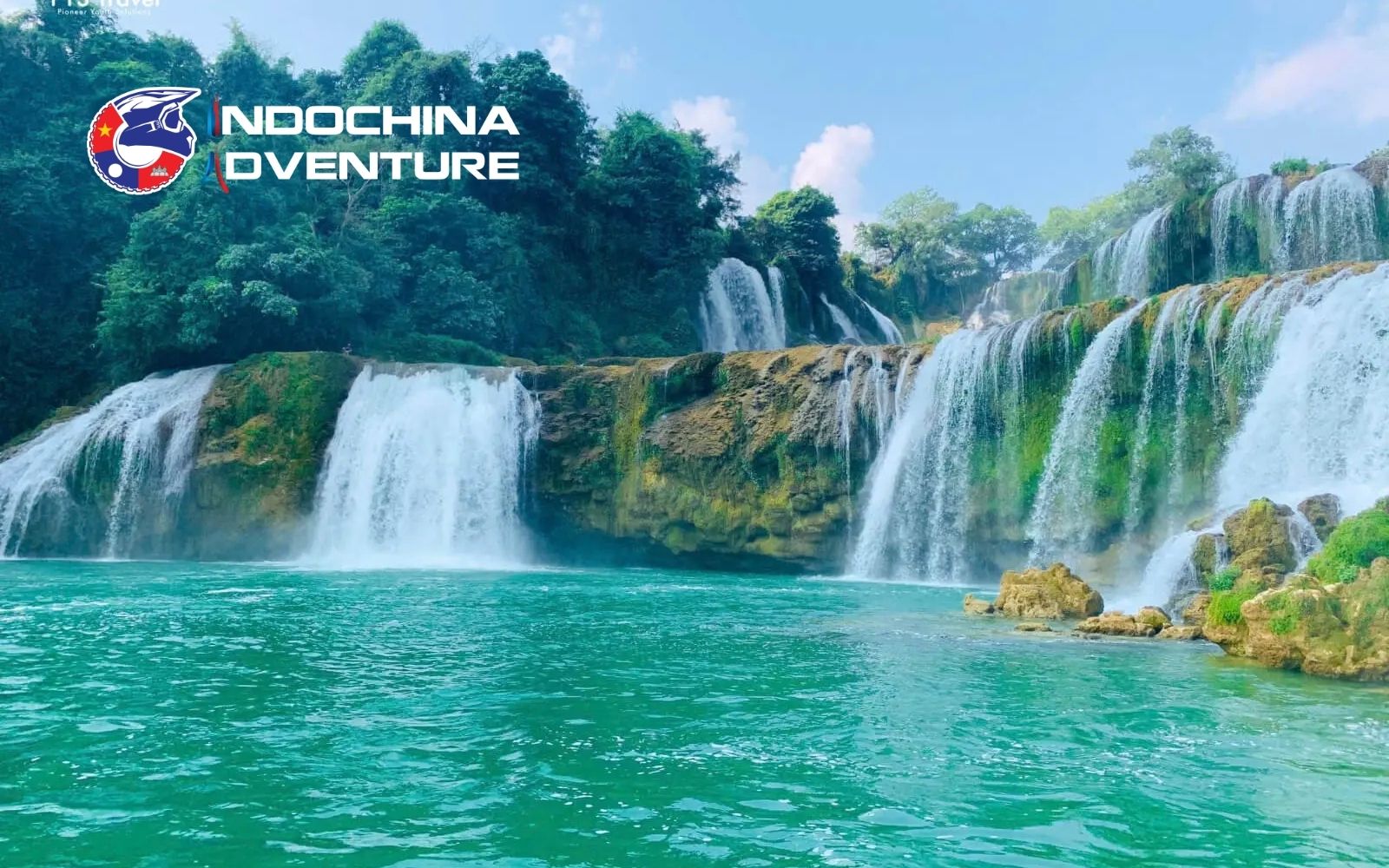
Is July a good time to visit Ban Gioc Waterfall?
The surrounding scenery becomes especially vibrant at this time, with lush green rice fields, dense forests, and the calm Quay Son River contrasting with the strong current of the waterfall. While many travelers consider autumn the classic time to visit Ban Gioc Waterfall, July offers a more raw and dynamic beauty, less predictable, but far more impressive in terms of scale and atmosphere.
Weather at Ban Gioc Waterfall in July
Unlike the calm and steady flow of Ban Gioc Waterfall in March or the clear, gentle turquoise waters of Ban Gioc Waterfall in April, the July climate is all about drama and intensity. While the sun shines brightly for most of the day, the moisture in the air keeps the landscape looking incredibly fresh and vibrant.
To give you a better idea of what is Ban Gioc Waterfall like in July, here are the key weather stats:
- Temperature: Expect a tropical range between 25°C and 33°C (77°F to 91°F). It’s warm, but the mist from the falls offers a natural cooling effect.
- Rainfall: July is one of the wettest months, with an average of 338 mm. These are usually short, heavy bursts in the afternoon or evening rather than all-day drizzles.
- Humidity: Levels remain high (around 80%), making the air feel thick but perfect for the lush greenery to thrive.
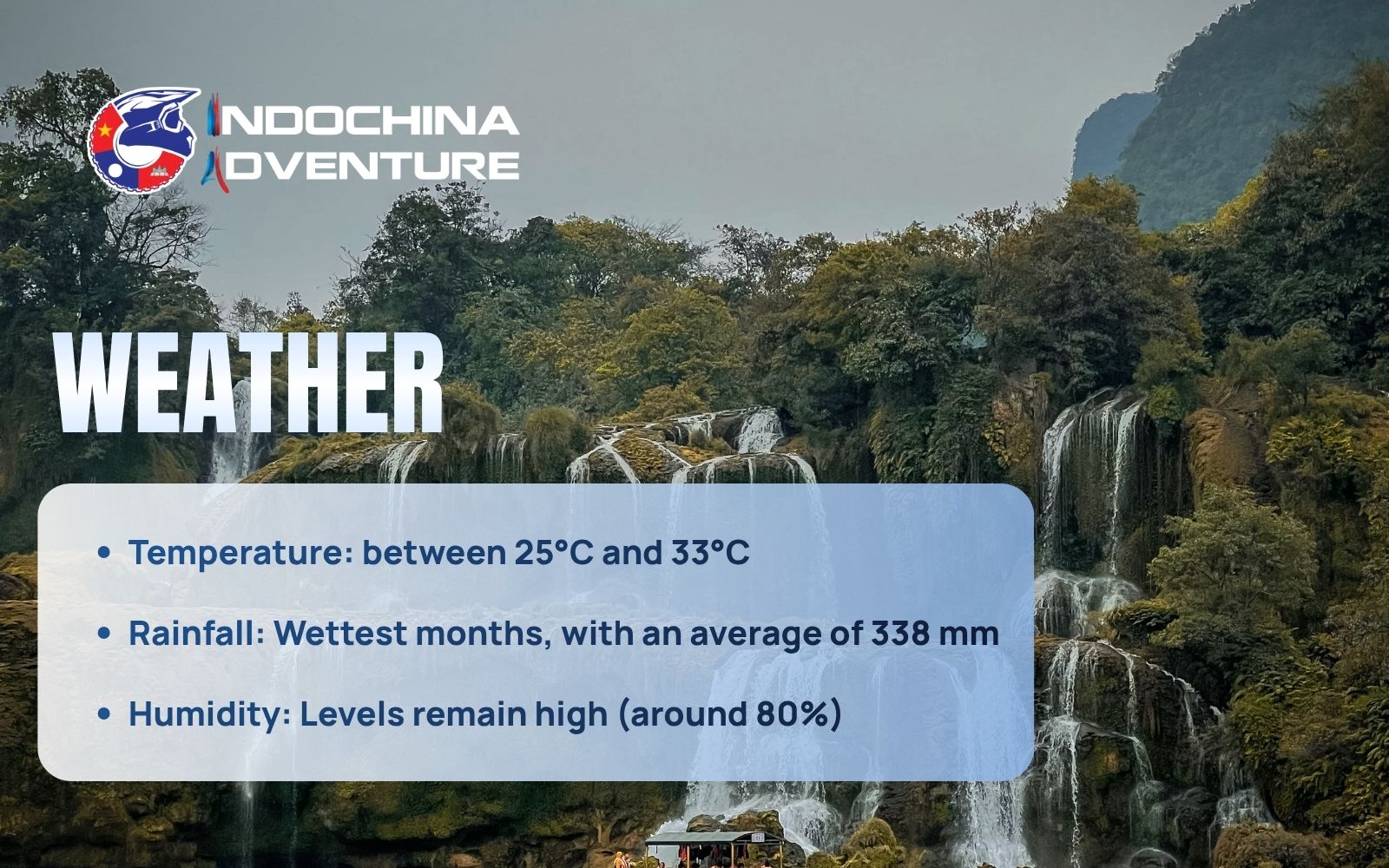
Warm temperatures and sudden rains shape Ban Gioc Waterfall weather July experience
Is July a good time to visit Ban Gioc Waterfall?
Yes, if you enjoy dramatic scenery and don’t mind some rain.
July brings Ban Gioc Waterfall to its most powerful state, with strong water flow and lush surroundings. Travel conditions can be less stable due to rain, but the experience feels more adventurous, especially for those interested in north Vietnam motorcycle tours, where the journey itself becomes a highlight.
| Pros | Cons |
|
Waterfall at peak power and widest flow |
Frequent rain and sudden showers |
|
Lush green landscapes and vibrant scenery |
Slippery paths and muddy trails |
|
Fewer crowds than peak dry months |
Visibility may drop during fog or rain |
|
Ideal for adventurous travel experiences |
Road conditions can be challenging |
Verdict: July is a great time for nature lovers and adventure seekers, so if you are wondering is Ban Gioc Waterfall worth visiting in July, the answer is yes, though it may not suit those who prefer dry weather and easy travel conditions.
Best things to do at Ban Gioc Waterfall in July
July offers a unique energy that you won’t find in other seasons, making it a playground for nature lovers and thrill-seekers alike. Whether you are arriving at the frontier on a Ban Gioc Waterfall motorcycle tour or exploring by foot, the combination of thundering water and lush jungle provides an unforgettable backdrop for adventure. Here are the top ways to soak in the magic of the falls this month.
Witness the waterfall at its most powerful
Forget the gentle trickles of the dry season, July is when the waterfall truly wakes up. The summer monsoon supercharges the Quay Son River, turning the cliffs into a thundering curtain of white water that commands your full attention. For anyone hunting for the most visceral things to do in Ban Gioc Waterfall, standing at the edge of this massive natural power plant is a total sensory overload. The mist is heavier, the roar is louder, and the photos you’ll snap against the saturated emerald backdrop are pure gold.
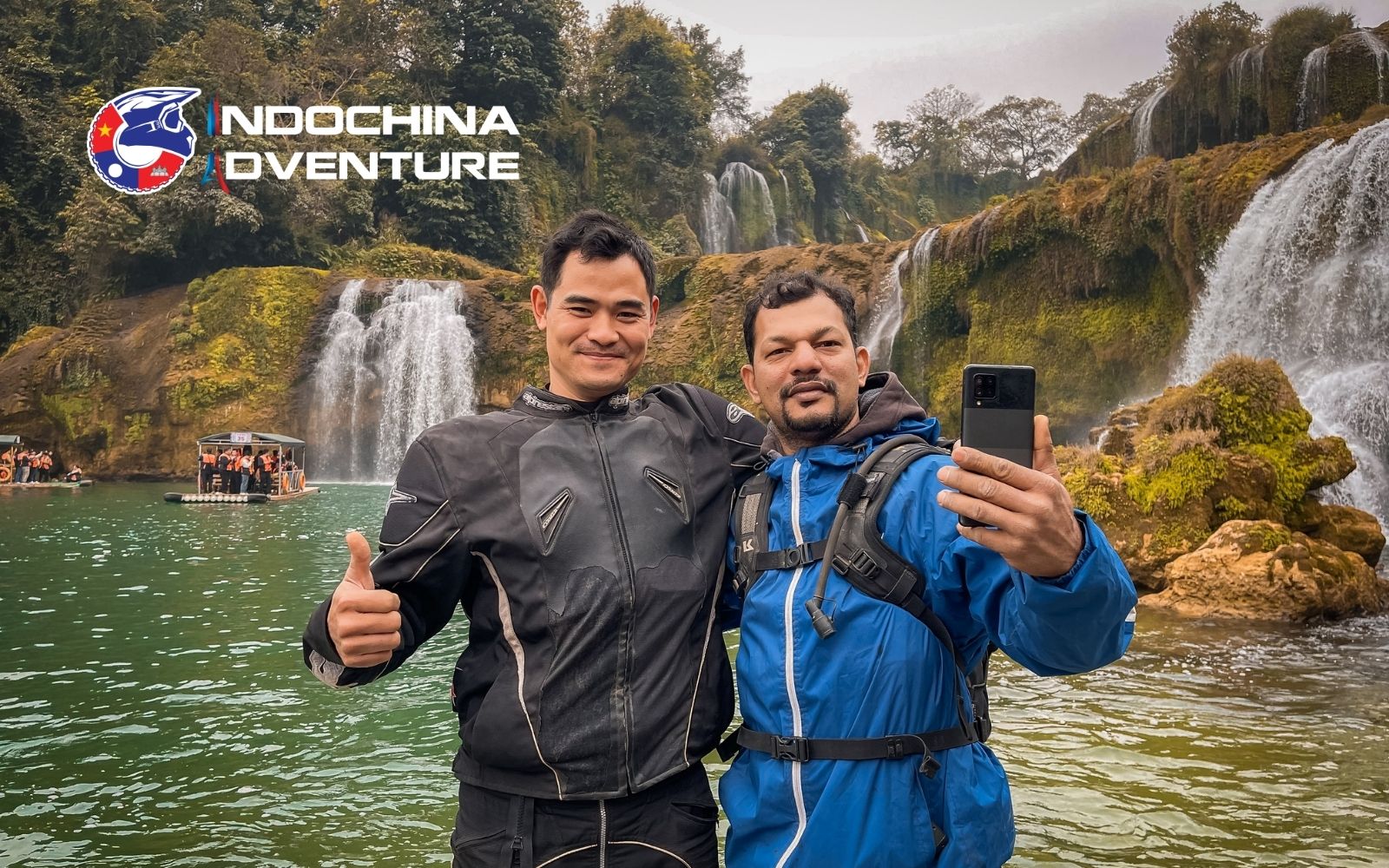
Feel the thunderous flow during Ban Gioc Waterfall July at peak season
Ride a bamboo raft on the Quay Son River
A bamboo raft ride on the Quay Son River offers one of the closest and most immersive ways to experience Ban Gioc Waterfall in July. Surrounded by emerald hills and drifting mist, the boat glides gently toward the falls, where the sound of rushing water grows louder with every meter. While rafts keep a safe distance from the strongest currents, the cool spray still reaches you – refreshing, but enough to warrant a waterproof bag for your essentials. For many travelers combining this stop with a motorcycle tour in Vietnam, the experience adds a perfect balance of thrill and relaxation to the journey.
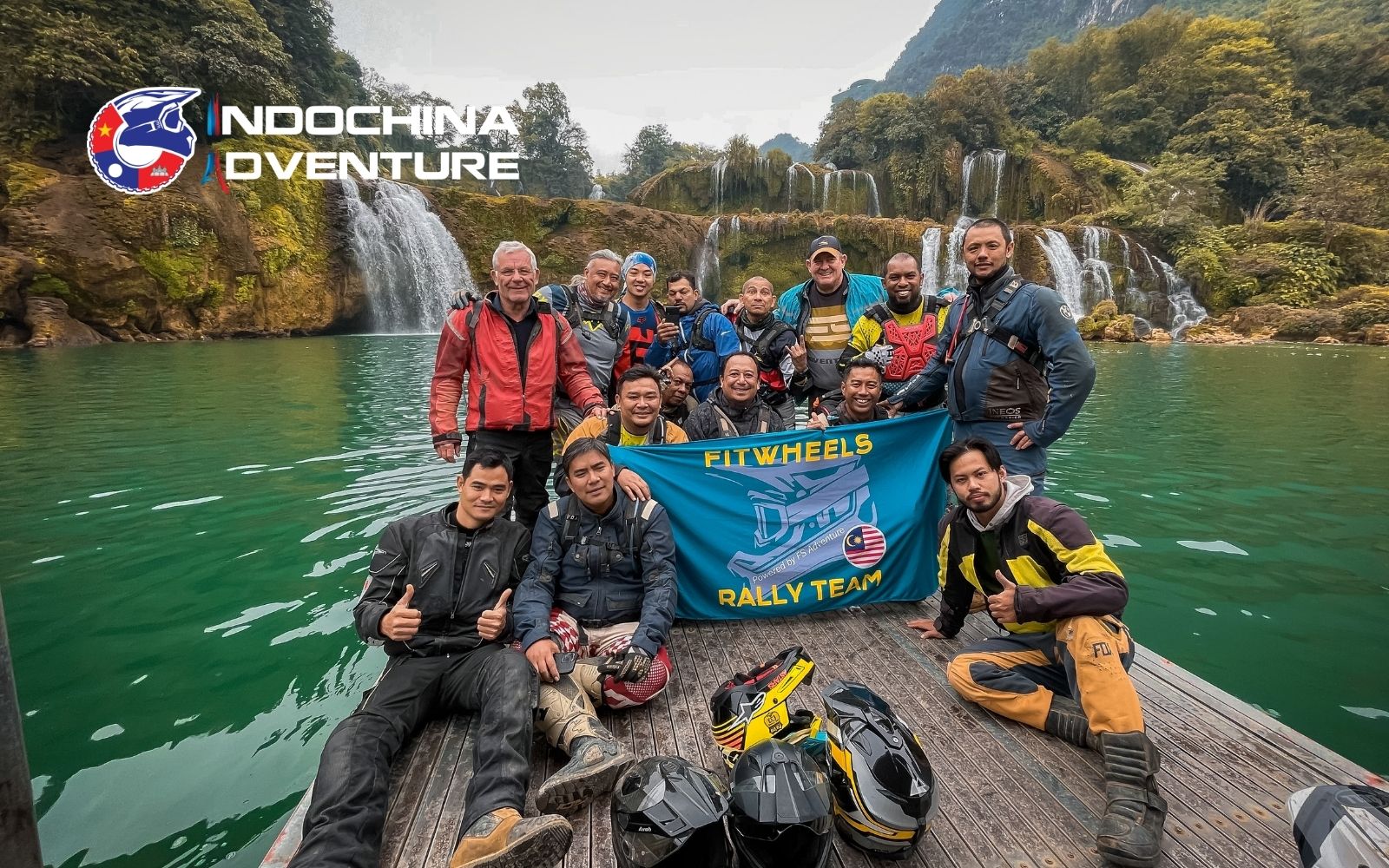
Glide closer to misty falls on a scenic bamboo raft ride
Discover the beauty of Nguom Ngao Cave
When the Ban Gioc Waterfall weather July heat starts to peak, ducking into Nguom Ngao Cave offers the ultimate natural relief. Located just 15 minutes away by bike, this subterranean marvel features a 2-kilometer path winding through massive chambers filled with jaw-dropping stalactites and surreal rock formations. The air stays refreshingly chilled, providing a welcome contrast to the humid summer sun outside. As one of the must-see places to visit in Ban Gioc Waterfall, the cave’s “silver waterfall” stone structures and strangely poetic English signage make it a fascinating hour-long detour from the thundering river.
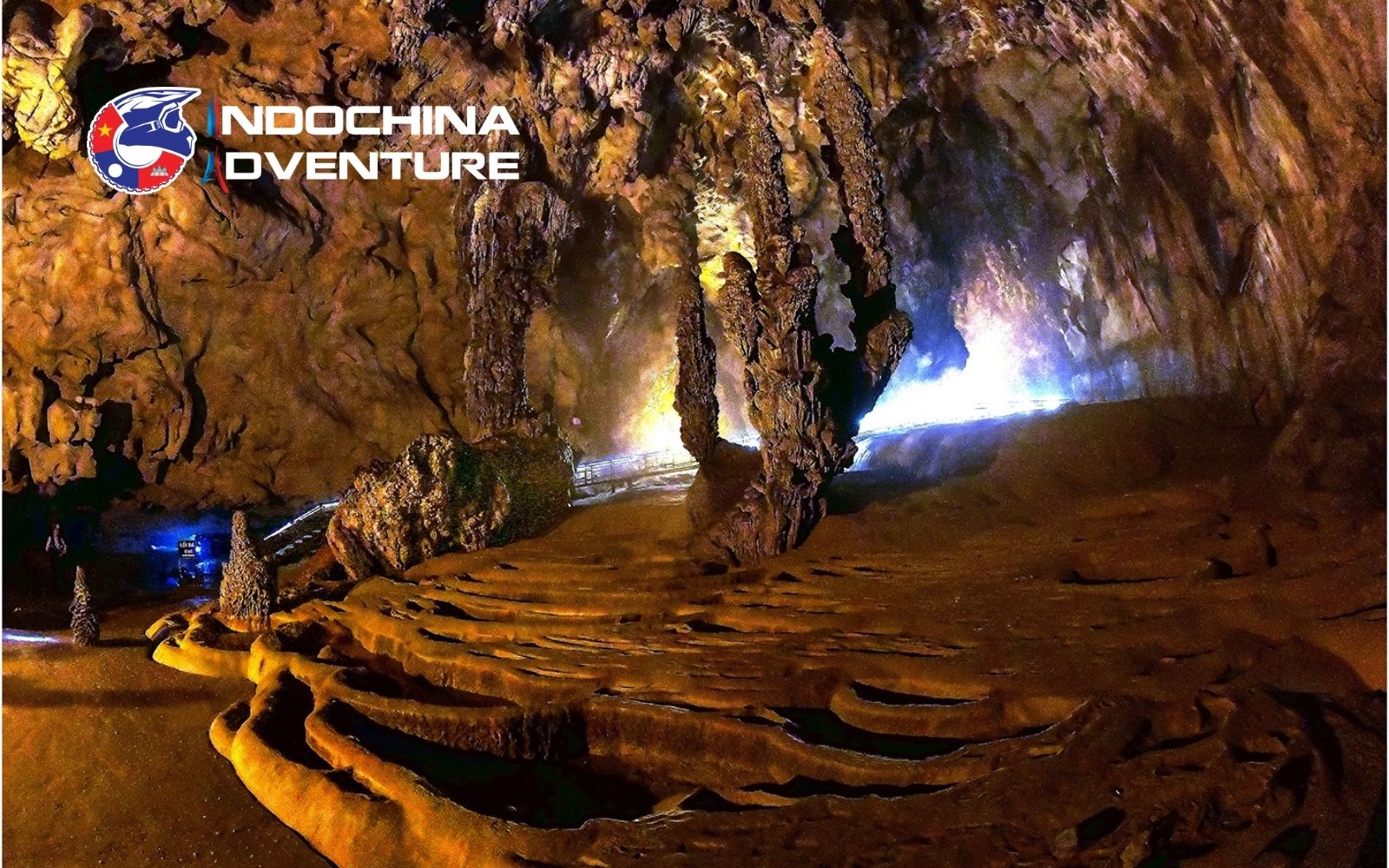
Step into cool chambers filled with stunning limestone formations underground
Slow down and enjoy the peaceful landscape
Beyond the roar of the water, Ban Gioc Waterfall July offers a surprisingly serene escape as the lush landscape reaches its most vibrant peak. The frequent summer showers clear the air, leaving behind a tranquil, misty atmosphere that invites you to slow down and breathe in the scent of the rain-washed forest. For those navigating a motorcycle tour Northeast Vietnam, these quiet moments amidst the verdant rice paddies and karst peaks provide the perfect contrast to the adrenaline of the open road. It is a rare chance to disconnect and fully immerse yourself in the raw, peaceful beauty of the northern border.
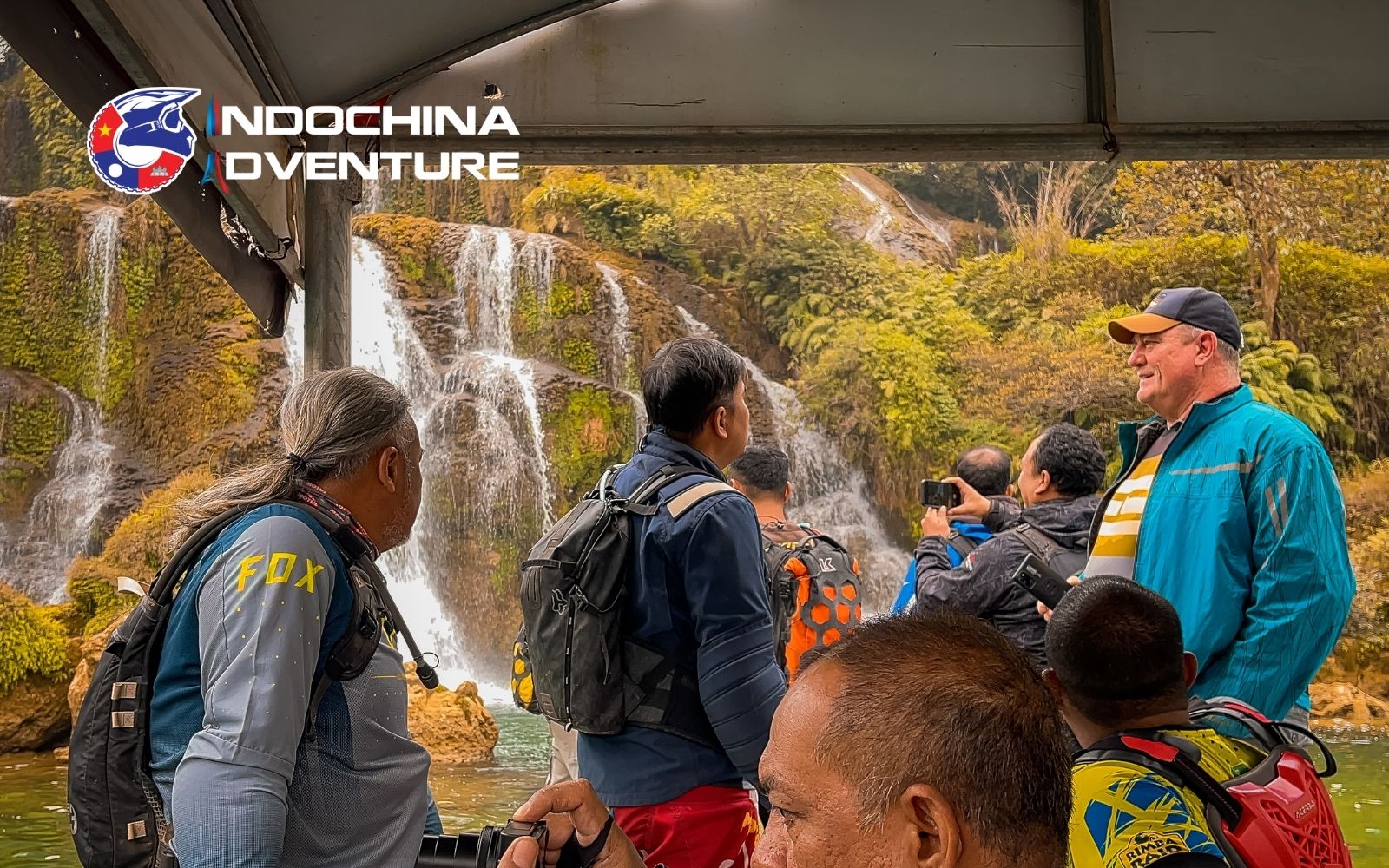
Quiet riverside moments reveal a calmer side of Ban Gioc Waterfall in July
Explore local villages and ethnic culture
The border region is home to vibrant Tay and Nung communities whose stone houses and ancient traditions thrive in the summer heat. Visiting villages like Phia Thap or the blacksmithing hamlets of Trung Khanh during Ban Gioc Waterfall in July allows you to witness daily life at its most authentic, from intricate weaving to traditional crafts. After a morning of cultural discovery, heading back toward the main road will lead you to some of the best restaurants in Ban Gioc Waterfall, where you can refuel on local specialties like roasted duck and lime-scented stream fish.
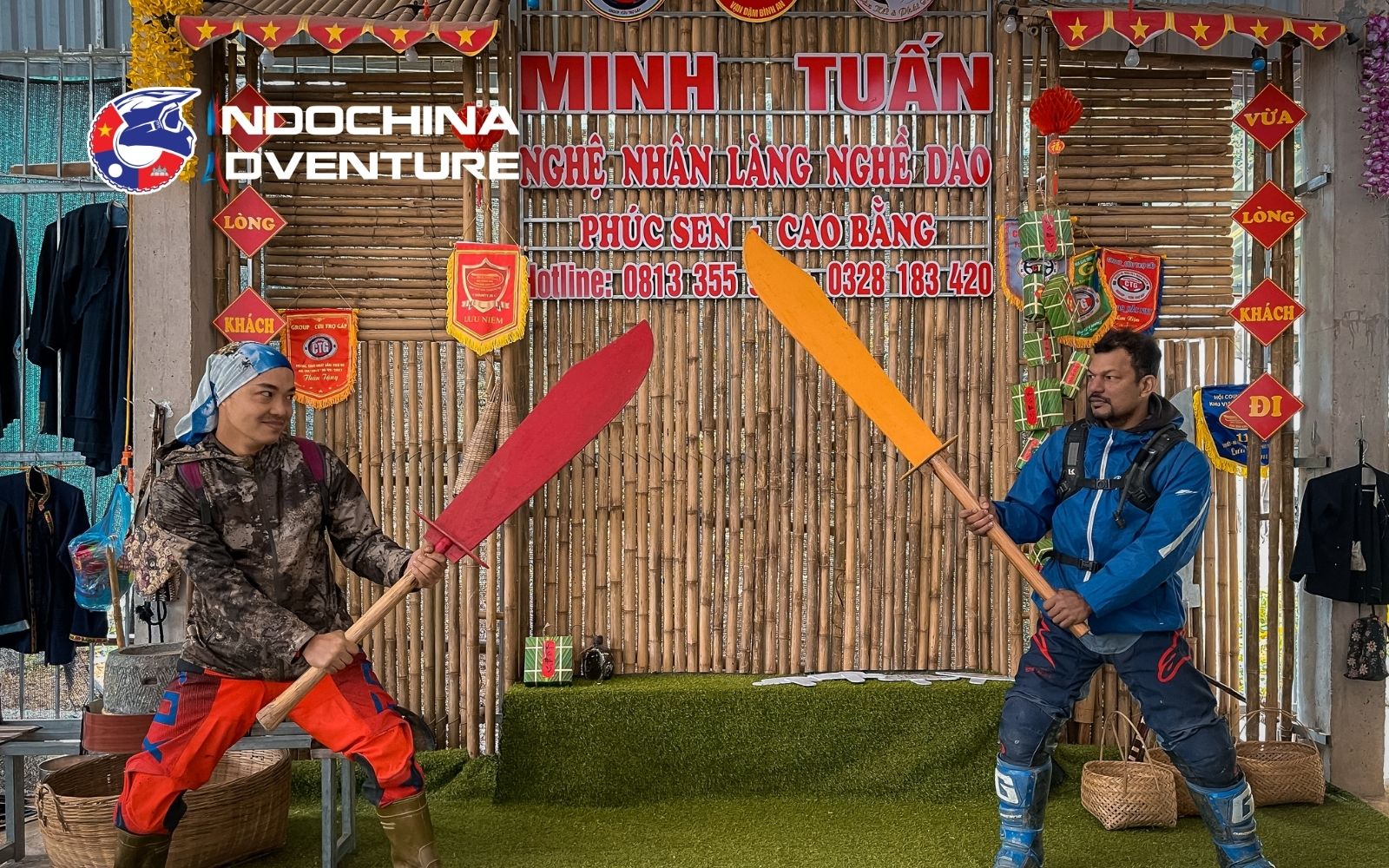
Experience authentic traditions and daily life in villages near the waterfall
Suggested route for visiting Ban Gioc Waterfall in July
Routes to Ban Gioc become part of the experience, especially in July when the landscapes are at their greenest and most dramatic. Many travelers choose a motorbike tour Cao Bang to fully enjoy the scenic mountain roads, turning the journey into a highlight rather than just the destination.
Suggested tour:
- Tour 1: Northeast Vietnam Bigbike Adventure 7 Days: Hanoi – Vu Linh – Ha Giang – Dong Van – Bao Lac – Ban Gioc – Ba Be Lake – Hanoi
- Tour 2: Northeast Dirtbike Tour 7 Days: Hanoi – Lang Son – Ban Gioc Waterfall – Bao Lac – Dong Van – Ha Giang – Vu Linh – Hanoi
Turn your journey to Ban Gioc into an adventure worth remembering with Indochina Adventure’s expertly crafted motorbike tours. Ride through breathtaking mountain passes, connect with local culture, and reach the waterfall in the most immersive way possible. With experienced guides and full support along the way, every moment on the road becomes just as rewarding as the destination itself.

Epic journeys begin with Ban Gioc Waterfall July motorcycle adventure tours
Travel tips for visiting Ban Gioc Waterfall in July
July travel requires a bit more preparation due to changing weather and road conditions, but the experience is well worth it. These Ban Gioc Waterfall travel tips will help you stay comfortable, safe, and ready to enjoy the journey at its best.
- Plan more than just the waterfall: The journey is long, so combine Ban Gioc with Nguom Ngao Cave or wider places to visit in Cao Bang for a more rewarding trip.
- Carry enough cash: ATMs are far away, and most services near the falls don’t accept cards.
- Visit at the right time of day: Early morning or late afternoon offers softer light and better views.
- Check weather conditions in advance: Rain can affect visibility and road safety, especially for motorbike travel.
- Include Nguom Ngao Cave in your plan: It’s close by and adds a completely different experience.
- Respect the border area: Stay within allowed zones and avoid crossing restricted boundaries.
- Dress appropriately: Wear non-slip shoes and bring rain gear or sun protection depending on conditions.
- Agree on raft prices beforehand: Confirm the cost clearly to avoid misunderstandings.
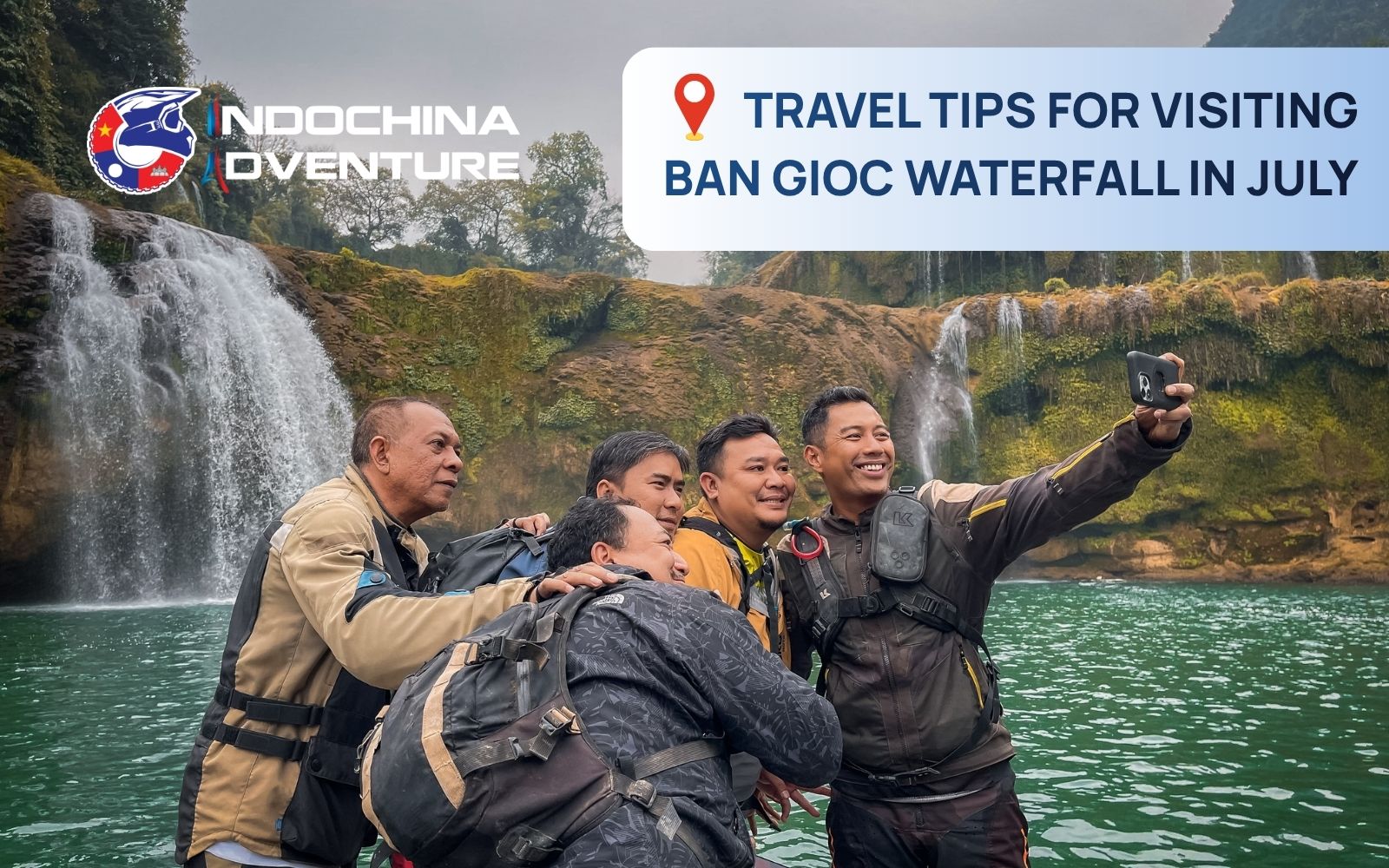
Smart planning helps you enjoy Ban Gioc Waterfall weather July conditions
While the summer rains bring a touch of unpredictability, the sheer majesty of the falls in full flow makes Ban Gioc Waterfall in July a bucket-list experience for any true explorer. Standing before the thundering cascades and the lush, rain-washed karst mountains offers a perspective on Vietnam’s natural beauty that few other seasons can match. If you are seeking a journey defined by raw energy, vibrant colors and the thrill of the frontier, mid-summer is undoubtedly the time to go. Don’t just dream of the adventure, ride it with Indochina Adventure and master the legendary loops of the North this July!
Curious about how long is the Ho Chi Minh Trail and whether it’s still possible to explore it today? The answer goes beyond a simple number. This legendary network stretches across thousands of kilometers, cutting through jungles, mountains, and borders, making it one of the most thrilling routes in Southeast Asia. For travelers seeking real adventure, the trail has transformed into a bucket-list journey, especially through motorcycle adventure tours with Indochina Adventure, where every mile reveals history, raw landscapes and unforgettable riding experiences.
How long is the Ho Chi Minh Trail?
At its peak of operation, the total network of the Ho Chi Minh Trail spanned approximately 16,000 to 20,000 kilometers (roughly 10,000 to 12,400 miles). If you look at the modern Ho Chi Minh Road that travelers ride today, the main North-South axis covers about 2,000 kilometers within Vietnam’s borders. However, for those booking a Ho Chi Minh Trail tour, the distance varies wildly depending on whether you stick to the paved highways or dive into the hidden jungle tracks in Laos and Cambodia.
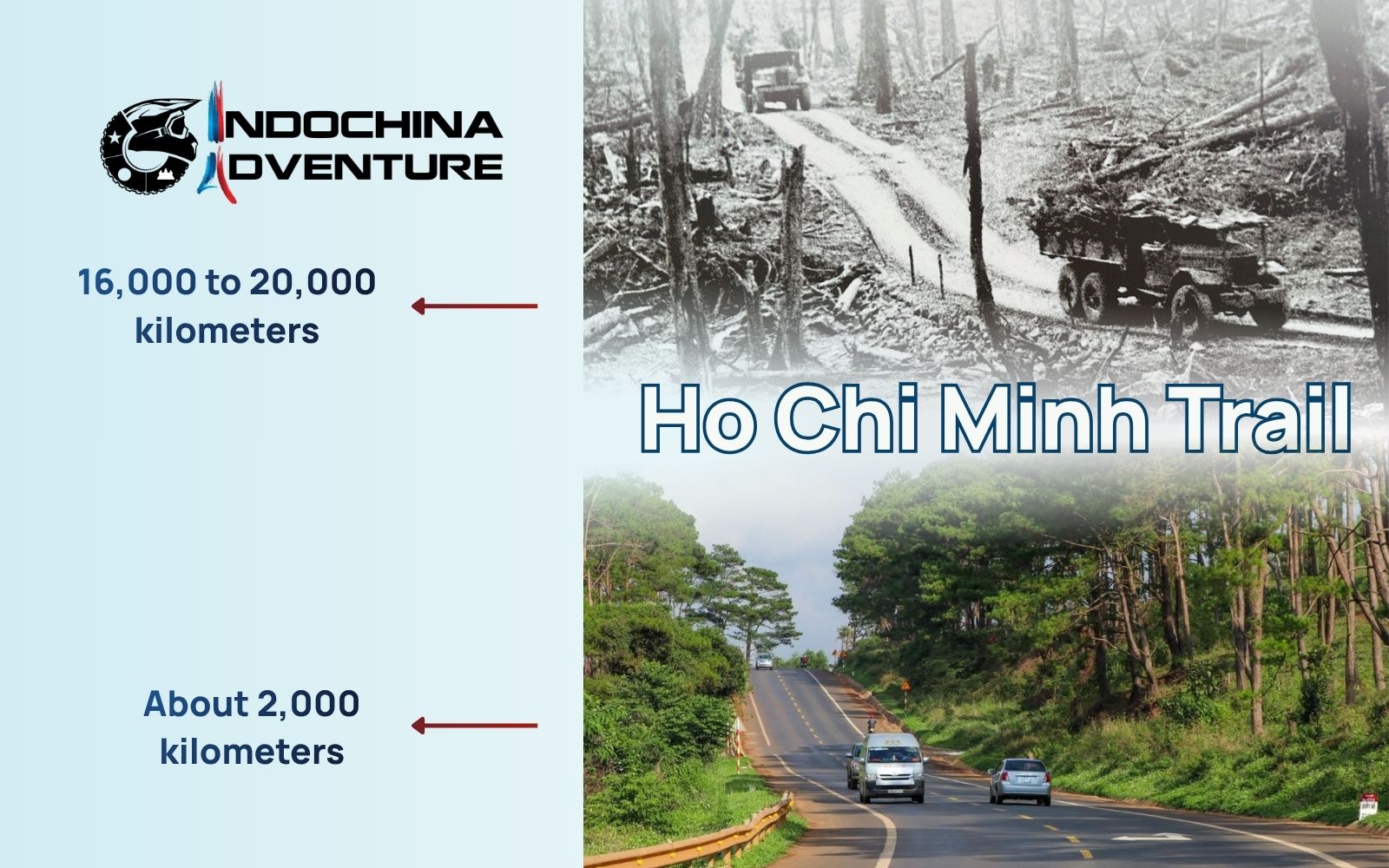
Discover how long is the Ho Chi Minh Trail through epic landscapes
Pinning down a single, definitive figure is nearly impossible because the Trail was never just one road. It functioned as a complex, ever-shifting “logistical labyrinth” rather than a linear path. When US forces bombed one section, Vietnamese engineers immediately carved out several new bypasses nearby. The network consisted of five main longitudinal roads, 21 transverse roads and thousands of kilometers of hidden footpaths and river routes. Because the trail constantly expanded and shifted to evade detection, its total length remained a moving target throughout the entire conflict.
Overview and history
The Ho Chi Minh Trail emerged in 1959 as a secret strategic supply route to connect North and South Vietnam. Originally managed by the legendary Group 559, it started as a series of primitive trekking paths used by porters to carry supplies on their backs or modified bicycles. Over time, this network transformed into a sophisticated military infrastructure with underground hospitals, fuel pipelines, and storage depots, eventually reaching a staggering total ho chi minh Trail length of nearly 20,000 kilometers.
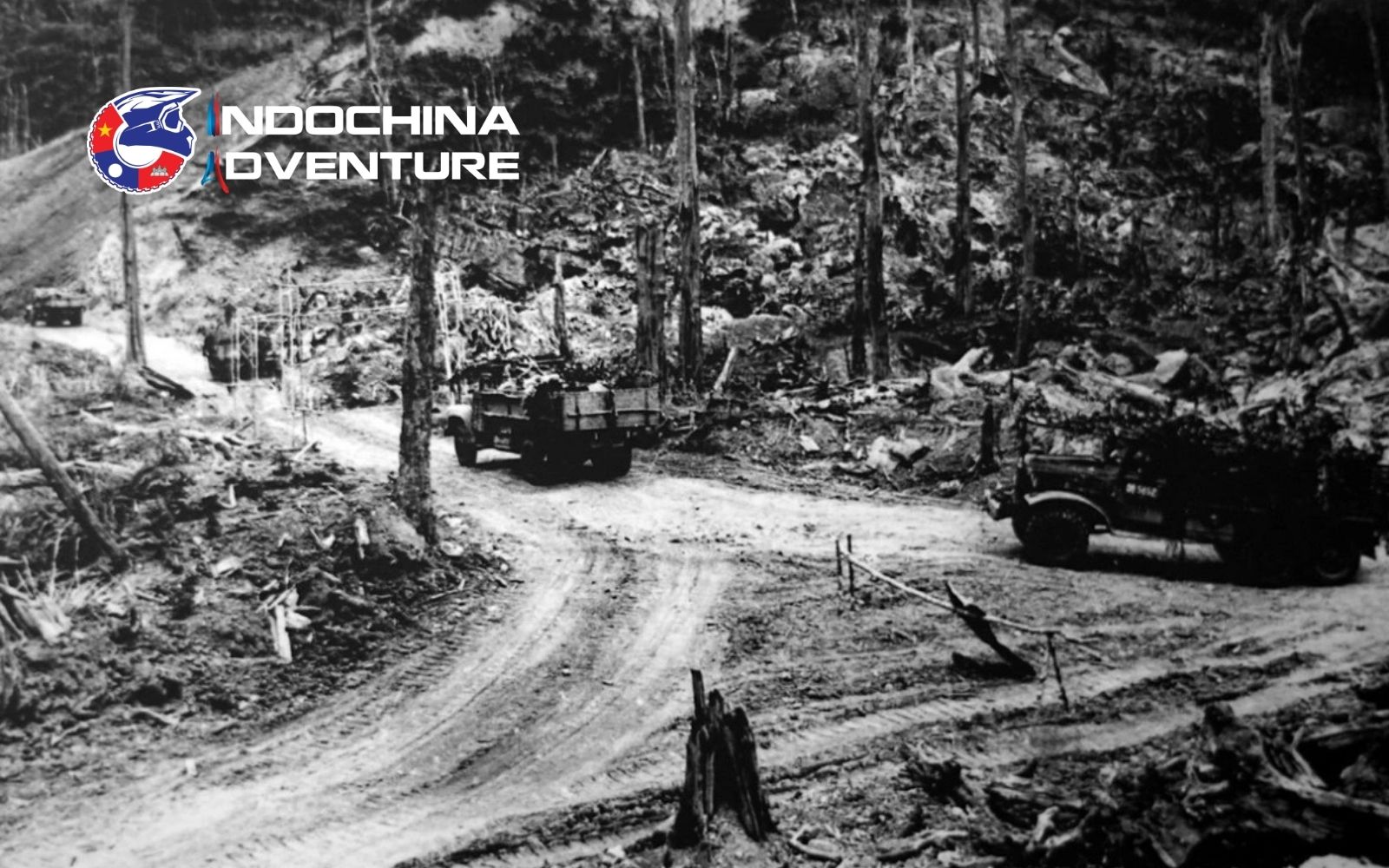
Vintage photos reveal the sheer scale of the original ho chi minh Trail length during wartime
Today, while the modern Ho Chi Minh Road offers smooth tarmac for travelers, many wonder: is Ho Chi Minh Trail dangerous? Historically, it was the most heavily bombed place on Earth, and that legacy persists today through unexploded ordnance still hidden in the deep jungles. While the paved routes are perfectly safe for a ride, the historical history of the trail serves as a powerful reminder of the resilience of the people who maintained this “Bloodline of the Nation” against impossible odds.
Where did the Ho Chi Minh Trail run?
The Ho Chi Minh Trail stretched across a vast and complex corridor in Southeast Asia, forming a multi-country network rather than a single route. Its scale and constant expansion are key reasons why the length of Ho Chi Minh Trail remains difficult to define precisely.
Countries the trail passed through:
- Vietnam
- Laos
- Cambodia
Start and end points of the Ho Chi Minh Trail:
- Starting area: Northern Vietnam, near the Red River Delta and regions south of Hanoi
- Ending area: Southern Vietnam, leading toward today’s Ho Chi Minh City
The system connected key logistical zones rather than fixed endpoints, with multiple entry and exit routes.
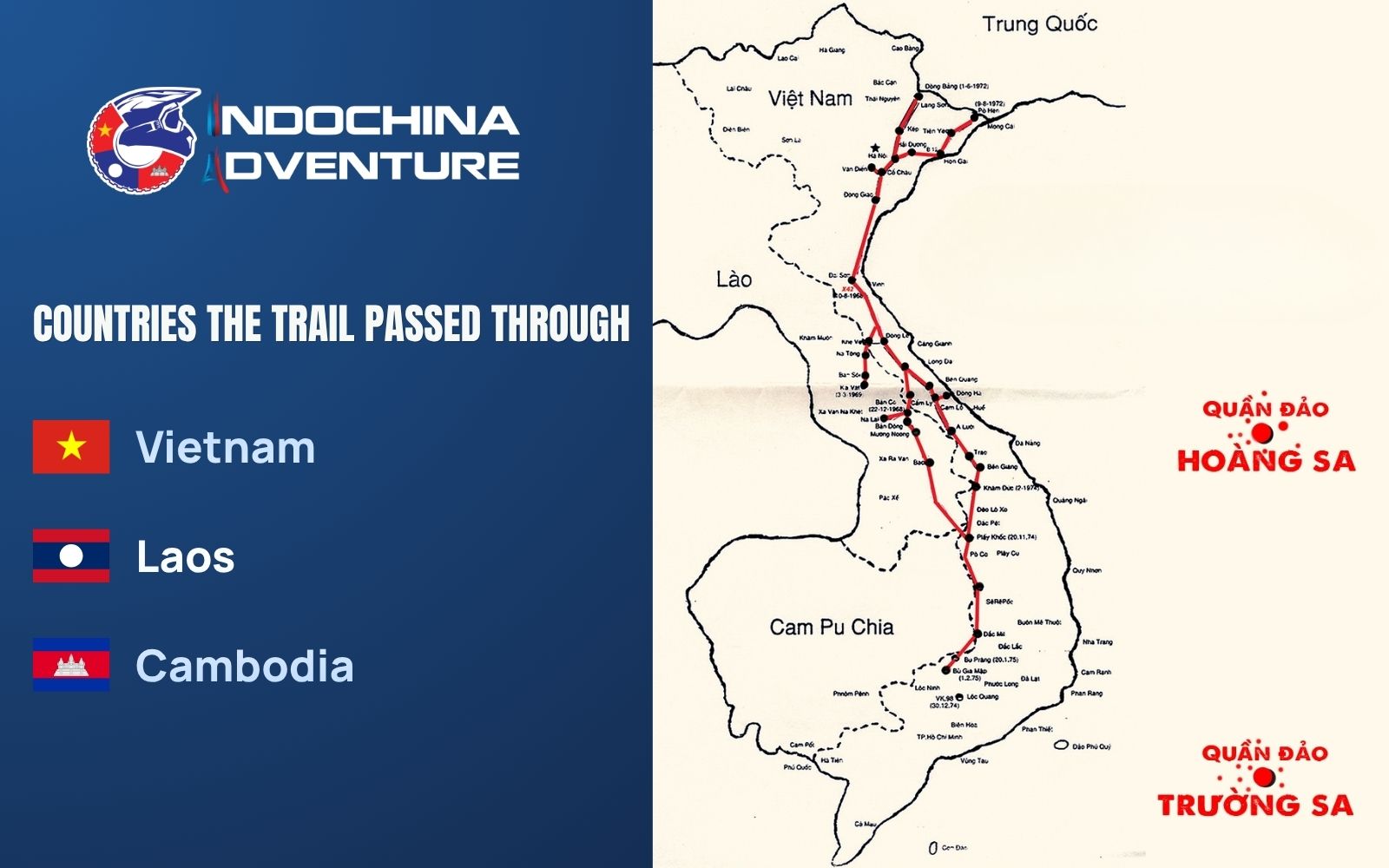
A map showing the complex network and just how long was the Ho Chi Minh Trail
Terrain and route characteristics:
- Mountain ranges: The Annamite (Truong Son) Mountains formed the backbone of the trail
- Dense jungle: Thick forest canopy helped conceal movement
- River crossings: Numerous streams and rivers required constant adaptation
- Remote borderlands: Many sections ran along or across international borders for strategic cover
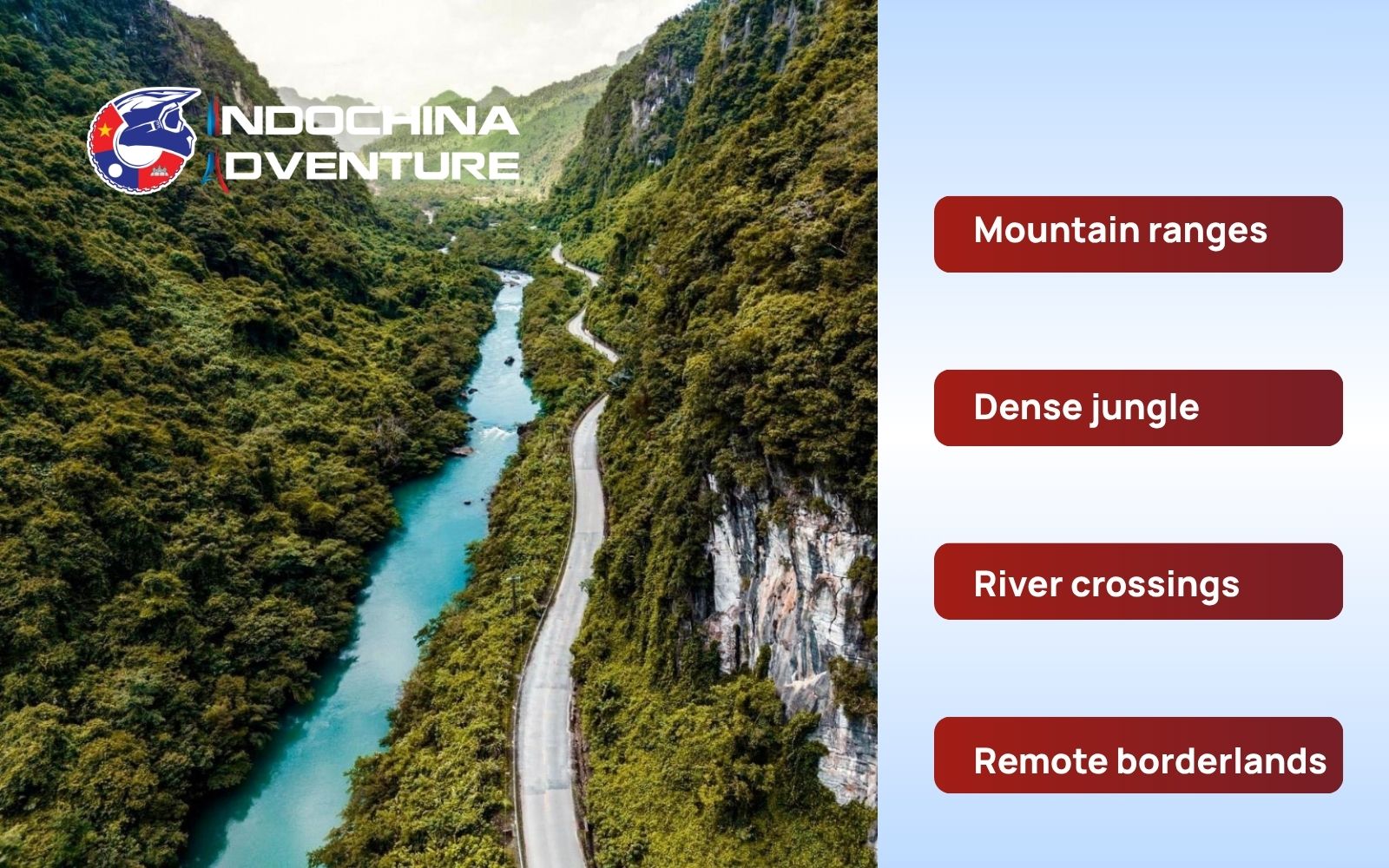
Mountains, jungles, rivers define rugged trail terrain and routes
Instead of one continuous road, the trail consisted of thousands of interlinked paths, including foot trails, truck routes and even pipelines. Over time, some of these routes evolved into what is now known as the Ho Chi Minh Road – an accessible highway that attracts travelers today.
For modern explorers, this geography creates one of the most rewarding routes for Vietnam motorbike tours. Riders can follow sections of the historic path through mountains, national parks and quiet rural regions, experiencing both the natural beauty and the deep historical layers of this legendary route.
How long did it take to travel the Ho Chi Minh Trail?
The time required to traverse this legendary route has changed dramatically over the decades, shifting from a grueling multi-month expedition to an exhilarating multi-day adventure.
- During the War: In the early 1960s, a fit soldier carrying heavy gear on foot would take roughly six months to complete the journey from the North to the battlefields of the South. By the early 1970s, as the network expanded to include better truck roads and fuel pipelines, the travel time for mechanized units was slashed to about three weeks (21 – 23 days).
- For modern travelers: Today, you are not dodging aerial bombardments, but you are tackling some of the most winding mountain passes in Asia. Most riders completing a full cross-country journey typically spend 11 to 14 days on the road.
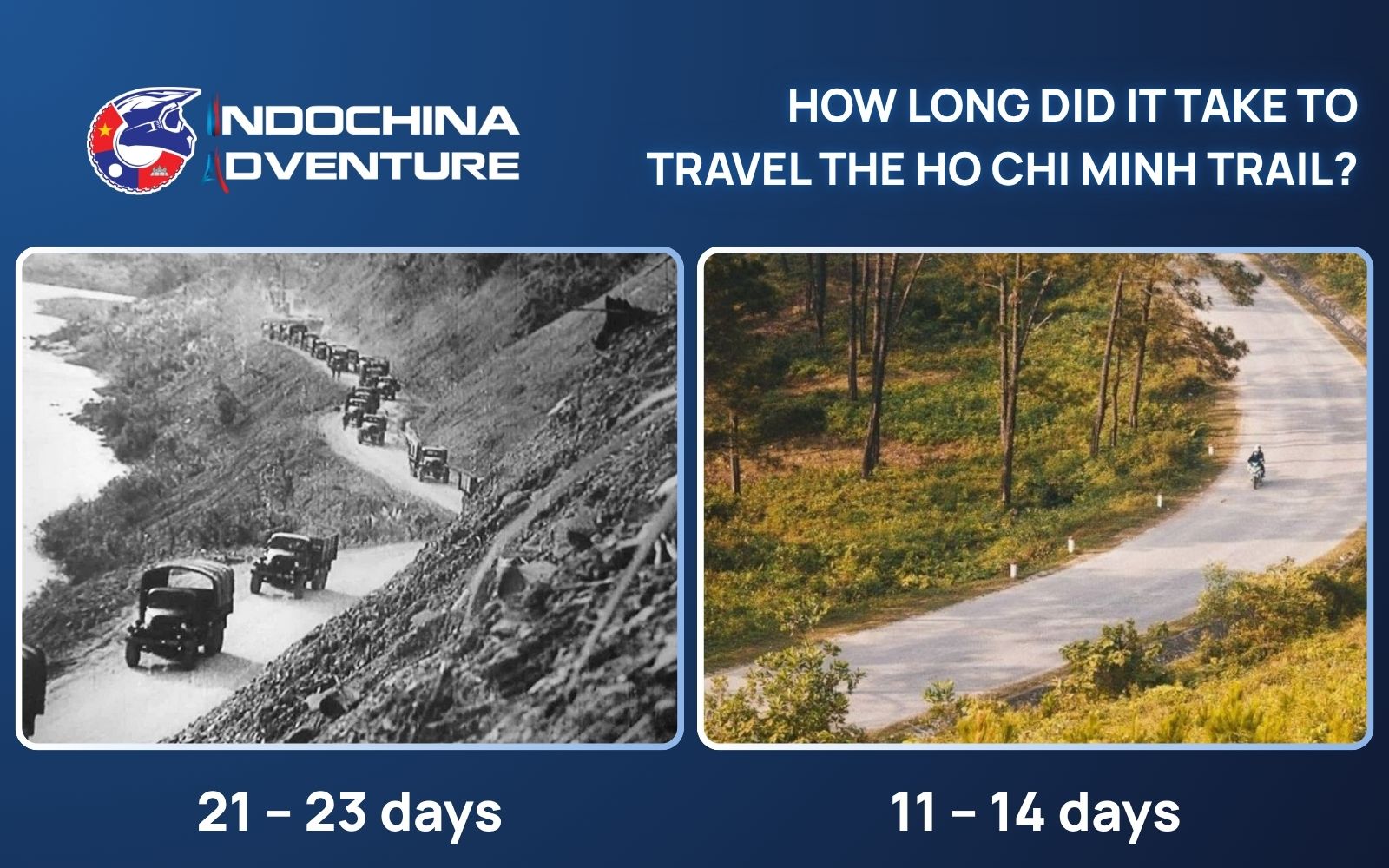
Journey time depended on terrain, weather, and constant route changes
If you’re short on time, you don’t have to ride the entire length to feel the spirit of the trail. Many riders opt for a focused north Vietnam motorbike tour to explore the dramatic limestone karsts. Alternatively, south Vietnam motorcycle tours often highlight the southern tail of the trail, winding through the coffee plantations of the Central Highlands and the hidden jungle paths leading toward the Mekong Delta.
Contact Indochina Adventure to get your engine started for the ultimate experience!
Best places to visit along the trail
The modern Ho Chi Minh Highway offers a front-row seat to some of the most jaw-dropping landscapes in Southeast Asia. If you want to experience the true ho chi minh Trail distance, make sure these legendary stops are on your radar:
- Ban Gioc Waterfall: While located in the far North, this massive waterfall represents the rugged frontier spirit of the trail’s supply network. It is a signature highlight of our northern expeditions.
- Phong Nha-Ke Bang National Park: This is the heart of the action. The karst mountains here provided perfect cover for hidden hospitals and storage depots. Today, it stands as a UNESCO World Heritage site.
- Khe Sanh Combat Base: History buffs will find this site chilling. It sits near the 17th parallel and served as a pivotal point where the trail bypassed the DMZ into Laos.
- Hoi An Ancient Town: After days in the mountains, this UNESCO port provides a perfect cultural contrast. Historically, areas surrounding Hoi An served as vital corridors for moving supplies toward the coast.
- Dak Glei & Kon Tum: These areas in the Central Highlands offer a raw look at the trail through tribal villages and vast coffee plantations, making them a standout highlight in many central Vietnam motorbike tours.
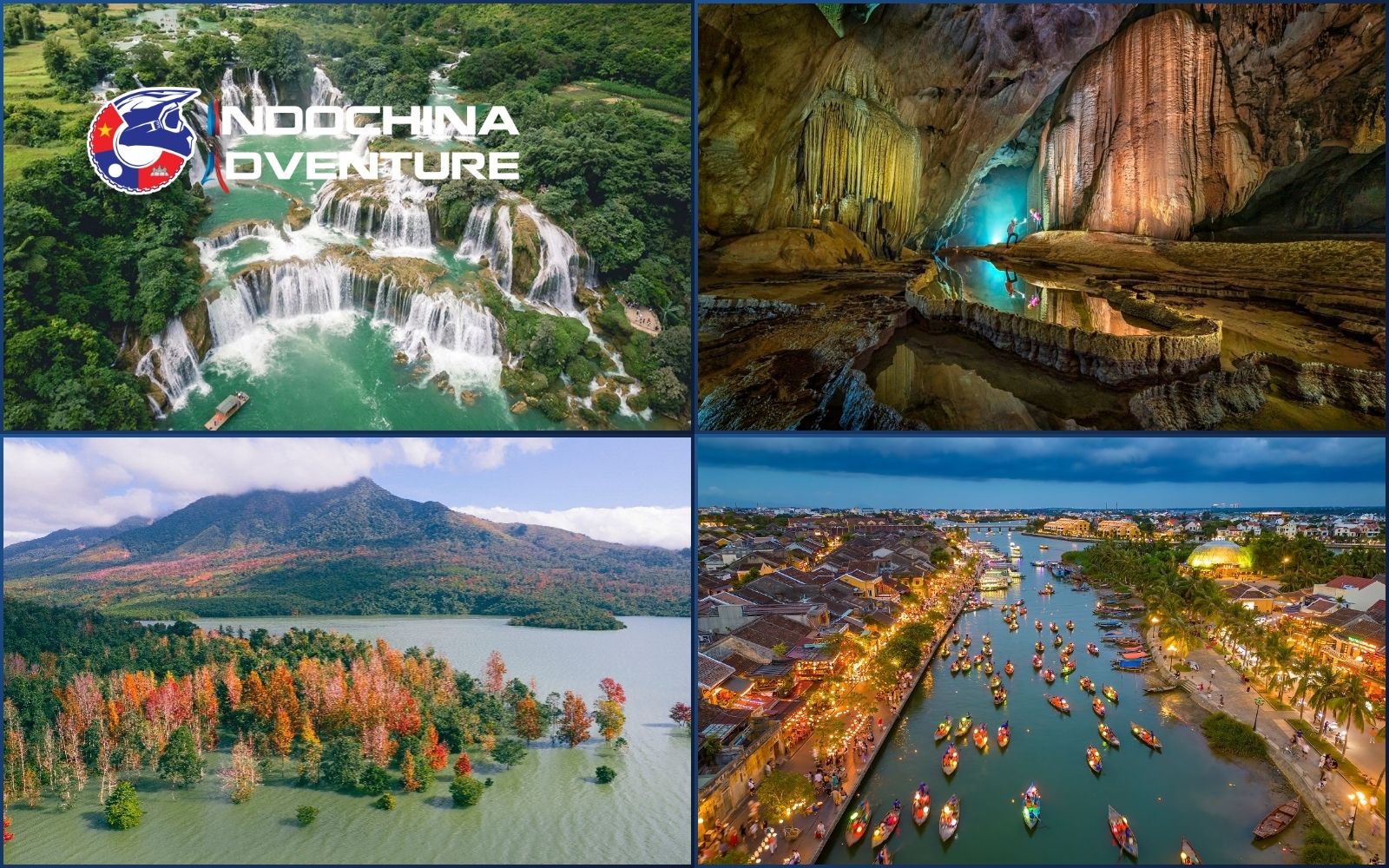
Scenic highlights along trail showcase Vietnam’s diverse landscapes and culture
Exploring the trail independently can be challenging due to remote roads and limited local knowledge. That’s where Indochina Adventure stands out.
- Carefully designed routes following the most scenic and meaningful sections
- Experienced local guides who understand terrain, history, and culture
- Support vehicles and logistics for a safer, smoother journey
If you want to experience the right way, join a motorbike tour with Indochina Adventure. Ride through legendary routes, discover hidden gems, and enjoy the freedom of the open road without the stress of planning everything yourself.

Ride iconic routes with Indochina Adventure for thrilling motorbike experiences
Suggested tours:
- Ho Chi Minh Trail Dirtbike Tour 12 Days: The HMC Trail from Hanoi to Saigon
- Ho Chi Minh Trail Motorbike Tour 5 Days: A Luoi – Khe Sanh – Hue Adventure
- Vietnam Crossing Country Motorbike Tour From Saigon to Hanoi 15 Days
Can tourists travel the Ho Chi Minh Trail?
Yes. Tourists can travel the Ho Chi Minh Trail today, but not in its original wartime form. Most journeys follow the modern Ho Chi Minh Road, which traces much of the historic route and makes it accessible for adventure travel.
How can you explore it?
- Motorbike tours: The most popular and immersive option, offering flexibility and direct contact with the landscape
- Self-guided rides: Suitable for experienced riders who want full independence
- Private car tours: A more comfortable choice for those who prefer not to ride
- Guided adventure tours: Ideal for combining safety, local insight and well-planned routes
Many travelers ask “How long is the Ho Chi Minh Trail in km?” when planning their fuel stops, and the answer highlights just how remote this journey can get. The dangers are not just about the distance; they include:
- Narrow mountain roads with sharp curves
- Sudden weather changes, especially in remote areas
- Limited services in rural regions
- Long riding distances between stops
Because of these unique challenges, you need more than just a map to survive and thrive on this road.
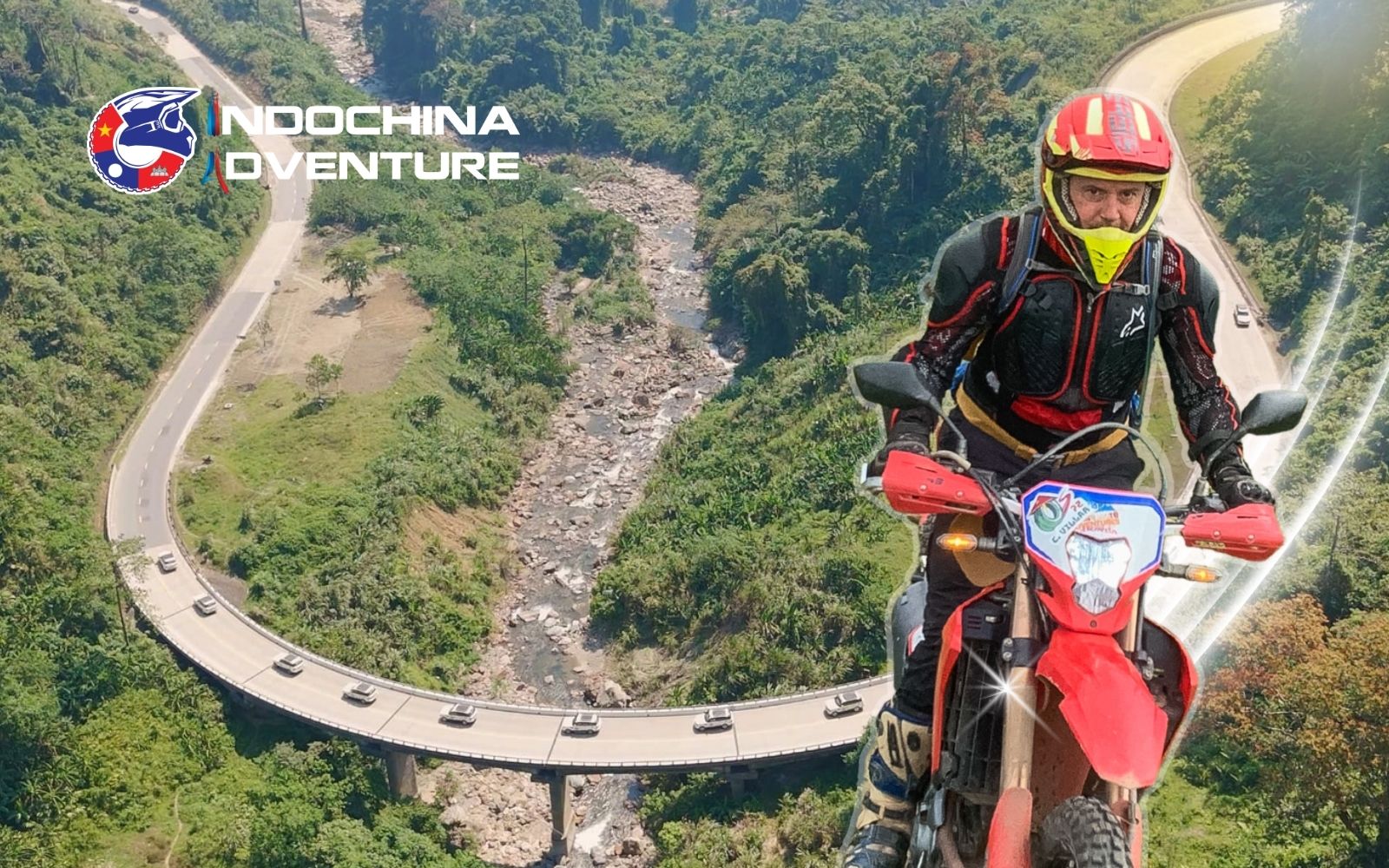
Curious how long is the Ho Chi Minh Trail for modern travelers
Travel tips for exploring the Ho Chi Minh Trail
Beside understanding “How long is the Ho Chi Minh Trail?”,making the journey truly memorable depends on smart planning and the right approach. Here are essential tips to help you explore it safely and fully:
- Best time to go: Travel between March – May or September – November for dry weather, clear skies, and more comfortable riding conditions
- Tour or self-guided: Guided motorbike tours offer local expertise, route planning, and safety support. Meanwhile, independent travel suits experienced riders who are confident with navigation and long-distance riding
- Road and weather awareness: Expect winding mountain roads, fog in high passes, and sudden rain, especially in central regions
- Safety first: Wear proper protective gear, avoid riding at night, and always check your bike before long stretches
- Fuel and supplies: Remote sections may have limited services, so refuel early and carry water and basic essentials
- Respect local culture: Many areas are home to ethnic minority communities, dress appropriately and ask before taking photos
- Plan flexible itineraries: Distances may look short on the map, but travel time can be longer due to terrain
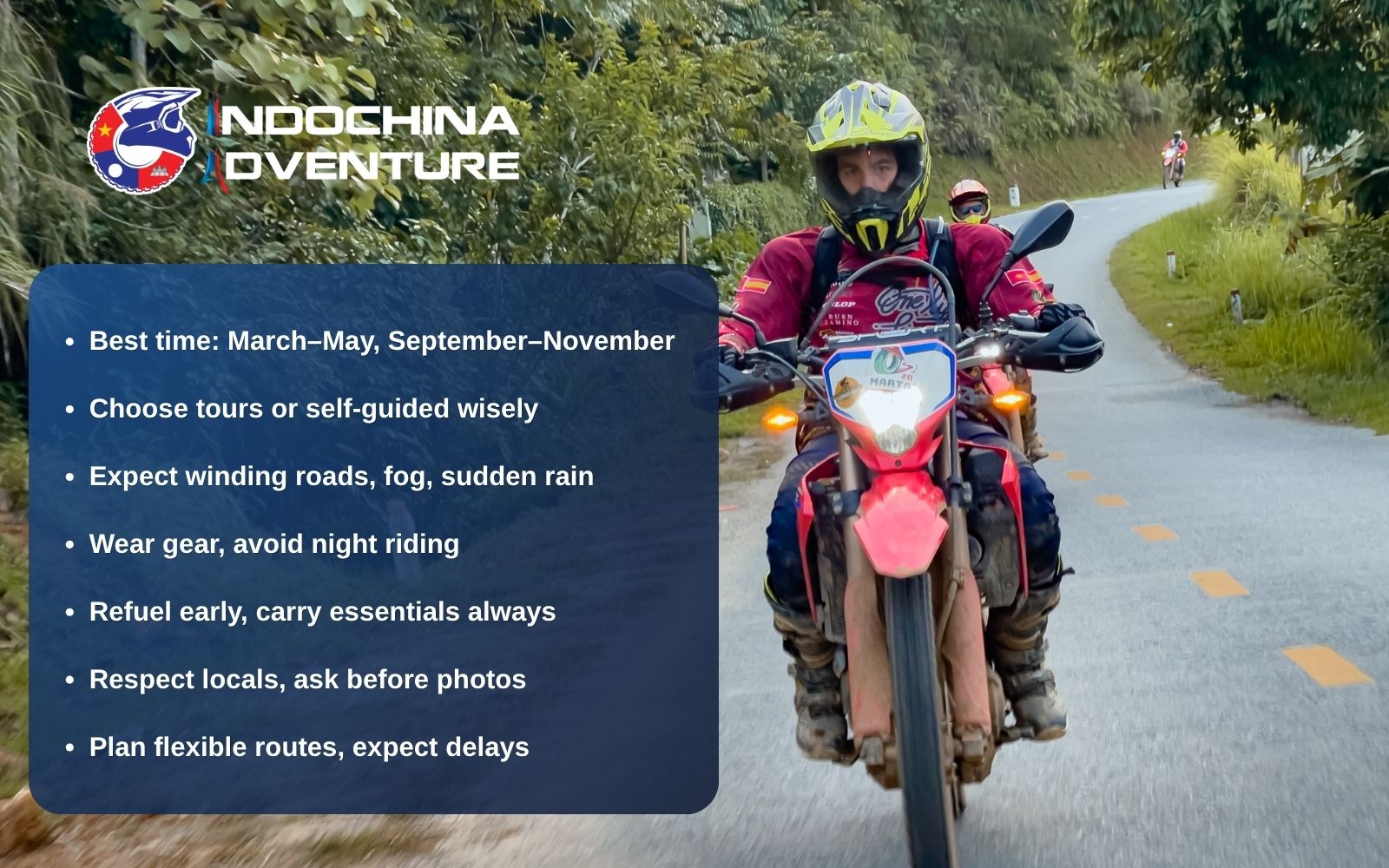
Essential tips help you explore safely and confidently on this route
The answer to how long is the Ho Chi Minh Trail depends on whether you measure it by its 20,000 kilometers of historical complexity or the 2,000 kilometers of breathtaking mountain highway that remains today. It is a journey that transcends simple distance, offering a rare window into the resilience of the human spirit and the raw, untamed beauty of Southeast Asia. If you are ready to conquer the legendary trail and write your own chapter of history? Contact Indochina Adventure today to book your spot on our next expedition and experience the trail like a true explorer!
Are you dreaming of emerald landscapes, majestic waterfalls, and winding mountain roads? Cao Bang in June is a vibrant masterpiece of nature. While the summer heat settles over Southeast Asia, this northern highland province offers a refreshing escape filled with lush greenery and powerful cascades. Whether you are a photography enthusiast or a seasoned rider, Indochina Adventure is ready to guide you through the mist. If you crave the thrill of adventure motorcycle tours, here is everything you need to know about visiting Cao Bang this June.
Cao Bang weather in june: Temperature, rainfall & travel conditions
June marks the beginning of the green season in Northern Vietnam, bringing cooler mountain air, dramatic waterfalls, and vibrant rice fields across Cao Bang. For travelers searching for the best time to visit Cao Bang with fewer crowds and breathtaking natural scenery, June offers an exciting balance of adventure, culture, and raw landscape beauty.
Temperature in Cao Bang in June
This month brings warm summer weather to Cao Bang, with daytime temperatures usually ranging between 24°C and 32°C. Mountain areas often feel cooler in the early morning and evening, creating more comfortable conditions for sightseeing and outdoor activities. Compared to larger cities in Vietnam, Cao Bang temperature June remains relatively pleasant thanks to the province’s highland landscape and fresh mountain air.
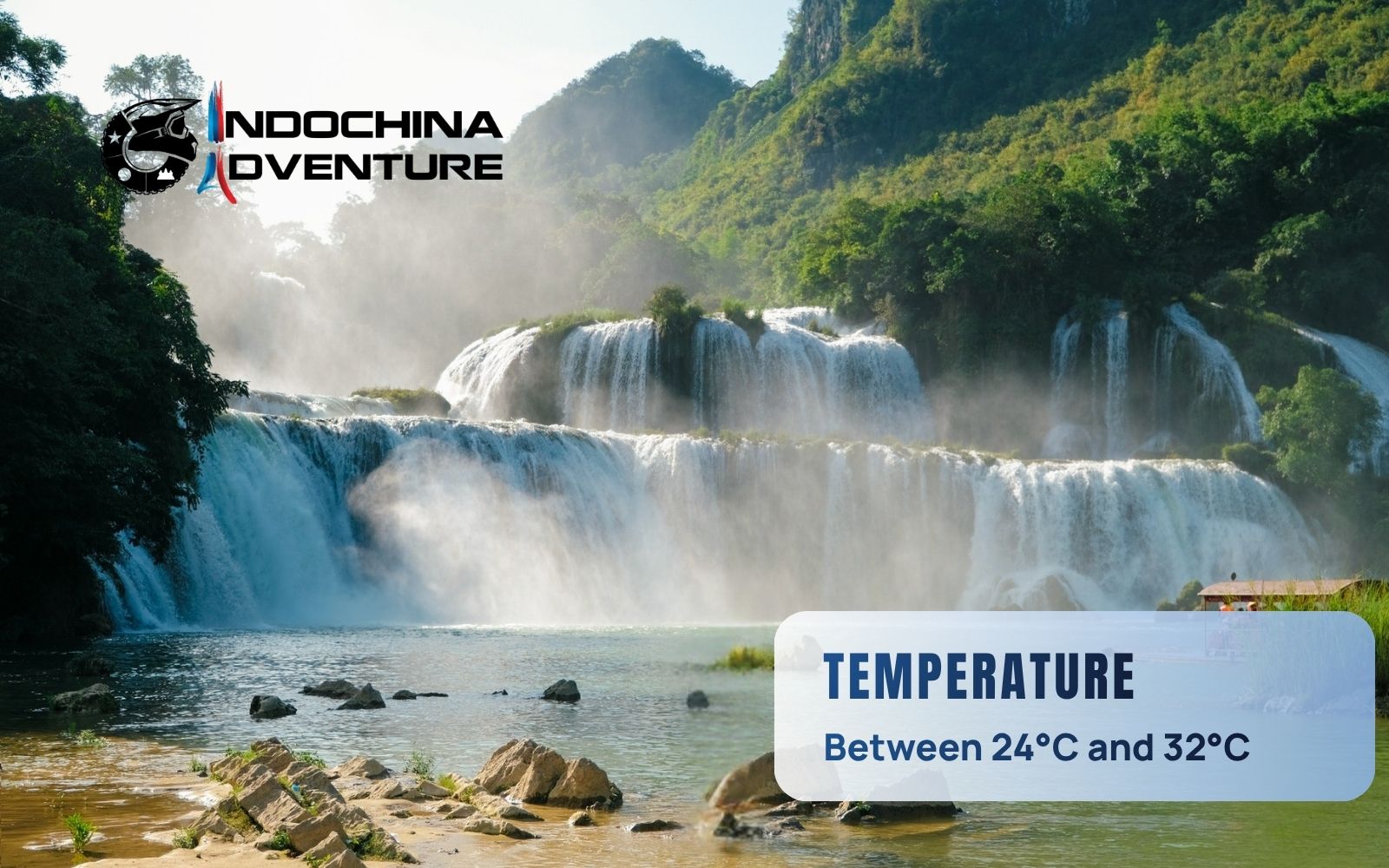
Is June a good time to visit Cao Bang Vietnam?
Rainfall and humidity
Afternoon rain showers become more common during this period, especially in mountainous areas around Cao Bang. Humidity levels are higher than in spring, but the fresh rainfall helps cool the air and transforms the entire landscape into a vibrant green paradise. Many travelers book a Cao Bang motorbike tour at this time of year to experience fuller waterfalls, misty valleys, and dramatic mountain scenery.
Travel conditions in June
Road conditions in June are a mix of adventure and breathtaking scenery, as the lighter traffic allows for a more intimate connection with the mountains. While the main highways like Highway 34 are well-maintained, Cao Bang travel in June requires extra focus on mountain passes where sudden summer showers can make the asphalt slippery. Visibility remains excellent between rain spells, offering crystal-clear views of the limestone peaks, though it is wise to start your day early to beat the heat and the predictable afternoon clouds.
Prepare for vibrant trails and occasional refreshing rain showers in the highlands
Is June a good time to visit Cao Bang? Pros and cons
Travelers who love mountain scenery, cultural experiences, and outdoor adventures often consider June an exciting season to explore Cao Bang. The combination of green landscapes, flowing waterfalls, and quieter tourist spots also makes this period ideal for a north Vietnam motorbike tour through the northern highlands.
Advantages of visiting Cao Bang in June:
- Mountains and valleys become incredibly green after seasonal rain
- Ban Gioc Waterfall looks more powerful and impressive
- Cooler mountain air compared to many lowland destinations in Vietnam
- Fewer crowds at major attractions and scenic routes
- Great conditions for photography and nature lovers
- Rice fields begin entering one of the most beautiful seasons of the year
- Ideal atmosphere for adventure travel and motorbike journeys
Disadvantages of traveling in June:
- Afternoon rain showers may affect outdoor schedules
- Some mountain roads become slippery after heavy rain
- Humidity levels are higher than during winter months
- Fog occasionally reduces visibility on mountain passes
- Extra caution is necessary for long-distance motorbike trips during wet weather

Balancing powerful waterfalls with tropical humidity makes Cao Bang in June an epic ride
Best things to do in Cao Bang in June
Cao Bang feels especially alive in June, with green mountain valleys, flowing waterfalls, and peaceful rural landscapes stretching across the region. Travelers searching for authentic outdoor experiences often combine these destinations into a motorcycle tour northwest Vietnam itinerary, where every road leads to dramatic scenery and hidden cultural gems.
Visit Ban Gioc Waterfall in June
Surrounded by limestone mountains and green rice fields, Ban Gioc Waterfall becomes even more spectacular during the early rainy season. The stronger water flow creates a dramatic white cascade, while light mist adds a magical atmosphere around the falls. Many travelers consider Ban Gioc Waterfall in June one of the most breathtaking natural sights in Northern Vietnam, especially during early morning visits or bamboo raft rides near the base of the waterfall.
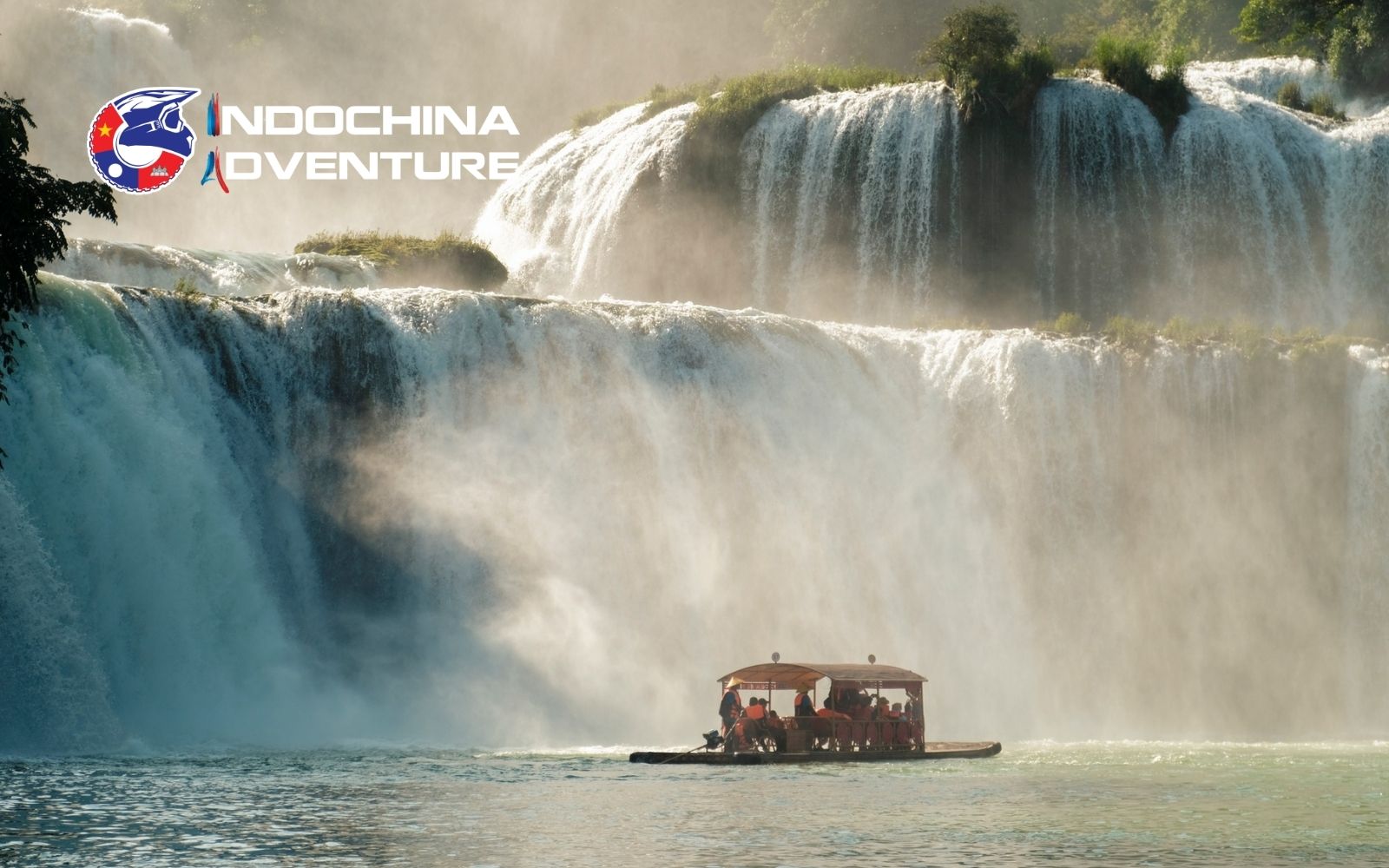
Witness the thunderous power of the falls during the peak summer season
Explore Nguom Ngao Cave
Tucked away near the waterfall, this cave offers a mystical escape from the summer humidity. Spanning over two kilometers, the cave is filled with unique limestone formations, including the famous “upside-down lotus” and stalactites that resemble mythical creatures. The natural airflow inside keeps the temperature incredibly cool, making it a favorite subterranean stop for those on motorbike tours of Vietnam looking to recharge before hitting the mountain passes again.
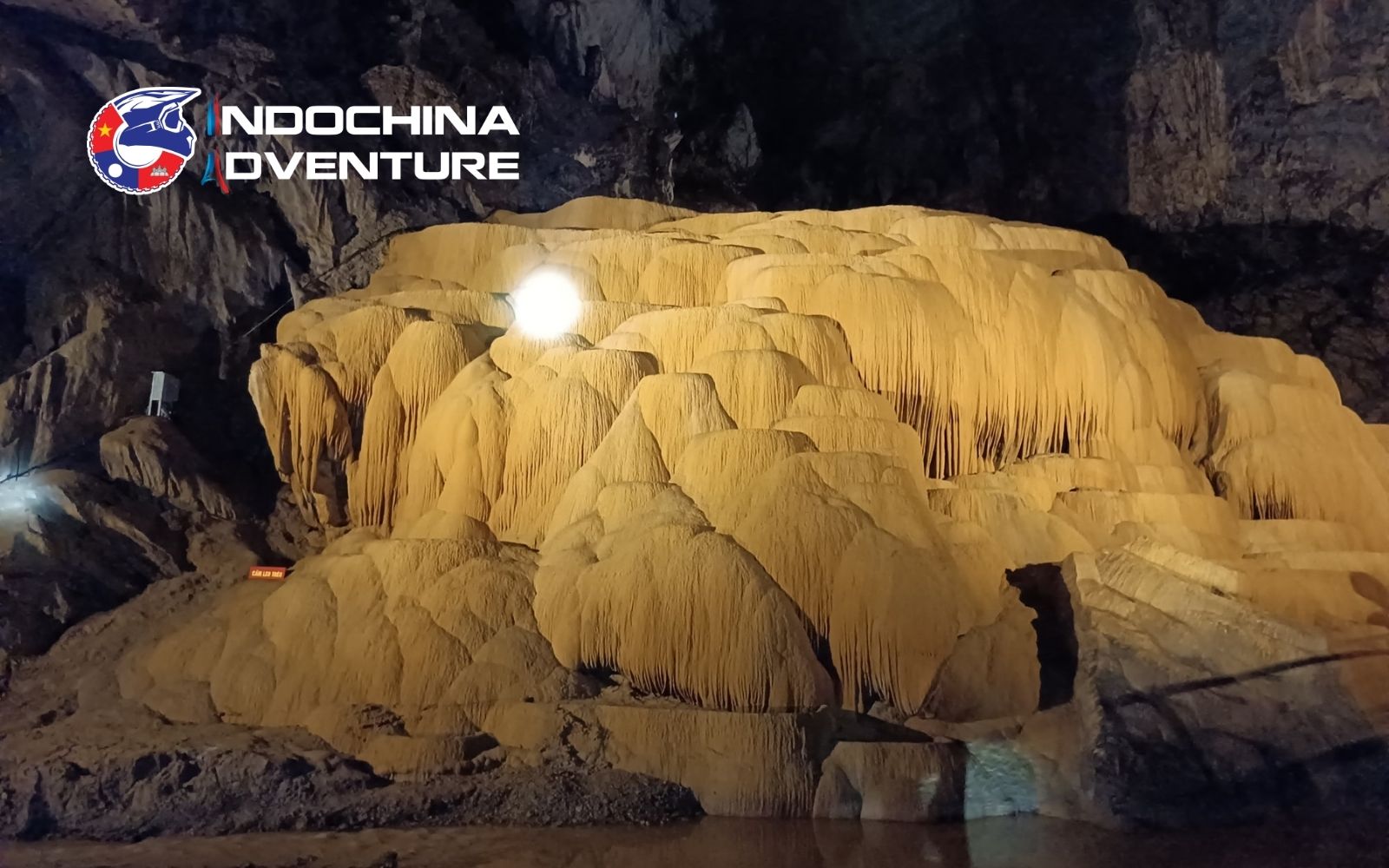
Escape the heat inside this cool limestone wonder near the China border
Ride through Cao Bang mountain passes
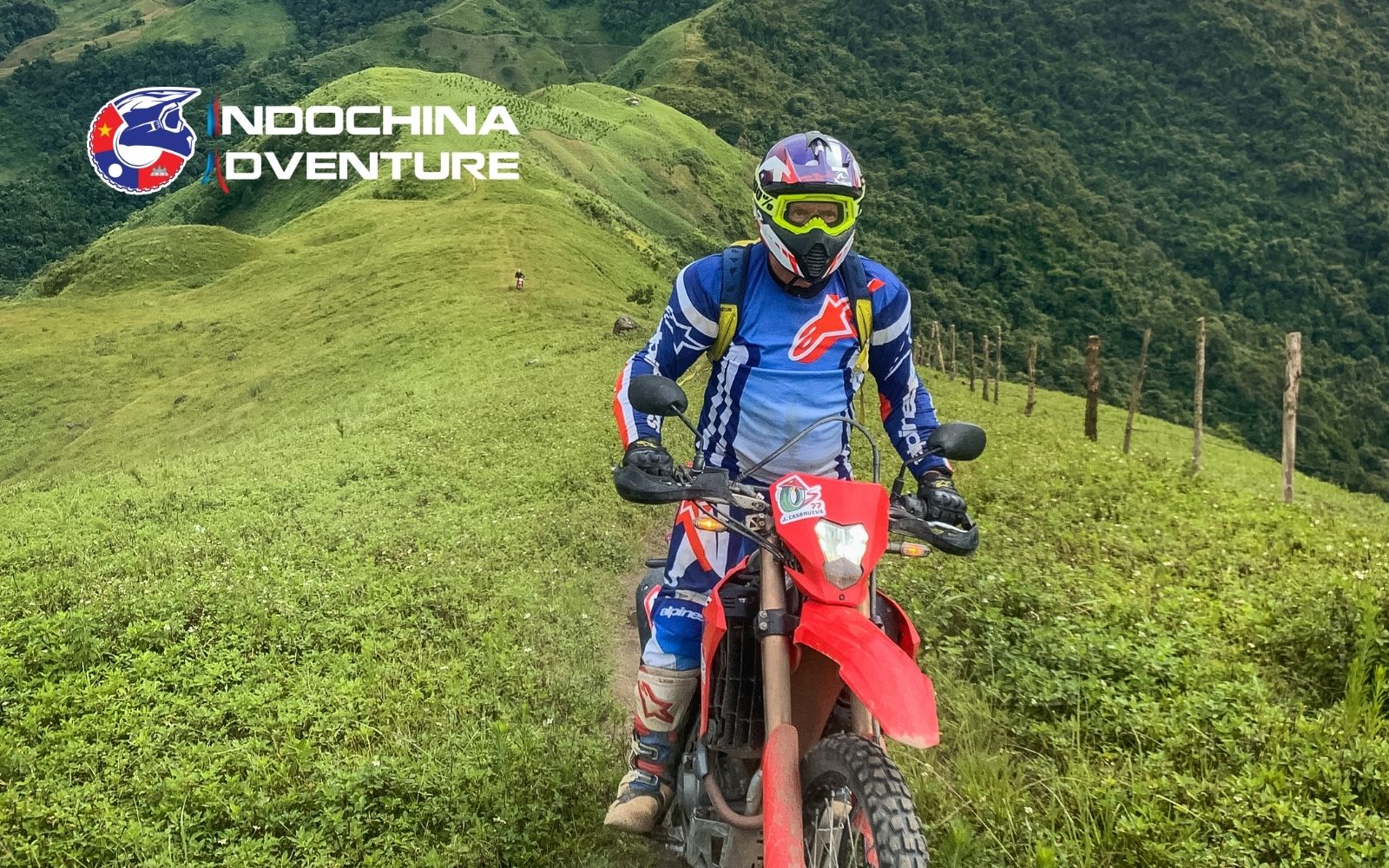
Clear skies between summer showers create excellent conditions for scenic rides across Cao Bang’s dramatic mountain roads. Travelers can conquer famous routes such as Ma Phuc Pass with its winding curves or Khau Coc Cha Pass with steep switchbacks and breathtaking valley views. A motorbike trip Cao Bang June adventure becomes even more memorable during this season, as the contrast between dark limestone mountains and vibrant green maize fields reaches its most spectacular point.
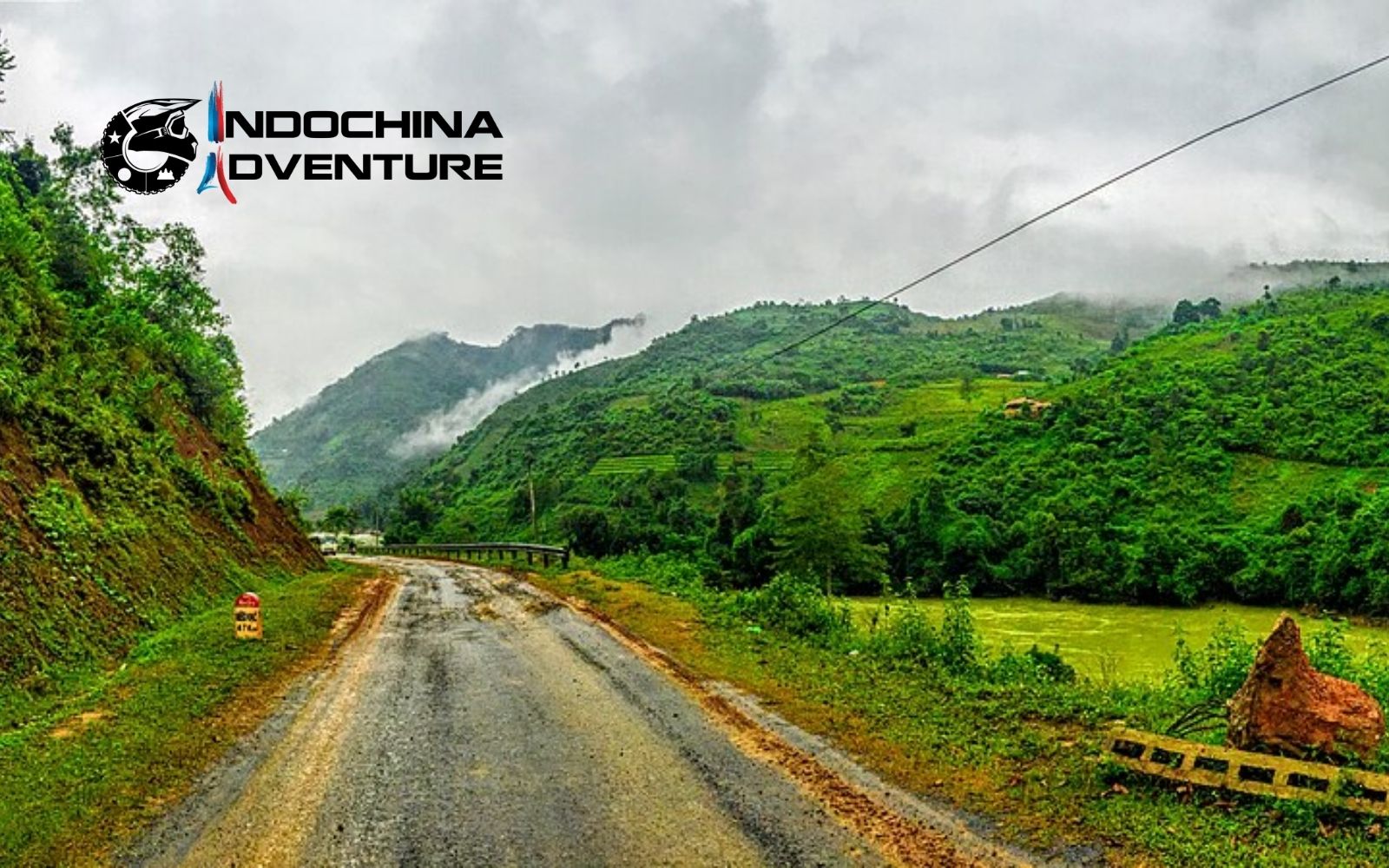
Navigate legendary switchbacks surrounded by clouds, breathtaking emerald mountain peaks
Visit local ethnic villages
Venturing into the traditional stilt-house communities of the Tay and Nung people is one of the most culturally immersive things to do in Cao Bang. In June, villages like Phuc Sen and Phia Thap are buzzing with life as locals balance their ancient crafts with the peak of the summer agricultural season. Watching artisans work against a backdrop of emerald rice paddies offers a rare, authentic glimpse into a way of life that remains deeply connected to the rhythm of the mountains.
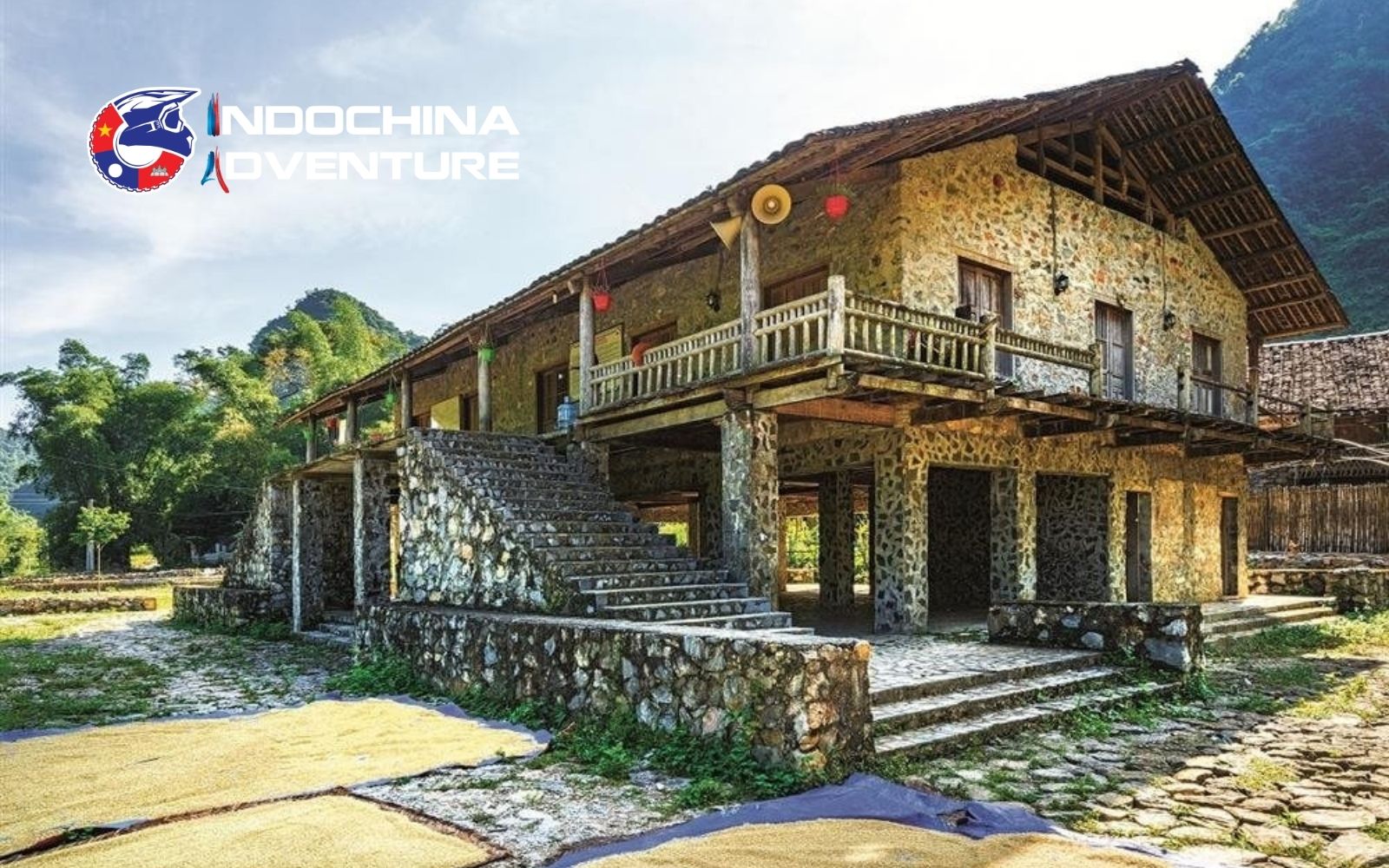
Discover authentic culture and ancient traditions in the heart of the mountains
Enjoy green rice fields
Early summer transforms the valleys of Cao Bang into endless layers of vibrant green rice fields stretching beneath limestone mountains. Areas around Trung Khanh, Quang Uyen, and remote countryside roads become especially photogenic during this season, attracting photographers and nature lovers alike. Among the most beautiful places to visit in Cao Bang, these peaceful rice landscapes offer a perfect combination of fresh mountain air, rural scenery and authentic local life.
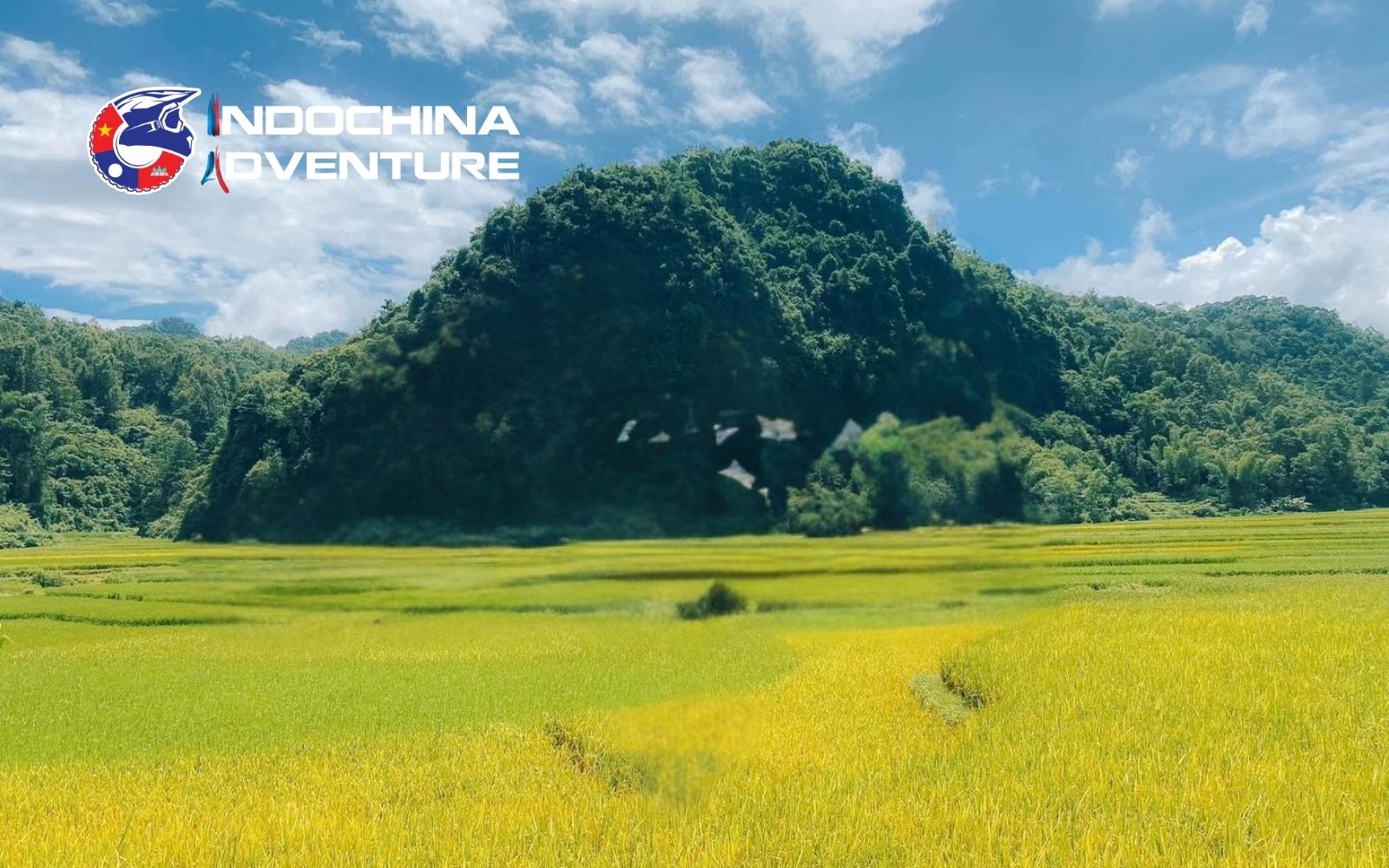
Endless green rice fields stretching across valleys
Don’t just scroll through the photos, be in them! If you’re ready to trade the city heat for the mist of the northern highlands, grab your helmet and join an Indochina Adventure. Our Cao Bang motorbike tour isn’t your average sightseeing trip; it’s a high-energy pulse through rugged passes and hidden valleys. The road is calling, are you ready to answer?

Unleash your wild side on a Cao Bang motorbike tour with Indochina Adventure
What to pack for Cao Bang in June
Packing light but smart is the secret to a stress-free adventure. Because the Cao Bang Vietnam June weather is characterized by high humidity and sudden tropical downpours, your gear needs to prioritize protection and quick-drying capabilities.
- Breathable riding gear: Focus on moisture-wicking base layers and well-ventilated jackets.
- Waterproofing: Bring a high-quality raincoat or a heavy-duty poncho, and use dry bags for your electronics and documents.
- Safety essentials: A well-fitting helmet, gloves with good grip, and sturdy hiking boots or riding shoes for slippery terrain.
- Health & comfort: High SPF sunscreen, insect repellent, and personal medications are must-haves for the humid highlands.
- Tech ready: A reliable power bank and a waterproof phone mount will keep your navigation and camera running through the mist.
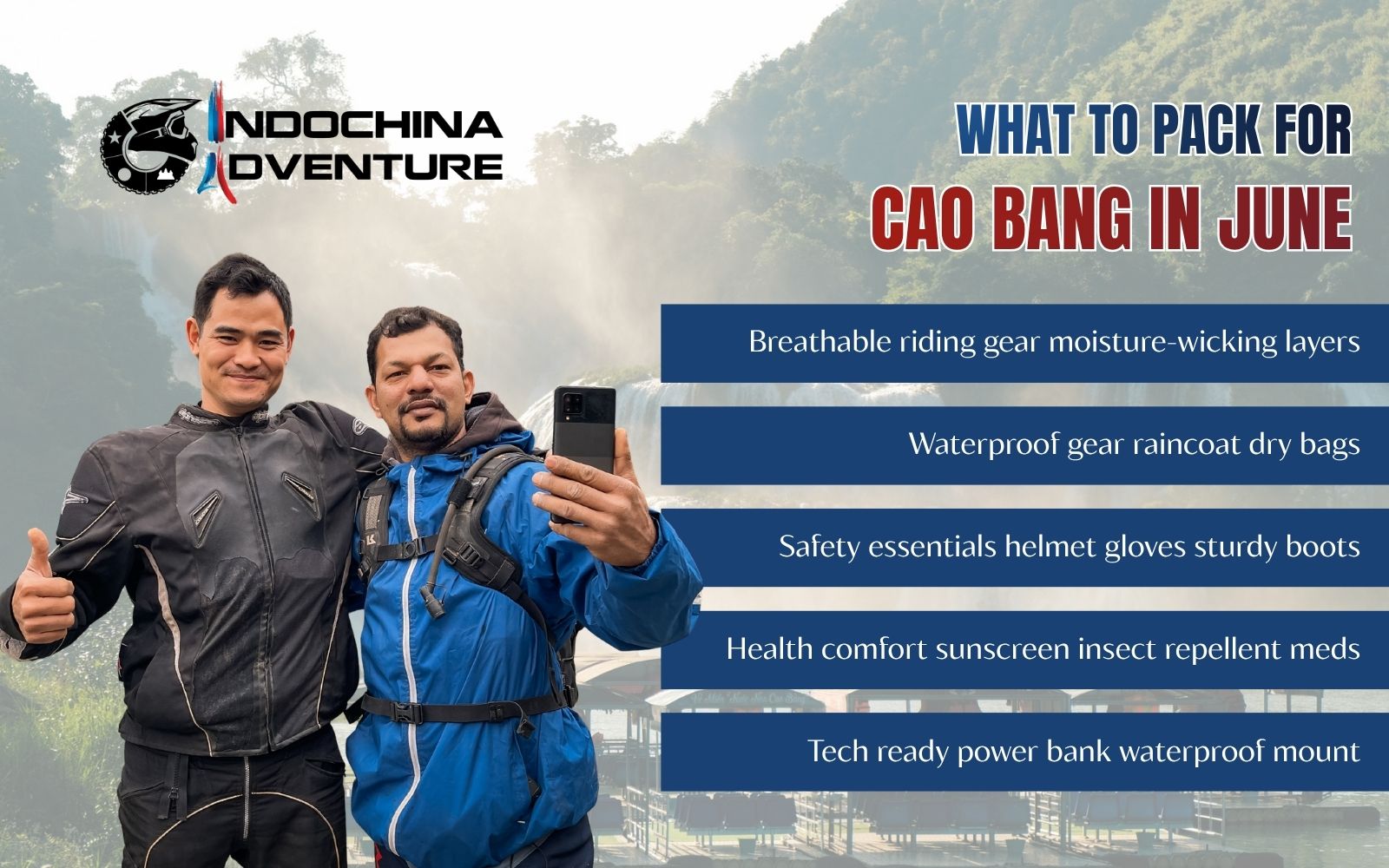
Essential what to pack for Cao Bang June travel checklist
Travel tips for visiting Cao Bang in June
Smart preparation makes a big difference when exploring Northern Vietnam’s mountain region, especially during the summer transition period. These Cao Bang travel tips help you stay safe, comfortable, and ready for changing weather conditions throughout your journey.
- Check weather forecast: Stay updated daily to better understand what is Cao Bang weather in June and plan outdoor activities accordingly.
- Avoid riding in heavy rain: Mountain roads can become slippery and reduce visibility during sudden showers.
- Start early: Morning hours offer clearer skies and more stable conditions for sightseeing and travel.
- Choose local guide for safety: Local support helps navigate remote routes and ensures a smoother travel experience in rural areas.
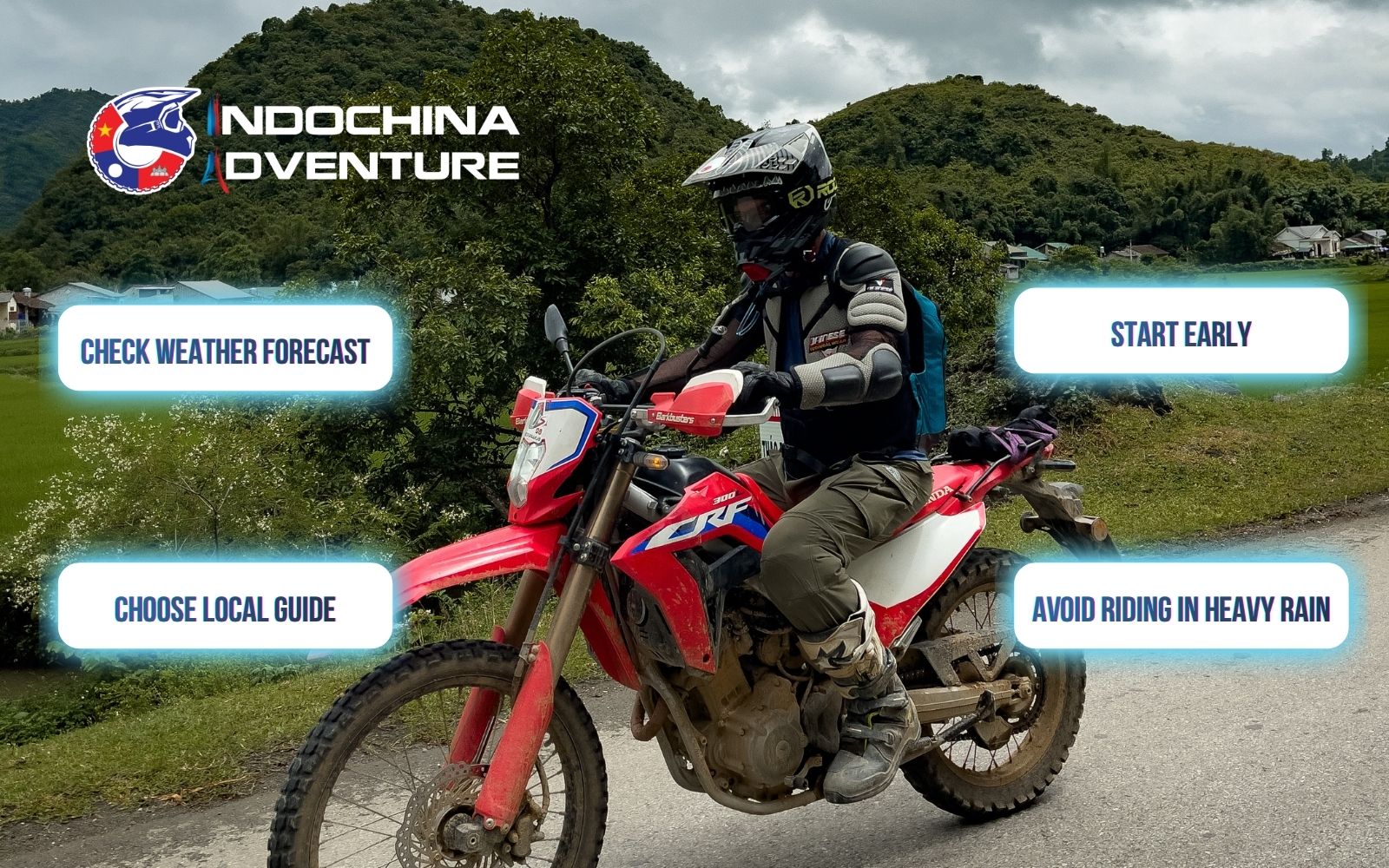
Smart travel tips for safer and smoother Cao Bang exploration
If you’re ready to take the journey further, a North Vietnam motorbike tour is the perfect way to experience Cao Bang and beyond with greater comfort, safety, and local insight. Ride through iconic mountain passes, hidden valleys, and cultural villages with a well-planned route that helps you enjoy every moment of the adventure without worrying about logistics.
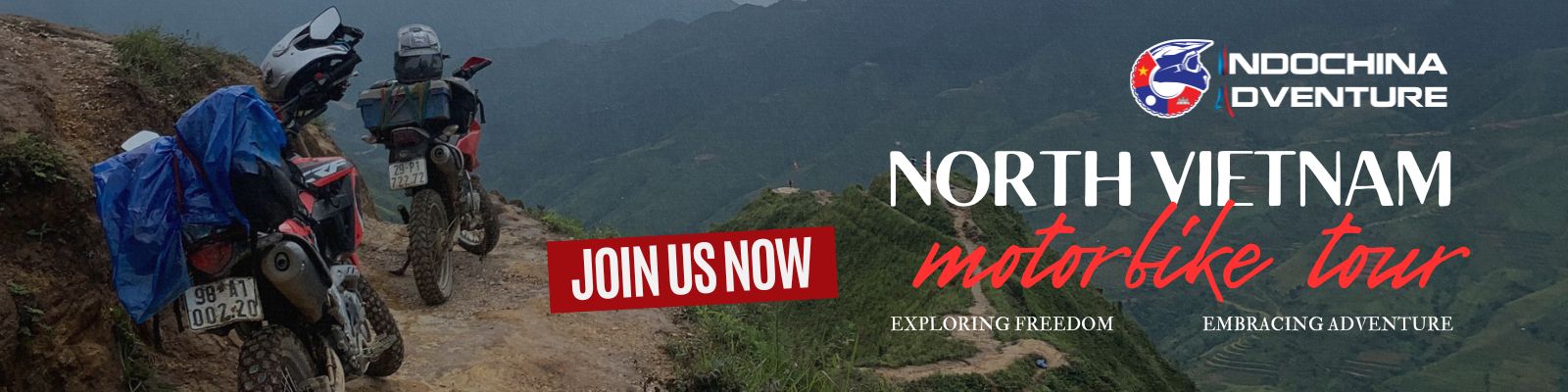
Live the dream on a North Vietnam motorbike tour with Indochina Adventure
While the humidity and rain require a bit of extra planning, the sight of Ban Gioc Waterfall at full power and the endless “neon” green valleys make Cao Bang in June a photographer’s and adventurer’s dream. By staying flexible and starting your days early, you’ll discover that despite the tropical elements, it is truly the best time to visit Cao Bang June for those seeking vibrant landscapes and fewer crowds.
Ready to gear up for an epic journey through the mountains? Contact Indochina Adventure today to book your professional motorcycle tour and experience the very best of the North!