Ninh Binh by Motorbike: Tam Coc, Trang An and the Roads Most People Miss


Ninh Binh gets called the inland Ha Long Bay so often that the comparison has stopped meaning anything. What it actually is, from a rider’s point of view, is the closest place to Hanoi where limestone karst rises straight out of flat rice fields — and where the roads between those karsts are narrow, empty and almost entirely flat.
That combination makes a Ninh Binh motorbike tour unusual. It is the one destination in northern Vietnam where the scenery is spectacular and the riding is genuinely easy, which is why it works as a first day out for nervous riders and as a rest day on a longer tour.
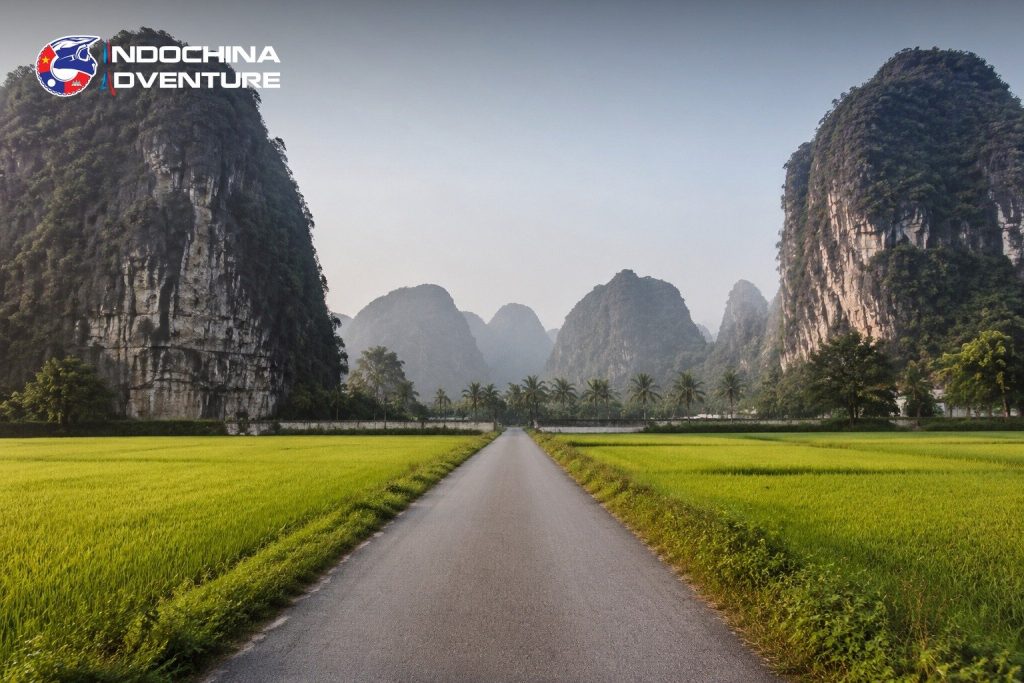
Ninh Binh's back roads run flat and empty between the karst — the easiest good riding in northern Vietnam
Getting there from Hanoi
Ninh Binh sits 95 km south of Hanoi. There are two ways to ride it and they are not equivalent.
Highway 1A is the fast option at around two hours, and it is dull and busy with freight. Take it if you want maximum time at the destination.
The Red River route follows the dyke roads south through Ha Nam, adds about 30 km, and is a far better ride — narrow embankment roads above the fields, villages every few kilometres, and almost no trucks. Allow three hours.
Riding out of Hanoi. Whichever route you take, the first 20 km is city traffic and it is the hardest part of the day. Leaving before 7am makes a substantial difference, and it also puts you in Ninh Binh before the tour buses.
The main loop: Tam Coc, Trang An and Bich Dong
The classic circuit runs about 45 km and takes a full day if you stop properly.
Trang An
The Trang An landscape complex is a UNESCO World Heritage site and the boat trip through it is the single thing most worth doing here. Rowers take you through a series of water caves — some low enough that you duck — between karst towers, on a route that takes two to three hours depending on which of the three circuits you pick.
Go early. Boats start around 7am and the difference between arriving at 7:30 and 10:00 is the difference between quiet water and a queue.
Tam Coc
Tam Coc offers a shorter version of the same experience on the Ngo Dong river, through three caves, with rice fields on both banks. It is more crowded than Trang An but the rice makes it the better choice in two specific windows: late May and early June when the crop turns gold, and September for the second harvest.
Bich Dong pagoda and Mua Cave
Bich Dong is a three-level pagoda built into a cliff a short ride from Tam Coc, and it takes half an hour. Mua Cave is the other half of that stop: roughly 500 stone steps up a karst peak to a viewpoint that looks straight down over the Tam Coc valley. It is the photograph everyone comes for, and it is worth the climb — start it early or late, because there is no shade.
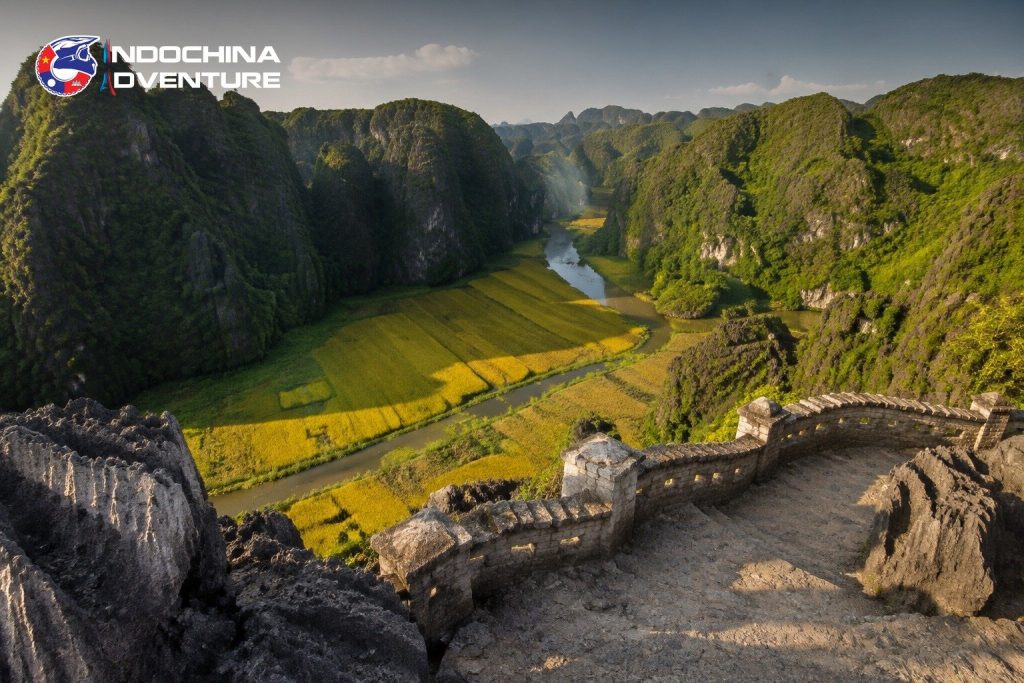
The Mua Cave viewpoint is about 500 steps up — the reason to start early is the complete lack of shade
The hidden routes: where the tour buses do not go
The circuit above is what most visitors see. The reason to arrive on a motorbike is everything below, none of which is reachable by coach.
Van Long nature reserve
Twenty kilometres north of Tam Coc, Van Long is a wetland reserve with the same karst scenery and a fraction of the visitors. The boats here are punted through reed beds rather than caves, and the reserve holds one of the last populations of Delacour’s langur. Mornings are best for wildlife and for still water.
The Cuc Phuong road
Cuc Phuong is Vietnam’s oldest national park, 45 km west of Ninh Binh, and the ride there is the best riding in the province — a climbing road through forest with genuine bends, which the rest of Ninh Binh does not offer. The park road continues 20 km inside the boundary under closed canopy.
Kenh Ga and the back dyke roads
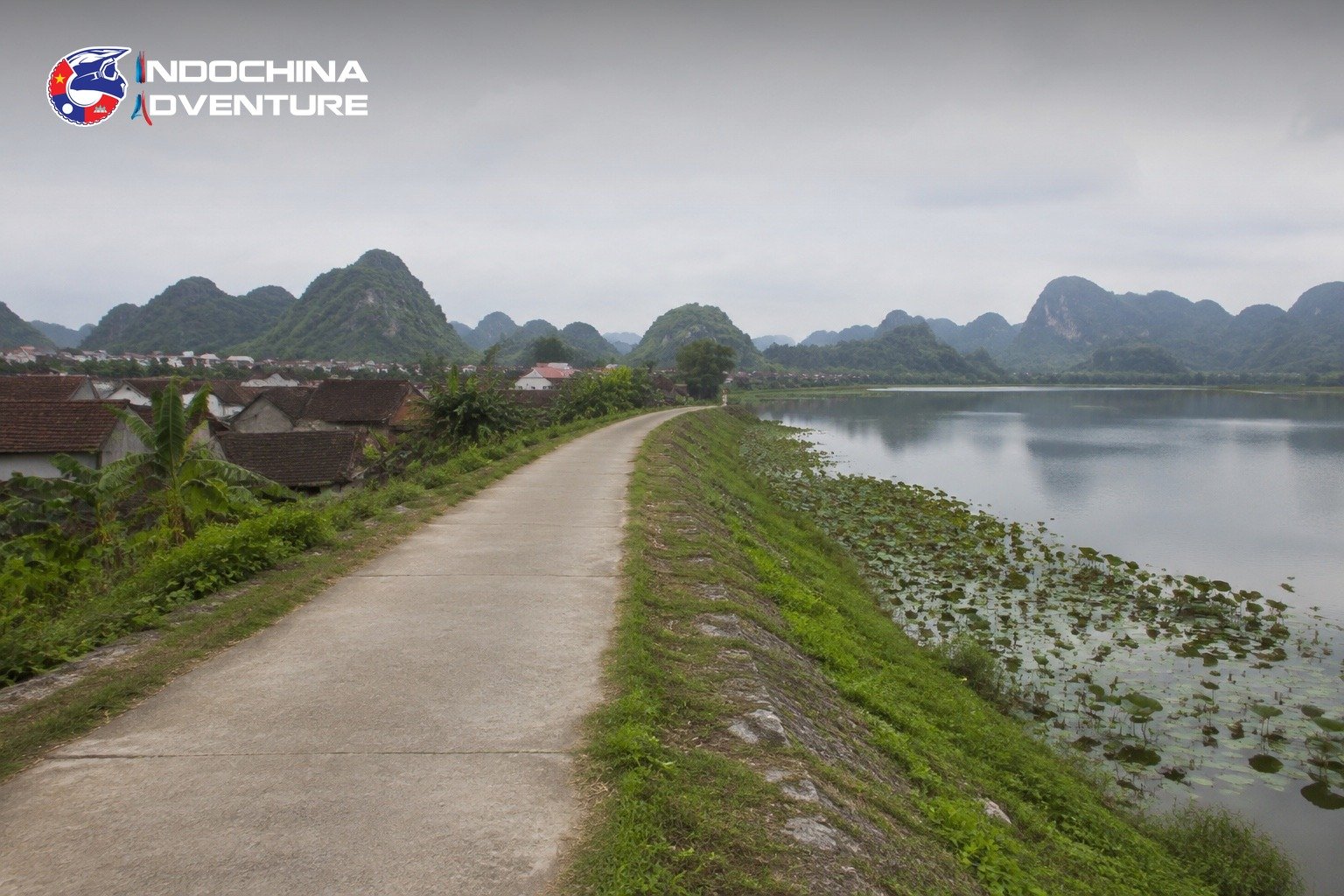
North-west of the main sites, the floating village at Kenh Ga sits on the Hoang Long river, and the dyke roads that reach it run for kilometres between water and fields with essentially no traffic. This is where a Ninh Binh hidden route actually means something: no ticket booth, no boat queue, just narrow concrete lanes and villages.
Hang Mua to Thung Nham
South-east of the main valley, the road to Thung Nham bird garden passes through a gap in the karst and opens into a separate valley almost nobody rides into. Late afternoon, when the birds come in to roost, is the reason to time it that way.
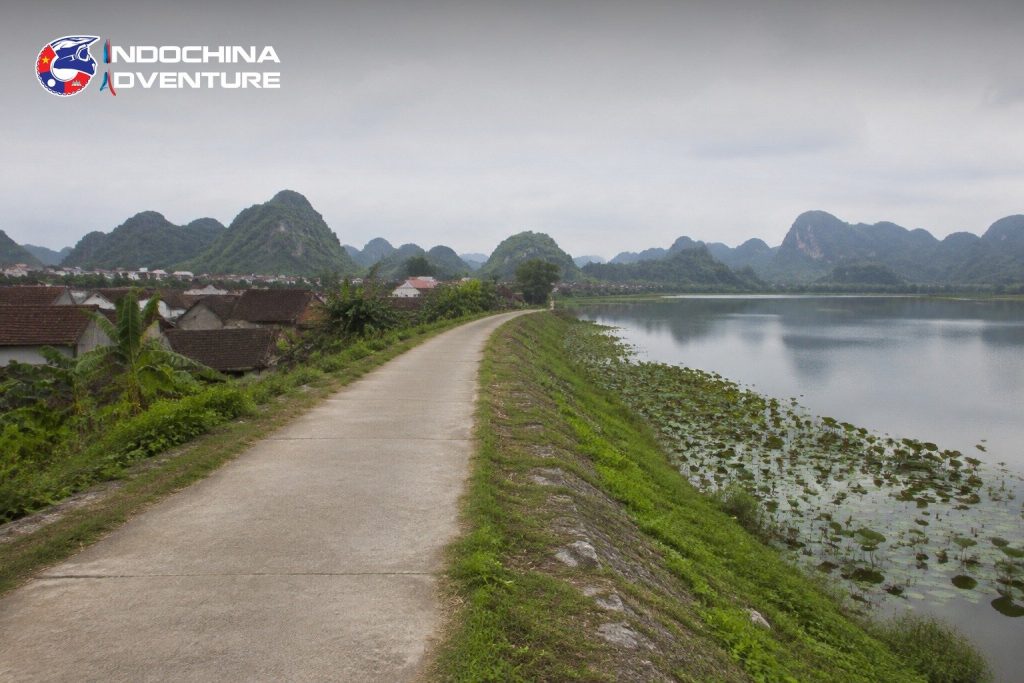
The dyke roads around Kenh Ga see almost no traffic — this is the Ninh Binh most visitors never reach
One day or two?
One day covers Trang An, Mua Cave and Tam Coc if you leave Hanoi at 6am and accept a long day. It is the standard day trip and it works.
Two days is considerably better. Day one for the main sites, an overnight in a homestay among the karst, then day two for Van Long, Cuc Phuong and the dyke roads with no time pressure. Accommodation in the Tam Coc area is inexpensive and the evening in the valley is the part day-trippers miss entirely.
Practical notes
- Tickets are separate at every site. Trang An, Tam Coc, Mua Cave and Bich Dong each charge individually, and boat fares are separate again. Carry cash.
- Boat rowers work on a rota and are paid little. A tip is customary and genuinely matters here.
- Best months are April to May and September to November. June to August is hot and humid; the rice, however, is at its best in late May and September.
- The riding is flat. Almost no climbing anywhere except the Cuc Phuong road, which makes this suitable for any licensed rider.
- Roads narrow without warning. Dyke lanes can be two metres wide with water on both sides. Ride slowly and expect to reverse occasionally.
Combining Ninh Binh with a longer tour
Ninh Binh works well as the first or last day of a northern itinerary. Riders heading south towards Phong Nha pass directly through, and it makes a natural soft opening before harder terrain — a day to get used to Vietnamese traffic on roads where a mistake costs nothing.
It also pairs with Pu Luong, 80 km west, where the terrain changes to terraced hillside and the riding gets more interesting. Several of our Vietnam motorbike tours route through both.
Frequently asked questions about riding in Ninh Binh
Can I ride from Hanoi to Ninh Binh and back in one day?
Yes. Around 190 km of riding plus sightseeing makes for a twelve-hour day, so start at 6am. Two days is far more comfortable.
Is Ninh Binh suitable for inexperienced riders?
The Ninh Binh roads are, yes — flat, slow and scenic. The ride out of Hanoi is the difficult part, and less confident riders often take a bus down and rent locally instead.
Trang An or Tam Coc — which boat trip?
Trang An for the caves and the scale, Tam Coc for the rice fields. If you only do one, make it Trang An, unless you are visiting in late May or September when the rice makes Tam Coc the better call.
How much should I budget for a day?
Entrance fees and boat fares across the main sites come to a moderate sum, plus fuel, lunch and tips. Bring more cash than you expect to need — card acceptance is limited outside hotels.
Is it worth staying overnight?
Yes, if you want the hidden routes. The main sites fit in a day; Van Long, Cuc Phuong and the dyke roads do not.
Are the caves passable year-round?
Generally yes, though after heavy rain the water level in the Tam Coc caves can rise enough to close them temporarily. Trang An is less affected.
Ninh Binh is not a challenging ride, and that is precisely its value. It gives you world-class landscape on roads that ask nothing of you, ninety minutes from Hanoi — which makes it either the gentlest possible introduction to riding in Vietnam or the best rest day on a hard tour. Tell us which it needs to be and the Indochina Adventure team will build it into the route.


Latest posts
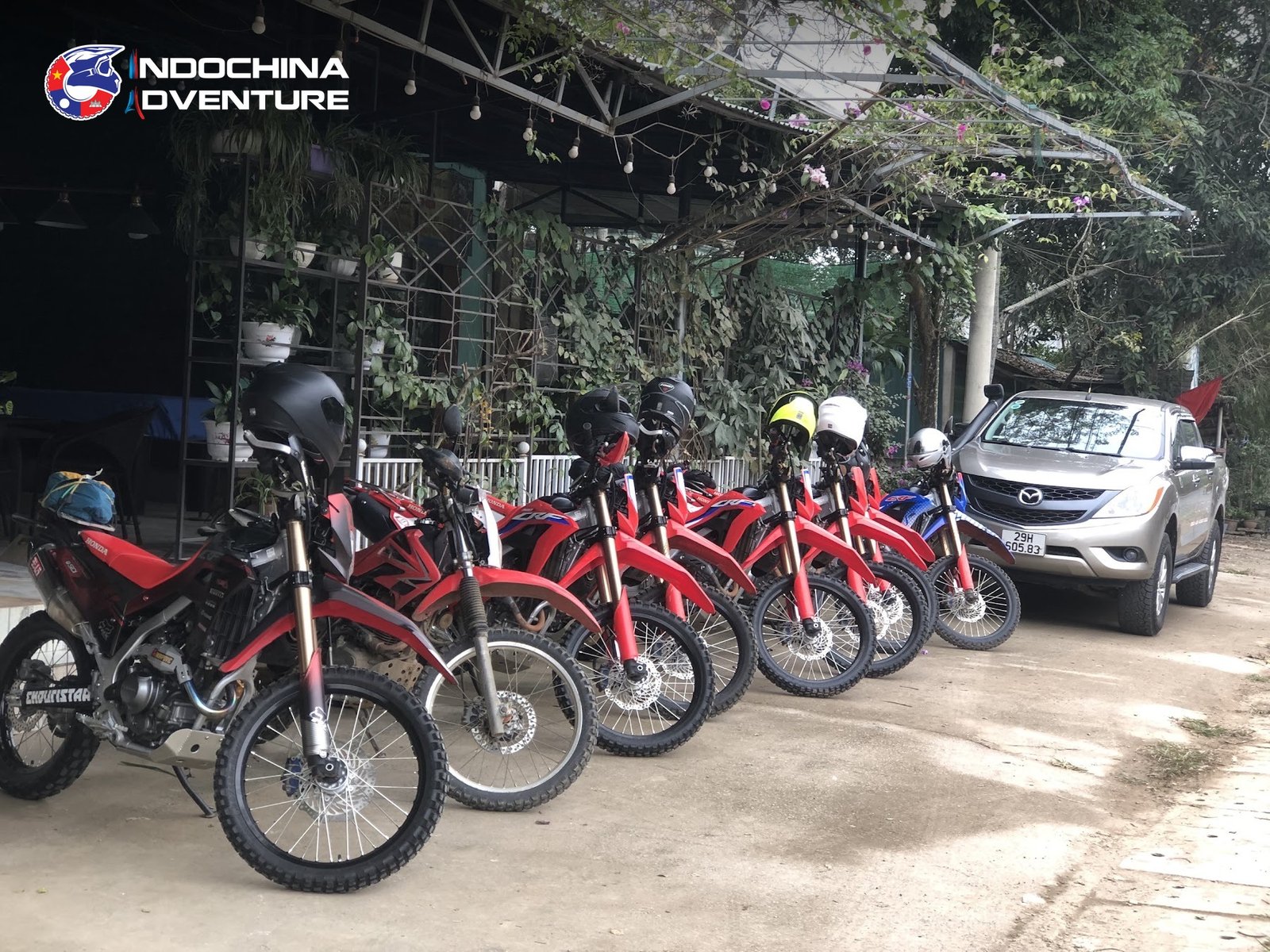
Bigbike vs Dirtbike Tours in Vietnam: Which One Should You Book?
 Date: 12/09/2026
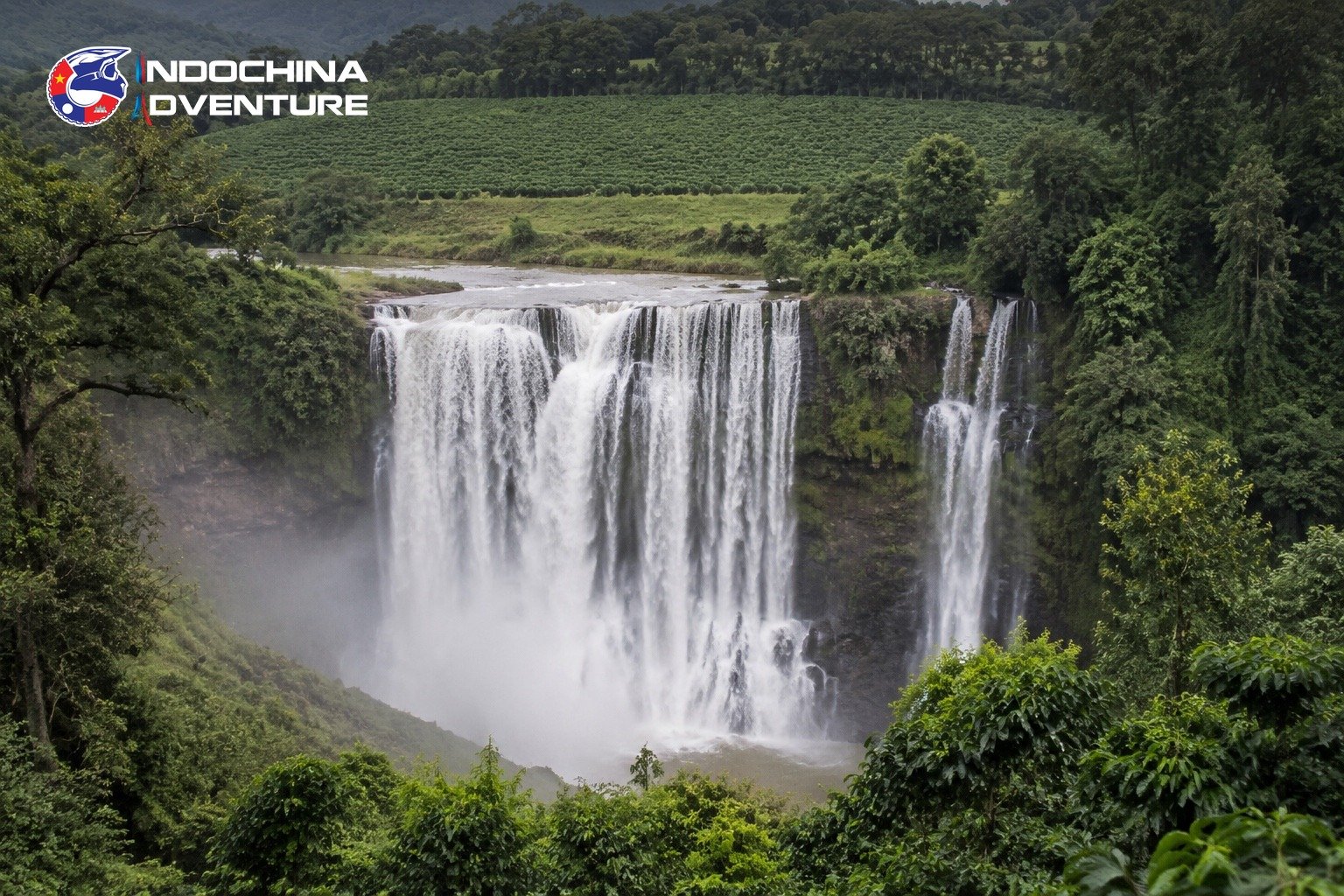
Laos Motorbike Tour: The Best Routes Through North and South Laos
Date: 10/09/2026

Do You Need a Motorbike License to Ride in Vietnam as a Foreigner?
Date: 01/08/2026
Maybe You Don’t Know
Bigbike vs Dirtbike Tours in Vietnam: Which One Should You Book?
Bigbike vs dirtbike tour Vietnam: an honest comparison of terrain, riding demand, comfort and cost…
Date: 12/09/2026

Laos Motorbike Tour: The Best Routes Through North and South Laos
A Laos motorbike tour guide covering the northern mountain loops and the southern Thakhek and…
Date: 10/09/2026
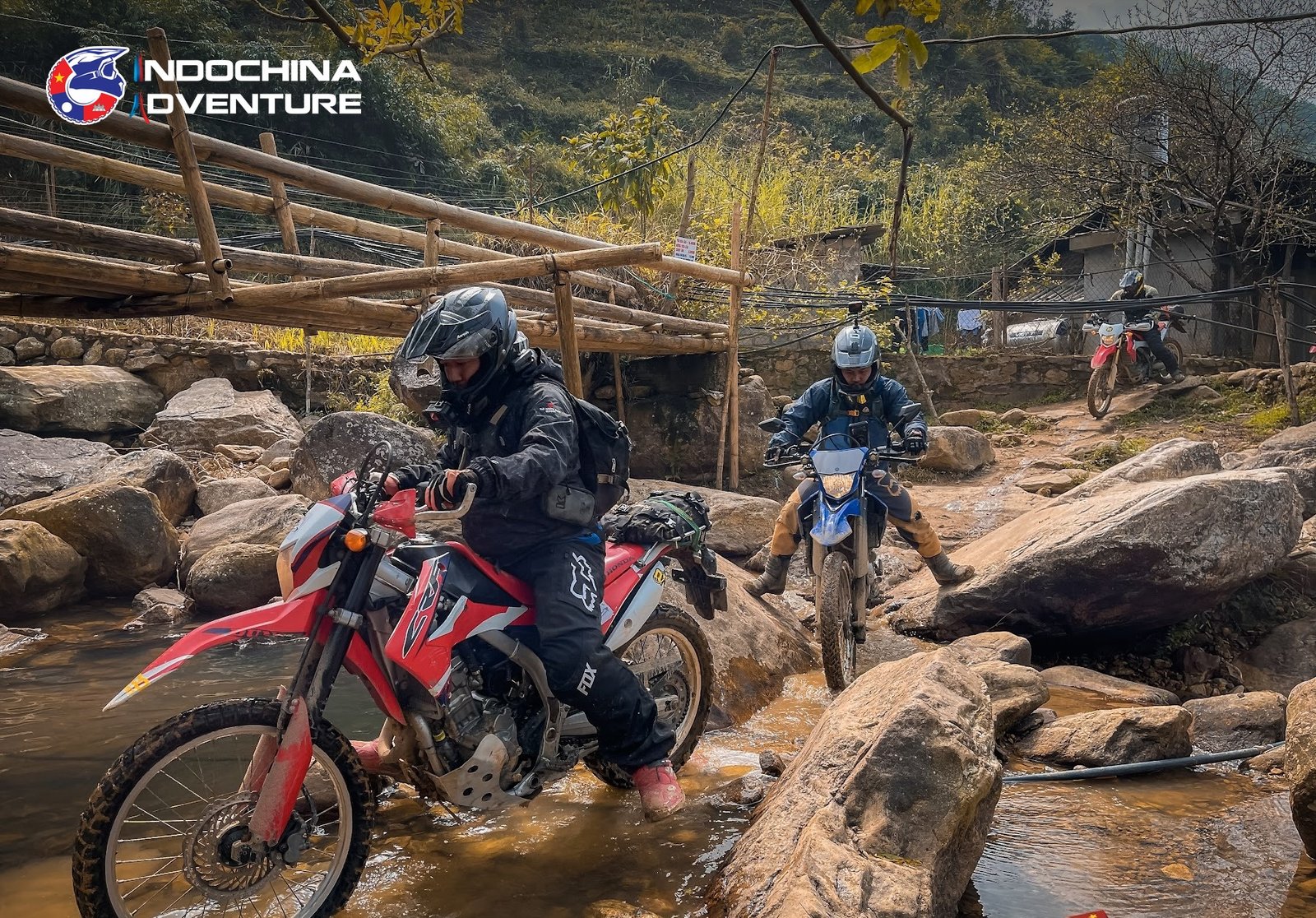
South-North Vietnam Offroad Motorbike Tour: Riding HCM City to Hanoi The Hard Way
Planning a Vietnam offroad motorbike tour from HCM City to Hanoi? Route breakdown, daily distances,…
Date: 08/09/2026
Do You Need a Motorbike License to Ride in Vietnam as a Foreigner?
Do you need a motorbike license to ride in Vietnam as a foreigner? The honest…
Date: 01/08/2026

Ha Giang Loop Guided Tour vs Self Ride: Which Option Is Right for You?
Comparing a Ha Giang Loop guided tour vs self ride? Explore the pros, cons, real…
Date: 28/07/2026

Hanoi in July 2026: Hot, Humid & Rainy? What to Expect
Hanoi in July brings hot, humid days and sudden downpours. Discover the weather, best things…
Date: 24/07/2026