Bigbike vs Dirtbike Tours in Vietnam: Which One Should You Book?


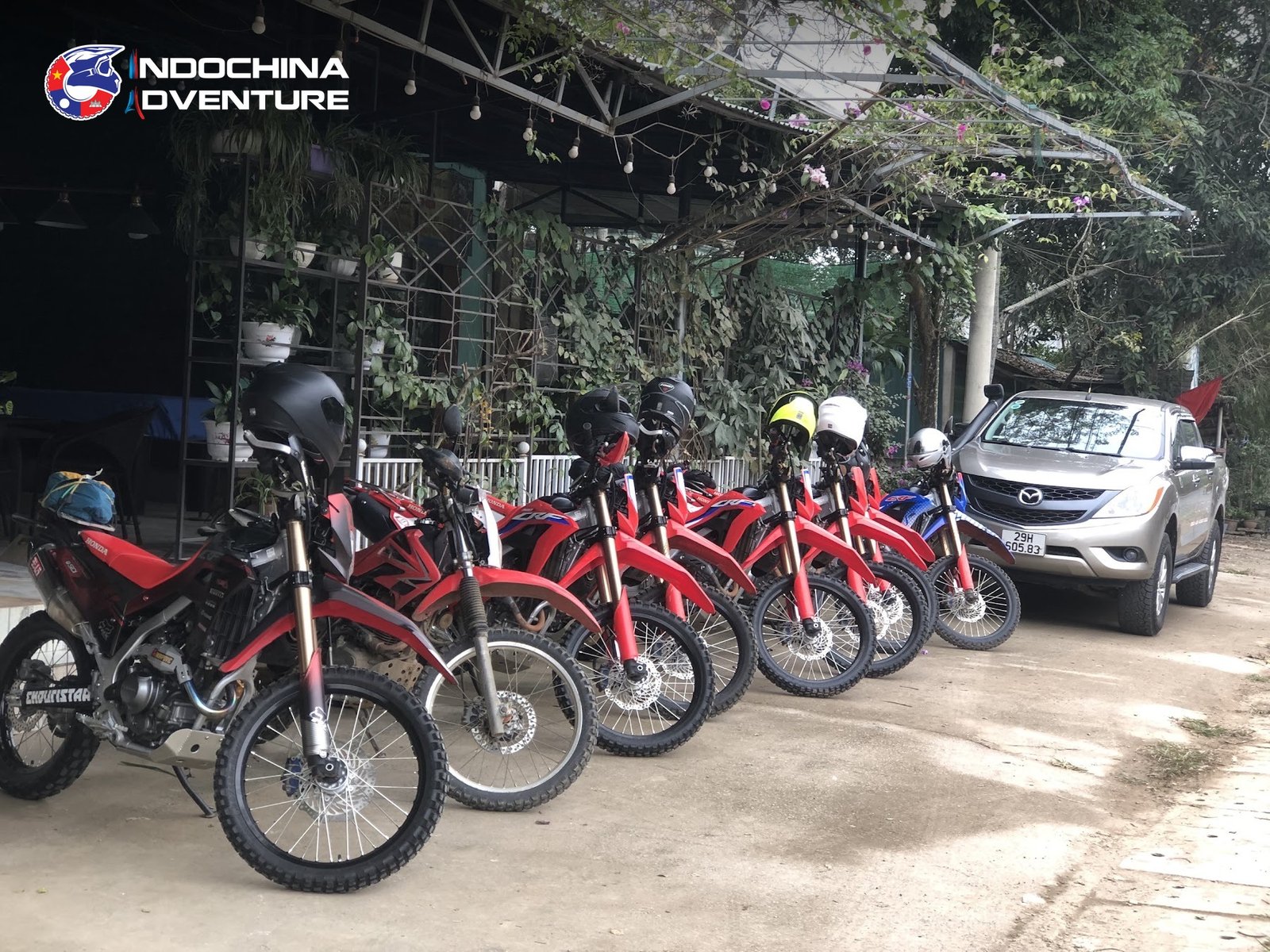
This is the question we answer more than any other, and getting it wrong is the single biggest cause of a disappointing trip. Book a dirtbike tour without offroad experience and you spend two weeks exhausted and nervous. Book a bigbike tour when you wanted mud and river crossings and you spend it wishing you had turned off the tarmac.
The bigbike vs dirtbike tour Vietnam decision is not about which is better. It is about matching the machine to the roads you actually want to ride and the skills you actually have. Here is the honest comparison.
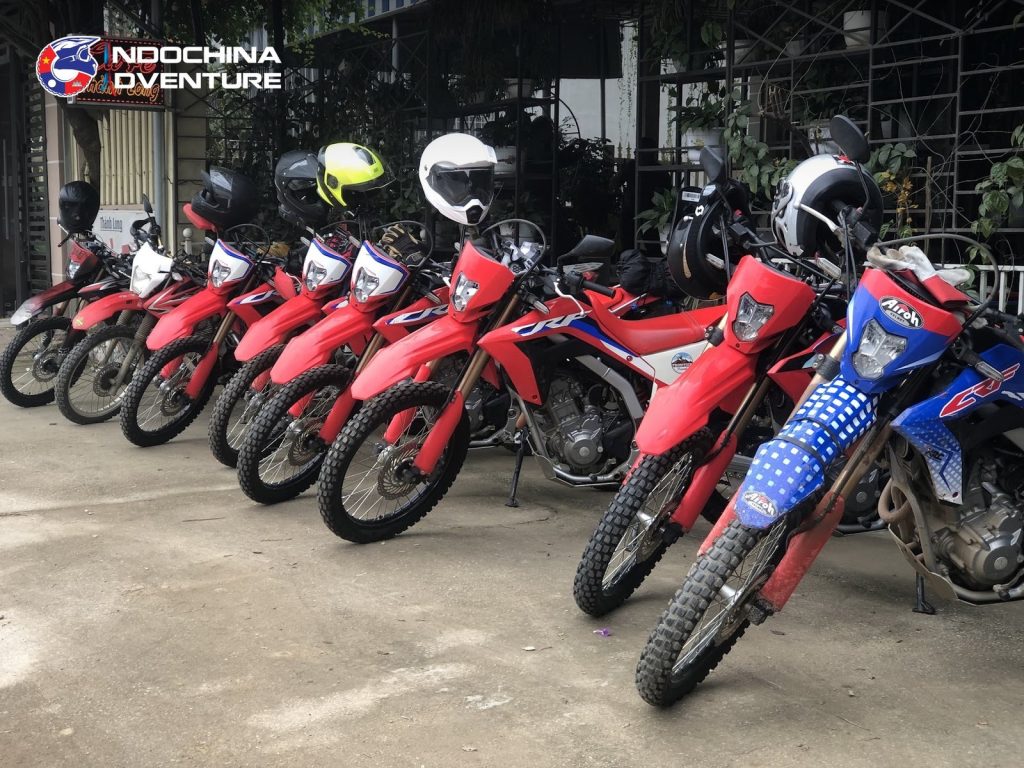
The same route can be a relaxed road trip or a technical ride, depending on which of these you book
The short answer
| Bigbike tour | Dirtbike tour | |
| Typical machine | 650–1250cc adventure bike, 220–260 kg | 150–250cc enduro, 110–140 kg |
| Surface | 90%+ sealed roads | 40–70% dirt, track and trail |
| Daily distance | 200–300 km | 90–150 km |
| Average speed | 50–70 km/h | 25–40 km/h |
| Experience needed | Confident road riding, comfortable with weight | Genuine offroad skill, standing on pegs |
| Physical demand | Moderate — long hours, low intensity | High — short days, constant effort |
| Falls | Rare, and expensive when they happen | Expected, and usually harmless |
| Pillion possible | Yes | Effectively no |
Bigbike tours: what they are actually like
A bigbike tour in Vietnam is a road trip through mountains. You cover real distance, you stay in hotels rather than homestays more often than not, and the riding is about flow rather than technique.
The terrain suits it. Vietnam’s mountain passes — Hai Van, Ma Pi Leng, O Quy Ho, Khau Pha — are all sealed, and many of them are among the best sealed roads in Southeast Asia. On a big adventure bike you can link four passes in a day and finish comfortable.
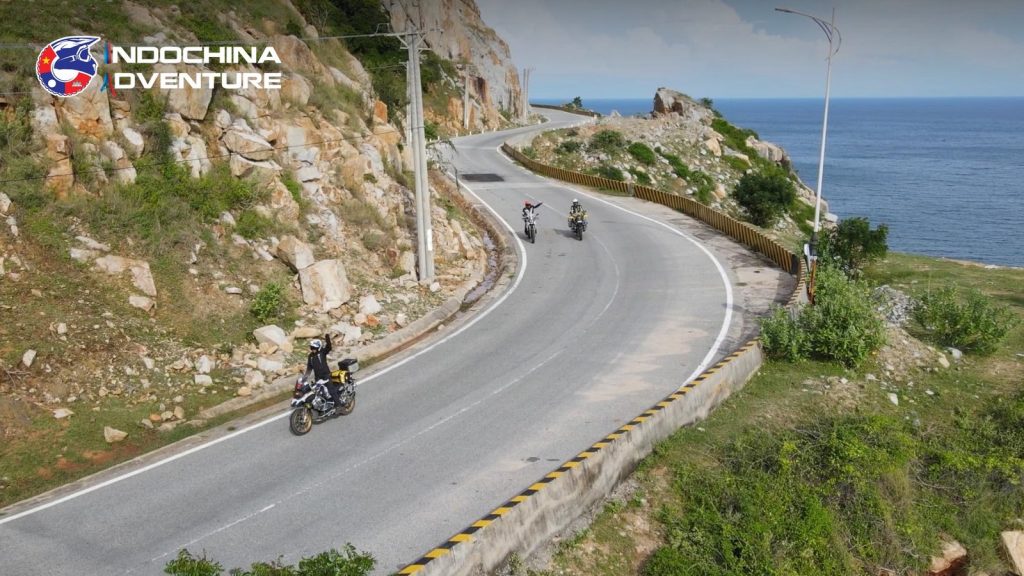
Bigbike territory: long sealed passes where comfort and distance matter more than ground clearance
Book a bigbike tour if:
- Your riding experience is road-based, even if extensive
- You want to cover the length of the country rather than one region in depth
- You are travelling with a partner who will ride pillion
- Comfort over eight-hour days matters more to you than terrain
- You are over 50 and want to ride hard without punishing your body
What frustrates people about them: the interesting-looking dirt road always stays unridden. On a loaded 240 kg machine, a 3 km rocky track to a viewpoint is not worth the risk, so you look at it and carry on.
Dirtbike tours: what they are actually like
A dirtbike tour is not a road trip with some dirt in it. It is a different activity that happens to involve travelling from A to B.
Days are shorter in distance and longer in hours. You will ride 110 km and it will take six hours. You will stand on the pegs for a large part of it. You will fall off, probably more than once, and almost always at a speed where nothing is damaged except momentum.
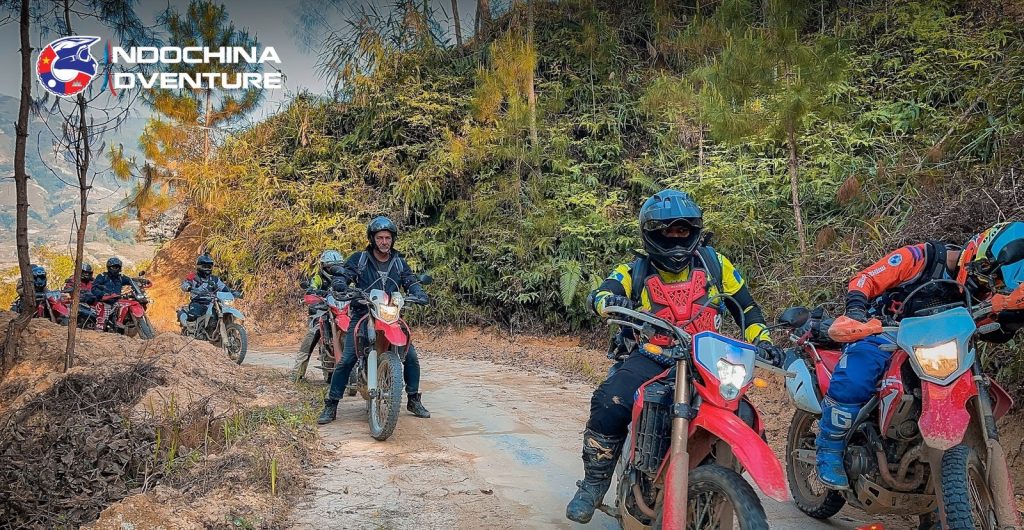
Dirtbike territory: slow, technical, and impossible on a loaded touring machine
What you get in exchange is access. The villages that no bus reaches, the trails through the Truong Son range, the river crossings, the buffalo tracks between rice terraces — this is an offroad motorbike tour Vietnam in the literal sense, and none of it is available on a big machine.
Book a dirtbike tour if:
- You have ridden offroad before — not necessarily competitively, but genuinely
- You are comfortable being tired at the end of a day
- Remote villages and terrain interest you more than famous passes
- You accept that falling off is part of it
What frustrates people about them: the pace. If you want to see a lot of Vietnam in ten days, a dirtbike tour will show you one region very thoroughly instead.
The honest question about skill level
Most riders overestimate their offroad ability, and the gap shows up on day two rather than day one.
A useful self-test: have you ridden a loose gravel or mud surface, standing up, for more than thirty continuous minutes? If not, you have road experience rather than offroad experience, however many years of it you have. That is not a problem — it just points you at the bigbike tour.
The middle option nobody mentions. A mid-weight adventure bike on a route that is 70% sealed with short dirt connectors gives you most of the access with much less demand. If you are torn between the two categories, this is usually the right answer, and it is worth asking about specifically when you enquire.
Cost, and what actually drives it
Dirtbike tours generally cost more per day than bigbike tours, which surprises people given the smaller machines. Three reasons:
- Guide ratio. Offroad groups run smaller, typically 4–6 riders per guide against 8–10 on the road.
- Support vehicle. Essential on technical routes, optional on sealed ones.
- Maintenance. A dirtbike used hard needs work after every tour; a road bike does not.
Against that, bigbike tours cover more distance per day, so a route of the same length finishes in fewer days — which often evens out the total.
Gear: the part both groups underestimate
Whichever you book, the gear decision matters as much as the bike. For road touring you need a ventilated armoured jacket, proper gloves and boots that cover the ankle. For offroad you need all of that plus a back protector, knee braces and boots designed for it — trainers and jeans are how riders end up with broken ankles on trails.
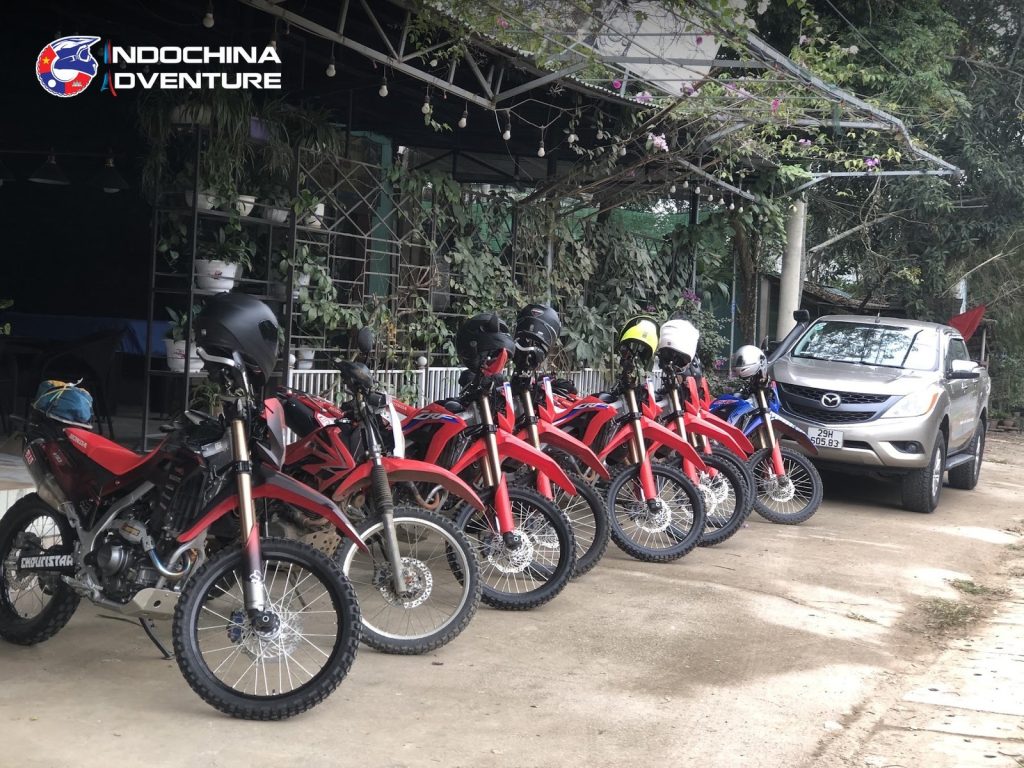
Whichever bike you choose, the gear decision matters as much — boots and armour, not just a helmet
Most operators supply helmets and basic protection. Bring your own boots and gloves if you can, because fit over two weeks matters more than specification.
Frequently asked questions about choosing your tour
Can I switch bikes mid-tour if I chose wrong?
On a guided tour with a support vehicle, sometimes. It depends on what is available at that point on the route, so it is far better to have the honest conversation before you book.
I ride a big bike at home. Can I handle a dirtbike tour?
Not automatically. The skills barely overlap. Riders with 30 years of road experience regularly find their first day of technical offroad harder than complete beginners expect them to.
Which is safer?
Dirtbike tours produce more falls, bigbike tours produce more serious injuries. Low-speed offroad falls are usually bruises; a road accident at 70 km/h is a different matter.
Can my partner ride pillion?
On a bigbike tour yes, and it is common. On a dirtbike tour effectively no — the bikes are unsuitable and the terrain makes it unsafe.
What licence do I need for each?
The same in both cases: a valid motorcycle licence plus an International Driving Permit under the 1968 Convention. See our guide to the motorbike licence in Vietnam for foreigners.
Is a dirtbike tour possible in the rainy season?
Possible but much harder. Clay surfaces that are straightforward when dry become genuinely difficult when wet, and river crossings rise fast. Bigbike tours are far less affected — see our notes on riding Cao Bang in the monsoon.
There is no better option here, only a better fit. Tell us where you want to ride, how many days you have, and what you have actually ridden before — not what you own — and the Indochina Adventure team will point you at the right one, including when that means the tour you were not asking about.


Latest posts
Bigbike vs Dirtbike Tours in Vietnam: Which One Should You Book?
 Date: 12/09/2026
Laos Motorbike Tour: The Best Routes Through North and South Laos
Date: 10/09/2026
Do You Need a Motorbike License to Ride in Vietnam as a Foreigner?
Date: 01/08/2026
Maybe You Don’t Know
Ninh Binh by Motorbike: Tam Coc, Trang An and the Roads Most People Miss
A Ninh Binh motorbike tour guide: the Tam Coc and Trang An loop, the quiet…
Date: 14/09/2026

Laos Motorbike Tour: The Best Routes Through North and South Laos
A Laos motorbike tour guide covering the northern mountain loops and the southern Thakhek and…
Date: 10/09/2026
South-North Vietnam Offroad Motorbike Tour: Riding HCM City to Hanoi The Hard Way
Planning a Vietnam offroad motorbike tour from HCM City to Hanoi? Route breakdown, daily distances,…
Date: 08/09/2026
Do You Need a Motorbike License to Ride in Vietnam as a Foreigner?
Do you need a motorbike license to ride in Vietnam as a foreigner? The honest…
Date: 01/08/2026
Ha Giang Loop Guided Tour vs Self Ride: Which Option Is Right for You?
Comparing a Ha Giang Loop guided tour vs self ride? Explore the pros, cons, real…
Date: 28/07/2026
Hanoi in July 2026: Hot, Humid & Rainy? What to Expect
Hanoi in July brings hot, humid days and sudden downpours. Discover the weather, best things…
Date: 24/07/2026