Laos Motorbike Tour: The Best Routes Through North and South Laos


Riders who finish a Vietnam loop tend to ask the same question at dinner on the last night: what is next? The answer, more often than not, is Laos — and specifically the fact that a Laos motorbike tour gives you emptier roads than anywhere else in Southeast Asia.
Laos has roughly a fifth of Vietnam’s traffic across a similar land area. You can ride an hour on a good mountain road and meet four vehicles. That single fact shapes everything about riding here, and it is why so many people who came for one loop end up staying for three weeks.
This guide covers both halves of the country: the mountain routes of the north and the karst and plateau routes of the south, with what each demands and when to ride them.
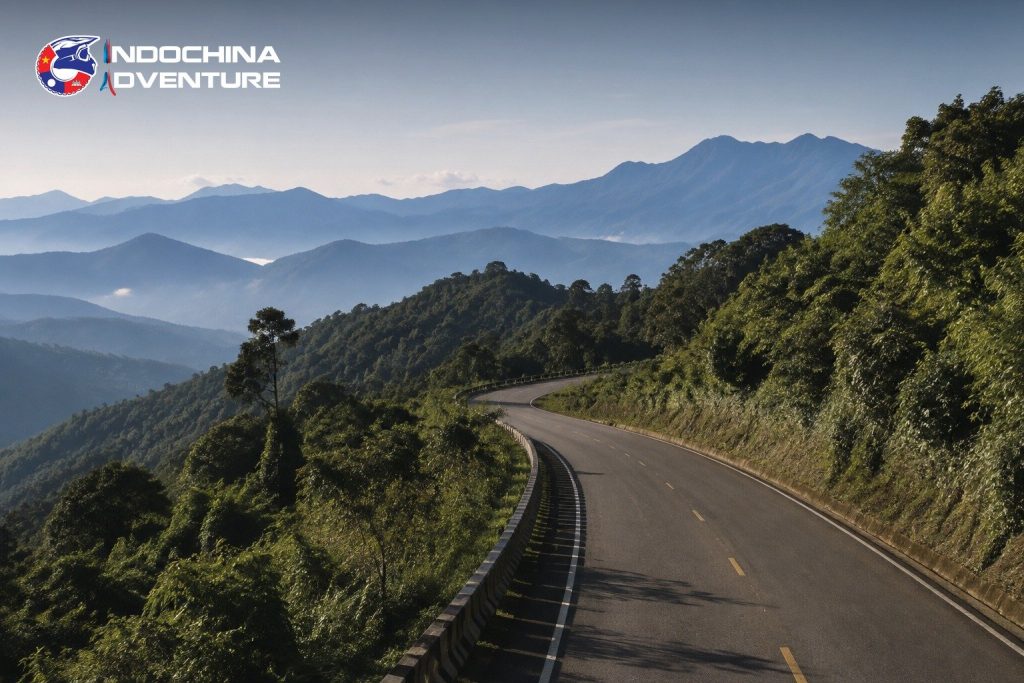
Northern Laos has the emptiest good roads in Southeast Asia — most riders notice the silence before the scenery
North or south: which half of Laos should you ride?
The two halves are genuinely different countries to ride, and the choice comes down to what you want from the trip.
| Northern Laos | Southern Laos | |
| Terrain | Continuous mountains, 1,000–1,800 m passes | Karst plains, one plateau, mostly flat between |
| Road surface | Mixed — good tarmac with broken sections | Better overall, most loops fully sealed |
| Riding demand | High — long days, tight bends, altitude | Moderate — suitable for less experienced riders |
| Typical duration | 7–12 days | 4–7 days |
| Best for | Mountain riding, hill tribe villages | Caves, waterfalls, coffee, easier pace |
North Laos motorbike routes
The classic northern loop: Luang Prabang – Nong Khiaw – Vieng Thong – Phonsavan
This is the ride most people mean by a north Laos motorbike trip. Roughly 900 km over seven to nine days, it strings together the best mountain roads in the country.
Out of Luang Prabang the road climbs immediately, and it does not really stop for three days. Nong Khiaw, about 140 km north, is the natural first halt: a small town wedged between vertical limestone walls on the Nam Ou river, and one of the few places in Laos where the setting genuinely stops conversation.
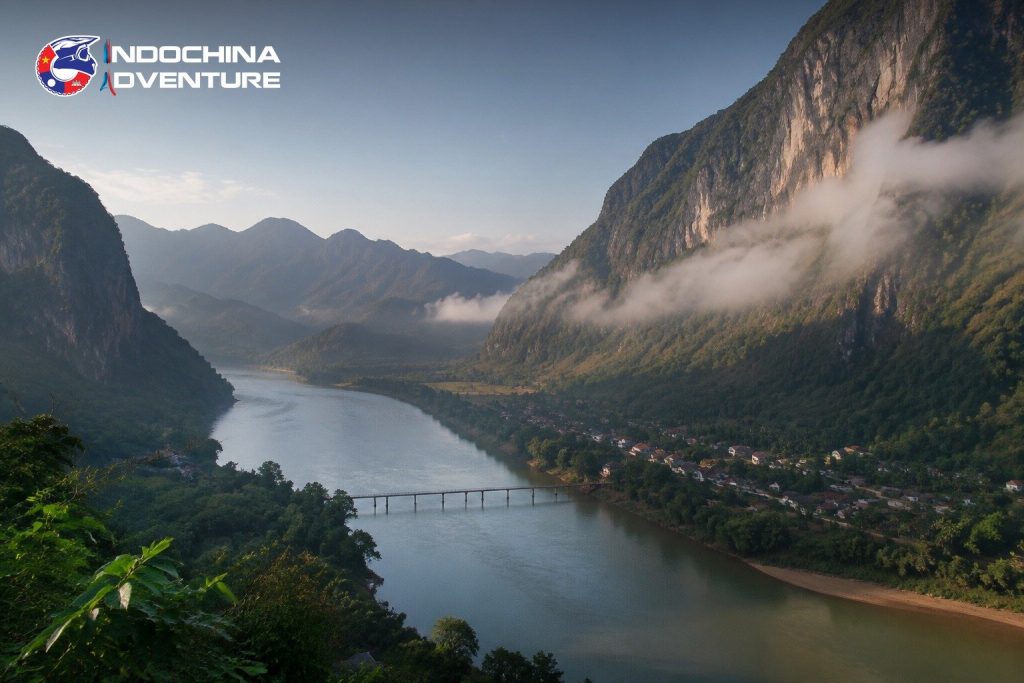
Nong Khiaw sits between limestone walls on the Nam Ou — the natural halfway point of any northern loop
From there the loop swings east through Vieng Thong and down to Phonsavan on the Plain of Jars, then back west to Luang Prabang on Route 7 and Route 13. The Phonsavan leg crosses the highest ground of the trip and is noticeably colder — plan for 10°C mornings between November and February.
The northern extension: Muang Khua and the Vietnam border
Riders continuing into or out of Vietnam usually add the leg to Muang Khua and the Tay Trang border crossing near Dien Bien Phu. It is remote, the surface deteriorates in places, and fuel stops are far apart — but it is also the most direct way to join a Laos ride onto a northern Vietnam loop.
South Laos motorbike routes
The Thakhek Loop
The best-known ride in the country and, for a first south Laos motorbike trip, the obvious choice. Around 450 km over three to four days, almost entirely sealed, through a landscape of limestone towers, caves and the strange flooded forest at Nam Theun where dead trees stand in still water.
The highlight is Kong Lor Cave — a 7.5 km river cave you travel through by boat, entering under a 100 m limestone cliff and coming out the other side of the mountain. Most riders build a night at Kong Lor into the loop rather than rushing it.
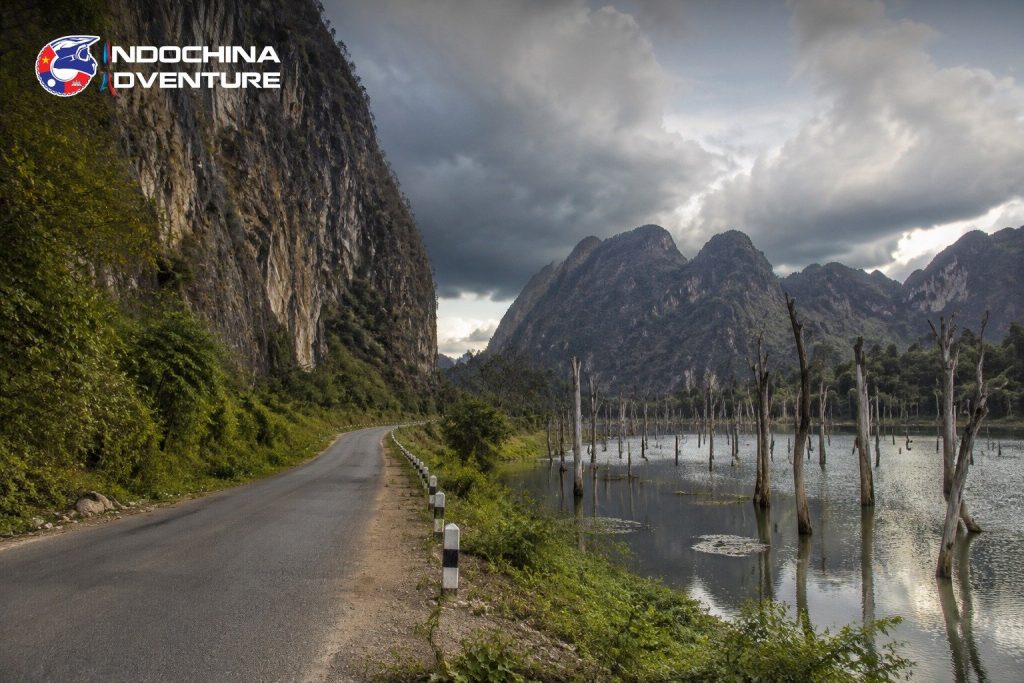
The Thakhek Loop: limestone towers, caves and the flooded forest at Nam Theun
The Bolaven Plateau
Further south, the Bolaven Plateau sits at 1,000–1,300 m and stays ten degrees cooler than the plains below. It is coffee country — Laos grows most of its arabica here — and it holds the densest concentration of waterfalls in the country.
The small loop is about 200 km over two days; the big loop runs closer to 350 km over three or four and takes in Tad Lo, Tad Fane and the villages of the Katu and Alak communities. The tarmac is good throughout, which makes this the gentlest multi-day route in Laos.
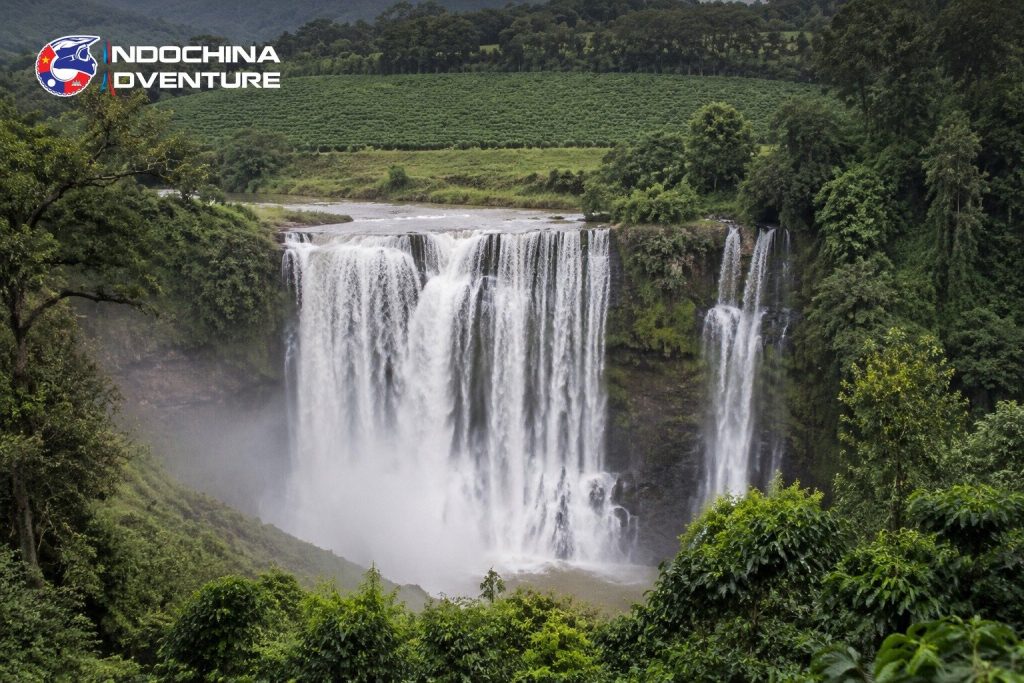
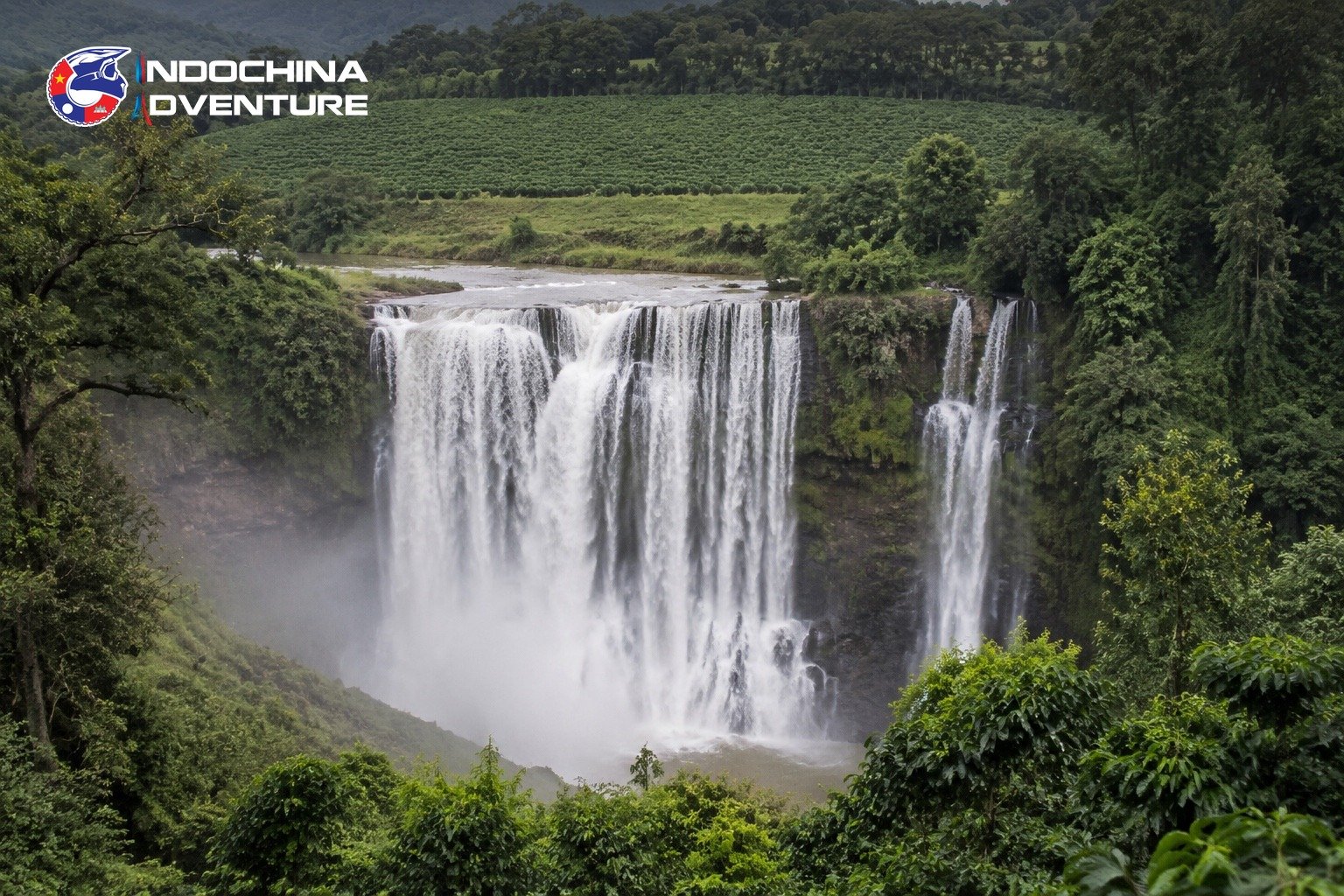
The Bolaven Plateau stays cool through the hot season — waterfalls, coffee and easy tarmac
When to ride in Laos
Laos has a sharper wet season than Vietnam and it affects the two halves differently.
| Period | North | South |
| November – February | Dry, clear, cold mornings at altitude — the best window | Dry and pleasant, the peak season |
| March – April | Hot, and heavy agricultural burning cuts visibility badly | Very hot on the plains, cooler on the plateau |
| May – October | Wet season, landslides on mountain routes | Wet but waterfalls at full force |
A warning about March and April. Burning season in northern Laos fills the valleys with smoke for weeks. The riding is fine but the views disappear entirely, and air quality can be genuinely poor. If the landscape is why you are going, avoid these two months.
Riding conditions and what to expect
- Fuel. Stations are far apart on northern routes. Fill up whenever you pass one rather than when you need to — 150 km between pumps is normal.
- Road surface. Better than its reputation on main routes, unpredictable on secondary ones. A sealed road can turn to gravel for 20 km without warning.
- Livestock. Buffalo, cattle and dogs on the road are the single most common cause of accidents. Ride expecting them on every blind bend.
- Night riding. Avoid it. Unlit roads, unlit vehicles and animals make it a different risk category entirely.
- Medical access. Serious injuries are treated in Thailand, not Laos. Evacuation cover is not optional here.
Joining Laos onto a Vietnam trip
Most riders reach Laos overland from Vietnam rather than flying in, and the practical question is paperwork rather than route. Taking a motorbike across the border requires the right vehicle documents and the right visa, and the rules differ depending on whether the bike is rented, owned or supplied by a tour operator.
We cover the requirements in detail in our Vietnam motorbike tours planning material, and a guided Indochina motorbike tour handles the crossing as part of the package — which for most travellers is the deciding factor.
Frequently asked questions about riding in Laos
Is Laos safer to ride than Vietnam?
The traffic is far lighter, which removes the biggest risk in Vietnam. In exchange you get worse medical access, longer distances between help, and more livestock on the road. Net risk is comparable, but the failure modes are different.
What size bike do I need for a Laos motorbike tour?
A 150–250cc machine handles every route described here comfortably. Larger adventure bikes work on the southern loops but are a liability on the rougher northern sections.
Can I ride Laos without offroad experience?
Yes, in the south. The Thakhek Loop and the Bolaven Plateau are almost entirely sealed. The northern mountain routes demand more, mainly for the sustained climbing and the unpredictable surface.
How long should I allow for Laos?
Seven days for one southern loop, ten to twelve for a northern circuit, and around three weeks if you want both halves without rushing.
Do I need a licence to ride in Laos?
An International Driving Permit with a motorcycle category is required. Rental shops may not check it, but police and insurers will.
Is there fuel available on the remote sections?
Yes, but not always as a station. Roadside stalls selling petrol from bottles are normal in small villages and perfectly usable. Carry a reserve on the Muang Khua leg.
Laos is not a bigger version of Vietnam. It is quieter, slower, and less forgiving of poor planning — and that combination is exactly what draws people back. Whether you have a week for the Thakhek Loop or three for the whole country, tell us your dates and riding level and the Indochina Adventure team will build the route to match.


Latest posts
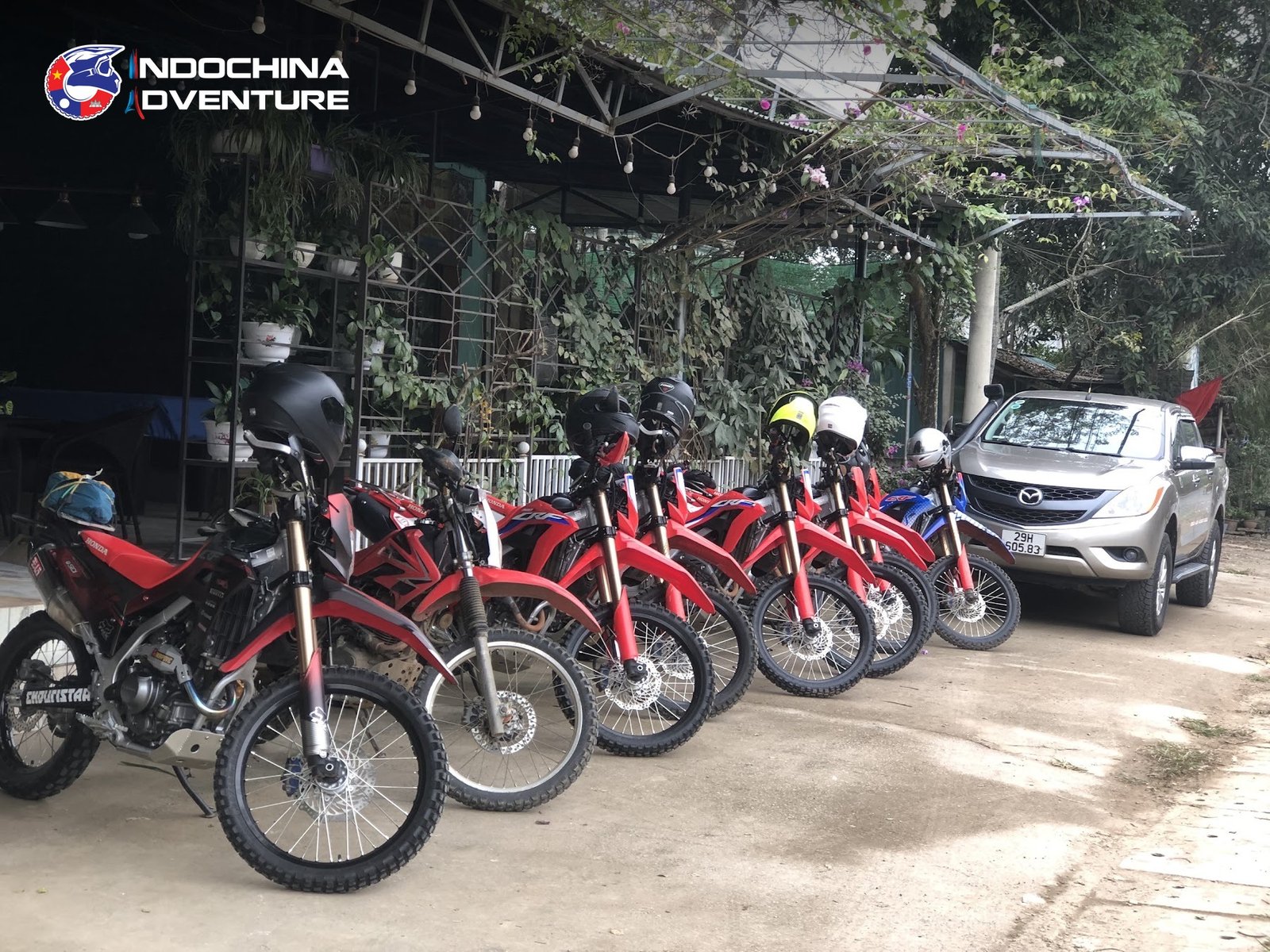
Bigbike vs Dirtbike Tours in Vietnam: Which One Should You Book?
 Date: 12/09/2026
Laos Motorbike Tour: The Best Routes Through North and South Laos
Date: 10/09/2026

Do You Need a Motorbike License to Ride in Vietnam as a Foreigner?
Date: 01/08/2026
Maybe You Don’t Know
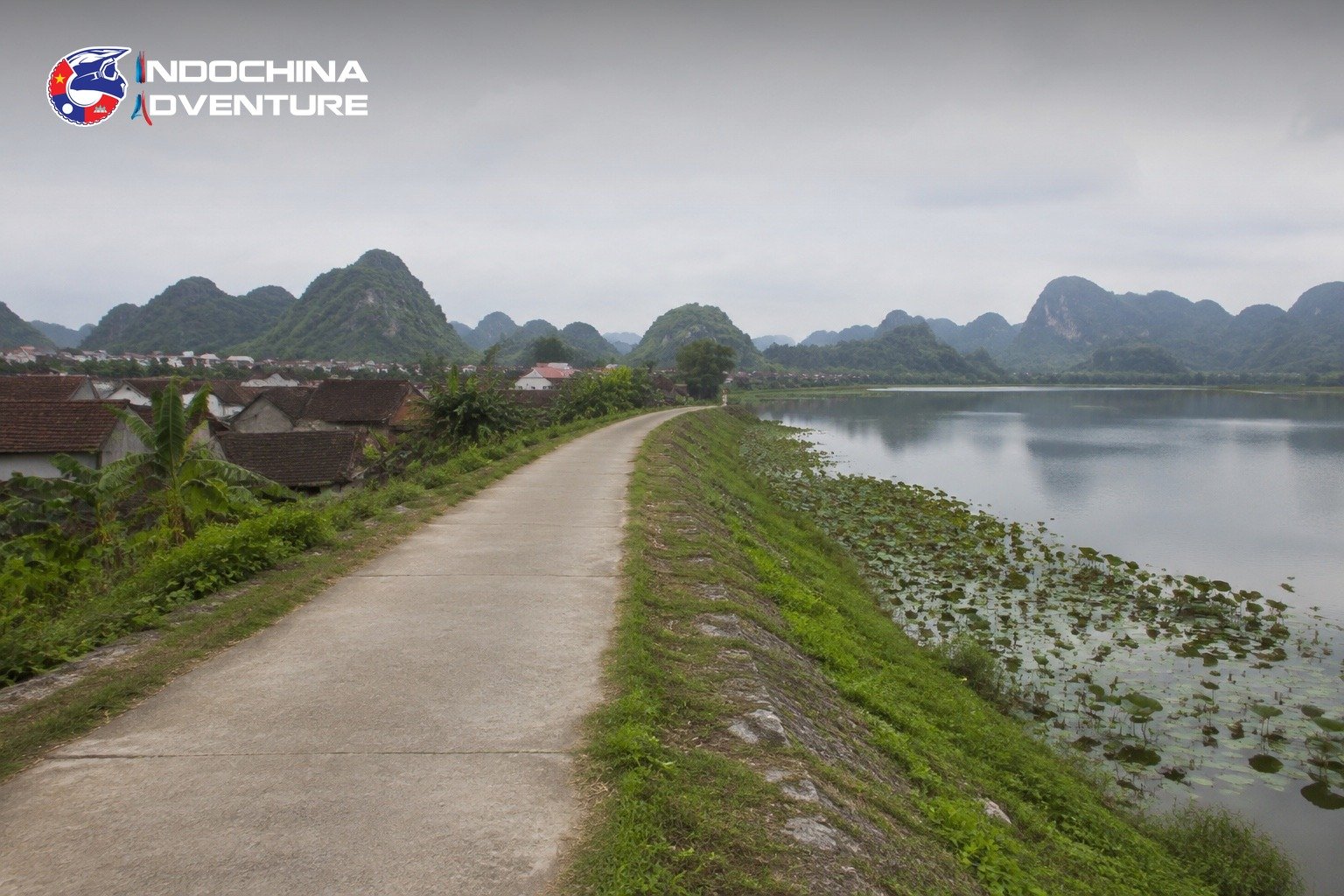
Ninh Binh by Motorbike: Tam Coc, Trang An and the Roads Most People Miss
A Ninh Binh motorbike tour guide: the Tam Coc and Trang An loop, the quiet…
Date: 14/09/2026

Bigbike vs Dirtbike Tours in Vietnam: Which One Should You Book?
Bigbike vs dirtbike tour Vietnam: an honest comparison of terrain, riding demand, comfort and cost…
Date: 12/09/2026
South-North Vietnam Offroad Motorbike Tour: Riding HCM City to Hanoi The Hard Way
Planning a Vietnam offroad motorbike tour from HCM City to Hanoi? Route breakdown, daily distances,…
Date: 08/09/2026
Do You Need a Motorbike License to Ride in Vietnam as a Foreigner?
Do you need a motorbike license to ride in Vietnam as a foreigner? The honest…
Date: 01/08/2026

Ha Giang Loop Guided Tour vs Self Ride: Which Option Is Right for You?
Comparing a Ha Giang Loop guided tour vs self ride? Explore the pros, cons, real…
Date: 28/07/2026
Hanoi in July 2026: Hot, Humid & Rainy? What to Expect
Hanoi in July brings hot, humid days and sudden downpours. Discover the weather, best things…
Date: 24/07/2026