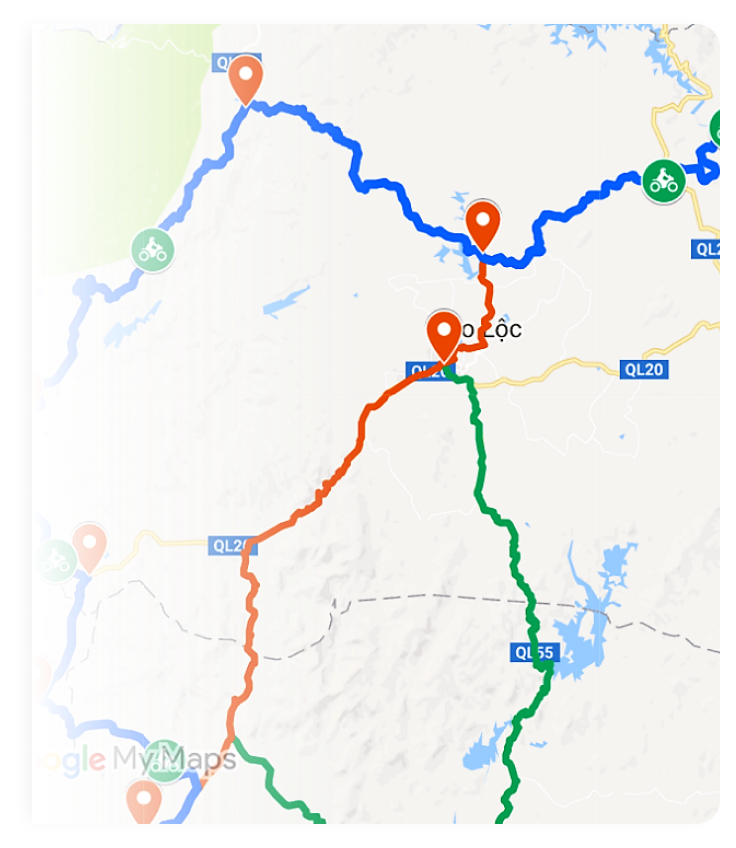
South-North Vietnam Offroad Motorbike Tour: Riding HCM City to Hanoi The Hard Way


There are two ways to travel the length of Vietnam. One follows Highway 1A up the coast, past the truck stops and the beach resorts, and takes about a week. The other turns inland at the first opportunity, climbs into the Truong Son range, and stays there — dirt, river crossings, jungle tracks and mountain villages — for two weeks or more.
This guide is about the second one. A Vietnam offroad motorbike tour from Ho Chi Minh City to Hanoi is the most demanding ride in the country, and for a certain kind of rider it is the only version worth doing. Below is what the route actually looks like: the stages, the daily distances, the terrain you will meet, and an honest read on who should and should not book it.
The Ho Chi Minh Trail carries almost no traffic for hours at a time — the reason most riders come back for it
What makes the south-north offroad route different
The coastal run is a road trip. The inland run is an expedition. On a HCM to Hanoi motorbike journey through the western highlands you spend roughly 40% of each day off sealed surfaces, and the road conditions change faster than the weather.
Three things separate it from every other route in Vietnam:
- The Ho Chi Minh Trail west branch. Not the modern highway of the same name, but the original network of tracks through the Truong Son mountains. Long sections see no other traffic for hours.
- Altitude and climate change daily. You start in the Mekong heat, climb to 1,500 m in the Central Highlands where it drops to 15°C at night, then descend again to the coast.
- Almost no tourist infrastructure. Between Kon Tum and Khe Sanh you are in working villages and small towns, not on a tourist circuit.
The route, stage by stage
A full south-north crossing runs 14 to 18 days depending on how much dirt you want. Here is the standard 15-day structure.
| Stage | Route | Days | Terrain |
| 1 | HCM City → Da Lat → Nha Trang | 3 | Sealed roads, first mountain climbs |
| 2 | Nha Trang → Buon Ma Thuot → Kon Tum | 3 | Red dirt, coffee and pepper plantations |
| 3 | Kon Tum → Kham Duc → Prao | 2 | The hardest offroad — jungle track, river crossings |
| 4 | Prao → Hoi An → Hue | 2 | Hai Van Pass, coastal tarmac, a rest day |
| 5 | Hue → Khe Sanh → Phong Nha | 2 | Western Ho Chi Minh Trail, remote and empty |
| 6 | Phong Nha → Pu Luong → Mai Chau | 2 | Limestone valleys, terraced rice, broken tarmac |
| 7 | Mai Chau → Hanoi | 1 | Highway 6, a straightforward finish |
Stage 1 — Out of the city and into the hills
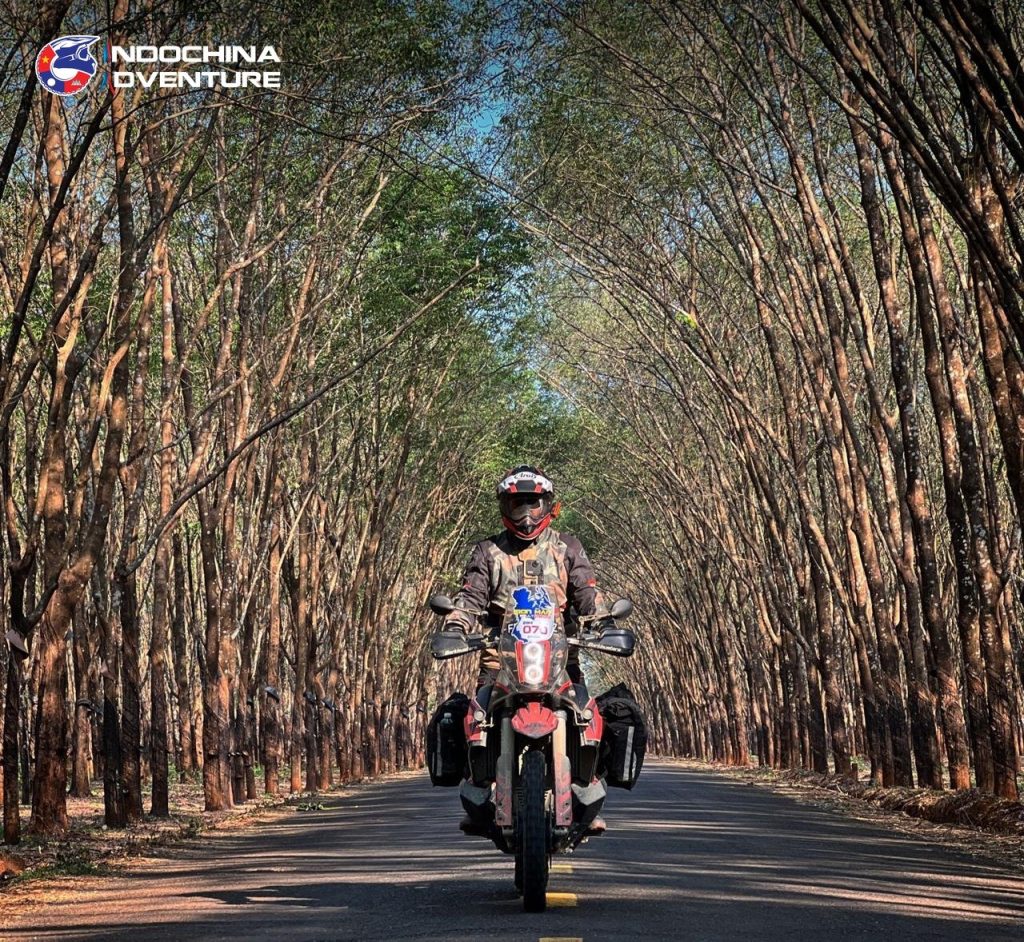
The first day is the least interesting and the most necessary. You clear Ho Chi Minh City traffic, then climb through rubber plantations towards Da Lat. It is where the group finds its pace and where the guide works out who is comfortable and who is not.
Stage 2 — The Central Highlands
This is where the ride opens up. Red basalt tracks cut between coffee plantations, and the surface holds well in the dry season and turns to slick clay in the wet. Buon Ma Thuot to Kon Tum is the first day where you will spend more time on dirt than tarmac.
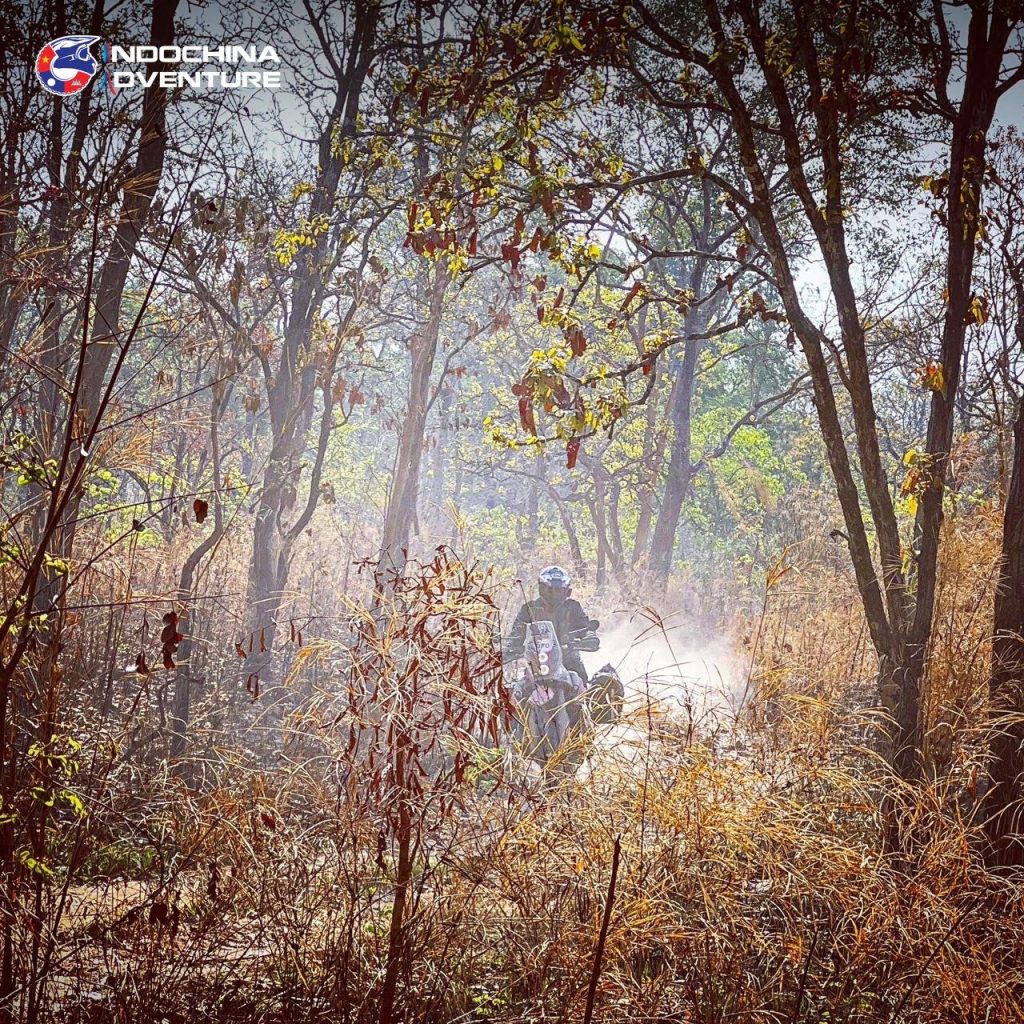
The Central Highlands section: red dirt, coffee plantations and almost no other traffic
Stage 3 — The hard two days
Kon Tum to Prao via Kham Duc is the section that defines the tour. Expect narrow single track, loose rock, exposed drops and several river crossings where the water can reach mid-shin. Daily distance drops to 90–120 km because average speed falls to around 25 km/h.
If any part of the trip is going to test you, it is here. It is also the part every rider talks about afterwards.
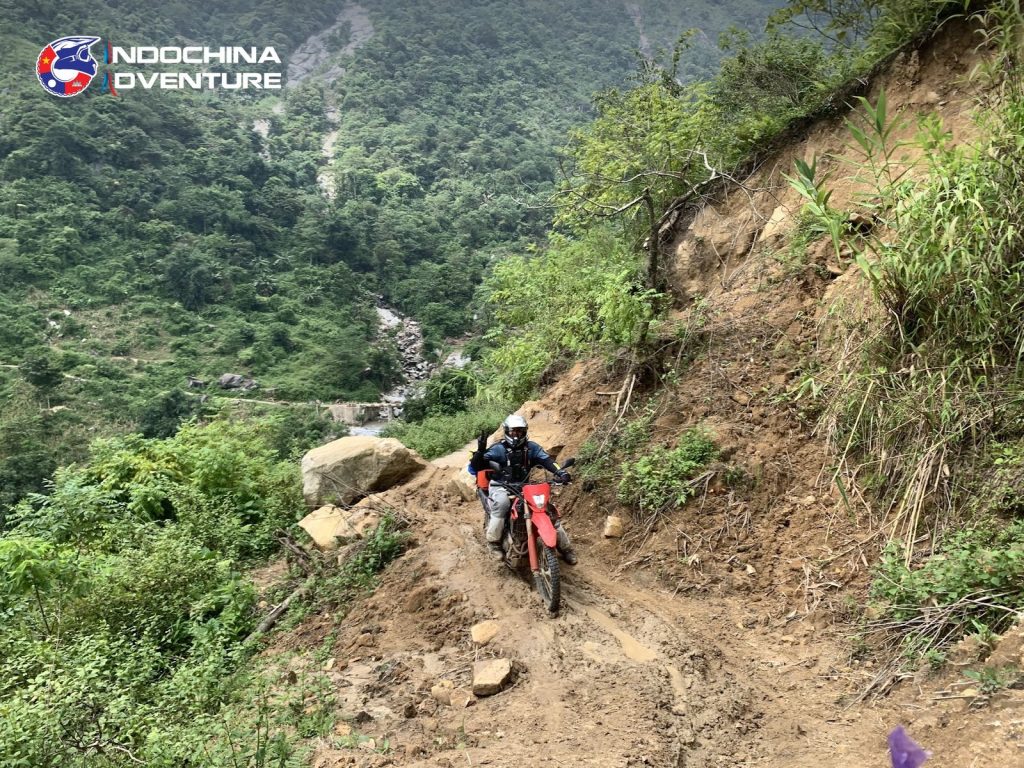
The technical sections are slow rather than fast — steady throttle control matters more than power
Stage 4 — Coast and recovery
Hoi An and Hue give you two nights of proper beds, laundry and food that is not cooked on a village stove. The Hai Van Pass between them is sealed, sweeping and busy with other bikes — a complete change of character after the jungle.
Stage 5 — The western trail
Hue to Khe Sanh to Phong Nha runs along the western branch of the Ho Chi Minh Trail. The tarmac is good but the road is empty, the villages are small and far apart, and fuel stops need planning. This is many riders’ favourite section precisely because nothing happens on it.
Stage 6 and 7 — North to Hanoi
Phong Nha to Pu Luong takes you back onto broken surfaces and limestone valleys, then Mai Chau to Hanoi on Highway 6 closes the loop. The last day is deliberately easy.
How hard is a Vietnam offroad motorbike tour, honestly?
Harder than the marketing photographs suggest, and easier than the horror stories.
The reality is that you need real offroad experience, not just a licence and enthusiasm. Specifically:
- Comfortable standing on the pegs for long stretches
- Able to pick up a fallen 140 kg bike, or at least help someone else do it
- Fit enough for six to seven hours in the saddle on consecutive days
- Willing to ride in rain, because over two weeks you will get some
What you do not need is racing skill. Almost every difficult section is slow-speed and technical rather than fast. Riders who take their time have very few problems; riders in a hurry are the ones who drop bikes.
Not sure this is your level? The same north-south journey exists as a road-based tour on larger adventure bikes, following sealed passes rather than jungle track. It covers similar ground with none of the technical demand — see our comparison of Vietnam motorbike tours for the difference.
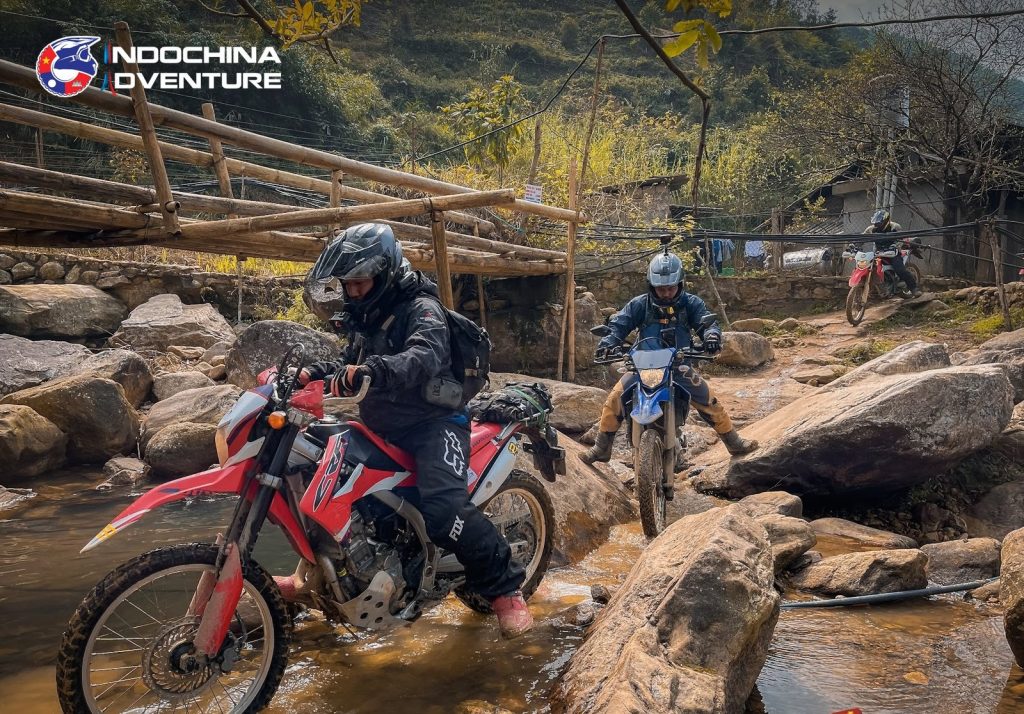
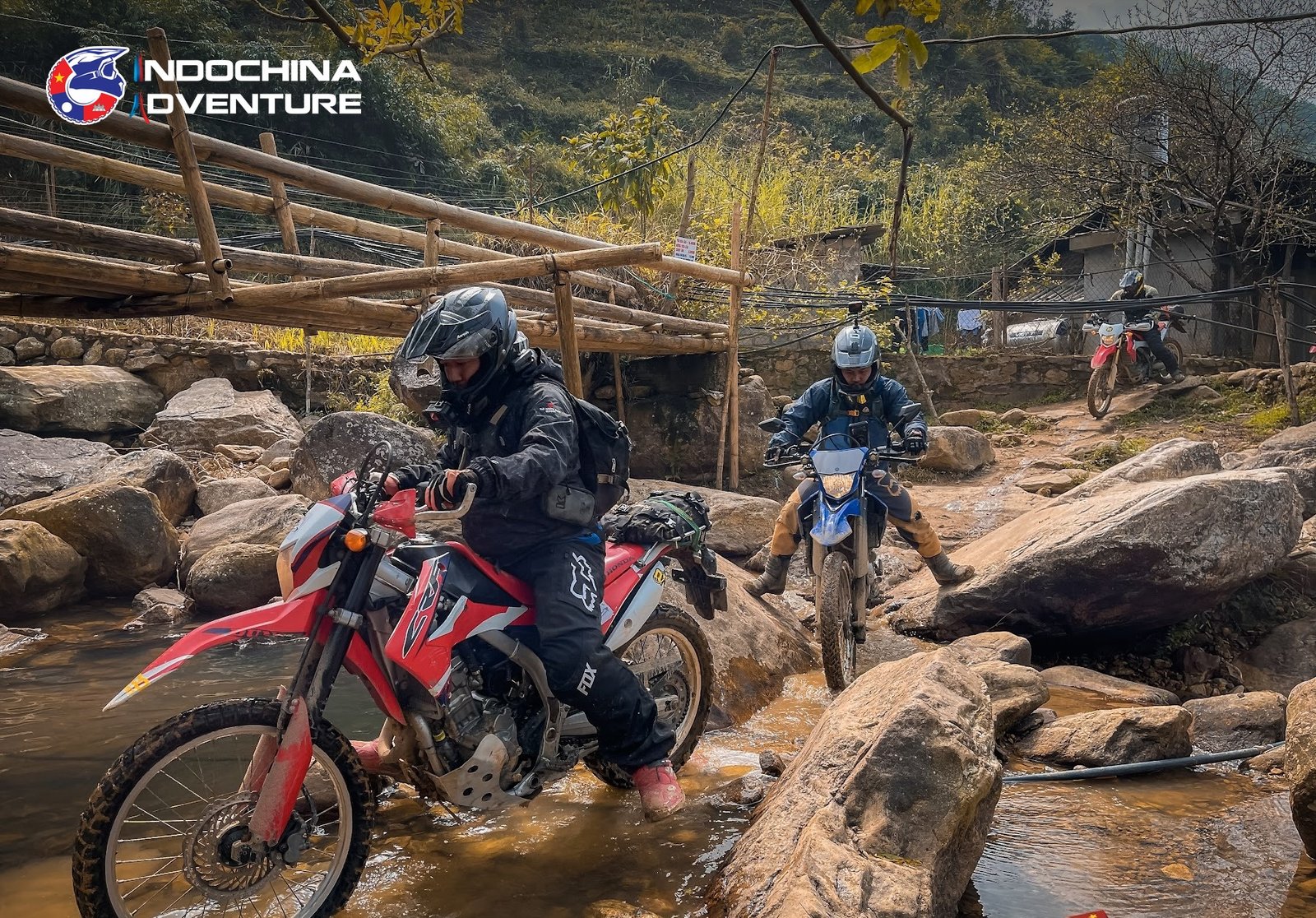
River crossings are routine on the western sections — and much easier with someone who has ridden them before
When to ride the south-north route
Timing matters more on this route than on any short loop, because you cross three climate zones and a fortnight is long enough for the season to change under you.
| Window | Conditions | Verdict |
| February – April | Dry throughout, dust on the trails, warm in the south | The best window |
| May – August | Monsoon in the centre and north, rivers high, landslide risk | Experienced groups only |
| September – November | Rain easing, landscape at its greenest, typhoon risk on the coast | Good, with schedule flexibility |
| December – January | Dry but cold in the north, 8–12°C in the mountains | Fine with proper layers |
What the bikes and the support look like
A dirtbike tour Vietnam of this length runs on 150–250cc enduro machines rather than heavy adventure bikes. Ground clearance and weight matter far more than power once the tarmac ends, and a lighter bike is dramatically easier to recover after a fall.
Support on a two-week crossing normally includes a lead guide, a sweep rider, and a support vehicle carrying luggage, spares and fuel. That vehicle is the reason you can ride the technical sections with an almost empty bike rather than a fully loaded one — a bigger difference than most riders expect.
Practical preparation
- Licence. You need a Vietnamese licence or an International Driving Permit issued under the 1968 Vienna Convention. Read our guide on the motorbike licence in Vietnam for foreigners before you book.
- Gear. Boots and body armour, not just a helmet. Bring your own if you can — fit matters over fourteen days.
- Insurance. Check your travel policy covers motorcycling above 125cc and off sealed roads. Many do not.
- Fitness. Two weeks of consecutive riding days is the real test, not any single section.
- Buffer days. Build one or two into your flights. Landslides and washed-out crossings do happen.
Frequently asked questions about the south-north offroad route
How many days do I need to ride HCM City to Hanoi offroad?
Fourteen days is the practical minimum and fifteen to eighteen is more comfortable. Anything under twelve means dropping the technical sections and riding mostly sealed roads, which changes the trip entirely.
Can a beginner do this tour?
Not this version. Riders without offroad experience should start with a shorter northern loop on easier terrain and build up. The Kon Tum to Prao section in particular is not a place to learn.
What happens if I drop the bike or it breaks down?
On a guided tour the sweep rider stays behind the last rider, and the support vehicle carries spares and tools. Mechanical problems cost time rather than ending the trip.
Is the Ho Chi Minh Trail actually offroad?
Partly. The modern Ho Chi Minh Highway is sealed and fast. The original trail network in the Truong Son range is where the dirt is, and a good route uses the second while treating the first as a connector.
Do I ride the same bike the whole way?
Yes on a guided tour. The bike is prepared before departure and serviced along the route, which matters more over 2,000 km than the specification on paper.
Can I do the route in the opposite direction?
Hanoi to Ho Chi Minh City works equally well and is common for riders flying out of the south. The terrain is identical; only the acclimatisation order changes, and starting in the north means meeting the hardest sections earlier.
The south-north offroad crossing is not the easiest way to see Vietnam, and it is not trying to be. What it offers is two weeks of riding that most people never get to do — jungle track, river crossings and mountain villages strung along the spine of the country. If that is the trip you have in mind, tell us your dates and riding background and the Indochina Adventure team will tell you honestly whether it fits.


Latest posts
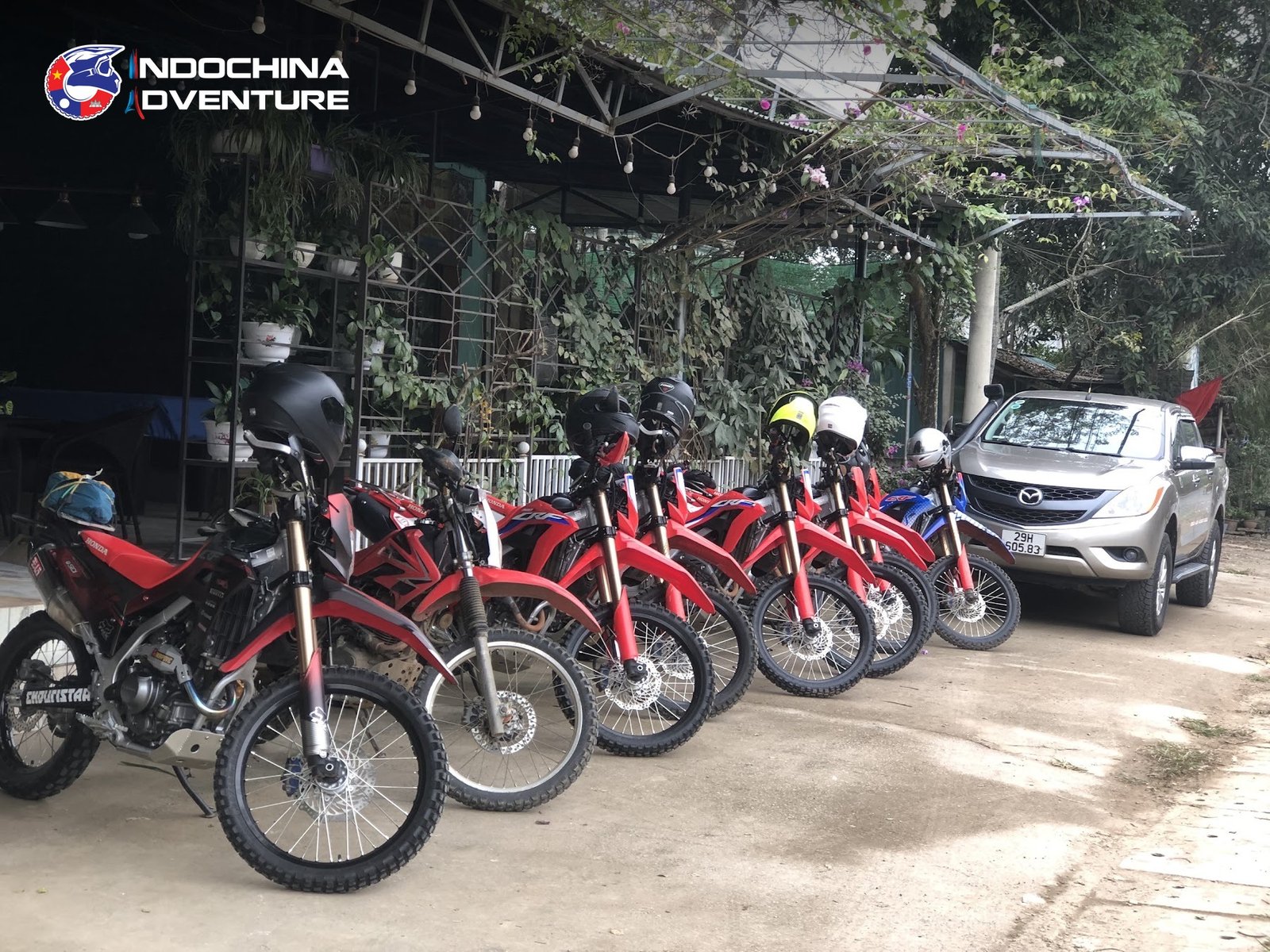
Bigbike vs Dirtbike Tours in Vietnam: Which One Should You Book?
 Date: 12/09/2026

Laos Motorbike Tour: The Best Routes Through North and South Laos
Date: 10/09/2026

Do You Need a Motorbike License to Ride in Vietnam as a Foreigner?
Date: 01/08/2026
Maybe You Don’t Know
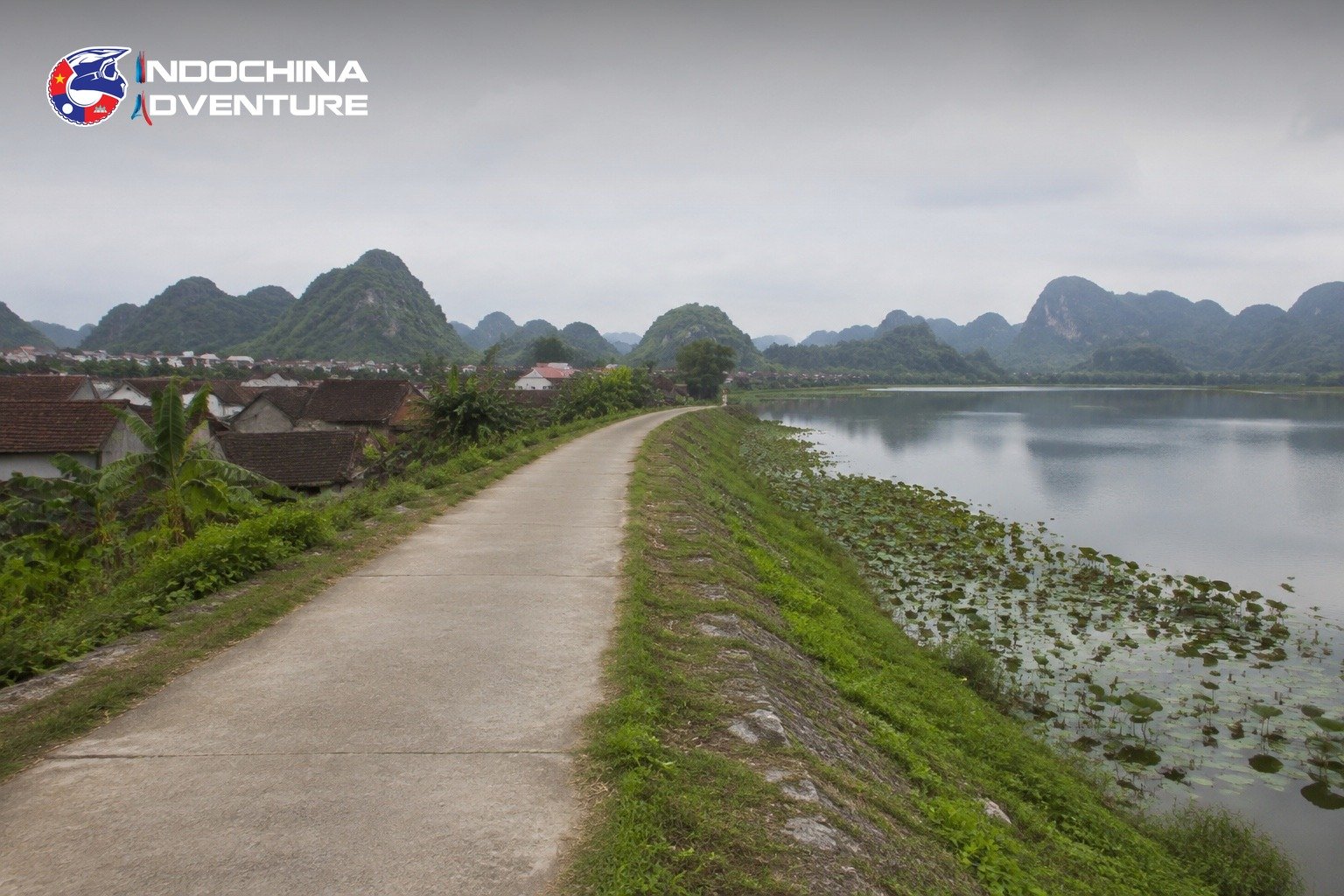
Ninh Binh by Motorbike: Tam Coc, Trang An and the Roads Most People Miss
A Ninh Binh motorbike tour guide: the Tam Coc and Trang An loop, the quiet…
Date: 14/09/2026

Bigbike vs Dirtbike Tours in Vietnam: Which One Should You Book?
Bigbike vs dirtbike tour Vietnam: an honest comparison of terrain, riding demand, comfort and cost…
Date: 12/09/2026
Laos Motorbike Tour: The Best Routes Through North and South Laos
A Laos motorbike tour guide covering the northern mountain loops and the southern Thakhek and…
Date: 10/09/2026
Do You Need a Motorbike License to Ride in Vietnam as a Foreigner?
Do you need a motorbike license to ride in Vietnam as a foreigner? The honest…
Date: 01/08/2026

Ha Giang Loop Guided Tour vs Self Ride: Which Option Is Right for You?
Comparing a Ha Giang Loop guided tour vs self ride? Explore the pros, cons, real…
Date: 28/07/2026
Hanoi in July 2026: Hot, Humid & Rainy? What to Expect
Hanoi in July brings hot, humid days and sudden downpours. Discover the weather, best things…
Date: 24/07/2026